
Many aspiring event managers struggle with writing professional emails that achieve desired responses from clients, vendors, and attendees. Effective email communication is crucial for building relationships and boosting event success, yet it remains one of the most underestimated skills in the industry. This guide will teach you how to craft professional emails tailored to event management contexts, enhancing your career and event engagement through strategic, personalised communication that drives results.
Table of Contents
- Preparing To Write Professional Emails
- Writing Effective Professional Emails
- Executing And Optimising Your Email Campaigns
- Common Mistakes And Verifying Email Success
- Advance Your Event Management Career With Expert Training
- Frequently Asked Questions
Key takeaways
| Point | Details |
|---|---|
| Structured emails boost engagement | Personalised, well-organised emails significantly increase attendee response rates and event participation. |
| Multi-message sequences reduce no-shows | Strategic email sequences can decrease event no-shows by up to 30% compared to single reminders. |
| Subject line testing improves opens | A/B testing different subject lines can dramatically increase open rates and overall campaign performance. |
| Email delivers strong ROI | Email marketing provides higher return on investment than many other channels for event promotion. |
| Segmentation strengthens relationships | Dividing your mailing list into targeted groups creates more relevant communication and deeper attendee connections. |
Preparing to write professional emails
Before sending your first email, a little prep work goes a long way. A solid foundation ensures your campaigns are targeted, effective, and drive the results you need. You must identify your target audience and segment mailing lists accordingly. Different groups require different messaging: VIP sponsors need formal updates, while casual attendees respond better to friendly, engaging content.
Set clear goals for each email you send. Are you informing stakeholders about venue changes? Confirming attendance for a corporate event? Promoting early bird tickets? Your objective shapes every element of your message, from subject line to call to action. Gather relevant event details before you start writing: dates, times, locations, speaker names, agenda highlights, and any special instructions attendees need.
Plan timing and frequency to maintain engagement without overwhelming recipients. Too many emails create fatigue and unsubscribes, whilst too few leave people uninformed and disengaged. Use tags and personalisation to increase relevance and response rates. Modern email platforms allow you to insert recipient names, reference their past attendance, and tailor content based on their interests or registration status.
Integrating digital marketing in event management requires understanding how email fits within your broader promotional strategy. Email works best when coordinated with social media, website updates, and other channels to create a cohesive attendee experience.
Pro Tip: Create audience personas for your typical event stakeholders (first-time attendees, returning guests, sponsors, speakers) and write sample emails for each before your next campaign. This preparation speeds up actual campaign execution and ensures consistency.
Writing effective professional emails
Structure emails clearly to guide readers through your message effortlessly. Start with a personalised greeting using the recipient’s name. State your purpose immediately in the opening sentence so readers know why you’re contacting them. Present event details in a logical flow, using short paragraphs and bullet points for easy scanning. Include a compelling call to action that tells recipients exactly what you want them to do. Close professionally with your name, title, and contact information.
Craft subject lines deliberately because they determine whether your email gets opened. Test at least two versions per send to identify what resonates with your audience. Small tweaks make a big difference in open rates. Compare “Event Update” (generic, low urgency) with “Your VIP Access Expires Tomorrow” (specific, time-sensitive).
| Subject Line Type | Example | Expected Open Rate |
|---|---|---|
| Generic | Event reminder | 15-20% |
| Personalised | Sarah, your seat awaits | 25-30% |
| Urgency-driven | Last 24 hours to register | 30-35% |
| Question-based | Ready for the biggest industry gathering? | 22-28% |
Personalise content by segment and behaviour. VIP guests receive exclusive previews and special access information. First-time attendees need more context and reassurance. Past participants appreciate recognition of their loyalty and relevant updates based on sessions they previously attended. Include concise, compelling calls to action that remove friction: “Confirm your attendance” works better than “Please let us know if you plan to attend at your earliest convenience.”

Use professional tone with clarity and politeness suitable for event management contexts. You want to sound approachable yet competent, friendly yet respectful. Avoid overly casual language with sponsors whilst maintaining warmth with general attendees. Creative writing for marketing principles apply here: show personality without sacrificing professionalism.
Follow these steps to write an email from greeting to sign-off:
- Address the recipient by name and title when appropriate.
- State your purpose in the first sentence with clarity.
- Provide essential event details in scannable format.
- Explain benefits or value to the recipient specifically.
- Include one clear call to action with a clickable link.
- Close with appreciation and your full contact details.
- Add a professional signature with your role and organisation.
Mastering event proposal writing skills translates directly to email communication. Both require clear value propositions, structured information, and persuasive calls to action.
Pro Tip: Read your email aloud before sending to catch awkward phrasing and ensure it sounds conversational. If you stumble whilst reading, your recipient will stumble whilst processing the message.
Executing and optimising your email campaigns
Schedule emails strategically for build-up, reminders, and follow-ups. A typical event sequence includes an initial announcement six to eight weeks before, a detailed agenda email four weeks out, an early registration reminder two weeks prior, a final reminder three days before, a day-of logistics email, and a post-event thank you with feedback request. This cadence keeps your event top of mind without overwhelming recipients.
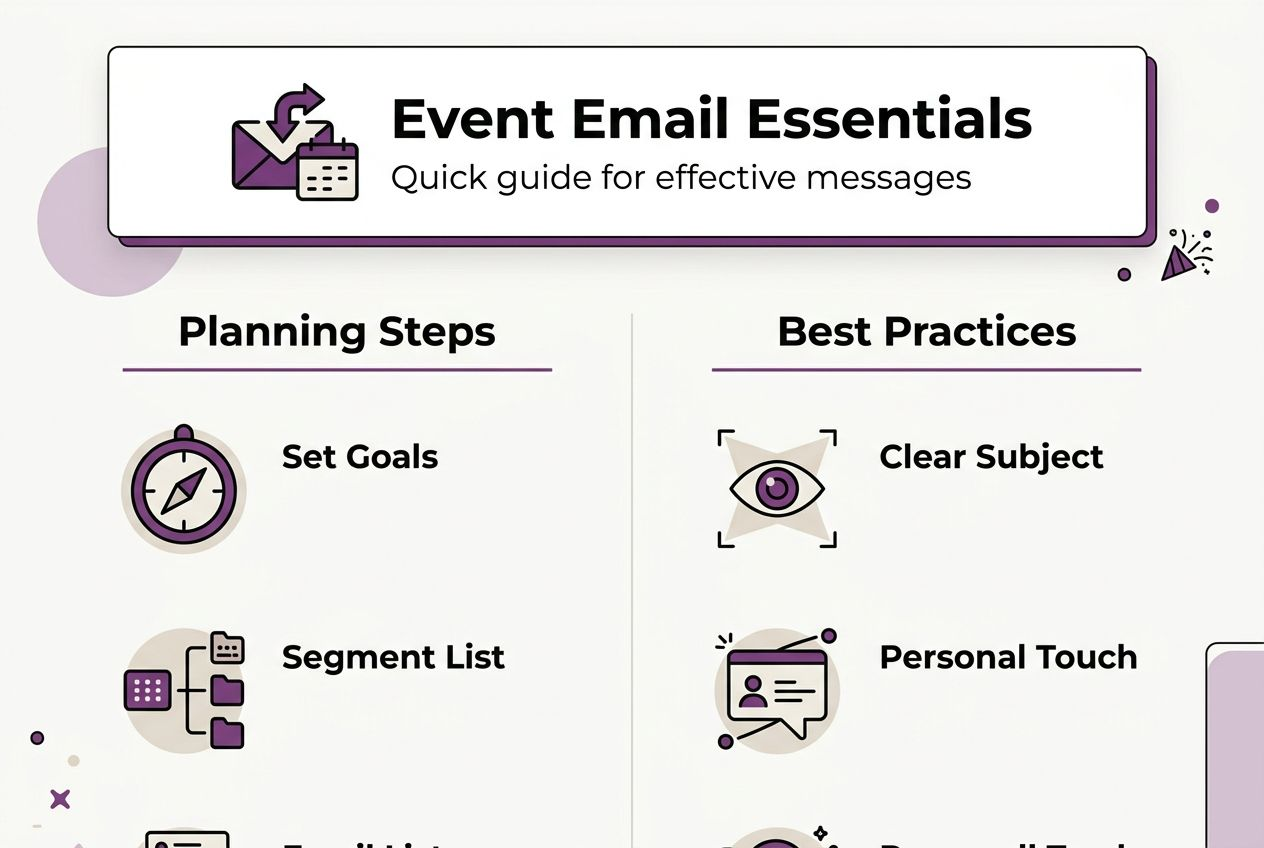
Use multi-message sequences to reduce no-shows effectively. A major conference saw a 30% drop in no-shows with this approach compared to sending a single reminder email. Each message in the sequence serves a distinct purpose: building excitement, providing practical information, creating urgency, and confirming attendance.
| Approach | Messages Sent | Average No-Show Rate | Engagement Level |
|---|---|---|---|
| Single reminder | 1 (day before) | 35-40% | Low |
| Basic sequence | 2-3 (week before, day before) | 25-30% | Moderate |
| Optimised sequence | 4-6 (strategic intervals) | 15-20% | High |
Optimise send times based on audience behaviour and time zones. For professional events, Tuesday through Thursday between 10am and 2pm typically performs best. Consumer events may see better engagement during evening hours or weekends. Test different send times with small segments before committing to your full list.
Email is the preferred communication channel for 77% of B2B buyers for professional communication, making it essential for corporate event managers. Track open rates, click-throughs, and conversions to refine your approach. Most email platforms provide detailed analytics showing who opened, who clicked, and who took action.
Avoid these common campaign pitfalls:
- Sending too many emails in a short period creates fatigue and unsubscribes.
- Failing to segment your list results in irrelevant messages and poor engagement.
- Neglecting mobile optimisation when most recipients read emails on phones.
- Using no-reply email addresses that prevent recipient responses and questions.
- Forgetting to test emails across different email clients and devices.
- Ignoring unsubscribe requests or making them difficult to process.
Understanding measuring event ROI helps you connect email performance to actual business outcomes. Track not just opens and clicks, but registrations, attendance, and post-event actions.
Pro Tip: Create a campaign calendar template for your standard event types (conferences, workshops, networking events) so you can replicate successful sequences and timing patterns for future events.
Implementing success tips for event managers includes mastering email communication as a core competency that differentiates exceptional event professionals from average ones.
Common mistakes and verifying email success
Identify frequent errors in professional email writing to avoid undermining your campaigns. Lack of personalisation makes recipients feel like just another number on a mailing list. Poor timing sends messages when people are too busy to engage or have already made other plans. Unclear calls to action leave recipients unsure what you want them to do next, resulting in inaction despite interest.
Common email mistakes to watch for:
- Writing subject lines that trigger spam filters or sound like marketing junk.
- Burying important information in long paragraphs instead of highlighting it.
- Forgetting to include essential details like venue address or start time.
- Using attachments instead of embedded information that displays immediately.
- Sending from personal email accounts instead of professional organisation addresses.
- Neglecting to proofread for typos and grammatical errors that damage credibility.
Use this checklist for final email review before sending:
- Verify all names, dates, times, and locations are accurate.
- Confirm links work and direct to the correct pages.
- Test email display on mobile devices and major email clients.
- Check that personalisation tokens populate correctly for all recipients.
- Review subject line for clarity, relevance, and appropriate length.
- Ensure unsubscribe link is visible and functional.
- Send a test to yourself and colleagues for final review.
Use metrics like open rates, click-through rates, and no-show rates to evaluate success. Open rates indicate subject line effectiveness and sender reputation. Click-through rates reveal content relevance and call to action strength. Conversion rates (registrations, confirmations, purchases) measure actual business impact. No-show rates tell you whether your reminder sequence effectively motivated attendance.
Email marketing delivers high ROI for events, making it a crucial channel to measure and optimise carefully.
Encourage continuous learning and iteration based on results. Every campaign teaches you something about your audience. Document what works and what doesn’t. Experiment with new approaches whilst maintaining proven elements. Share insights with your team to elevate everyone’s email skills.
Staying current with the future of event marketing ensures your email strategies evolve alongside industry trends and attendee expectations.
Advance your event management career with expert training
Mastering professional email communication is just one component of becoming an exceptional event manager. Comprehensive training programmes provide the skills, knowledge, and practical experience you need to excel in this dynamic industry. Whether you’re starting your career or advancing to senior roles, structured education accelerates your professional growth.
Explore detailed event management course options that cover email marketing alongside venue selection, budget management, vendor negotiation, and attendee experience design. Online event management courses offer flexibility for working professionals to build skills without interrupting their careers. The Instaform platform streamlines event registration and attendee management, integrating seamlessly with your email campaigns to create cohesive communication experiences.
Frequently asked questions
How do I personalise professional emails for different event audiences?
Use behavioural data and past attendance to tailor message tone and content for each segment. Address recipients by name and reference relevant event details specific to their interests or previous participation. VIP sponsors receive formal updates highlighting their visibility opportunities, whilst casual attendees get friendly invitations emphasising networking and learning benefits.
Leveraging content generation in event management techniques helps you create varied messaging that resonates with diverse audience segments without starting from scratch each time.
What are the best times to send professional event emails?
Schedule emails outside busy work hours, with mid-week typically offering higher engagement than Mondays or Fridays. Tuesday through Thursday between 10am and 2pm works well for professional audiences, whilst consumer events may perform better during evening hours when people have leisure time. Consider specific time zones and audience habits for sending times, especially for international or geographically dispersed attendees.
How can I measure the success of my professional email campaigns?
Track open rates, click-through rates, and event attendance conversion to evaluate campaign effectiveness. Use analytics tools integrated with email platforms for detailed insights into recipient behaviour, including which links they clicked and how long they engaged with your content. Compare these metrics against industry benchmarks and your own historical performance to identify improvement opportunities.
Applying principles from measuring event ROI helps you connect email performance to broader business objectives and demonstrate the value of your communication efforts.
Recommended
- instaform – team I
- What Does It Take To Become An Event Manager? – team I
- Tips for Success as a New Event Management Professional – team I
- How to Write Event Proposal for Success: Step-by-Step Guide – team I
- Why use radio communications for events in 2026
Thinking about a career in event management?
team I is Bangalore’s only EEMA-certified event management institute, running for 24 years, where students work on real live events with real budgets and real deadlines rather than classroom simulations. See the full range of event management courses in Bangalore, or go straight to the flagship Certificate Program in Event Management (CPEM).