

Almost every aspiring event manager faces a moment when a proposal needs to impress not only clients but also stand up to international standards like those valued by British firms. In India, learning how to research client needs and structure persuasive recommendations sets you apart in a field where over 60 percent of proposals get rejected for lack of clarity or detail. This guide reveals practical techniques and actionable steps that transform basic event ideas into winning proposals for both corporate and social occasions, supporting your journey toward recognized certification.
Table of Contents
- Step 1: Research Client Needs And Event Goals
- Step 2: Gather Essential Event Details And Supporting Data
- Step 3: Structure Your Event Proposal For Clarity
- Step 4: Develop Compelling Content And Recommendations
- Step 5: Review, Refine, And Check For Completeness
Quick Summary
| Key Point | Explanation |
|---|---|
| 1. Understand Client Goals | Conduct in-depth consultations to identify clients’ specific objectives and motivations for the event. |
| 2. Gather Comprehensive Data | Use structured questionnaires and diverse sources to collect event details, ensuring the proposal is well-informed. |
| 3. Organise Proposal Clearly | Present a logically structured proposal that clearly communicates objectives and methodologies. |
| 4. Create Compelling Recommendations | Tailor actionable and evidence-based recommendations that directly address the client’s needs and expectations. |
| 5. Conduct Rigorous Quality Review | Implement a thorough review process to ensure the proposal is precise, coherent, and aligns with the client’s brief. |
Step 1: Research Client Needs and Event Goals
Successful event proposals begin with understanding the client’s precise objectives and underlying expectations. This initial research phase sets the foundation for a compelling and targeted event strategy.
To conduct comprehensive needs research, start by scheduling an in-depth client consultation that goes beyond surface-level discussions. Your goal is to uncover not just what the client wants, but why they want it. During this conversation, ask probing questions about their organisational goals, target audience, previous event experiences, and specific outcomes they hope to achieve. The systematic process of identifying gaps between current conditions and desired goals will help you craft a precise and responsive event proposal.
Begin by creating a structured interview framework that covers key areas. Ask about budget constraints, thematic preferences, logistical requirements, and any specific challenges the client wants the event to address. Document their responses meticulously, paying attention to both explicit statements and underlying motivations. Cross reference these insights with stakeholder perspectives to develop a holistic understanding of the event’s strategic purpose.
Insider Guidance: Always record key discussion points and validate your understanding by sending a summary document to the client for confirmation, ensuring alignment from the very beginning of your proposal development process.
Step 2: Gather Essential Event Details and Supporting Data
Gathering comprehensive event details is a critical phase that transforms initial client conversations into actionable planning strategies. Your objective is to collect precise information that will form the backbone of your event proposal.
Begin by developing a systematic approach to data collection that encompasses diverse methods for gathering comprehensive event information. Create a structured questionnaire that covers key dimensions such as event purpose, target audience demographics, expected attendee numbers, preferred venue characteristics, budget constraints, and specific programme requirements. This methodical approach ensures you capture nuanced details that might otherwise be overlooked.
Utilise multiple data sources to validate and enrich your understanding. Conduct stakeholder interviews, review past event documentation, analyse organisational strategic goals, and gather quantitative metrics that support your event design. Pay particular attention to qualitative insights that reveal underlying motivations and expectations. Cross reference information from different sources to build a robust and comprehensive event profile that demonstrates your thorough understanding of the client’s needs.
Here’s a summary of the core data sources to strengthen your event proposal:
| Data Source | Type of Information | Value for Proposal |
|---|---|---|
| Stakeholder Interviews | Qualitative insights | Reveal hidden expectations |
| Past Event Documentation | Quantitative metrics | Identify successes and gaps |
| Organisational Strategy | Strategic goals | Align proposal with mission |
| Survey Responses | Audience demographics | Target content effectively |
Insider Guidance: Create a comprehensive digital documentation system where all gathered event details are organised systematically, allowing easy reference and ensuring no critical information falls through the cracks during proposal development.
Step 3: Structure Your Event Proposal for Clarity
Crafting a well-organised event proposal is your opportunity to demonstrate professionalism and strategic thinking. Your goal is to create a document that communicates your event vision with precision and persuasiveness.

Begin by implementing a clear proposal structure that highlights objectives, methodology, and anticipated impact through logical and consistent sections. Your proposal should typically include key components such as executive summary, event overview, objectives, target audience analysis, detailed programme outline, logistical planning, budget breakdown, and anticipated outcomes. Each section must flow seamlessly, allowing readers to understand the comprehensive strategy behind your proposed event.
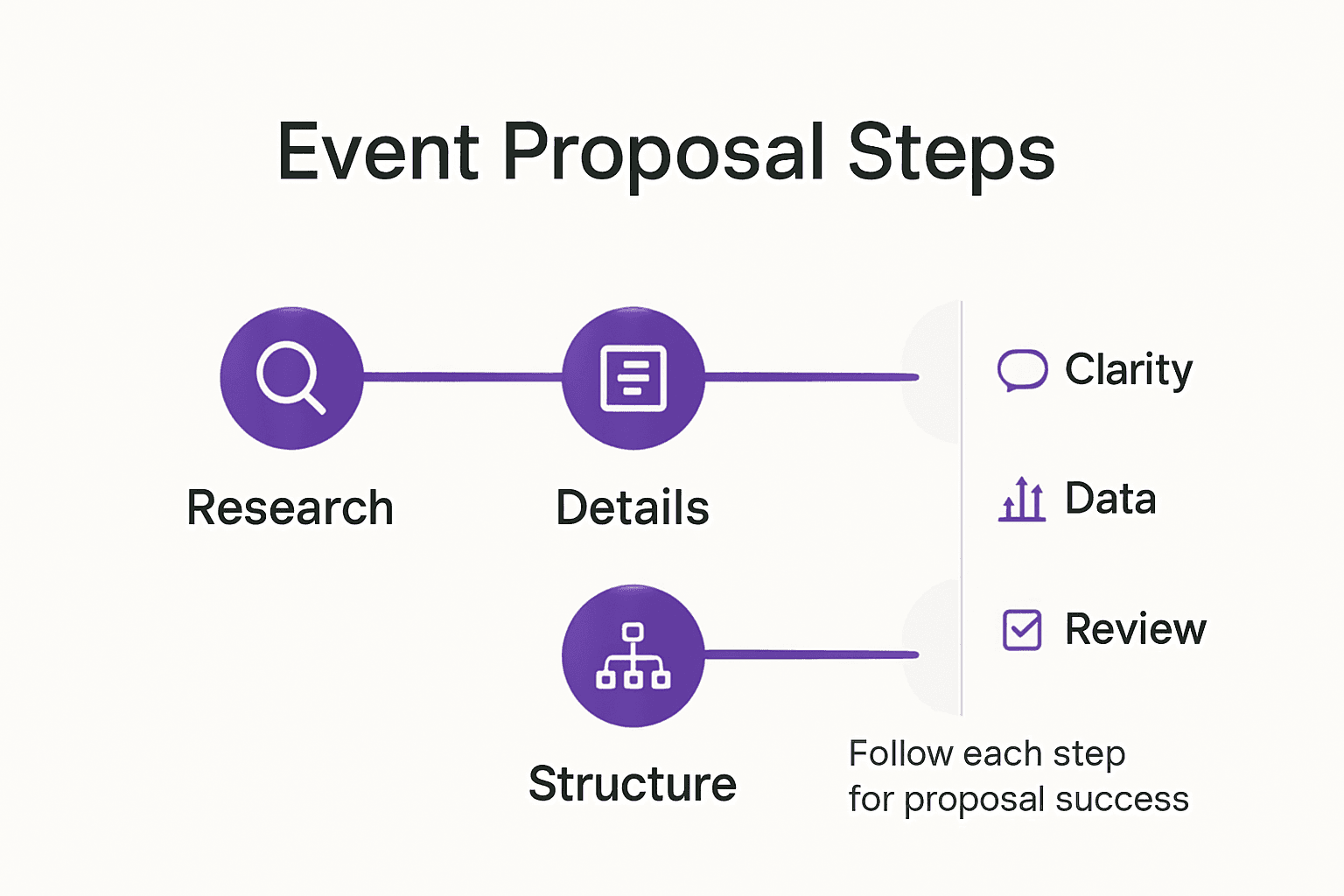
Ensure your proposal maintains a balance between technical detail and engaging narrative. Use clear headings, concise language, and visual elements like charts or infographics to break up text and illustrate complex information. Demonstrate how each section of your proposal connects to the client’s original objectives, showing a thorough understanding of their needs and your strategic approach to meeting them.
Consider these proposal sections and their strategic impact:
| Proposal Section | Purpose | Strategic Value |
|---|---|---|
| Executive Summary | Set objectives | Immediate clarity for reviewer |
| Programme Outline | Detail event flow | Demonstrates planning expertise |
| Budget Breakdown | Clarify costs | Transparent resource allocation |
| Anticipated Outcomes | Outline expected results | Shows measurable impact |
Insider Guidance: Create a proposal template with pre-defined sections that you can quickly customise, ensuring consistent professional formatting while saving time during the proposal development process.
Step 4: Develop Compelling Content and Recommendations
Transforming your gathered research and client insights into a persuasive event proposal requires strategic storytelling and precise recommendations. Your content must not only inform but inspire confidence in your event management capabilities.
Focus on developing recommendations that are evidence-based, actionable, and precisely aligned with the client’s original objectives. Each recommendation should tell a clear story connecting your proposed strategies to tangible outcomes. Integrate specific examples that demonstrate how your approach will address the client’s unique challenges. Use concrete data points, potential impact metrics, and concise language that transforms abstract concepts into practical solutions. Your content should anticipate potential questions or concerns, proactively addressing them through well researched and thoughtfully presented recommendations.
Craft your narrative with a balance of professional insight and creative vision. While maintaining technical accuracy, infuse your recommendations with a sense of excitement and possibility. Use compelling language that shows you understand not just the logistical requirements of the event, but the deeper strategic goals underlying the client’s request. Highlight your unique approach and the value you bring to the project, demonstrating why your proposed solutions stand out from potential alternatives.
Insider Guidance: Always include a brief section that outlines potential risks and your mitigation strategies to demonstrate comprehensive professional planning and build client trust.
Step 5: Review, Refine, and Check for Completeness
The final stage of your event proposal development requires meticulous attention to detail and a systematic approach to quality assurance. Your goal is to transform a good proposal into an exceptional, professional document that stands out to potential clients.
Apply a rigorous review process that ensures comprehensive content verification and adherence to professional standards. Create a comprehensive checklist that covers every aspect of your proposal including technical accuracy, logical flow, grammatical precision, and alignment with the client’s original brief. Carefully examine each section to confirm that your recommendations are clear, actionable, and directly responsive to the client’s specific needs. Pay special attention to consistency in formatting, terminology, and presentation style throughout the document.
Engage in a multi-stage review process that involves both self evaluation and external perspective. Consider having a colleague or mentor review the proposal to provide objective feedback. Look beyond surface level corrections and assess the overall narrative coherence, ensuring that your proposal tells a compelling story that demonstrates your understanding of the event objectives. Verify that all supporting data, case studies, and recommendations are current, relevant, and presented in a manner that builds confidence in your event management capabilities.
Insider Guidance: Create a final review checklist with specific criteria like grammatical accuracy, data verification, formatting consistency, and strategic alignment to streamline your quality assurance process.
Master the Art of Writing Winning Event Proposals with Expert Guidance
Crafting an event proposal that resonates with clients requires clear structure, strategic insight, and confidence in your recommendations. If you find yourself challenged by how to research client needs effectively or how to present actionable, evidence-based solutions, you are not alone. This step-by-step guide highlights crucial pain points such as gathering detailed event information, aligning your proposal to organisational goals, and refining content for professional impact. Understanding these concepts is the first step towards becoming a sought-after event manager.
Unlock your potential by turning these challenges into opportunities with dedicated training. At team.i.org, we offer comprehensive event management courses that equip you with practical skills, hands-on projects, and industry connections to master every stage of proposal development. Ready to transform your career and submit proposals that guarantee success? Explore our specialised programmes and start your journey today by visiting our platform. Take action now to gain the edge employers seek and ensure your event plans stand out from the competition!
Frequently Asked Questions
How can I identify my client’s needs when writing an event proposal?
To identify your client’s needs, conduct an in-depth consultation to uncover their objectives and expectations. Ask specific questions about their organisational goals, target audience, and previous event experiences, aiming to understand the reasons behind their requests.
What essential details should be included in an event proposal?
An event proposal should include key details such as an executive summary, event overview, objectives, target audience analysis, programme outline, logistical planning, and budget breakdown. Structure your proposal to ensure clarity and coherence, making it easy for the reader to follow your strategy.
How do I create compelling content and recommendations in an event proposal?
Develop compelling content by crafting evidence-based recommendations that align with your client’s objectives. Use clear, concise language and integrate specific examples that address their challenges, ensuring your proposals resonate with their strategic goals.
What steps should I take to review and refine my event proposal?
Use a meticulous review process by creating a checklist to verify content accuracy, logical flow, and grammatical precision. Consider peer feedback to assess narrative coherence and ensure the proposal effectively communicates its purpose and strategy.
Why is it important to gather supporting data for my proposal?
Gathering supporting data strengthens your proposal by providing evidence of your understanding of the client’s needs and enhancing the credibility of your recommendations. Utilise various data sources to create a robust event profile that aligns with the client’s objectives.
How can I ensure my proposal is clear and professional?
To ensure clarity and professionalism in your proposal, implement a well-organised structure with concise language and clear headings. Use visual elements such as charts to illustrate important information and ensure that each section flows logically from one to the next.