

Securing a celebrated event in Bangalore feels rewarding, but knowing if your event truly delivered value is a tougher challenge. For aspiring event managers, understanding how to measure event ROI opens doors to career growth, proves your skills to stakeholders, and helps you refine future events. This guide shines a light on the financial and strategic impact behind every successful occasion, giving you practical insights for tracking, analysing, and demonstrating your achievements in a competitive industry.
Table of Contents
- Defining Event ROI and Its Importance
- Types of ROI in Event Management
- Key Metrics and Data Collection Methods
- Linking ROI to Event Objectives and Stakeholders
- Common Pitfalls and How to Avoid Them
Key Takeaways
| Point | Details |
|---|---|
| Understanding Event ROI | Event ROI is essential for evaluating the financial and strategic value of an event, encompassing both tangible returns and intangible benefits. |
| Types of ROI | Financial ROI focuses on immediate monetary returns, while Strategic ROI highlights broader organisational benefits, including brand recognition and audience engagement. |
| Data Collection Strategies | Robust data collection methods are vital for gathering both quantitative and qualitative metrics to provide a comprehensive assessment of event success. |
| Avoiding Common Pitfalls | Establish clear, measurable objectives during planning and utilise standardised data collection methods to ensure a holistic understanding of event impact. |
Defining Event ROI and Its Importance
Event Return on Investment (ROI) represents a critical metric that quantifies the financial and strategic value generated by an event relative to its total expenses. Measuring event impact goes beyond simple monetary calculations, encompassing broader organisational objectives such as brand awareness, relationship development, and long-term business growth.
At its core, event ROI provides event managers and stakeholders with a comprehensive framework for evaluating event performance. This involves systematically tracking both tangible financial returns like ticket sales and sponsorship revenue, as well as intangible benefits such as networking opportunities, knowledge sharing, and potential future business connections. Successful ROI measurement requires establishing clear, measurable objectives before the event and collecting robust data throughout the event lifecycle.
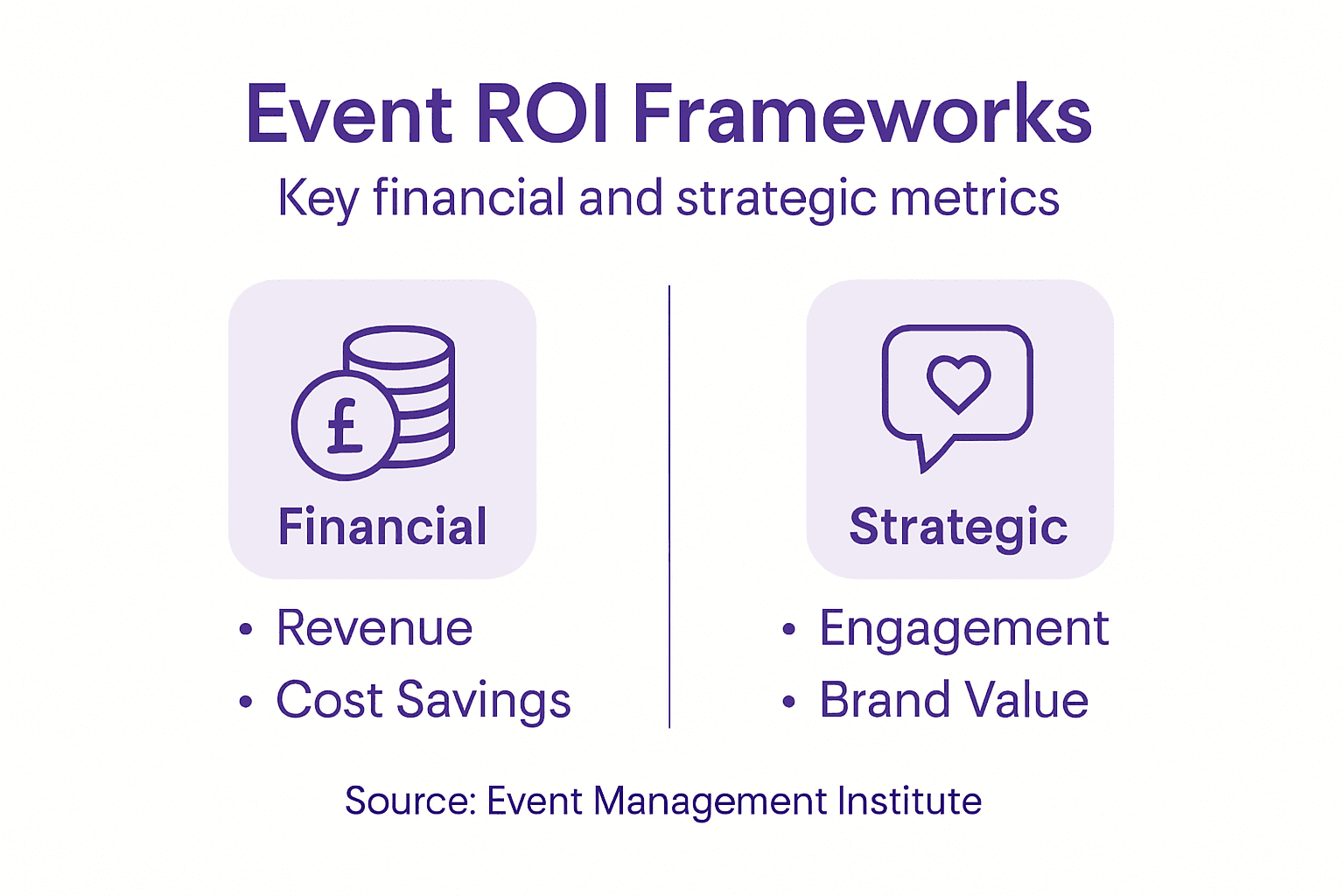
Comprehensive event ROI analysis typically incorporates several key dimensions. Financial metrics include direct revenue streams, cost savings, and potential lead generation value. Strategic metrics encompass brand exposure, audience engagement levels, media coverage, and alignment with broader organisational marketing and communication goals. By integrating quantitative and qualitative assessment methods, event professionals can develop a nuanced understanding of an event’s true impact.
Pro tip: Create a standardised ROI tracking template before your event to ensure consistent and comprehensive data collection across multiple performance indicators.
Types of ROI in Event Management
Event management professionals recognise that Return on Investment (ROI) is not a monolithic concept, but rather a multifaceted framework with diverse measurement approaches. Event ROI dimensions can be categorised into distinct types that provide comprehensive insights into an event’s performance and strategic value.
Financial ROI represents the most straightforward measurement, focusing directly on monetary returns such as ticket sales, sponsorship revenues, and direct cost reductions. These quantifiable metrics offer immediate visibility into an event’s economic impact. Complementing financial ROI, strategic ROI explores less tangible but equally critical outcomes like brand recognition, audience engagement, and potential future business opportunities. Strategic ROI helps organisations understand the broader organisational benefits beyond immediate financial gains.

The following table compares financial and strategic ROI approaches in event management:
| Aspect | Financial ROI Focus | Strategic ROI Focus |
|---|---|---|
| Measurement Basis | Monetary returns | Organisational objectives |
| Typical Indicators | Ticket sales, sponsorship | Brand exposure, engagement |
| Timeframe of Impact | Short-term | Medium to long-term |
| Business Value | Immediate revenue gains | Future growth and reputation |
Different event formats demand nuanced ROI measurement strategies. Corporate conferences might prioritise lead generation and networking potential, while academic symposiums could emphasise knowledge dissemination and research collaboration. Virtual and hybrid events introduce additional complexity, requiring event managers to track digital engagement metrics, online interaction rates, and post-event conversion outcomes. Event ROI measurement must therefore be flexible and tailored to specific event objectives and audience characteristics.
Pro tip: Develop a customised ROI scorecard that balances financial and strategic metrics specific to your event’s unique goals and stakeholder expectations.
Key Metrics and Data Collection Methods
Event performance metrics represent a sophisticated ecosystem of quantitative and qualitative indicators that provide comprehensive insights into an event’s overall success. These metrics span multiple dimensions, ranging from straightforward numerical data to complex engagement measurements that capture the nuanced impact of an event.
The primary metrics can be categorised into several key areas. Attendance metrics include total participant numbers, registration rates, and demographic breakdowns. Engagement metrics delve deeper, measuring session participation, interactive poll responses, networking interactions, and digital platform activity. Financial metrics track revenue generation, sponsorship values, and cost-efficiency ratios. Importantly, qualitative metrics such as Net Promoter Score (NPS) and participant satisfaction surveys provide critical insights into the event’s perceived value and potential long-term impact.
Data collection methods have evolved significantly with technological advancements. Digital platforms now enable real-time data tracking through registration systems, mobile event applications, and integrated analytics tools. Post-event data analysis requires a multi-channel approach, combining digital analytics, survey responses, social media interactions, and direct participant feedback. Event managers must design comprehensive data collection strategies that capture both quantitative performance indicators and nuanced qualitative insights.
Pro tip: Create a standardised data collection template before your event that includes both quantitative and qualitative measurement points to ensure comprehensive and consistent performance tracking.
Linking ROI to Event Objectives and Stakeholders
Event ROI measurement represents a strategic alignment between organisational goals and stakeholder expectations. Successful event management requires a nuanced approach that transforms raw performance data into meaningful insights that resonate with diverse stakeholder groups, including participants, sponsors, internal teams, and senior leadership.
Different stakeholders prioritise distinct metrics and outcomes. Corporate sponsors typically focus on lead generation, brand exposure, and potential business opportunities. Participants evaluate events through experiential lenses, considering factors like networking quality, learning opportunities, and overall satisfaction. Internal organisational stakeholders examine broader strategic alignment, assessing how events contribute to marketing objectives, talent development, and long-term business growth strategies.
The complexity of stakeholder expectations demands a multifaceted ROI framework. Maximising event value requires developing customised performance indicators that translate event outcomes into meaningful language for each stakeholder group. This approach involves creating targeted reporting mechanisms that highlight specific value propositions, using both quantitative financial metrics and qualitative engagement measurements to provide a comprehensive understanding of event impact.
Pro tip: Develop a stakeholder-specific ROI dashboard that presents tailored metrics and visualisations, ensuring each group receives insights most relevant to their strategic interests.
Common Pitfalls and How to Avoid Them
Event ROI measurement challenges frequently emerge from systemic gaps in planning, communication, and strategic alignment. Event managers often fall into predictable traps that undermine their ability to accurately assess and demonstrate event value, leading to incomplete or misleading performance evaluations.
One significant pitfall is initiating measurement discussions retrospectively, rather than establishing clear objectives during event planning stages. Many organisations struggle with defining precise, measurable outcomes that connect directly to broader business goals. This challenge is compounded by inconsistent data collection methods, which prevent meaningful comparative analysis. Stakeholders may receive fragmented insights that fail to communicate the event’s true strategic impact, resulting in diminished perceived value and reduced future investment potential.
Critical measurement errors typically stem from three primary sources: insufficient goal definition, inadequate data infrastructure, and narrow performance perspectives. Comprehensive ROI analysis requires a holistic approach that integrates both quantitative financial metrics and qualitative engagement indicators. Event professionals must develop robust frameworks that capture nuanced performance dimensions, ensuring stakeholders receive a comprehensive understanding of event contributions beyond simplistic revenue calculations.
Here is a summary of common event ROI measurement pitfalls and proactive solutions:
| Pitfall | Consequence | Solution |
|---|---|---|
| Vague objectives | Unclear success criteria | Set specific, measurable goals |
| Inconsistent data collection | Gaps in performance analysis | Use standardised tracking protocols |
| Narrow metrics focus | Overlooked strategic value | Combine financial and engagement metrics |
Pro tip: Create a standardised pre-event measurement blueprint that defines specific, measurable objectives and establishes data collection protocols before event implementation.
Elevate Your Event Management Skills to Master ROI Measurement
Measuring Event ROI requires a clear understanding of objectives, consistent data collection, and strategic alignment with stakeholder expectations. Many event professionals struggle with vague goals and fragmented performance insights that diminish the true value of their events. If you want to overcome these challenges and transform event data into meaningful, actionable insights you need expert guidance and practical training.
At team.i.org we offer specialised certification programmes designed to equip you with the latest skills in event strategy, ROI analysis, and stakeholder management. With over 23 years of industry experience and collaborations with top organisations like DNA Entertainment Networks, our courses blend theory with real-world projects and internships for hands-on exposure. Whether you aim to excel in corporate, social, sports, or wedding event management, our courses help you build a robust ROI measurement framework tailored to your unique goals.
Ready to turn your passion for events into measurable success? Take the first step toward mastering event ROI today. Connect with our expert team at team.i.org and explore our certification programmes that will empower you to deliver impactful, data-driven event results. Your journey to becoming a confident, proficient event manager begins now.
Frequently Asked Questions
What is Event ROI and why is it important?
Event ROI, or Return on Investment, quantifies the financial and strategic value generated by an event relative to its total expenses. It is important because it helps evaluate event performance and supports informed decision-making for future events.
How can I measure both financial and strategic ROI for my event?
To measure financial ROI, track direct revenue streams like ticket sales and sponsorship. For strategic ROI, assess factors such as brand exposure, audience engagement, and networking opportunities, ensuring to set clear objectives at the outset.
What are the key metrics to consider when assessing event success?
Key metrics include attendance rates, engagement levels (like session participation and networking interactions), financial performance (revenue generation and cost efficiency), and qualitative feedback from participants, such as satisfaction surveys and Net Promoter Scores (NPS).
What common pitfalls should I avoid when calculating Event ROI?
Common pitfalls include vague objective setting, inconsistent data collection methods, and focusing solely on financial metrics. To avoid these, establish specific, measurable goals, use standardised data tracking protocols, and incorporate both quantitative and qualitative performance indicators.