

Most promotional campaigns fall flat because they rely on outdated messaging instead of dynamic storytelling. For aspiring event managers and marketing professionals in India, mastering creative writing means transforming event content into immersive narratives that capture attention like a british festival captivates crowds. With over 60 percent of attendees deciding to register based on emotional engagement, innovative writing techniques are the secret to making your events truly memorable and irresistible.
Table of Contents
- Core Concepts Of Creative Writing For Marketing
- Key Formats And Styles For Events Promotion
- How Storytelling Drives Audience Engagement
- Practical Techniques For Compelling Event Content
- Common Pitfalls In Creative Event Marketing
Key Takeaways
| Point | Details |
|---|---|
| Emotional Engagement is Key | Creative writing for marketing should focus on developing emotional connections with the audience, turning traditional messages into compelling narratives. |
| Utilise Storytelling Frameworks | Implement storytelling techniques to present events as transformative experiences, enhancing engagement and participation. |
| Tailor Communication Strategies | Personalise content across various channels to resonate with specific audience segments, emphasising authenticity in messaging. |
| Avoid Common Pitfalls | Recognise and mitigate strategic missteps such as generic messaging and inadequate audience understanding to enhance marketing effectiveness. |
Core concepts of creative writing for marketing
Creative writing for marketing transcends traditional communication strategies, transforming mundane messaging into compelling narratives that engage audiences emotionally. At its core, this approach leverages imaginative writing techniques to craft stories that resonate deeply with potential customers.
The fundamental elements of creative writing in marketing include understanding narrative structure, developing authentic voice, and creating emotional connection. Successful practitioners recognise that marketing is not about selling a product, but about telling a story that transforms features into meaningful experiences. This requires writers to go beyond factual descriptions and tap into human psychology, weaving narratives that speak directly to audience aspirations and challenges.
Key strategies for implementing creative writing in marketing involve several critical techniques:
- Developing character-driven narratives
- Using sensory language that creates vivid mental imagery
- Crafting emotional hooks that trigger audience engagement
- Personalising messaging to specific audience segments
- Maintaining authenticity while delivering strategic communication objectives
Storytelling Frameworks are particularly powerful in this context. By applying narrative arcs typically used in fiction writing marketing professionals can create content that feels less like promotion and more like genuine human communication. This might involve presenting a protagonist (the customer) facing a challenge, discovering a solution, and experiencing transformation.
Pro tip: Practice writing marketing content by first imagining the emotional journey you want your audience to experience, then construct your narrative around that core emotional trajectory.
Key formats and styles for events promotion
Event promotion demands a strategic approach that combines multiple communication channels and creative storytelling techniques. Effective conference marketing begins with understanding how different promotional formats can engage specific audience segments and drive meaningful participation.
The landscape of event promotion encompasses diverse digital and traditional communication strategies. These include targeted email campaigns, social media outreach, personalised landing pages, and strategic influencer partnerships. Each format requires careful customisation to ensure the messaging resonates with the intended audience, highlighting the event’s unique value proposition and creating genuine excitement.
Here’s a concise comparison of digital versus traditional event promotion approaches:
| Approach Type | Key Strength | Typical Challenge |
|---|---|---|
| Digital Promotion | Wide audience reach | Risk of oversaturation |
| Traditional Outreach | Personal connection | Limited scalability |
| Hybrid Strategies | Greater engagement blend | Requires complex coordination |
Key promotional formats for event marketing include:
- Digital Marketing Channels
- Social media campaign strategies
- Email marketing with segmented messaging
- Targeted digital advertising
- Interactive event landing pages
- Traditional Outreach Methods
- Personal networking
- Print collateral and brochures
- Direct mail campaigns
- Professional association communications
Storytelling Techniques play a crucial role in transforming standard promotional content into compelling narratives. By crafting messages that speak directly to audience aspirations and challenges, event marketers can create emotional connections that drive engagement and registrations. Conference marketing strategies should focus on presenting the event as a transformative experience rather than merely a scheduled gathering.
Pro tip: Develop a consistent visual and messaging brand across all promotional channels to create a cohesive and memorable event identity that captures potential attendees’ attention.
How storytelling drives audience engagement
Storytelling is a powerful mechanism that transforms passive information consumption into an immersive, emotionally resonant experience. Narrative marketing strategies leverage human psychology by creating connections that transcend traditional promotional techniques, engaging audiences through compelling emotional journeys.

At its core, effective storytelling in event marketing works by constructing narratives that speak directly to audience aspirations, challenges, and fundamental human experiences. This approach moves beyond simple information delivery, creating a deeper cognitive and emotional connection that motivates participation and engagement. By presenting events not merely as scheduled occurrences but as transformative experiences, marketers can significantly enhance audience investment and excitement.
Key elements of impactful storytelling include:
- Narrative Structure
- Clear protagonist journey
- Recognisable emotional arc
- Relatable character development
- Meaningful resolution or transformation
- Emotional Engagement Techniques
- Creating personal connection
- Triggering empathy
- Highlighting audience potential
- Demonstrating real-world impact
Narrative transportation techniques reveal that when audiences become emotionally invested in a story, they are more likely to support the underlying cause or event. This psychological phenomenon transforms passive observers into active participants, creating a sense of shared experience and collective purpose that drives meaningful engagement.
Below is a summary of how storytelling enhances participant engagement in event marketing:
| Storytelling Aspect | Engagement Impact | Business Outcome |
|---|---|---|
| Emotional Narrative | Builds trust and empathy | Higher attendee commitment |
| Relatable Protagonist | Fosters identification | Increased registration rates |
| Clear Transformation | Inspires audience action | Greater long-term loyalty |
Pro tip: Develop story elements that highlight audience transformation, focusing on the personal growth and unique experiences participants will gain from attending your event.
Practical techniques for compelling event content
Content creation is the heartbeat of successful event marketing, transforming ordinary promotional materials into engaging narratives that captivate potential participants. Compelling event content strategies require a nuanced approach that goes beyond traditional information dissemination, focusing instead on creating immersive experiences that resonate emotionally with target audiences.
The art of crafting exceptional event content involves understanding audience psychology and developing multi-dimensional communication strategies. This means moving beyond generic descriptions to create narratives that speak directly to participants’ aspirations, challenges, and professional development needs. By integrating storytelling techniques, event marketers can develop content that not only informs but truly inspires and motivates potential attendees.
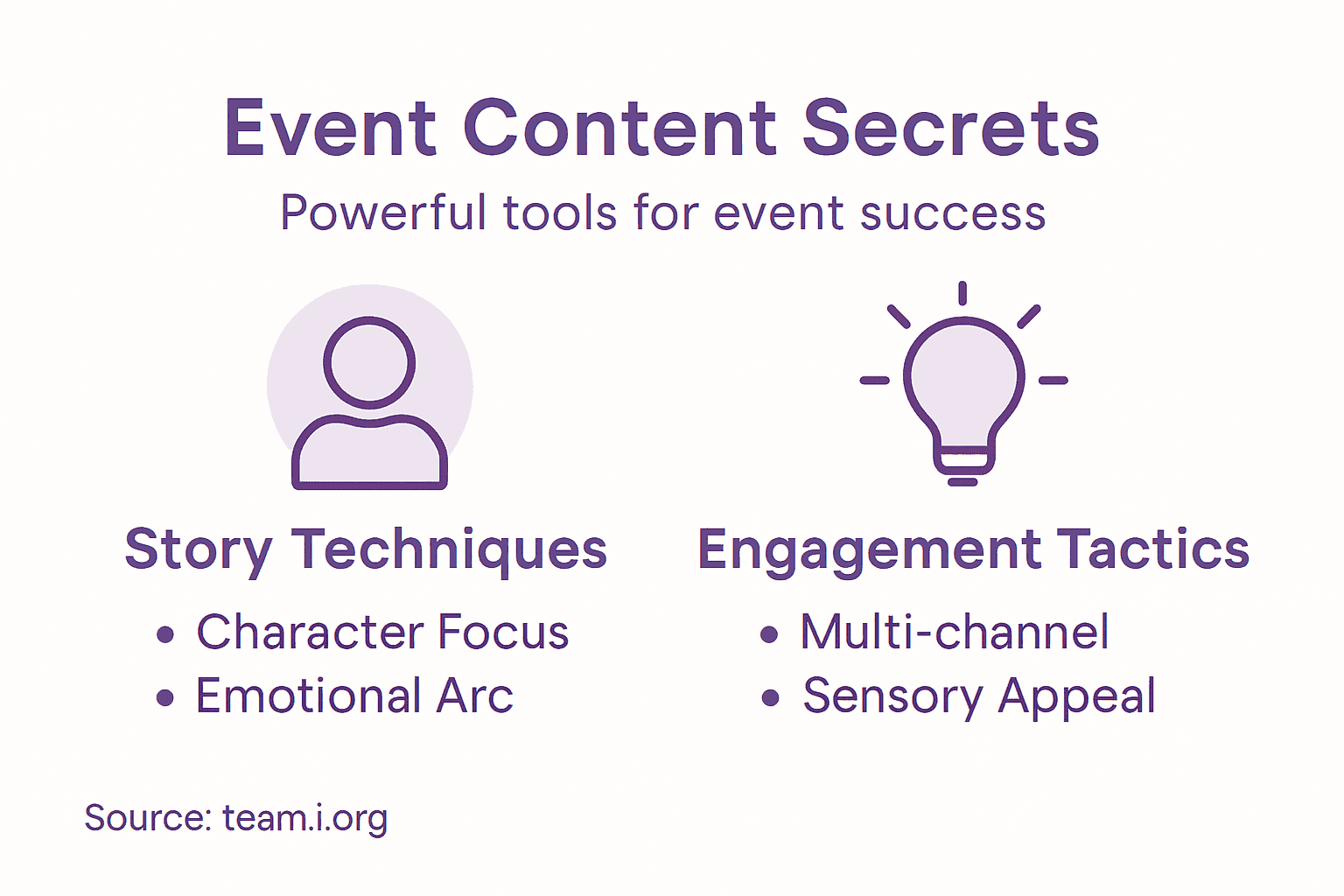
Key techniques for developing compelling event content include:
- Narrative Development
- Creating character-driven stories
- Highlighting real participant transformations
- Connecting event goals to personal growth
- Demonstrating tangible skill acquisition
- Engagement Strategies
- Utilising multi-sensory content approaches
- Developing interactive digital assets
- Personalising messaging for specific audience segments
- Creating anticipation through strategic content release
Event content creation techniques demonstrate that successful communication requires a holistic approach spanning pre-event, during-event, and post-event content strategies. This comprehensive methodology ensures continuous engagement and maintains audience interest throughout the entire event lifecycle, transforming passive observers into active participants.
Pro tip: Design your event content as a narrative journey, mapping each piece of communication to a specific emotional and informational objective that progressively builds excitement and anticipation.
Common pitfalls in creative event marketing
Creative event marketing requires strategic navigation through complex challenges that can derail even the most well-intentioned promotional efforts. Event marketing challenges emerge from multiple dimensions, including budgetary constraints, audience targeting complexities, and rapidly evolving technological landscapes that demand continuous adaptation.
Professional event marketers must remain vigilant about potential strategic missteps that can compromise event success. These pitfalls often stem from insufficient planning, inadequate audience understanding, and a lack of flexible communication strategies. The most critical errors include overlooking audience segmentation, failing to develop a cohesive narrative, and underestimating the importance of personalised engagement approaches.
Key pitfalls to avoid in creative event marketing include:
- Strategic Limitations
- Insufficient budget allocation
- Poorly defined target audience
- Lack of comprehensive marketing strategy
- Ineffective resource management
- Communication Challenges
- Generic, non-personalized messaging
- Inconsistent brand representation
- Neglecting multi-channel communication
- Overlooking audience emotional triggers
Event marketing adaptation strategies highlight the critical need for continuous learning and flexibility. Successful marketers recognise that overcoming these challenges requires a dynamic approach that combines technological understanding, emotional intelligence, and strategic communication skills.
Pro tip: Develop a comprehensive audience persona framework that goes beyond demographic data, incorporating psychological insights and behavioural patterns to create truly resonant marketing communications.
Elevate Your Event Marketing with Expert Creative Writing Skills
The article highlights the challenge of crafting authentic, emotionally engaging narratives that transform standard event promotions into memorable experiences. If you struggle to connect with your audience through storytelling techniques such as character-driven narratives and emotional hooks, you are not alone. Many aspiring event marketers face difficulties in developing compelling content that resonates deeply and drives real engagement.
At team.i.org, we understand these pain points and offer specialised education tailored to overcome them. With over 23 years of industry experience and collaborations with leaders like DNA Entertainment Networks, our certification programmes empower you to master creative marketing strategies, storytelling frameworks, and personalised audience engagement. Whether you seek to refine your narrative development or build practical skills through internships and real event participation, our online and hybrid courses provide a comprehensive platform to unlock your potential.
Ready to transform your event marketing approach by mastering creative writing? Discover how you can create authentic, emotionally charged campaigns that captivate and convert by connecting with us today at team.i.org. Take the first step towards becoming a standout event professional now.
Frequently Asked Questions
What is creative writing for marketing?
Creative writing for marketing involves using imaginative writing techniques to craft compelling narratives that engage audiences emotionally, transforming traditional promotional messages into meaningful stories.
How can storytelling enhance event marketing?
Storytelling enhances event marketing by creating emotional connections, presenting events as transformative experiences, and engaging audiences through relatable narratives, which ultimately drives participation and excitement.
What are key techniques for developing compelling event content?
Key techniques include narrative development with character-driven stories, utilising multi-sensory engagement strategies, and personalising messaging for specific audience segments to inspire and motivate potential attendees.
What common pitfalls should be avoided in creative event marketing?
Common pitfalls include insufficient audience understanding, generic messaging, lack of a cohesive narrative, and poor resource management, which can compromise overall event success.
Recommended
- What Makes a Successful Event: Real Impact Revealed – team I
- Brand Activation Events: Driving Engagement and Loyalty – team I
- How to Write Event Proposal for Success: Step-by-Step Guide – team I
- How to Get Clients for Events: Proven Steps for Success – team I
- 10 Winning CEU Course Topics for Hospitality Manufacturers – CEU Builder