

Aspiring event managers often face confusion about whether accreditation is essential or merely optional for career growth. Many believe certification is mandatory to enter the industry, whilst others dismiss it entirely as unnecessary. The reality is far more nuanced. Accreditation is not required to work in events, but it can significantly enhance your opportunities, particularly at mid-career stages. This guide demystifies event management accreditation, explaining the main certification options, their requirements, when they matter most, and how to prepare strategically for long-term career success.
Table of Contents
- Key takeaways
- Understanding event management accreditation options
- Navigating the nuances: when accreditation matters most
- How to prepare and maintain your event management accreditation
- Emerging trends shaping accreditation value in event management
- Advance your event management career with team I courses
- Frequently asked questions
Key Takeaways
| Point | Details |
|---|---|
| Certification options | The main certifications CMP, CSEP and CPCE serve different career niches and experience levels and should be chosen to match your goals. |
| Early career focus | Early in your career practical experience matters more than formal accreditation, with demonstrable skills weighing heavily with employers. |
| When accreditation matters | The value of accreditation increases mid career and when targeting specialist niches such as catering or creative events. |
| Choose by niche | Select the credential that aligns with your niche whether corporate events, creative experiences or food service to maximise relevance. |
Understanding event management accreditation options
The event management industry offers several recognised certifications, each targeting different career niches and experience levels. Understanding these options helps you align your professional development with your career goals.
The Certified Meeting Professional (CMP) stands as the most established credential for corporate and association event professionals. Candidates need 24 to 36 months of verified experience before sitting the examination. The CMP exam covers 12 comprehensive knowledge domains including strategic planning, risk management, stakeholder management, site management, and increasingly important areas like sustainability and technology integration. Each domain reflects real-world competencies you’ll apply throughout your career. The certification demonstrates mastery of both traditional event fundamentals and emerging industry practices.
The Certified Special Events Professional (CSEP) targets those working in experiential and creative event sectors. This credential requires three years of documented experience in special events alongside passing rigorous examinations. CSEP focuses on the unique challenges of designing memorable experiences, from weddings and galas to festivals and brand activations. The certification emphasises creativity, vendor management, and the ability to transform client visions into reality.
For professionals specialising in catering and food service events, the Certified Professional in Catering and Events (CPCE) provides targeted recognition. This credential acknowledges expertise in menu planning, service styles, dietary accommodations, and the operational complexities of food-centred gatherings.
Here’s a comparison of the three main certifications:
| Certification | Experience required | Exam format | Primary focus area |
|---|---|---|---|
| CMP | 24-36 months | Computer-based, 165 questions | Corporate meetings, conferences, strategic planning |
| CSEP | 3 years | Written and practical components | Special events, experiential design, creative execution |
| CPCE | Varies by pathway | Computer-based | Catering operations, food service events |
Each certification pathway serves distinct career trajectories. Corporate event managers benefit most from CMP’s strategic emphasis, whilst creative professionals find CSEP aligns with their experiential focus. Catering specialists gain recognition through CPCE’s food service expertise.
Pro Tip: Before committing to advanced certifications like CMP or CSEP, consider starting with entry-level online certifications to build foundational knowledge whilst gaining the required work experience. This approach reduces financial risk and helps you determine which specialisation truly matches your interests.
Understanding these certification options provides the foundation for your next critical decision: determining when accreditation will deliver the greatest career value.
Navigating the nuances: when accreditation matters most
Timing your pursuit of accreditation strategically can maximise its career impact. The value of certification varies significantly depending on your career stage and target niche.
Early in your career, practical experience outweighs certification for most employers. Entry-level positions prioritise demonstrable skills like vendor coordination, timeline management, and problem-solving under pressure. Hiring managers want to see you’ve successfully executed real events, managed budgets, and handled unexpected challenges. Spending thousands on certification before building this experiential foundation often provides limited return on investment. Your first two to three years should focus on gaining diverse hands-on experience across different event types and roles.
However, mid-career professionals discover that accreditation opens doors that experience alone cannot. Certifications provide several strategic advantages at this stage. They signal commitment to professional development and mastery of industry best practices. They facilitate networking through professional associations and alumni groups. They differentiate you in competitive job markets where multiple candidates possess similar experience levels. Many senior positions and corporate clients specifically prefer or require certified professionals, viewing credentials as quality assurance.
“Experience remains the most valuable asset early in an event management career, but accreditation significantly aids mid-career advancement by enhancing credibility, expanding professional networks, and opening doors to senior opportunities that prioritise certified professionals.”
Choosing the right certification requires understanding how different credentials align with career niches. The CMP focuses on corporate meetings and association conferences, making it ideal for professionals targeting convention centres, corporate event departments, or destination management companies. The CSEP suits creative professionals drawn to weddings, festivals, product launches, and experiential marketing. CPCE serves those passionate about culinary events, catering operations, and food service management. Pursuing credentials outside your target niche wastes resources and provides minimal career benefit.
Consider these factors when deciding whether to pursue accreditation now or later:
- Your current experience level and whether you meet minimum requirements
- The specific job opportunities you’re targeting and their credential preferences
- Your financial capacity to invest in examination fees, preparation materials, and ongoing renewal costs
- The availability of employer support or reimbursement for certification expenses
- Your career timeline and whether immediate credentialing provides strategic advantage
- The strength of your existing professional network and whether certification would expand it meaningfully
For those starting their event management career, prioritise gaining diverse experience first. Volunteer for different event types, seek internships with varied organisations, and build a portfolio showcasing your contributions. This foundation makes certification more valuable when you’re ready. For mid-career professionals seeking advancement, accreditation can provide the competitive edge needed to transition into senior roles or specialised niches.
Understanding when accreditation delivers maximum value helps you invest wisely in your professional development. Next, let’s explore the practical steps to prepare for and maintain your chosen certification.
How to prepare and maintain your event management accreditation
Successfully obtaining and maintaining event management accreditation requires strategic preparation, financial planning, and commitment to ongoing professional development.
The preparation journey follows a logical sequence. First, accumulate the required experience hours through documented event work. Keep detailed records of your responsibilities, event types, and outcomes. Many certification bodies require employer verification, so maintain positive relationships with supervisors who can validate your experience. Second, research your chosen certification thoroughly, understanding its specific domains, examination format, and pass rates. Third, invest in quality preparation resources. Official study guides, practice examinations, and review courses significantly improve success rates.

Financial planning is essential because certification costs extend beyond examination fees. Budget for application fees ranging from £300 to £500, examination fees between £400 and £800, and study materials costing £200 to £400. Factor in potential retake fees if needed. Additionally, recertification every 3 to 5 years requires continuing education units costing several hundred pounds annually. Total investment over a five-year cycle typically ranges from £1,500 to £2,000.
Follow these steps to navigate the certification process:
- Gain required experience through diverse event roles whilst documenting your contributions meticulously
- Choose the certification aligning with your career niche and verify you meet eligibility requirements
- Prepare systematically using official study materials, practice tests, and structured review schedules
- Apply through the certifying body’s official channels, submitting all required documentation and fees
- Maintain your credential through continuing education, professional development activities, and timely renewal
Continuing education requirements ensure certified professionals stay current with evolving industry practices. Most certifications require 20 to 40 continuing education units over each renewal cycle. You can earn these through conference attendance, webinars, workshops, online courses, and professional contributions like speaking or writing. Track your activities carefully and submit documentation before renewal deadlines to avoid credential lapses.
Pro Tip: Reduce initial certification costs by utilising free or low-cost online event management courses for foundational preparation. Many platforms offer trial certifications that build knowledge without significant financial commitment. Save premium study materials for final examination preparation when you’re closest to testing.
Successful certification maintenance requires viewing it as an ongoing professional development commitment rather than a one-time achievement. Build continuing education into your annual professional goals, seeking opportunities that genuinely enhance your skills rather than simply checking boxes. This approach ensures your credential remains valuable throughout your career.
With preparation strategies clear, let’s examine how emerging industry trends are reshaping accreditation content and career relevance.
Emerging trends shaping accreditation value in event management
The event management industry is evolving rapidly, and certification bodies are updating their content to reflect new competencies essential for career success.
Sustainability and technology now represent 5% each of the CMP examination content, reflecting their growing importance in professional practice. Event managers must now demonstrate knowledge of carbon footprint reduction, waste management strategies, sustainable sourcing, and environmental impact measurement. Technology competencies include virtual platform selection, hybrid event design, audience engagement tools, and data analytics. These additions recognise that modern event professionals cannot succeed without mastering both environmental responsibility and digital innovation.
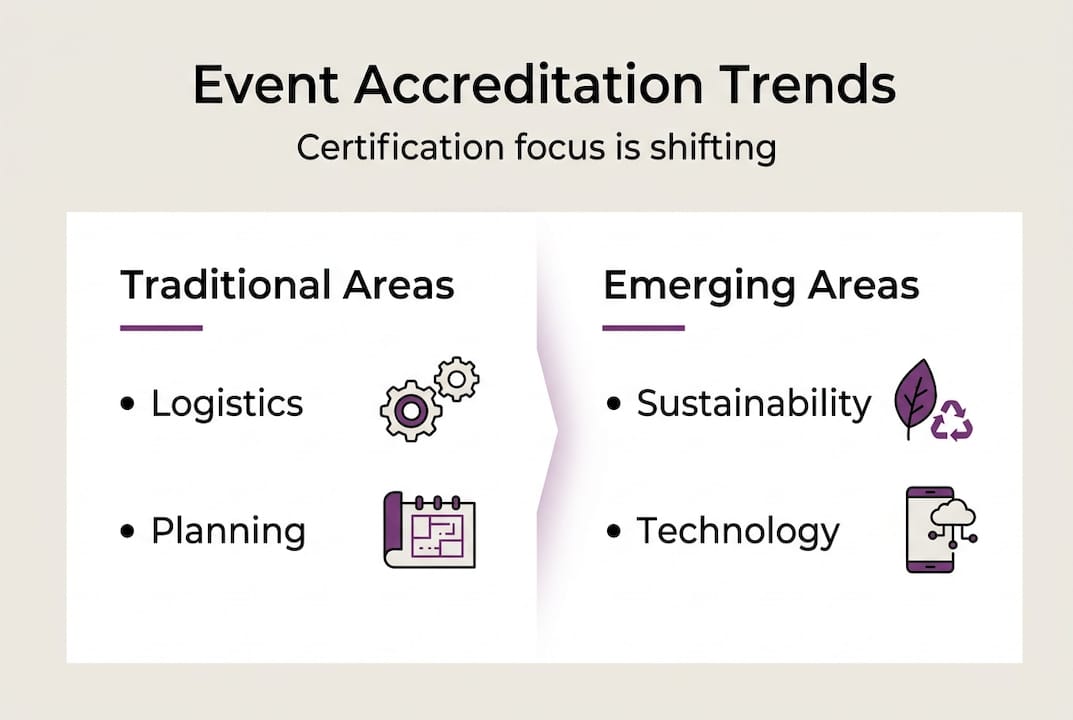
The rise of hybrid and virtual events has fundamentally changed the skills employers seek. Traditional certifications focused almost exclusively on physical event logistics. Today’s accredited professionals must understand streaming technology, virtual attendee engagement, digital sponsorship activation, and seamless integration between in-person and online experiences. This shift means recent certification content provides more relevant preparation for current job markets than older credentials.
Consider these trending accreditation topics when evaluating certification options:
- Virtual and hybrid event platform expertise including technical requirements and troubleshooting
- Sustainable event practices covering waste reduction, carbon offsetting, and eco-friendly vendor selection
- Data analytics and metrics for measuring event success beyond attendance numbers
- Accessibility and inclusion ensuring events accommodate diverse participant needs
- Crisis management and contingency planning for health emergencies, security threats, and logistical disruptions
- Digital marketing and social media strategies for event promotion and engagement
Here’s how traditional and emerging content areas compare in modern certifications:
| Content area | Traditional emphasis | Emerging emphasis | Approximate exam weighting |
|---|---|---|---|
| Logistics and operations | High | Medium | 25-30% |
| Budget and finance | High | Medium | 15-20% |
| Stakeholder management | Medium | High | 15-20% |
| Technology integration | Low | High | 10-15% |
| Sustainability practices | Minimal | Medium | 5-10% |
| Virtual/hybrid delivery | None | High | 10-15% |
| Risk and crisis management | Medium | High | 10-15% |
Aspiring managers should align certification choices with evolving industry needs by prioritising credentials that incorporate these emerging competencies. Review examination blueprints and content outlines carefully, looking for explicit coverage of technology, sustainability, and hybrid formats. Certifications last updated within the past three years typically reflect current industry demands more accurately than older programmes.
Additionally, consider how your chosen event management specialisation intersects with these trends. Corporate event professionals need strong virtual platform skills as hybrid meetings become standard. Wedding and social event planners must master sustainable practices as environmentally conscious clients demand eco-friendly celebrations. Festival and experiential event managers require advanced crowd management and safety protocols in post-pandemic environments.
The pace of industry change means your initial certification is just the beginning. Commit to ongoing learning through continuing education that emphasises emerging competencies. Attend conferences featuring technology and sustainability tracks. Pursue micro-credentials in specific areas like virtual event production or sustainable event management. This approach ensures your accreditation remains valuable as industry demands evolve.
Understanding these trends positions you to make certification choices that enhance your career relevance for years to come. Now let’s explore how comprehensive training programmes can support your accreditation journey.
Advance your event management career with team I courses
Navigating the accreditation landscape becomes significantly easier with structured educational support tailored to industry requirements and career goals.
team I offers comprehensive event management courses specifically designed to prepare aspiring professionals for certification success. With 24 years of industry experience, the institute understands exactly what knowledge and skills certification examinations assess. Course content aligns with CMP, CSEP, and other major credential requirements, covering strategic planning, risk management, technology integration, and emerging industry trends.
The flexibility of online and hybrid programmes makes professional development accessible for working professionals balancing career advancement with current job responsibilities. You can study at your own pace whilst gaining the theoretical knowledge certification examinations require. Interactive modules, case studies, and practical assignments reinforce learning and prepare you for examination formats.
Crucially, team I provides practical work experience opportunities through partnerships with DNA Entertainment Networks and other industry leaders. This hands-on exposure helps you accumulate the verified experience hours required for certification eligibility whilst building the real-world competencies that make credentials valuable. You’ll work on actual events, manage genuine challenges, and develop a professional portfolio that complements your accreditation.
Whether you’re just starting your event management journey or seeking mid-career advancement through certification, team I’s tailored programmes support your professional goals. Explore course options today to take the next strategic step towards accreditation and career success.
Frequently asked questions
What experience is needed for top certifications?
The CMP requires 24 to 36 months of verified experience in meeting or event management before you can sit the examination. The CSEP demands three years of documented special events experience plus passing written and practical examinations. Both certifications verify experience through employer documentation.
How often must I renew my accreditation?
Most event management certifications require recertification every 3 to 5 years depending on the specific credential. You’ll need to complete continuing education units, typically 20 to 40 hours of professional development activities, and pay renewal fees. Tracking your activities throughout the cycle ensures smooth renewal.
Is accreditation mandatory to work in events?
No, certification is not required to work in event management. However, credentials significantly enhance career opportunities, particularly for mid-career advancement and specialised roles. Many employers prefer certified professionals, and some corporate clients specifically request them for major projects.
What costs are involved in accreditation?
Expect total costs of £1,500 to £2,000 over a five-year cycle including application fees, examination fees, study materials, and recertification expenses. Initial certification typically costs £900 to £1,200, whilst maintaining credentials requires several hundred pounds in continuing education and renewal fees every few years. Check detailed cost breakdowns before committing.
Can I prepare for accreditation online?
Yes, numerous free and paid online resources support certification preparation. Official study guides, practice examinations, webinars, and structured courses help you master examination content. Many aspiring professionals successfully prepare for credentials through online learning whilst gaining required work experience simultaneously.