
Choosing an event management specialisation feels straightforward until you’re actually standing at the crossroads. Weddings or corporate conferences? Sports logistics or entertainment production? Social gatherings or brand activations? The options multiply fast, and the anxiety of making the wrong call can genuinely feel paralyzing. You don’t want to invest months of study and energy into a path that doesn’t suit your strengths or fire up your passion. This article walks you through what specialisations are, how India’s events industry shapes your options, and exactly how to make a decision you’ll feel confident about.
Table of Contents
- What is event management specialisation?
- Popular event management specialisations in India
- How to select your ideal event management specialisation
- Common mistakes when choosing a specialisation
- What to expect after specialising
- A fresh perspective on event specialisation in India
- Take your first step towards event management expertise
- Frequently asked questions
Key Takeaways
| Point | Details |
|---|---|
| Clarify your goals | Understand what each event specialisation offers and how it matches your ambitions. |
| Leverage formal education | Courses and training expose you to options, making your specialisation choice easier. |
| Research the industry | Align your selection with both your passion and market demand in India’s events sector. |
| Avoid common mistakes | Do not blindly follow trends or peers—make decisions based on careful self-reflection. |
| Stay adaptable | Be prepared to upskill and shift specialisations as opportunities in the event industry evolve. |
What is event management specialisation?
Let’s get something straight first. A specialisation is not just a label you pick from a dropdown menu. It is a focused direction, a deliberate choice to build deep expertise in one type of event rather than knowing a little about everything.
Think of it this way. A general practitioner knows medicine broadly. A cardiologist owns one domain completely. In India’s rapidly growing events industry, being a specialist signals something powerful to employers and clients. It says you understand the mechanics, the culture, and the chaos of that specific event world. Formal education enhances your ability to choose and excel in a specialisation, giving you structured exposure before you commit.
Common specialisations in event management include:
- Social events such as birthdays, anniversaries, and cultural celebrations
- Wedding events including large Indian destination weddings and multi-day ceremonies
- Sports events covering tournaments, marathons, fan experiences, and athlete management
- Corporate events such as product launches, conferences, team-building, and AGMs
- Entertainment events including concerts, award shows, and live productions
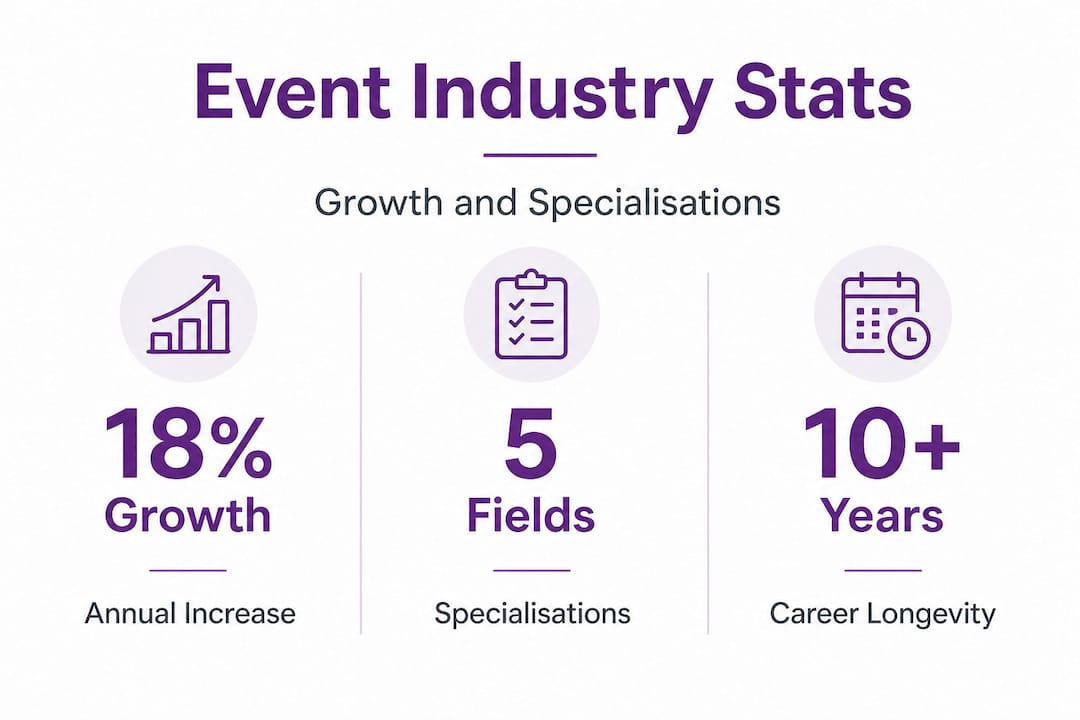
India’s events industry is projected to grow significantly through the late 2020s, driven by rising disposable income, brand experimentation, and a booming entertainment culture. Specialising now positions you ahead of a crowded field.
Popular event management specialisations in India
Each specialisation has its own heartbeat. Its own pressure points. Its own rewards. Here’s a quick reference to help you see where you might naturally fit.

| Specialisation | Core skills needed | Typical work environment |
|---|---|---|
| Social events | Creativity, client relations, budgeting | Boutique agencies, freelance |
| Wedding events | Detail orientation, vendor management, cultural sensitivity | Wedding planning firms, hotels |
| Sports events | Logistics, crowd management, sponsorship handling | Sports bodies, agencies |
| Corporate events | Project management, branding, AV knowledge | Corporate in-house teams, agencies |
| Entertainment events | Production knowledge, artist management, ticketing | Production houses, media companies |
As each specialisation demands unique skills and has distinct career paths, it is critical to look beyond surface-level appeal. Loving music concerts does not automatically mean you will thrive in entertainment event production. That world involves unglamorous logistics, tight security coordination, and brutal timelines.
Career roles by specialisation:
- Wedding events: Wedding planner, décor coordinator, bridal consultant, venue manager
- Corporate events: Event producer, brand experience manager, conference coordinator
- Sports events: Sports event manager, sponsor liaison, ticketing coordinator
- Social events: Social event coordinator, theme designer, catering manager
- Entertainment events: Production manager, artist relations executive, stage manager
Pro Tip: Before locking in a choice, spend time observing in-demand event careers to understand what employers actually seek right now. Trends shift. What was niche three years ago may be mainstream today. Stay curious about the market before you commit.
Browse the specialisations offered by Team I to see how structured programmes align with these career paths in real, practical ways.
How to select your ideal event management specialisation
Knowing the options is step one. Choosing wisely is an entirely different challenge. Here is a proven, step-by-step process to make the decision with clarity rather than panic.
Conduct an honest self-assessment. Write down what you genuinely enjoy doing, not what sounds impressive. Do you love detailed paperwork and timelines? Corporate events may suit you. Are you deeply passionate about storytelling and celebrations? Weddings may be your stage. Know yourself before you research the industry.
Research each specialisation actively. Go beyond reading articles. Watch behind-the-scenes footage of event setups. Follow industry professionals on social media. Attend events as a volunteer or audience member. Notice what excites you and what drains you.
Review your existing skills honestly. If you struggle with last-minute pressure, sports events will test you hard. If you are meticulous with budgets and vendor coordination, wedding planning could be a natural fit. Match skills to demands, not aspirations alone.
Seek practical exposure before deciding. Event management work experience through internships or volunteer roles is genuinely the best diagnostic tool available to you. Nothing teaches faster than doing. Even one week assisting at a corporate conference or a destination wedding will reveal more than months of theoretical reading.
Choose formal study aligned with your direction. Formal training can help you discover the right specialisation by exposing you to multiple event types in a structured, guided environment before asking you to commit fully.
Critical note: Not all institutes offer equal depth across specialisations. Before enrolling anywhere, investigate the faculty’s real industry experience, the quality of internship placements, and whether the curriculum reflects current market realities. A course that only teaches theory without live event exposure is not preparing you for the industry that actually exists.
Pro Tip: Before committing to a course, speak with at least two or three working professionals in your preferred specialisation. Ask them what they wish they had learnt earlier. Their answers will sharpen your focus instantly.
Common mistakes when choosing a specialisation
Here is where many aspirants go wrong. The decision feels big, so they rush it or copy someone else’s choice. Both approaches cost time, money, and motivation.
Students often misjudge their abilities or follow trends without evaluating personal fit. These are the most common errors to avoid:
- Copying peers. Your best friend thriving in wedding planning tells you nothing about your own strengths. Stop comparing paths and start evaluating your own.
- Choosing purely on glamour. Entertainment events look extraordinary from the outside. The reality involves 18-hour setup days, temperamental artists, and constant troubleshooting. Know the full picture.
- Ignoring market research. Choosing a specialisation without understanding local demand is a real risk. A sports event specialist in a city with no significant sporting infrastructure will struggle to build a career without relocating or adapting.
- Skipping guidance. Tutors, mentors, and industry professionals exist precisely to help you avoid costly errors. Using them is not weakness. Ignoring them is.
- Rushing the decision. There is genuine pressure to “pick something and go.” Resist it. Spending an extra month doing research and gaining exposure is far better than spending a year in the wrong programme.
Understanding the full range of career opportunities in event planning can also broaden your perspective before you narrow down your choice.
What to expect after specialising
Specialising does not close doors. It opens the right ones, faster and wider. Once you commit to a direction and build genuine expertise, your employability shifts noticeably.
Proper specialisation and training increase placement opportunities significantly, as employers consistently prefer candidates who can demonstrate focused competence over those with vague, generalised experience. Clients feel the same way. A wedding planner who knows Indian ceremony traditions, catering protocols, and multi-day logistics speaks a language that instantly builds trust.
Typical milestones after specialising:
- Securing a first role in a specific event type within your chosen field
- Building a portfolio of real events managed or assisted with
- Expanding your vendor and industry network within your specialisation
- Developing a reputation for reliability and expertise in that domain
- Progressing into senior coordinator or producer roles with higher creative and financial responsibility
Strong event management placements often come from being deeply known in one space rather than barely known across several. Your name becomes associated with quality work in a specific context, and that association compounds over time.
A fresh perspective on event specialisation in India
Here is an opinion that many training institutes will not share with you openly. The rigid, “pick one specialisation and never look sideways” model is increasingly outdated.
India’s events industry is genuinely evolving fast. Corporate clients now want entertainment-style production values. Wedding clients increasingly want branded, curated experiences that feel like lifestyle content. Sports events overlap with entertainment, sponsorship, and fan engagement in ways that demand cross-functional expertise. Staying updated on event industry trends reveals just how blurred these lines are becoming.
The professionals who are thriving are not those with the most rigid specialisation. They are the ones who chose a strong primary focus, built real depth in it, and then deliberately expanded laterally. A corporate event expert who understands social media production is suddenly twice as valuable. A wedding planner who can negotiate sponsorships adds an entirely new revenue dimension.
So yes, choose a specialisation. Build it seriously. But treat it as a home base, not a cage. The most battle-tested event professionals in India move fluidly between contexts because the skills, fundamentally, transfer. Crowd management is crowd management. Vendor negotiation is vendor negotiation. Budget discipline works in every setting.
Stay adaptable. Keep learning. The industry rewards those who evolve.
Take your first step towards event management expertise
If this article has helped you think more clearly about your direction, the next step is structured education that matches your ambition. A well-designed comprehensive event management course gives you the foundational skills and the specialisation depth to step into the industry with real confidence. Understanding the importance of event education is not just academic thinking. It is a career strategy. Explore the advanced event management programme at team I to see how 24 years of industry experience, live event exposure, and powerful industry partnerships translate into real career outcomes for graduates just like you.
Frequently asked questions
What is the most lucrative event management specialisation in India?
Wedding and corporate events typically offer the highest earning potential, though regional demand and individual experience level significantly influence actual income.
Do I need to decide my specialisation before starting a course?
No; formal education exposes students to multiple specialisations, allowing you to explore your options before settling on a focused direction.
How can internships help in choosing a specialisation?
Practical exposure guides students by revealing first-hand which event type genuinely suits your working style, strengths, and long-term interests.
Is it possible to switch specialisations later in my career?
Absolutely. Many professionals transition between specialisations as their interests deepen or as industry demand shifts, especially when core event management skills are strong.