
India’s event industry is no longer the scrappy side hustle people once dismissed as “just decoration and logistics.” It is a serious, fast-growing economic force attracting sharp young professionals who want careers built on creativity, strategy, and real-world impact. The Indian event market is projected to reach USD 29.75 billion by 2034, growing at a 7.60% CAGR from USD 14.30 billion in 2024. If you have been wondering whether event management is worth pursuing seriously, this article is your answer.
Table of Contents
- Understanding the scope of event management in India
- How event management fuels industry and career growth
- Why event management matters in 2026 and beyond: key trends and skills
- The path ahead: how to build experience and qualifications
- The uncomfortable truth: what separates successful event managers from the rest
- Advance your event management career with the right training
- Frequently asked questions
Key Takeaways
| Point | Details |
|---|---|
| Huge industry growth | Event management in India is set to more than double in a decade, creating abundant opportunities. |
| Multiple career paths | Roles span from creative planning to digital tech, offering flexible options for professionals. |
| Blend of skills needed | Balancing technical proficiency with human touch and crisis management is key to advancement. |
| Qualifications matter | Industry certifications and hands-on work are essential for standing out to employers. |
| Act now for success | The best time to enter the event management field is during this phase of market expansion. |
Understanding the scope of event management in India
Event management is far more than arranging chairs and booking caterers. It is the end-to-end process of conceptualising, planning, coordinating, and executing experiences, whether those are corporate conferences, live concerts, sports tournaments, brand activations, weddings, or large-scale exhibitions. Learn more about what event management truly involves and you will quickly see the breadth of skills required.
The industry spans several distinct and exciting segments:
- Corporate events: conferences, product launches, employee engagement programmes, and investor summits
- Sports IPs: leagues, tournaments, and branded sporting experiences drawing massive live and digital audiences
- Entertainment: music festivals, comedy shows, award ceremonies, and film premieres
- Exhibitions and trade shows: large-format B2B platforms connecting industries
- Hybrid and virtual events: blended in-person and online formats that expanded dramatically post-2020
- Social events: weddings, milestone celebrations, and high-budget private functions
The numbers make a compelling case for this sector’s seriousness. The Indian event market overview shows that growth is consistent, sustained, and multi-directional.
| Market indicator | 2024 figure | 2034 projection | CAGR |
|---|---|---|---|
| India events industry | USD 14.30 billion | USD 29.75 billion | 7.60% |
| Alternative growth estimate | 2024 baseline | 2029 projection | 10.24%+ |
Alternative research from Bonafide Research projects the market growing at over 10.24% CAGR from 2024 to 2029, suggesting even more aggressive expansion in some segments. Both projections point in the same direction: upward, fast, and with plenty of room for skilled professionals to grow into.
Young professionals are noticing. The combination of creative expression, business acumen, and the sheer adrenaline of live events makes this one of the most dynamic career paths available in India right now.

How event management fuels industry and career growth
Having defined the industry, it is essential to see how it acts as an engine for growth and professional development. Event management does not exist in isolation. Every large event cascades across tourism, hospitality, digital technology, logistics, marketing, and media. A single sports IP or music festival can inject crores into a city’s local economy within a weekend.
The career opportunities this creates are genuinely diverse. Consider what roles exist across a typical large-scale event:
- Event planners and producers: the strategic minds behind the concept and execution
- Logistics coordinators: managing vendor contracts, transport, and equipment with military precision
- Marketing and sponsorship managers: building commercial partnerships and promoting the event
- Tech specialists: handling live streaming, ticketing platforms, and digital audience engagement
- On-ground operations staff: managing crowd flow logistics, safety, and real-time problem-solving
The event exhibition segment alone is set to grow from USD 5.69 billion in 2025 to USD 9.04 billion by 2031, representing an 8.05% CAGR. That kind of growth does not happen without a serious demand for trained talent.
Understanding event manager salary insights in India reveals that compensation scales quickly with experience. Entry-level roles offer solid starting packages, and professionals who build a track record on high-profile events or sports IPs can command significantly higher earnings within five to seven years.
The pathway often looks like this: start as a volunteer or intern on smaller events, move into a coordination or assistant producer role, develop a specialisation (say, corporate events or sports), and work your way up to managing full-scale productions. For a deeper look at why trained professionals are so valued, explore the importance of event managers across India’s growing landscape.
Industry reality check: The event industry rewards people who show up, stay calm under pressure, and learn something new from every production. Your first few events are your most important classroom.
Pro Tip: Do not wait until you have a certificate in hand before seeking your first real event experience. The sooner you get behind the scenes, the faster you develop instincts that no syllabus can teach.
Check out event management basics if you are just starting out and want a clear foundation before taking on your first live project.
Why event management matters in 2026 and beyond: key trends and skills
The expansion of event management brings new forces and expectations. Here is how trends are reshaping what is required for success in 2026 and beyond.
Three forces are fundamentally changing the industry right now. First, hybrid events have become the new normal, blending in-person attendance with digital participation to multiply an event’s reach. Second, AI tools are transforming how planners manage scheduling, personalisation, and audience analytics. Third, sustainability is no longer optional, with clients and audiences actively expecting eco-conscious event practices.
Yet here is the part that surprises many aspiring professionals: AI in event management augments but does not replace human crisis management and emotional intelligence. When a headliner cancels three hours before showtime or a venue floods, no algorithm steps in to negotiate, calm sponsors, and reorganise logistics on the fly. That is still entirely human territory.
The skills you need in 2026 span both worlds:
- Technology literacy: understanding AI planning tools, ticketing platforms, live-streaming technology, and data analytics dashboards
- Creative problem-solving: designing experiences that feel fresh, relevant, and memorable
- Adaptability: pivoting quickly when plans change, because they always do
- Emotional intelligence: reading a room, managing client expectations, and keeping a team motivated under pressure
- Sustainability know-how: sourcing responsibly, minimising waste, and communicating green credentials to stakeholders
| Tech skills | Soft skills |
|---|---|
| AI planning and scheduling tools | Crisis management and decision-making |
| Data analytics and audience tracking | Client relationship and communication |
| Live-streaming and hybrid platforms | Emotional intelligence and empathy |
| Digital ticketing systems | Creative adaptability |
| Social media and content tools | Negotiation and stakeholder management |
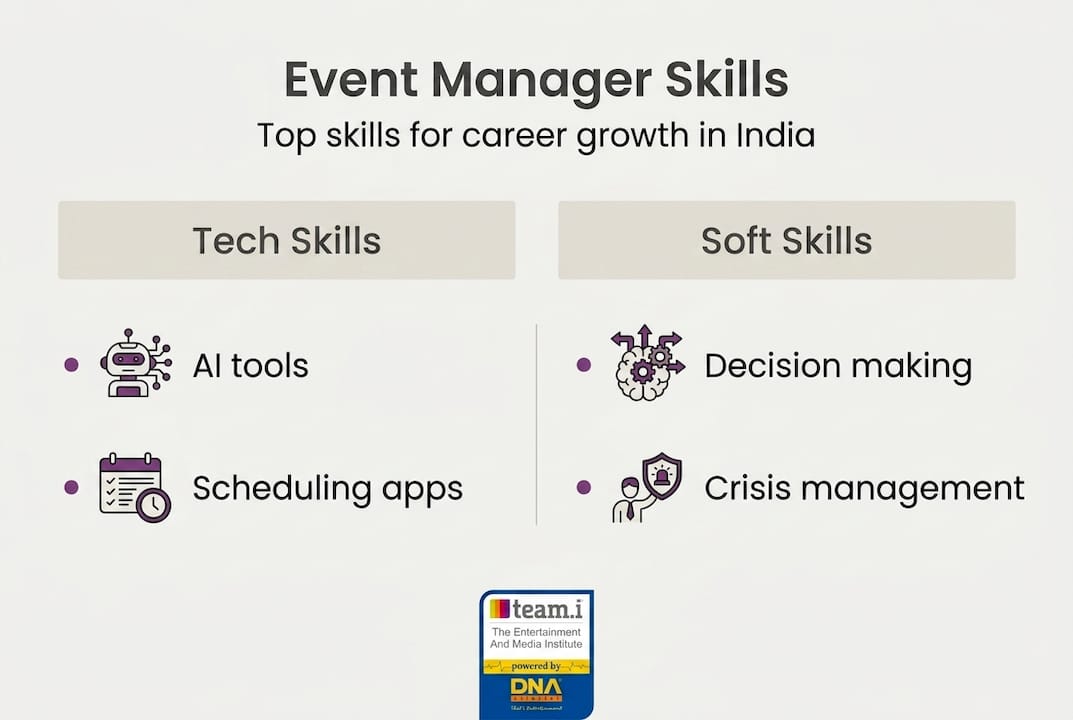
Pro Tip: Build both columns of this table simultaneously. Employers in 2026 are looking for professionals who can pull data from an analytics dashboard and walk a nervous client through a last-minute programme change without breaking a sweat.
The path ahead: how to build experience and qualifications
Knowing the importance and future of event management, here is how you can position yourself for a successful career. With market growth pushing the industry toward USD 29.75 billion, employers are not going to wait for self-taught generalists. They want trained professionals who hit the ground running.
Here is a practical pathway to follow:
- Choose the right certification programme: Look for courses that combine theory with real project work. Hybrid or online options give flexibility without sacrificing quality.
- Pursue hands-on experience from day one: Internships, live event volunteering, and student-led projects are non-negotiable for building genuine competence.
- Specialise early: Pick a lane, whether that is sports events, corporate productions, weddings, or entertainment, and build depth in that area.
- Join industry networks: Connect with event professionals through associations, workshops, and industry panels to open doors that job boards cannot.
- Reflect and iterate: After every event you work on, review what went wrong, what worked, and what you would change. This habit separates average coordinators from exceptional producers.
Leading Indian certifications and providers worth exploring include:
- team I (NIEM Bangalore): 24 years of industry experience with hands-on projects and DNA Entertainment Networks tie-ups for live event exposure
- National Institute of Event Management (NIEM): widely recognised certification programmes across Indian cities
- Event Management Development Institute (EMDI): strong alumni network and practical curriculum
Explore the full event manager career pathway to understand exactly what progression looks like from student to senior producer.
Pro Tip: Volunteer for at least three live events before your first paid role. Not because you need the experience on your CV, but because you need the instincts in your gut.
The uncomfortable truth: what separates successful event managers from the rest
Here is the hard-won perspective that most career guides skip over entirely. Many young professionals enter event management expecting that a strong course and a good grade will open every door. They focus on hard skills: project timelines, vendor lists, budget spreadsheets. Those matter. But they are the floor, not the ceiling.
The professionals who genuinely rise in this industry share one quality that cannot be taught in a classroom: they treat every single event as a learning experiment. They debrief honestly. They seek feedback from colleagues who are more experienced, not just from clients who are polite. They actively put themselves in situations that feel uncomfortable, because controlled chaos is precisely where their skills sharpen.
The mistake we see repeatedly is professionals who stop growing the moment they find a comfortable routine. Event management in India is moving too fast for comfort zones. The media and event industry is converging in new ways, and the professionals who understand both sides of that intersection will lead the next generation of productions.
Relationships also matter in ways that job applications cannot capture. The vendor who trusts you enough to extend credit on a tight deadline. The senior producer who recommends you for a mega IP because they have seen you perform under pressure. These connections are built through consistent, reliable, genuine behaviour across dozens of events before you ever need to call in a favour.
Pro Tip: Actively seek projects that push you into unfamiliar territory. If you only do corporate events, volunteer on a sports IP. If you only manage small weddings, assist on a large-scale exhibition. Growth happens at the edges.
Advance your event management career with the right training
The industry data is clear and the career pathways are real. What separates the professionals who capitalise on this growth from those who watch it pass by is structured training combined with genuine hands-on experience. Now is precisely the right time to invest in yourself.
Explore the full event management course guide to understand which programme suits your goals and timeline. If you want to understand what real event work experience looks like before committing to a course, that resource lays it out clearly. And if flexibility matters to you, team I’s online event management study options bring the same industry-relevant curriculum to wherever you are. The industry is not waiting. Neither should you.
Frequently asked questions
What qualifications do I need to start a career in event management in India?
A bachelor’s degree is a common starting point, but specialised certifications from recognised institutions combined with practical internship experience will set you apart far more effectively in competitive hiring processes.
How much can I earn as an event manager in India?
Salaries vary significantly based on experience, city, and specialisation, but with rapid industry growth toward USD 29.75 billion by 2034, skilled professionals with strong portfolios are finding both strong starting packages and accelerated progression.
What are hybrid events, and why are they important?
Hybrid events combine live, in-person attendance with simultaneous online participation, dramatically expanding audience reach and giving organisers far greater commercial and logistical flexibility. Hybrid and virtual formats are now among the fastest-growing segments in the industry.
Do I need to know how to use AI tools as a young event manager?
Familiarity with AI planning and analytics tools is increasingly valuable, but AI does not replace the human skills of crisis management, creative decision-making, and emotional intelligence that clients genuinely depend on.
How do I get practical experience in event management?
Begin by volunteering or interning on live events, even small-scale ones, to build hands-on competence, develop professional contacts, and understand how real productions operate under pressure.
Recommended
- Why Event Management as a Career? India’s Opportunity and a Global Frontier
- Build a successful event management career in India 2026 – team I
- Master event management fundamentals: career guide India – team I
- Event Manager Salary in India – Industry Growth Insights – team I
Thinking about a career in event management?
team I is Bangalore’s only EEMA-certified event management institute, running for 24 years, where students work on real live events with real budgets and real deadlines rather than classroom simulations. See the full range of event management courses in Bangalore, or go straight to the flagship Certificate Program in Event Management (CPEM).