

Many people still think event management is simply about organising birthday parties and corporate gatherings, but the reality is far more dynamic and strategic. The Indian events industry has evolved into a multibillion-pound sector demanding professionals skilled in logistics, marketing, budgeting, legal compliance, and creative execution. Specialised open university courses offer accessible pathways into this thriving field, combining theoretical knowledge with practical training and industry placements. This guide explores how flexible event management programmes can transform your career prospects in 2026, whether you are a fresh graduate or a working professional seeking specialisation.
Table of Contents
- Understanding Event Management Courses At Open Universities In India
- The Importance Of Practical Training And Industry Experience
- Choosing The Right Events Management Course For Your Career Goals
- How To Maximise Your Learning And Career Prospects With Open University Courses
- Advance Your Career With Specialised Event Management Courses
Key takeaways
| Point | Details |
|---|---|
| Practical skills focus | Open university courses emphasise hands-on training alongside theory, preparing students for real-world event challenges. |
| Industry connections matter | Internships and placements through courses significantly boost employability and professional networks. |
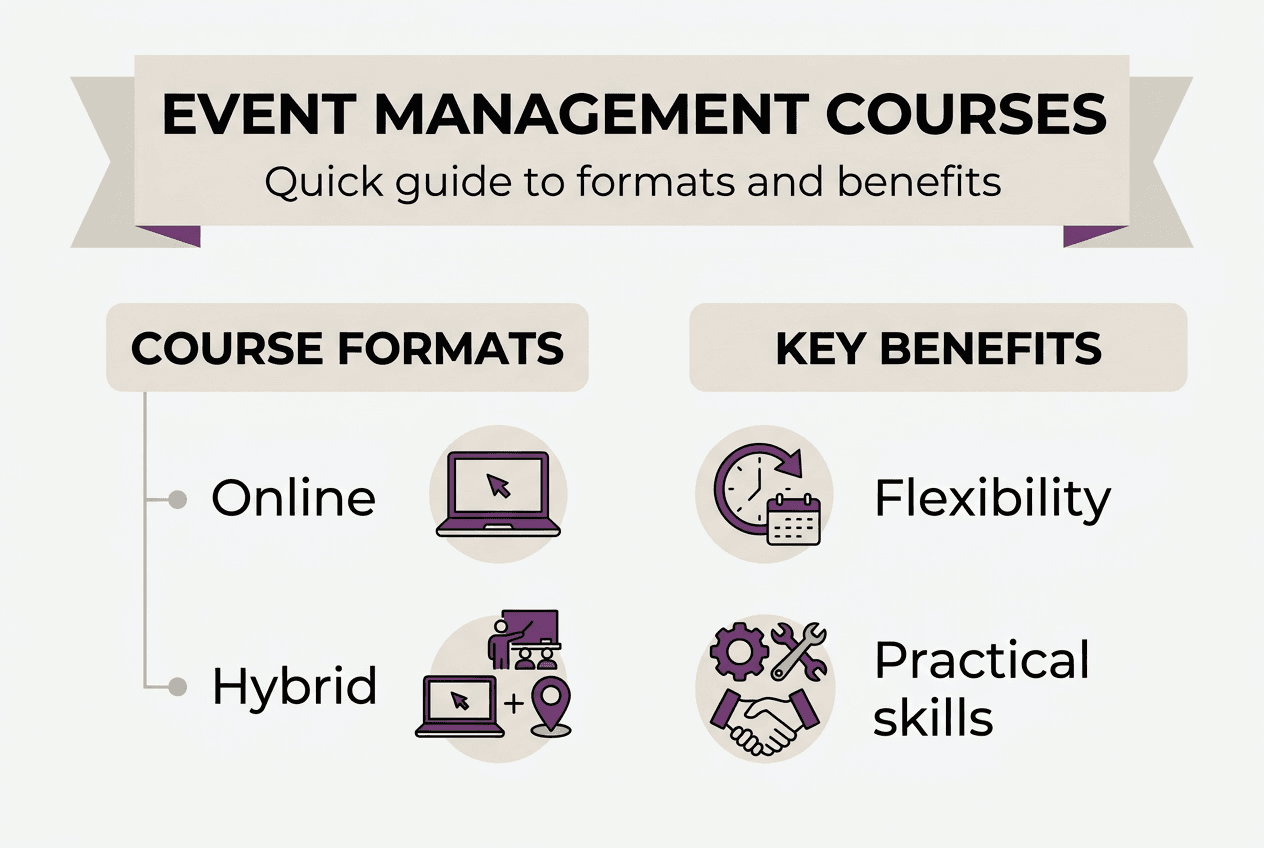
| Flexible learning options | Online and hybrid formats accommodate working professionals and students across India. |
| Certification adds value | Professional certification enhances credibility and distinguishes candidates in competitive job markets. |
Understanding event management courses at open universities in India
Open universities across India now offer diverse event management programmes tailored to different career stages and learning preferences. These courses range from short-term certifications and diplomas to comprehensive degree programmes, each designed to build both foundational knowledge and specialised expertise. The flexibility inherent in open university models makes them particularly attractive for students balancing work commitments or geographical constraints.
Open university courses in event management typically blend theoretical knowledge and practical application essential for effective event planning. Course curricula cover event conceptualisation, vendor management, budgeting, marketing strategies, legal frameworks, and crisis management. Many programmes incorporate case studies from real Indian events, helping students understand local market dynamics and cultural considerations that influence event success.
Study modes vary significantly, offering choices between fully online formats, hybrid models combining virtual lectures with occasional in-person workshops, and traditional classroom settings. This flexibility allows working professionals to upskill without career interruptions whilst enabling fresh graduates to gain credentials whilst exploring internship opportunities. The online programme in event management format has grown particularly popular post-pandemic, with institutions investing in interactive digital platforms.
Pro Tip: When evaluating courses, prioritise those offering practical project components where you can plan mock events or assist with live productions, as these experiences prove invaluable during job interviews.
Course content typically includes:
- Event planning fundamentals and project management methodologies
- Marketing and sponsorship acquisition strategies
- Venue selection, logistics coordination, and vendor negotiations
- Legal compliance, permits, and risk management
- Budget preparation, financial tracking, and profitability analysis
- Technology integration including event management software
Many best event management courses also offer specialisation tracks, allowing students to focus on corporate events, weddings, sports management, or entertainment production. These specialisations in event management enable learners to develop niche expertise aligned with their career interests and market demand.
| Course Type | Duration | Best For | Key Benefit |
|---|---|---|---|
| Certificate | 3-6 months | Quick skill acquisition | Rapid entry into industry |
| Diploma | 6-12 months | Comprehensive foundation | Balanced theory and practice |
| Degree | 1-3 years | Deep expertise | Advanced career prospects |
| Online Programme | Flexible | Working professionals | Learn whilst earning |
The importance of practical training and industry experience
Theoretical knowledge alone rarely secures employment in India’s competitive event management sector. Recruiters consistently prioritise candidates demonstrating hands-on experience, problem-solving abilities under pressure, and established industry connections. This reality makes practical training components the most valuable aspect of quality open university courses.
Events management work experience significantly boosts career prospects by developing practical skills and professional networks. Internships expose students to real event challenges, from last-minute vendor cancellations to weather disruptions, teaching adaptability and creative problem-solving that no textbook can replicate. Working alongside experienced event managers provides mentorship opportunities and insider knowledge about industry best practices.

Industry placements also serve as extended job interviews. Many event companies recruit directly from their intern pools, having already assessed candidates’ work ethic, creativity, and team collaboration skills. Even when internships do not lead to immediate employment, the professional references and portfolio work they generate prove invaluable during subsequent job searches.
The importance of internships extends beyond skill development to network building. The events industry in India operates significantly through personal connections and referrals. Interns who demonstrate reliability and enthusiasm often receive recommendations to other event professionals, creating opportunities that never appear on job boards.
“Practical experience bridges the gap between classroom concepts and industry reality. Students who have managed real events, even in supporting roles, demonstrate competence that theoretical knowledge alone cannot convey.”
Pro Tip: Seek diverse event exposure during internships rather than specialising too early. Experience with corporate conferences, social celebrations, and entertainment events builds versatile skills and helps you identify your true passion within the field.
Key benefits of practical training include:
- Development of crisis management and quick decision-making abilities
- Understanding of vendor ecosystems and negotiation dynamics
- Exposure to event technology platforms and management software
- Building a portfolio of completed projects for job applications
- Establishing professional relationships with industry contacts
Choosing the right events management course for your career goals
Selecting an appropriate event management course requires careful evaluation of multiple factors beyond just course content. Your educational background, career stage, financial constraints, and long-term professional aspirations should all influence this decision. A systematic comparison approach helps identify programmes offering the best return on your time and investment.
Clear eligibility criteria and alignment with career aspirations are vital when selecting an event management course. Most diploma and certificate programmes require completion of higher secondary education, whilst degree courses may demand specific percentage thresholds. Some advanced certifications prefer candidates with prior event industry exposure, making them suitable for professionals seeking formal credentials rather than complete beginners.
The choice between certification and diploma programmes often confuses prospective students. Certification vs diploma considerations include duration, depth of coverage, and industry recognition. Certifications typically focus on specific skills or event types, completing in shorter timeframes, whilst diplomas provide broader foundational knowledge. Your current skill level and career timeline should guide this choice.
Course delivery format significantly impacts your learning experience and outcomes. Fully online programmes offer maximum flexibility but require strong self-discipline and may limit networking opportunities. Hybrid models balance convenience with occasional face-to-face interactions, whilst traditional classroom settings provide structured learning environments and immediate peer collaboration. Consider your learning style, work commitments, and the value you place on in-person networking when evaluating delivery modes.
Pro Tip: Request detailed placement statistics and alumni contact information from prospective courses. Speaking with recent graduates provides honest insights into course quality, industry connections, and actual career outcomes that marketing materials may not reveal.
Follow this systematic evaluation process:
- Assess your event management course eligibility against programme requirements
- Define your career goals and identify specialisations aligning with those ambitions
- Compare course curricula, focusing on practical training components and industry projects
- Evaluate delivery formats against your schedule, learning preferences, and networking needs
- Research placement support, internship opportunities, and alumni success rates
- Calculate total investment including fees, materials, and potential income loss during study
| Evaluation Criteria | Questions to Ask | Why It Matters |
|---|---|---|
| Accreditation | Is the course recognised by industry bodies? | Affects employer perception and credential value |
| Faculty expertise | Do instructors have active industry experience? | Ensures current, practical knowledge transfer |
| Placement support | What percentage of graduates secure relevant employment? | Indicates course effectiveness and industry connections |
| Practical components | How many live events will you work on? | Builds portfolio and hands-on competence |
| Flexibility | Can you balance study with work commitments? | Determines programme feasibility for your situation |
The importance of certification in event management continues growing as the industry professionalises. Recognised credentials signal commitment to the field and validated competencies, helping you stand out amongst candidates with informal training or purely academic backgrounds.
How to maximise your learning and career prospects with open university courses
Enrolling in a quality course represents just the first step towards event management success. How you engage with the programme, supplement formal learning, and leverage course resources determines your actual skill development and career outcomes. Strategic approaches to coursework, networking, and practical application separate students who simply complete programmes from those who launch thriving careers.
Certification enhances credibility and increases employability in the competitive event management industry. However, the certificate itself matters less than the competencies you develop and connections you establish during your studies. Treating your course as a comprehensive career-building opportunity rather than just an academic exercise maximises returns on your investment.
Develop a structured study plan balancing theoretical coursework with practical application. Dedicate specific hours weekly to course materials whilst simultaneously seeking opportunities to apply concepts through volunteer event support, personal projects, or freelance assistance. This parallel approach reinforces learning whilst building your portfolio and professional network before course completion.
Active engagement in course forums, alumni networks, and industry events accelerates your professional development. Many students treat online courses as solitary experiences, missing valuable peer learning and networking opportunities. Participate in discussion boards, attend virtual networking sessions, and connect with classmates who share your specialisation interests. These relationships often evolve into professional collaborations and job referrals.
Pro Tip: Create a professional portfolio documenting every event you touch during your studies, including your specific contributions, challenges overcome, and measurable outcomes. Employers value concrete evidence of capabilities far more than course certificates alone.
Implement these strategies to maximise course value:
- Establish clear learning objectives beyond just passing assessments, focusing on skills you want to master
- Seek events management work experience opportunities even before course completion through volunteering or internships
- Build relationships with course instructors who can provide mentorship and industry introductions
- Attend industry conferences, workshops, and networking events to supplement formal coursework
- Develop a personal brand through social media showcasing your event projects and industry insights
- Research jobs after event management courses to align your skill development with market demand
Post-course career planning requires equal attention to your studies. Begin networking and exploring opportunities well before graduation rather than waiting until course completion. Update your CV progressively as you acquire new skills and complete projects. Research potential employers and reach out for informational interviews, demonstrating initiative that often leads to unadvertised opportunities.
Key actions for career success:
- Maintain an updated portfolio showcasing diverse event projects and your specific contributions
- Leverage alumni networks and placement services offered by your institution
- Pursue additional micro-credentials in emerging areas like virtual event production or sustainability
- Build vendor relationships during internships that can support your future independent projects
- Develop specialised expertise in high-demand niches whilst maintaining broad foundational skills
Advance your career with specialised event management courses
If you are ready to transform your passion for events into a professional career, team I offers comprehensive training programmes designed for the Indian market. With 23 years of industry experience and strong partnerships with DNA Entertainment Networks, our courses provide the practical exposure and industry connections essential for career success in 2026.
Our flexible online event management courses accommodate working professionals and students across India, combining live virtual sessions with hands-on project work. You will gain experience managing real events, build a professional portfolio, and earn recognised certification that enhances your employability. Our placement support connects graduates with leading event companies actively seeking trained professionals.
Explore our event management course details to discover specialisation options in corporate events, weddings, sports management, and entertainment production. Our curriculum balances creative development with business fundamentals, preparing you for diverse career paths within this dynamic industry. Contact team I today to discuss which programme aligns with your career aspirations and how we can support your journey into professional event management.
FAQ
What are the eligibility requirements for events management courses open university?
Eligibility usually includes completion of higher secondary education with minimum percentage criteria, varying by course level. Certificate programmes typically have minimal requirements, accepting students who have completed their 10+2 education regardless of stream. Diploma and degree courses may specify minimum aggregate percentages, often around 50 percent, though requirements differ across institutions. Some advanced certification programmes prefer candidates with prior event industry experience or related undergraduate degrees, making them more suitable for professionals seeking formal credentials rather than complete beginners. Always verify specific event management course eligibility criteria with your chosen institution before applying.
Can I complete an events management course fully online through open universities?
Yes, numerous open universities and specialised institutes now offer comprehensive online event management courses that can be completed entirely remotely. These programmes deliver lectures, assignments, and assessments through digital platforms whilst incorporating virtual workshops and collaborative projects. Online formats provide exceptional flexibility for working professionals, students in remote locations, or anyone balancing multiple commitments. However, some courses include optional or mandatory in-person components for intensive workshops or live event participation, so clarify delivery format details during your research. The quality of online programmes has improved dramatically, with interactive technologies enabling effective skill development that rivals traditional classroom experiences.
How important is certification in event management careers?
Certification is highly valued, signalling professionalism and increasing hiring chances in India’s events industry. Whilst natural talent and creativity matter, formal credentials demonstrate commitment to the profession and validated competencies in essential areas like project management, budgeting, and legal compliance. Employers increasingly prefer certified candidates when choosing between similarly experienced applicants, as certification provides assurance of standardised training. Professional certification importance extends beyond initial employment, supporting career advancement and enabling higher salary negotiations. As the Indian events sector continues professionalising, recognised credentials become increasingly essential for serious career progression and client confidence in independent event professionals.
What career opportunities exist after completing event management courses?
Event management training opens diverse career paths across multiple industries. Graduates secure positions as event coordinators, wedding planners, corporate event managers, exhibition organisers, festival producers, and venue managers. Specialised roles include sponsorship managers, event marketing specialists, production coordinators, and logistics supervisors. Many professionals eventually establish independent event planning businesses or consulting practices. The skills acquired translate well to adjacent fields like hospitality management, public relations, marketing, and entertainment production. Career progression typically advances from assistant roles to senior event manager positions, with experienced professionals moving into directorial or entrepreneurial roles managing teams and multiple simultaneous projects.
How long does it take to establish a career in event management after course completion?
Career establishment timelines vary significantly based on prior experience, networking effectiveness, and market conditions. Graduates with strong internship portfolios and industry connections often secure entry-level positions within three to six months of course completion. Those without prior exposure may require six to twelve months building experience through volunteer work, freelance projects, or junior assistant roles before landing stable employment. Proactive networking, continuous skill development, and willingness to start in supporting positions accelerate career launch. Building a reputation as a reliable, creative professional typically requires two to three years of consistent work, after which referrals and repeat clients create sustainable career momentum. Patience combined with strategic relationship building proves essential for long-term success in this relationship-driven industry.