
Most event managers think cross-cultural event management is about getting the catering right and learning a few greetings in the local language. That is where the misconception starts. The real challenge runs much deeper. From geopolitical disruptions that strand your international speakers at borders, to inclusion failures buried in your registration form’s language settings, the complexity of managing culturally diverse events has grown significantly. This guide cuts through the surface-level advice and gives you the operational depth you actually need, drawing on examples from Indian weddings, corporate conferences, college festivals, and global events.
Table of Contents
- Cross-cultural event management: beyond token multiculturalism
- Multilingual logistics: language is infrastructure
- Managing geopolitical risks in international event planning
- Leveraging local talent for authentic cultural events in India
- My honest take on getting cross-cultural events right
- Build the skills to lead cross-cultural events
- FAQ
Cross-cultural event management: beyond token multiculturalism
You have seen it. A corporate event in Bangalore adds a rangoli display at the entrance, plays a Bollywood track during lunch, and calls itself multicultural. That is not cultural integration. That is decoration.
The Events Industry Council argues that belonging must be designed across the full attendee lifecycle, covering menu design, scheduling, music, and workforce diversity. That means rethinking every touchpoint, not just the main stage.
Think about a destination wedding in Udaipur where the bride’s family is Tamil and the groom’s is Punjabi. The caterer only knows one regional cuisine. The priest speaks only Hindi. Half the guests cannot follow the rituals. That is a cultural inclusion failure, and it happens because no one mapped the experience from arrival to farewell through a cultural lens.
Here is what genuine multicultural event coordination looks like in practice:
- Food and beverage: Offer region-specific options with clear labelling in multiple scripts where relevant. At a South Indian corporate event catering to a North Indian client base, both cuisines must be represented with equal prominence, not as an afterthought buffet corner.
- Scheduling around observances: A Diwali-adjacent conference date in Mumbai will see lower attendance from Hindu colleagues. A Friday afternoon session at an international event ignores Muslim prayer commitments. Cross-cultural inclusion failures often happen in these operational details, not the keynote address.
- Supplier and workforce diversity: Hire vendors, interpreters, and on-ground staff who reflect the cultural groups attending your event. This is not a quota exercise. It is a quality decision that directly improves attendee experience.
- Inclusive spaces: Designate prayer rooms, quiet zones, and gender-neutral facilities. These are not luxuries at international events. They are expected.
Pro Tip: Maintain a rolling calendar of cultural observances across the major communities represented in your audience, covering religious festivals, national holidays, and community events. Cross-reference this calendar before locking any event date or scheduling agenda items.
Multilingual logistics: language is infrastructure
Here is the thing most event managers learn too late. Language support is not an add-on you sort out two weeks before the event. It is infrastructure, and it needs a production schedule of its own.
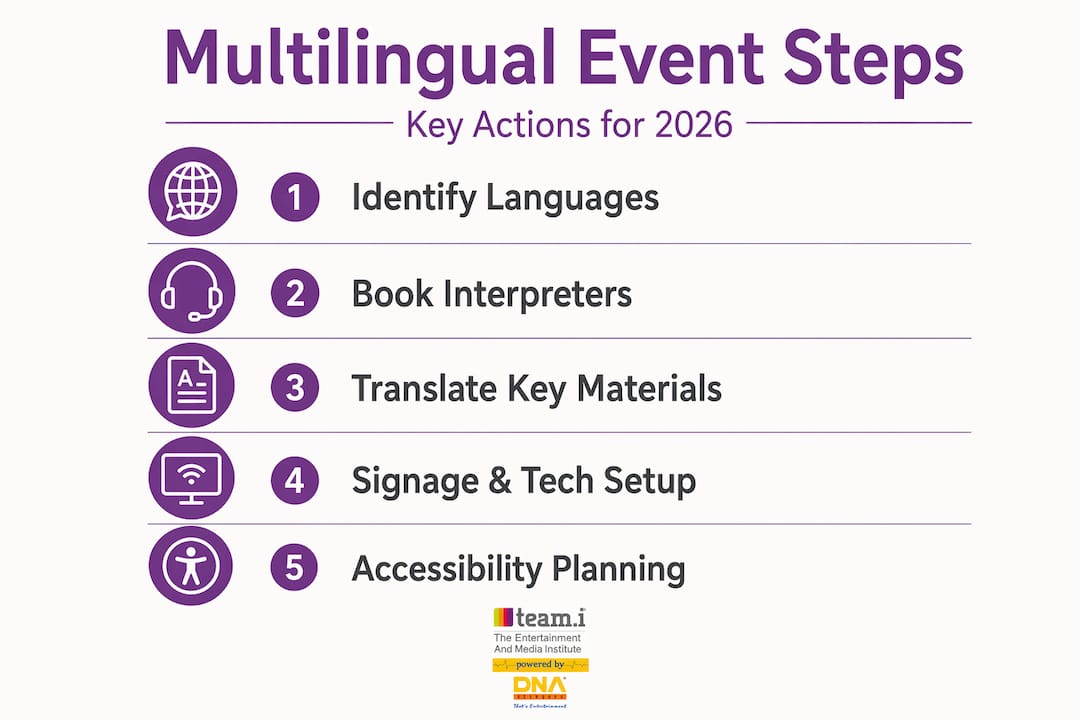
Booking interpreters for a multilingual conference should happen at least six months in advance. Quality simultaneous interpreters for specialised fields like law, medicine, or finance are genuinely scarce. At a global health summit in Hyderabad, you cannot call an interpreter agency three weeks out and expect a professional who understands cardiology terminology in Tamil and English.
Here is a practical timeline for multilingual event logistics:
- Six months out: Confirm the languages required based on confirmed attendee demographics. Book interpreters and interpretation equipment.
- Three months out: Share speaker presentations and session outlines with interpreters for preparation. Begin translating priority materials.
- Six weeks out: Finalise translated signage, registration forms, speaker bios, and agendas. Slides require translation only when content complexity demands it.
- Two weeks out: Run a technical rehearsal covering audio routing and platform channels for hybrid or virtual components.
- Event week: Coordinate interpreter shifts with your AV production schedule. Treat interpreter briefings as seriously as speaker rehearsals.
The materials you absolutely must translate are listed below.
| Material | Priority level |
|---|---|
| Event agenda | Critical |
| Speaker bios | High |
| Signage and wayfinding | Critical |
| Registration forms | Critical |
| Presentation slides | Medium (content-dependent) |
| Post-event surveys | High |
Do not forget sign language interpretation and accessibility needs. These must be planned in the same workflow, not bolted on after the main language logistics are settled.
Pro Tip: Treat your interpreter schedule as part of your AV production runsheet. When your lighting director knows the interpreter needs a five-minute break after 45 minutes of simultaneous interpretation, you avoid dead air at precisely the wrong moment.
Managing geopolitical risks in international event planning
This is the section most event management guides skip. They should not.
Global conflicts rose from 53.92% in 2025 to 73.84% in 2026 in terms of their impact on the ability to plan international meetings. That is not a background statistic. It is a planning reality you cannot afford to ignore when you are coordinating an international event in Delhi or hosting delegates from across South Asia and the Middle East.
The Chicago Forever Mine Festival faced exactly this kind of disruption when immigration restrictions affected artist and audience participation. Visa delays, travel bans, and shifting immigration policies are now front-line operational concerns for any event with international talent or attendees.
For your event risk assessment framework, you need scenario-based buffers built into every area:
- Talent and speakers: Always have a confirmed local alternative for any international headliner. At a corporate summit in Mumbai with a keynote speaker based in the US, a visa delay should not collapse your opening session.
- Shipping and logistics: Add four weeks of buffer for any physical material crossing borders. Customs holds on exhibition equipment are more common than event managers admit.
- Itinerary flexibility: Build 20% slack into conference programmes that involve international participants. Geopolitical disruptions cause sudden changes to audience and talent flow that no one can fully predict.
- Event insurance: Confirm your policy covers geopolitical cancellation scenarios. Most standard policies do not without a specific rider.
“Geopolitical and policy disruptions are emerging as the top failure modes in international event planning. Scenario-based contingency planning is no longer optional.” — IAPCO 2026 Survey
Understanding the importance of flexibility in event management is what separates professionals who survive these disruptions from those who do not.
Leveraging local talent for authentic cultural events in India
India gives event managers a masterclass in cultural diversity every single day. A college festival in Chennai operates on entirely different cultural codes than one in Chandigarh. A corporate gala in Hyderabad has distinct sensibilities compared to one in Kolkata. The event managers who thrive here understand that local collaboration is not a budget compromise. It is a creative and strategic advantage.
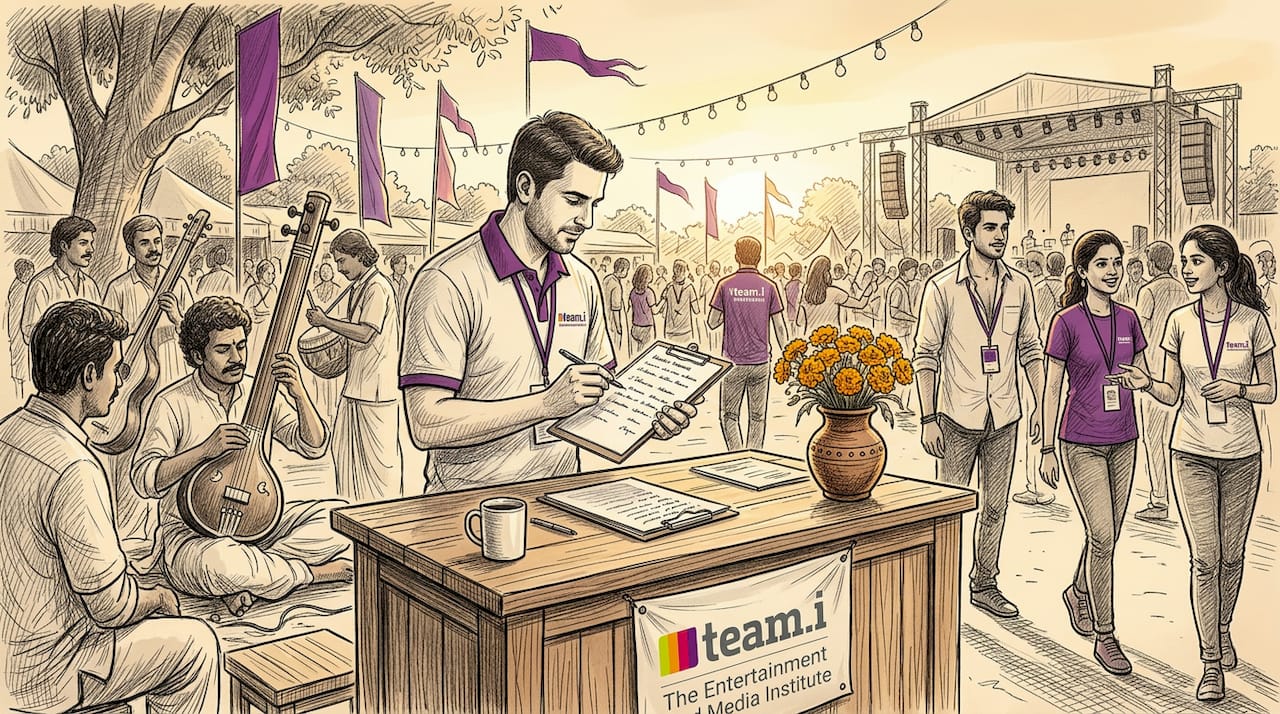
The importance of collaboration with local artists, cultural custodians, and community leaders cannot be overstated. When you hire a Carnatic musician from Chennai for a South Indian wedding, you are not just filling a performance slot. You are signalling to every attendee that you respect their cultural identity.
Practical ways to build genuine local partnerships:
- Engage local cultural communities six months before the event, not six days. Authentic collaboration takes time to develop trust.
- Work with local vendors who understand regional preferences. A caterer who grew up making biryani in Lucknow will serve a different product than one who learnt the recipe from a textbook in Bangalore.
- Credit and promote your local collaborators visibly. Cultural exchange works both ways, and recognition builds long-term partnerships.
- Avoid the commodification trap. Using a folk art form as a “theme” without engaging the community it comes from is the fastest way to create a culturally hollow event.
My honest take on getting cross-cultural events right
I have seen event managers spend weeks perfecting the cultural elements of the main stage programme and then completely miss the fact that their registration portal only operates in English, their directional signage has no Hindi or Tamil, and their catering team has no idea what “jain food” means.
In my experience, the events that genuinely succeed at cultural inclusion are the ones where the event manager has treated it as an operational discipline, not a creative brief. The intentional attendee journey matters more than the spectacular opening performance.
What I have also found is that India is actually one of the best training grounds for cross-cultural event management on the planet. If you can coordinate a 500-person wedding in Jaipur where the families speak four different languages, navigate dietary restrictions across six communities, and keep the programme running across three days of rituals, you have genuinely earned your credentials for international event planning.
The evolving role of the event manager is as much cultural connector as logistics coordinator. Own that role with intention. Every event you produce is an opportunity to make someone feel seen.
— Teami
Build the skills to lead cross-cultural events
Cross-cultural event management is one of the most demanding and rewarding specialisations in the industry. The professionals who get it right combine operational discipline, cultural intelligence, and geopolitical awareness in every project they take on.
Teami’s event management courses are designed to build exactly that kind of professional. With 24 years of industry experience, hands-on project training, and direct partnerships with DNA Entertainment Networks, Teami prepares you for the real complexity of events, not just the theory. You can also explore Teami’s online event management programme if you need flexibility alongside your current commitments. Start building the skills that international-level events actually demand.
FAQ
What is cross-cultural event management?
Cross-cultural event management is the practice of planning and executing events that serve attendees from multiple cultural backgrounds through intentional design across every touchpoint, including language, food, scheduling, and cultural representation.
How far in advance should you book interpreters for multilingual events?
Book interpreters at least six months before the event, particularly for specialised or technical conferences where language precision matters.
How do geopolitical risks affect international event planning?
Geopolitical tensions now affect 73.84% of international meetings, causing cancellations, relocations, and visa-related disruptions that require scenario-based contingency planning.
What materials should be translated for a multicultural event?
Prioritise the event agenda, signage, registration forms, and speaker bios. Presentation slides should be translated when content complexity demands it.
How can Indian event managers develop cross-cultural expertise?
India’s extraordinary diversity across language, religion, and regional culture makes it one of the world’s best training grounds. Formal training through accredited event management certification courses combined with hands-on experience across different event types builds the strongest foundation.
Recommended
- Event management lifestyle: a practical guide for 2026 – team I
- Event Management Internships in 2025: Your Guide to Success – team I
- BLOG – team I – Page 8
- International event management scope: career guide 2026 – team I
Thinking about a career in event management?
team I is Bangalore’s only EEMA-certified event management institute, running for 24 years, where students work on real live events with real budgets and real deadlines rather than classroom simulations. See the full range of event management courses in Bangalore, or go straight to the flagship Certificate Program in Event Management (CPEM).