
There is a moment in every live event that no audience ever sees. It happens about thirty six hours before doors open, when the venue is just a carpet, a ceiling, and silence. No stage. No lights. No sound. Just a crew standing in an empty hall with a deadline.
Our students know that moment personally. Not from a case study. From standing in it.
These photos come from a large-scale live show in Bengaluru that team I students worked as crew, and together they tell you more about the event production process than any textbook chapter we could assign.
Stage one: the empty room
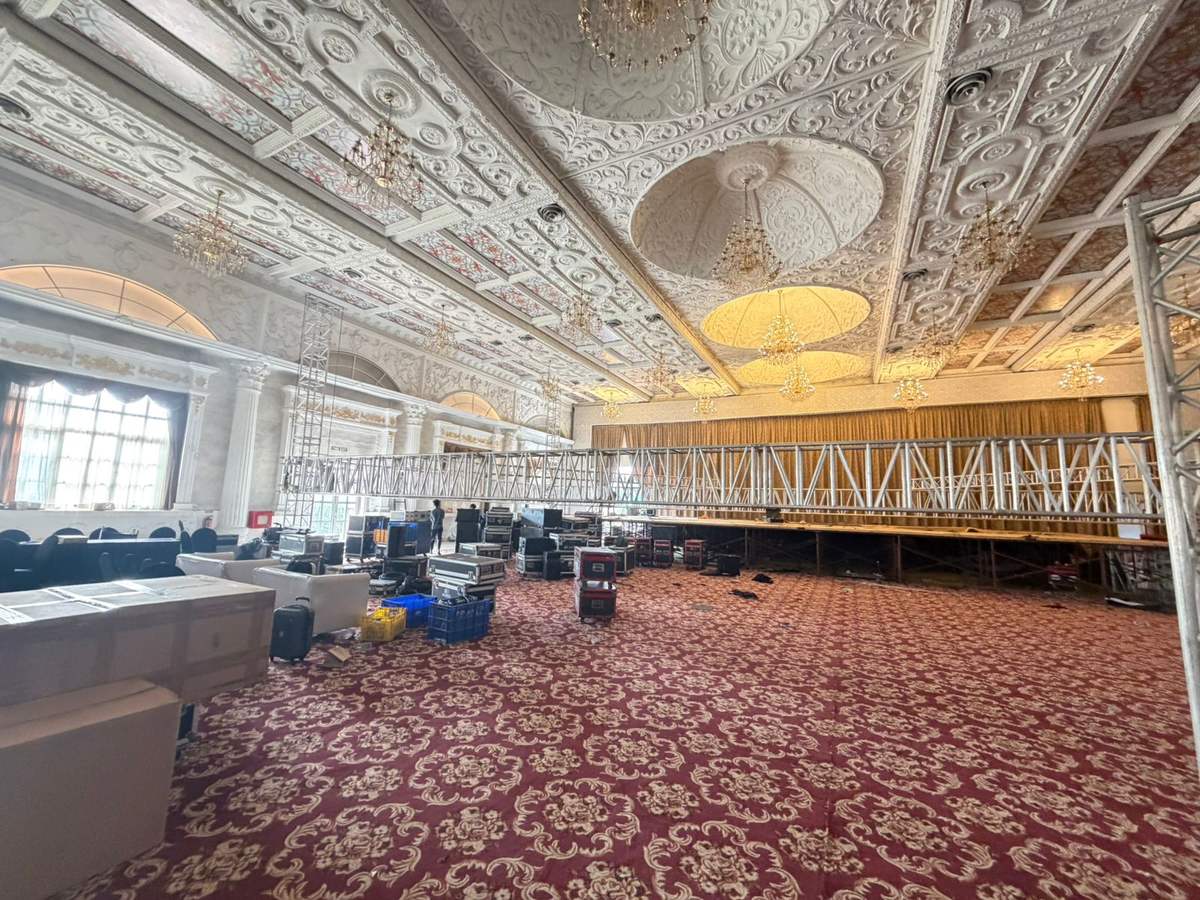
Every show starts the same way, with a venue that looks nothing like a show. In this case, a heritage-style ballroom with chandeliers and a red carpet, filled with flight cases instead of guests.
This is where the real event production process begins: the load-in. Trucks arrive, cases roll in, and a floor plan that existed only on paper starts becoming physical. Students on crew learn the first honest lesson of live events here. The glamour arrives last. The boxes arrive first.
Stage two: the build
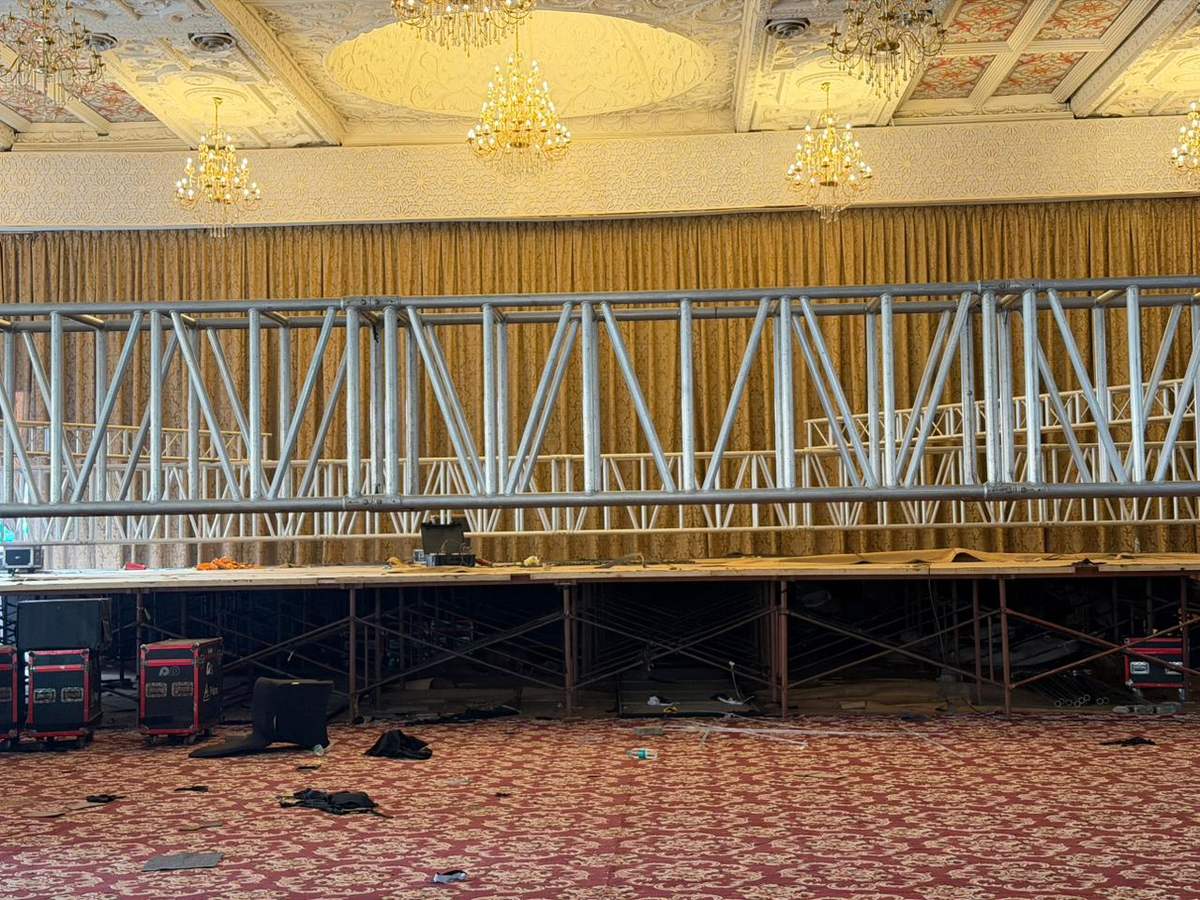
Look closely at this photo and you will see what "production" really means. That aluminium truss will carry lights and screens above people’s heads. The stage deck beneath it will hold performers, speakers, and equipment worth more than a car.
So nothing here is casual. Rigging is checked, weight is calculated, and backup plans exist for the backup plans. When our faculty, who have run some of India’s biggest shows, tell students that safety is the first production value, this is what they mean. An event manager who understands the build can talk to any vendor, question any shortcut, and catch a problem while it is still cheap to fix.
Stage three: the arrival experience
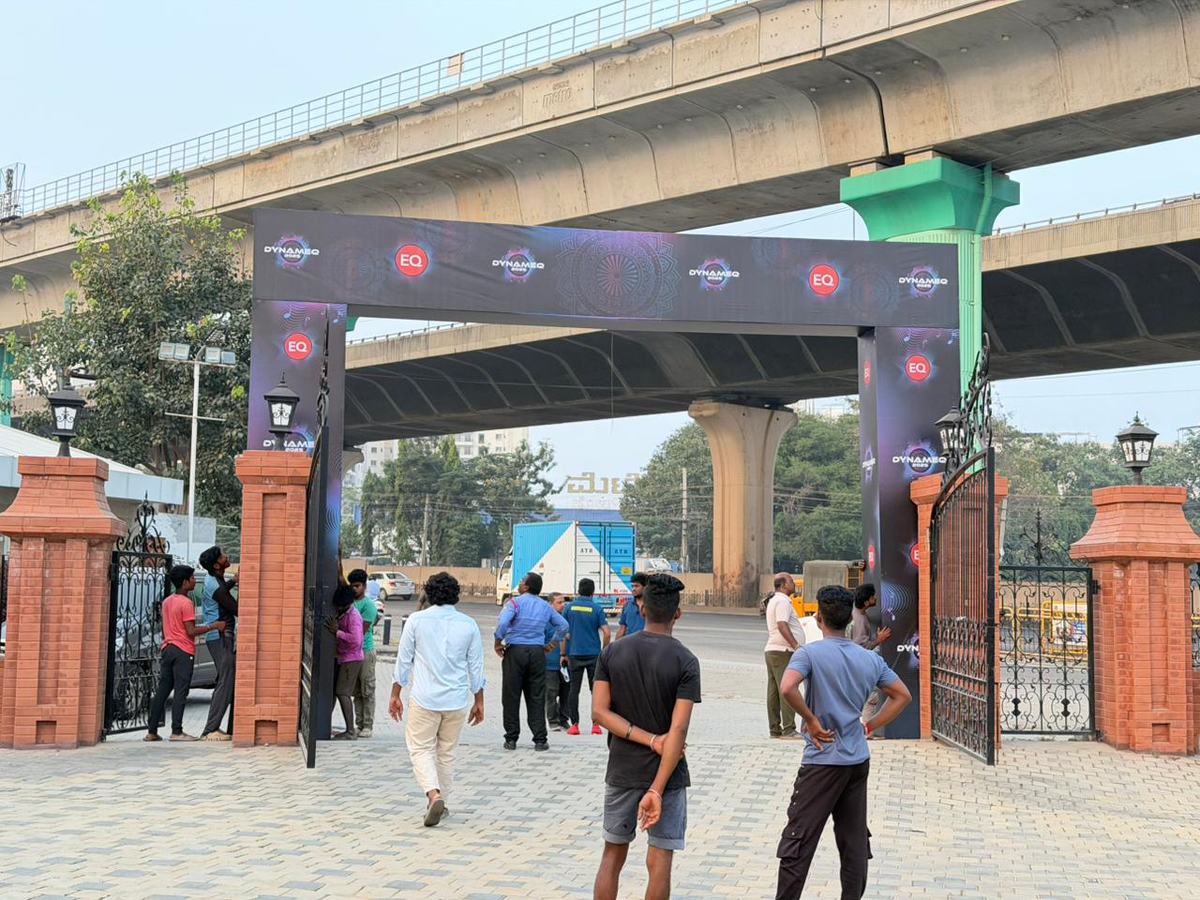
While the stage takes shape inside, another team is outside making the first thing guests will ever see: the entrance. Gate branding, signage, barricading, crowd flow. This is the part of the event production process most people never think about, and it decides how the first thirty seconds of the event feel.
Students working this zone learn ticketing logic, entry management, and the small design decisions that stop a queue from becoming a crowd problem. It is unglamorous, detailed work. It is also exactly the kind of thing that separates a trained event professional from an enthusiastic volunteer.
Stage four: showtime
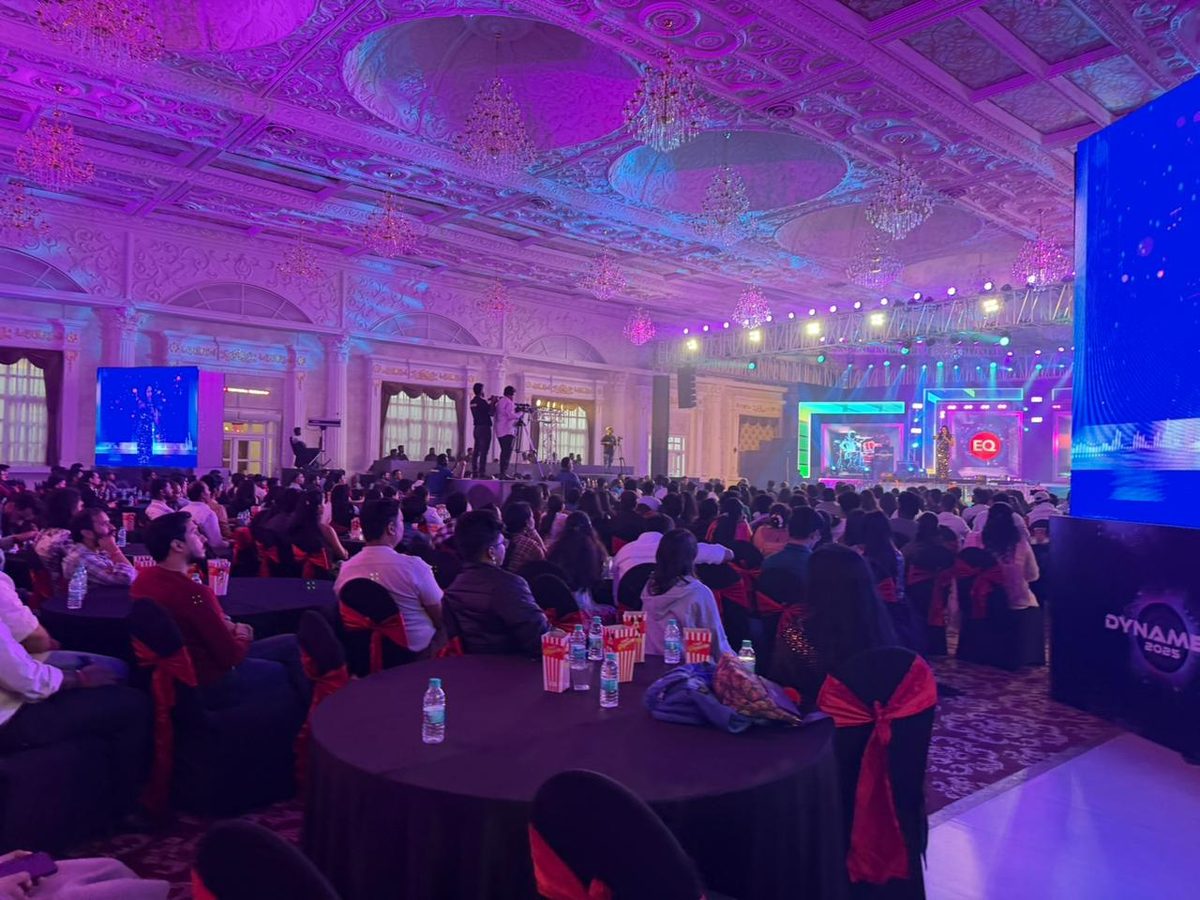
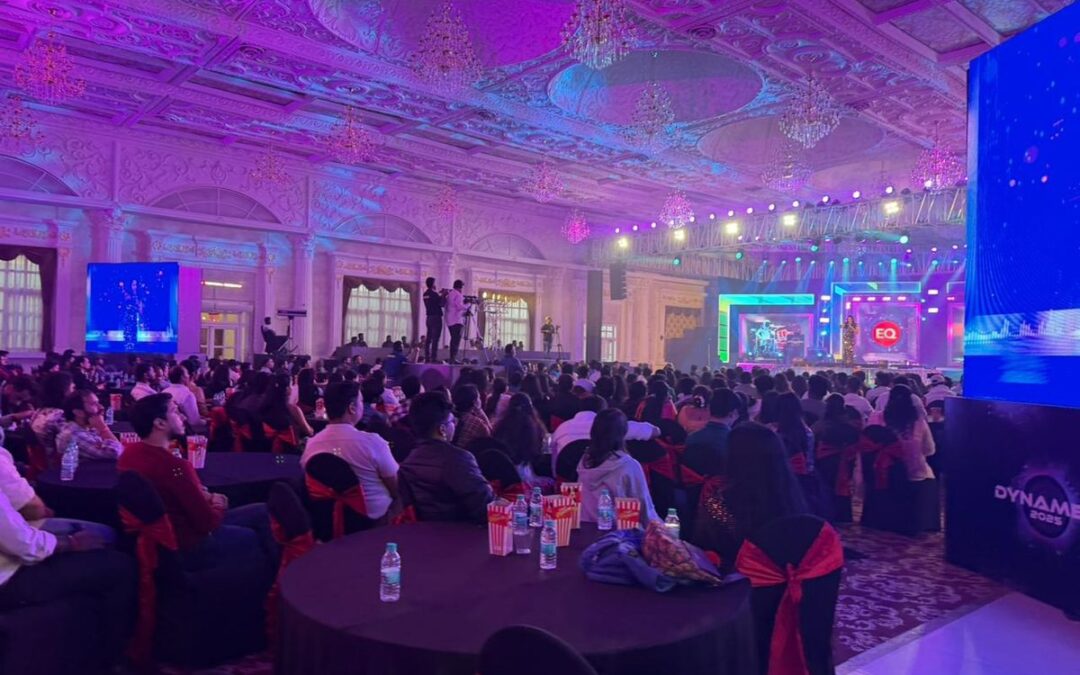
And then the room transforms. The same hall from the first photo, now packed with hundreds of guests, LED screens glowing, a live act on stage, camera crew on risers, light beams cutting through the air.
Here is what a student on crew is actually doing during this photo: tracking the run sheet, watching cue timings, managing artist movement, handling guest issues quietly at the edges, and coordinating on comms while the audience sees only a great show. The show looks effortless because dozens of people are working very hard to make it look that way.
This is the payoff of the entire event production process. Months of planning, days of build, and hours of live execution, compressed into an experience the audience will remember as simply "an amazing night."
Stage five: the crew at midnight
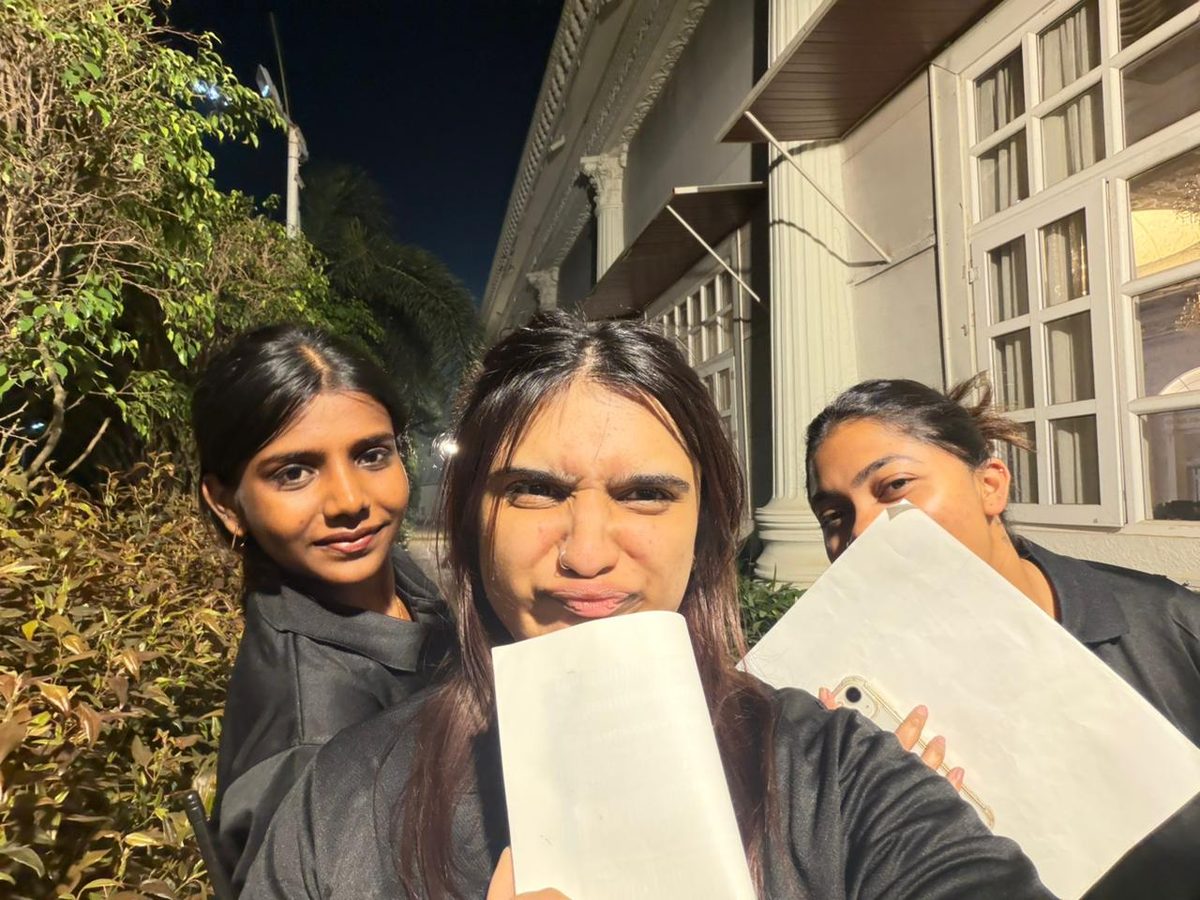
The last photo is our favourite. No stage, no lights, just students in black crew tees with run sheets in hand, still standing after a day that started before sunrise.
Nobody looks like this after a lecture. You only look like this after a show. Tired, wired, and already telling stories about the thing you just pulled off. That feeling is why people join this industry, and it is why they stay.
Why we build our courses around real shows
At team I, this is not an annual field trip. It is the operating system of our event management courses in Bangalore. Students in our Certificate Program in Event Management work real events with real crews from their first weeks, which is why our alumni walk into companies like Wizcraft and DNA already knowing how a show day feels.
And at The Event League, our inter-college fest, students move from crew to command: the whole fest is planned and executed end to end by team I students themselves. Same production process, but there they run it.
If reading this made you more excited than tired, that tells you something. Come see the process up close.
Want to build shows like this? Visit our campus, meet the faculty who run India’s biggest events, and see where a course like this can take you. Apply through our application form or walk in. The next show is always being built.
FAQ
What is the event production process?
It is the full journey of a live event: planning, vendor coordination, load-in, stage and technical build, entry and guest experience setup, live show execution, and de-rig. Every professional event follows this arc, whether it is a wedding, a concert, or a corporate summit.
Do team I students really work on live events?
Yes. Real shows with professional crews are built into the learning journey from the first weeks, across weddings, concerts, corporate events, and sports.
Can I join after 12th?
Yes. Our programs accept students after 12th as well as graduates and working professionals looking to switch careers.