
Breaking into event management requires more than classroom knowledge. You need industry connections that open doors to internships, mentorships, and job opportunities. Many students feel overwhelmed when approaching professionals or attending networking events, unsure how to start meaningful conversations. This guide provides practical, evidence-backed strategies to help you network confidently and effectively. You’ll learn how to prepare thoroughly, engage authentically, and follow up strategically to build lasting professional relationships that accelerate your event management career.
Table of Contents
- Understanding The Value Of Networking In Event Management
- Preparing To Make The Most Of Networking Events
- Executing Effective Networking Strategies At Events
- Following Up And Building Lasting Connections
- Boost Your Event Management Career With Team I Courses
- Frequently Asked Questions About Networking For Students
Key takeaways
| Point | Details |
|---|---|
| Preparation shapes success | Setting clear goals and researching attendees beforehand maximises networking effectiveness at events |
| Timely follow-up matters | Contacting new connections within 48 hours significantly increases the likelihood of building lasting professional relationships |
| Online presence is crucial | A polished LinkedIn profile and professional digital footprint enhance credibility when meeting industry contacts |
| Gamification boosts engagement | Interactive networking activities increase participation rates and generate more meaningful connections at events |
| Active listening wins | Asking thoughtful questions and genuinely engaging with professionals creates stronger impressions than simply distributing business cards |
Understanding the value of networking in event management
Networking serves as the foundation for career advancement in event management. Unlike many industries where qualifications alone might secure opportunities, event management thrives on personal connections and professional relationships. When you build a strong network, you gain access to employers, experienced alumni, and industry professionals who can provide guidance, mentorship, and job referrals. These connections often lead to opportunities that never appear on public job boards.
The event industry values trust and proven capability. Hiring managers frequently prefer candidates recommended by trusted colleagues over unknown applicants with impressive CVs. Networking creates a bridge between your knowledge and industry contacts, opening doors to advice and career paths you might never discover independently. This makes developing networking skills essential for anyone pursuing an event management career.
Effective networking accelerates your professional development by exposing you to diverse perspectives and industry insights. Conversations with seasoned professionals reveal current trends, emerging technologies, and practical challenges you won’t find in textbooks. You learn what skills employers actually value and which specialisations offer the most opportunities. These insights help you make informed decisions about your education and career direction.
“Quality matters more than quantity when building professional relationships. Focus on creating genuine connections rather than collecting hundreds of superficial contacts.”
Building authentic relationships requires patience and genuine interest in others. Rather than viewing networking as transactional, approach it as an opportunity to learn from experienced professionals and contribute value where possible. When you demonstrate curiosity about someone’s work and offer thoughtful engagement, you create memorable interactions that lead to lasting professional bonds. Understanding how professional networking impacts career trajectories helps you appreciate its long-term value.
Consider these fundamental networking principles:
- Prioritise building relationships over immediate job seeking
- Offer value by sharing relevant articles or connecting people who might benefit from knowing each other
- Stay authentic rather than adopting a false professional persona
- Remember that networking is a long-term investment in your career
Preparing to make the most of networking events
Successful networking begins long before you arrive at an event. Thorough preparation transforms anxiety into confidence and helps you maximise every interaction. Setting specific objectives and researching attendees beforehand dramatically enhances your networking effectiveness. Without clear goals, you risk wandering aimlessly through events without making meaningful progress towards your career objectives.

Start by defining what you want to achieve. Are you seeking internship opportunities? Looking for mentorship from experienced event managers? Hoping to learn about specific event specialisations like corporate conferences or wedding planning? Your objectives shape how you approach conversations and which attendees you prioritise meeting. Write down three specific goals for each event you attend.
Research is your secret weapon for confident networking. Use LinkedIn, Handshake, and event registration lists to identify attendees whose work aligns with your interests. Learn about their companies, recent projects, and career paths. This preparation enables you to ask informed questions and reference specific aspects of their work during conversations. When you demonstrate genuine knowledge about someone’s professional background, you immediately stand out from unprepared attendees.
Developing effective networking skills includes preparing your introduction and talking points. Craft a concise self-introduction that communicates who you are, what you study, and what you’re passionate about in event management. Practise delivering it naturally until it feels comfortable rather than rehearsed. Prepare thoughtful questions tailored to different types of professionals you might meet.
Your professional materials must be current and polished. Update your CV to highlight relevant coursework, projects, and any event experience. Bring printed copies to in-person events. Ensure your LinkedIn profile presents a professional image with a quality photo, detailed experience section, and engaging summary. Consider using tools like Instaform to create professional-looking materials that reflect your attention to detail.
Pro Tip: Create a simple one-page document listing your goals, target contacts, and prepared questions. Review it before the event to focus your mind and boost confidence.
Consider this preparation checklist:
- Define three specific networking goals for the event
- Research at least five attendees or companies you want to meet
- Update your CV and LinkedIn profile with recent accomplishments
- Prepare your self-introduction and practise delivering it naturally
- Develop five thoughtful questions relevant to event management professionals
- Choose appropriate business casual attire that projects professionalism
- Bring business cards or prepare to exchange contact details digitally
Understanding personal branding principles helps you present yourself authentically whilst maintaining professionalism. Your preparation should reflect your genuine interests and personality rather than creating an artificial professional persona. When you prepare thoroughly, you free your mind to focus on genuine conversation rather than worrying about what to say next.
| Preparation Element | Purpose | Time Investment |
|---|---|---|
| Goal setting | Provides focus and direction | 15 minutes |
| Attendee research | Enables informed conversations | 30-45 minutes |
| Materials update | Ensures professional presentation | 1-2 hours |
| Question preparation | Facilitates meaningful dialogue | 20 minutes |
| Introduction practice | Builds confidence | 15 minutes |
Executing effective networking strategies at events
Your preparation pays off when you confidently engage with professionals during events. Start with a simple, genuine introduction that communicates your identity and interests without overwhelming the listener. A strong opening might be: “Hello, I’m Sarah, a second-year event management student at team i. I’m particularly interested in sustainable event practices and noticed your company’s recent eco-friendly conference initiative.” This approach is personal, specific, and provides natural conversation hooks.
Active engagement separates memorable interactions from forgettable ones. Ask open-ended questions that invite detailed responses rather than yes/no answers. Instead of “Do you enjoy your work?”, try “What aspects of event management do you find most rewarding?” Listen attentively to responses and ask follow-up questions that demonstrate genuine interest. People remember those who made them feel heard and valued.
Many events now incorporate gamified networking activities that boost participation and connection quality. Research shows gamification significantly increases engagement, connection requests, and business leads at professional events. When organisers offer scavenger hunts, networking bingo, or point-based challenges, participate enthusiastically. These activities provide natural conversation starters and reduce the awkwardness of approaching strangers.
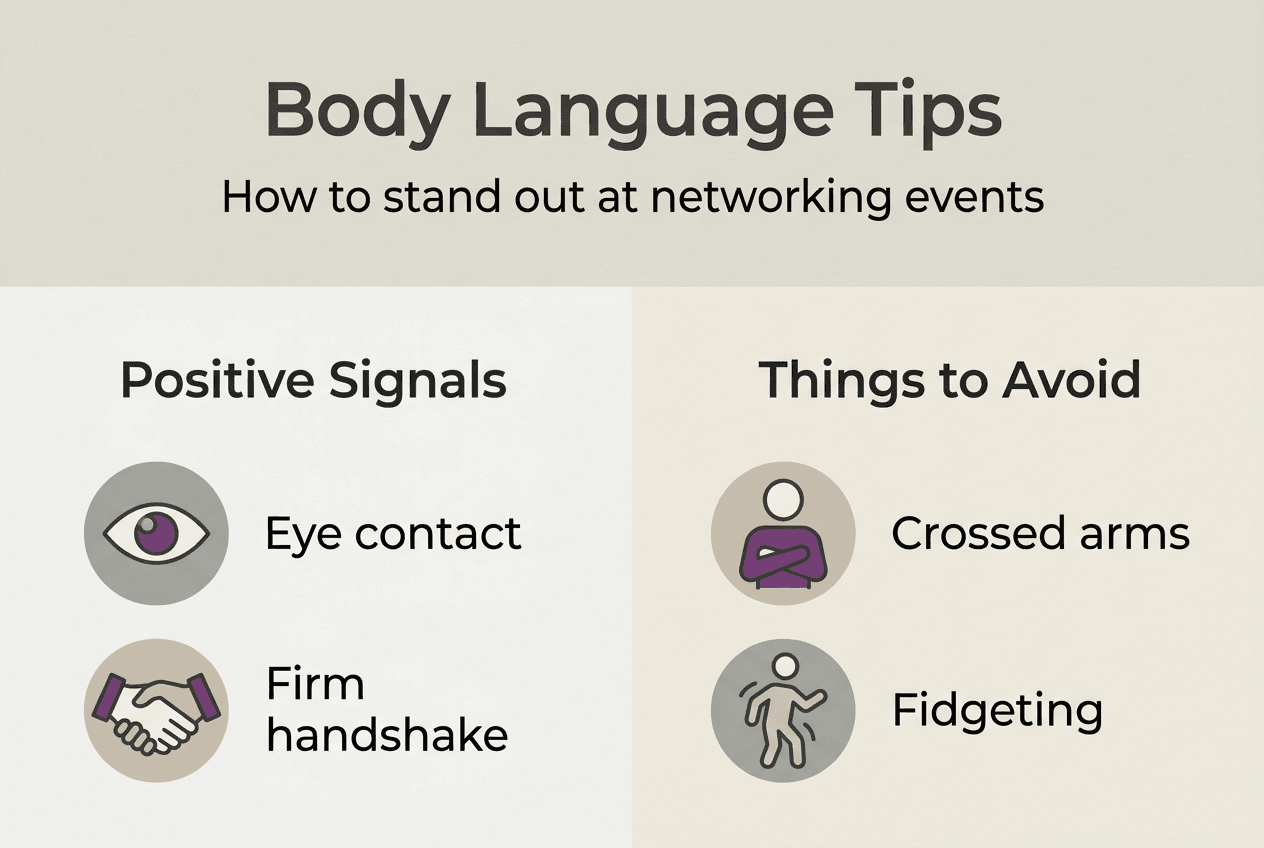
Your body language communicates as much as your words. Maintain appropriate eye contact, offer a firm handshake, and keep an open posture. Avoid crossing your arms or constantly checking your phone. When someone speaks, face them fully and nod to show engagement. These non-verbal cues signal respect and genuine interest in the conversation.
Pro Tip: If you feel nervous, arrive early when crowds are smaller. Practise introducing yourself to the first few people you meet, building confidence before the event reaches peak attendance.
Consider these proven networking techniques for events:
- Approach individuals or small groups rather than large clusters where breaking in feels awkward
- Introduce people to each other when you identify common interests, positioning yourself as a connector
- Exchange contact information when conversations naturally conclude rather than lingering uncomfortably
- Take brief notes after conversations to remember key details for follow-up
- Balance your time between meeting new people and deepening promising connections
- Attend multiple sessions or activities to encounter the same people repeatedly, building familiarity
Understand the difference between passive and active networking approaches:
| Approach | Characteristics | Effectiveness |
|---|---|---|
| Passive networking | Attending events, collecting business cards, waiting for others to initiate | Limited long-term impact |
| Active networking | Initiating conversations, asking questions, following up consistently, offering value | Builds lasting relationships |
Remember that networking extends beyond formal events. Volunteer for event management projects, join professional associations, and participate in online communities. Every interaction represents an opportunity to build your network and demonstrate your capabilities. Apply productivity principles to manage your networking activities efficiently alongside your studies.
Some students worry about appearing too forward or bothering busy professionals. Most experienced event managers remember their own early career struggles and genuinely want to help students succeed. When you approach conversations with authentic curiosity and respect for their time, professionals typically respond positively. If someone seems rushed or disinterested, politely excuse yourself and move on without taking it personally.
Quality conversations matter more than quantity. Having three meaningful 15-minute discussions creates more value than collecting 20 business cards through superficial interactions. Focus on building genuine connections with people whose work genuinely interests you rather than trying to meet everyone in the room.
Following up and building lasting connections
Networking doesn’t end when events conclude. Your follow-up efforts determine whether initial meetings transform into valuable professional relationships. Contacting new connections within 48 hours significantly increases your chances of building lasting relationships. Delays signal disinterest and allow your conversation to fade from their memory amongst dozens of other interactions.
Personalisation is crucial for effective follow-up. Generic messages like “Nice meeting you” get ignored or forgotten. Instead, reference specific conversation topics: “I enjoyed discussing sustainable event catering with you at the industry mixer. Your insights about local supplier partnerships gave me ideas for my upcoming project.” This specificity demonstrates genuine engagement and helps them remember your conversation.
LinkedIn provides an ideal platform for professional follow-up. Send personalised connection requests that mention where you met and what you discussed. Once connected, engage thoughtfully with their content by leaving substantive comments on their posts. Share relevant articles or resources that align with their interests. These ongoing interactions keep you visible without being pushy.
Email works well for more formal follow-up, particularly when someone offered specific assistance or advice. Keep messages concise and action-oriented. Thank them for their time, reference your conversation, and clearly state any questions or requests. If they mentioned resources or contacts they’d share, politely remind them whilst acknowledging their busy schedule.
Pro Tip: Create a simple spreadsheet tracking your networking contacts, where you met, conversation highlights, and follow-up dates. This system ensures you maintain consistent communication without overwhelming yourself.
Building lasting connections requires regular but respectful communication. You don’t want to disappear after initial contact, but you also shouldn’t bombard busy professionals with constant messages. Aim for meaningful touchpoints every few months: sharing relevant industry news, congratulating them on achievements, or updating them on your progress. These interactions maintain the relationship without demanding excessive time or attention.
Consider these follow-up best practices:
- Send LinkedIn requests or emails within 24-48 hours whilst the conversation remains fresh
- Reference specific discussion points to jog their memory
- Express genuine appreciation for their time and insights
- Ask one thoughtful follow-up question if appropriate
- Offer value by sharing relevant resources or making helpful introductions
- Respect their response time and avoid sending multiple follow-ups if they don’t reply immediately
- Update them periodically on how their advice helped your development
Use LinkedIn’s advanced search filters to discover event management professionals in your target companies or specialisations. When requesting connections with people you haven’t met personally, explain your interest in their work and why connecting would be mutually beneficial. Some professionals welcome student outreach whilst others prefer meeting in person first.
Your follow-up efforts should feel natural rather than calculated. Think about building genuine relationships rather than extracting favours. When you consistently demonstrate interest in others’ work, offer value where possible, and maintain authentic communication, professional relationships develop organically. These connections often lead to unexpected opportunities as your network remembers you when relevant positions or projects arise.
Understanding how to attract clients through relationship building applies equally to developing your professional network. The same principles of consistent communication, value delivery, and authentic engagement that win clients also build strong career networks. As you progress in your studies and gain experience, you’ll transition from primarily seeking advice to offering value and expertise to your network.
Consider building your professional brand through consistent online presence and thoughtful engagement. Your digital footprint should reflect your growing expertise and genuine passion for event management. Share insights from your coursework, comment thoughtfully on industry trends, and showcase projects that demonstrate your capabilities.
Boost your event management career with team i courses
Whilst networking opens doors, comprehensive education provides the skills and knowledge employers seek. team i offers specialised event management courses that combine theoretical foundations with practical industry experience. Our programmes connect students with real event opportunities and industry professionals, creating natural networking environments whilst you develop essential capabilities.
Our online event management courses provide flexible learning options that fit your schedule whilst maintaining rigorous standards. You’ll gain hands-on experience through live projects and internships that build both your portfolio and professional network. team i’s 23 years of industry partnerships mean you learn from active practitioners and gain access to events management work experience that accelerates your career launch.
The combination of structured education and strategic networking creates powerful career momentum. team i courses don’t just teach event management theory. They immerse you in the industry, connecting you with the people and opportunities that transform aspirations into successful careers.
Frequently asked questions about networking for students
What is the best way to introduce yourself at a networking event?
Keep your introduction concise and specific. State your name, your current role as a student, and one specific interest or goal related to event management. For example: “I’m James, studying event management at team i, and I’m particularly interested in learning about corporate event technology.” This approach is memorable and provides natural conversation hooks.
How soon should I follow up after meeting someone?
Send your follow-up message within 24 to 48 hours whilst your conversation remains fresh in their memory. Personalise your message by referencing specific topics you discussed. Prompt follow-up demonstrates professionalism and genuine interest whilst delayed contact suggests the connection wasn’t important to you.
Can I network effectively online?
Absolutely. LinkedIn, industry forums, and virtual events provide excellent networking opportunities. Engage authentically by commenting thoughtfully on posts, sharing valuable content, and initiating meaningful conversations. Online networking requires the same principles as in-person interactions: genuine interest, consistent engagement, and offering value to others.
How do I prepare for a virtual networking event?
Test your technology beforehand to avoid technical difficulties. Prepare your background and lighting to present professionally. Research attendees just as you would for in-person events. Have your questions and talking points visible on screen. Engage actively in chat functions and breakout rooms rather than passively observing.
Is it normal to feel nervous when networking?
Completely normal. Most students experience networking anxiety initially. Remember that experienced professionals were once students too and generally want to help. Thorough preparation reduces nervousness significantly. Start with smaller events to build confidence before attending large industry conferences. Each positive interaction makes the next one easier.
Recommended
- Personal Branding for Students: Career-Ready Strategies – team I
- Event Management Internships in 2025: Your Guide to Success – team I
- Build a successful event management career in India 2026 – team I
- Productivity Tips for Students: Succeed in Event Management – team I
- Professional Networking for Businesses: Impacts and Best Practices
- Unlock Success: SEO for Universities in Cape Town – LSA SEO Agency