
More than 5 million people in the British events industry depend on specialists who can deliver flawless experiences. Picking the right niche sets the tone for your entire event management journey and determines how clients perceive your expertise and value. Whether you are considering corporate galas or music festivals, this guide shows how strategic decisions build a standout event business in the competitive British market.
Table of Contents
- Stage 1: Define Your Event Management Niche And Offerings
- Stage 2: Build A Credible Online And Offline Presence
- Stage 3: Develop Strategic Industry Partnerships
- Stage 4: Engage Prospects With Tailored Proposals
- Stage 5: Verify Client Satisfaction And Gather Testimonials
Quick Summary
| Key Insight | Explanation |
|---|---|
| 1. Specialise in a niche | Identify a specific segment in the event industry to excel in, enhancing your market positioning and ability to charge premium rates. |
| 2. Develop a strong brand presence | Establish a comprehensive online and offline presence to showcase your expertise, including a professional website and active social media profiles. |
| 3. Build strategic partnerships | Create meaningful connections with industry professionals that facilitate referrals and collaborative opportunities to enhance your market visibility. |
| 4. Tailor proposals for clients | Customise your event management proposals to meet specific client needs, ensuring personalised touches that resonate with their objectives. |
| 5. Collect authentic client feedback | Implement a system for gathering client testimonials and feedback post-event to highlight your successes and improve future offerings. |
Stage 1: Define your event management niche and offerings
Successfully launching your event management career starts with understanding your unique market positioning. Your goal is to strategically identify a specific segment within the event industry where your skills and passion intersect with market demand.
Carefully evaluating potential niches requires thorough research and self reflection. Industry experts suggest examining emerging trends and identifying strategic opportunities within event management to differentiate your services. Consider specialising in segments like corporate conferences, wedding celebrations, music festivals, sports events, or cultural exhibitions. Each niche presents distinctive challenges and revenue potential.
The most successful event professionals develop a crystal clear understanding of their target audience. Analyse your personal strengths technical capabilities and network connections. Are you exceptional at managing large scale corporate events? Do you have strong relationships within the wedding industry? Perhaps you excel at coordinating music and entertainment venues? Your unique combination of skills passion and professional network will determine your most promising specialisation.
Pro tip: Do not attempt to be everything to everyone. Specialisation allows you to become an expert and command premium pricing in your chosen segment. Potential clients seek specialists who understand the nuanced requirements of their specific event type.
Once you have defined your niche the next step involves developing a compelling service offering that addresses specific client needs within your chosen market segment.
Stage 2: Build a credible online and offline presence
Building a strong professional presence is fundamental to attracting potential event management clients. Your goal is to create a comprehensive personal brand that demonstrates expertise and reliability across multiple platforms.

In the digital era, strategic online presence development becomes crucial for event management professionals. Start by crafting a professional website showcasing your portfolio, highlighting successful events you have managed. Create dedicated social media profiles on platforms like LinkedIn and Instagram where you can share industry insights, event photographs, and demonstrate your professional capabilities. These digital touchpoints serve as virtual portfolios that potential clients will review before engaging your services.
Offline networking remains equally important. Attend industry conferences, join professional associations like the Indian Association of Professional Event Managers, and participate in local business networking events. Your physical presence allows you to build genuine relationships, exchange business cards, and demonstrate your interpersonal skills. Professional certifications from recognised institutions can also significantly enhance your credibility.
Pro tip: Consistency is key. Ensure your online profiles and offline interactions communicate a unified professional narrative. Your brand should reflect your chosen event management niche and highlight your unique strengths.
With a robust online and offline presence established, you are now prepared to start actively marketing your event management services to potential clients.
Stage 3: Develop strategic industry partnerships
Developing strategic industry partnerships represents a critical pathway to expanding your event management opportunities and establishing credibility within the professional landscape. Your objective is to create meaningful connections that can provide referrals, collaborative opportunities, and broader market visibility.
Professional networking platforms like the International Festivals and Events Association offer remarkable opportunities for building industry connections. Begin by identifying potential partners such as venue managers, catering companies, audiovisual professionals, entertainment providers, and corporate event planners. Attend industry conferences, join professional associations, and participate in networking events to meet potential collaborators. Consider creating mutually beneficial relationships where you can exchange referrals and support each other’s business objectives.
When approaching potential partners, focus on demonstrating the unique value you can bring to the relationship. Prepare a concise pitch that highlights your specialisation, past successful events, and how a partnership could benefit both parties. Be prepared to offer something in return such as cross promotion, shared leads, or complementary services. Remember that successful partnerships are built on trust, reliability, and mutual professional respect.
Pro tip: Quality matters more than quantity. Focus on developing a few deep, meaningful partnerships rather than collecting numerous superficial connections. Each strategic relationship should align with your event management niche and professional goals.
With strategic partnerships established, you will be well positioned to expand your service offerings and create a robust professional network that can drive your event management business forward.
Stage 4: Engage prospects with tailored proposals
Creating compelling event management proposals is an art that requires deep understanding of client needs and strategic communication. Your primary objective is to transform initial client interest into a committed partnership by presenting a meticulously crafted proposal that speaks directly to their specific requirements.
Comprehensive research on event participation patterns reveals that personalised proposals significantly enhance client engagement. Begin by conducting thorough client discovery. Schedule in depth consultations to understand their precise event objectives, budget constraints, target audience, and desired outcomes. During these conversations, ask probing questions that demonstrate your genuine interest and professional expertise. Document every detail meticulously and use these insights to design a proposal that feels custom built for their unique event vision.
Your proposal should be a professional storytelling document that goes beyond mere technical specifications. Structure it to include an executive summary, detailed event strategy, comprehensive budget breakdown, timeline of key milestones, and case studies from similar previous events. Include visual elements like mood boards, potential venue recommendations, and preliminary design concepts. Demonstrate your understanding of their specific industry and event goals by showcasing how your proposed approach will deliver measurable results.
Pro tip: Personalisation is paramount. Each proposal should feel like it was crafted exclusively for that specific client, reflecting their brand identity and event aspirations. Generic templates will quickly find themselves in the rejection pile.
Once your tailored proposal is prepared, you are ready to schedule a presentation and transform your strategic document into a signed event management contract.
Stage 5: Verify client satisfaction and gather testimonials
Collecting genuine client feedback and testimonials is a strategic process that transforms successful event execution into powerful marketing assets. Your goal is to systematically capture client experiences while simultaneously demonstrating your commitment to professional excellence.
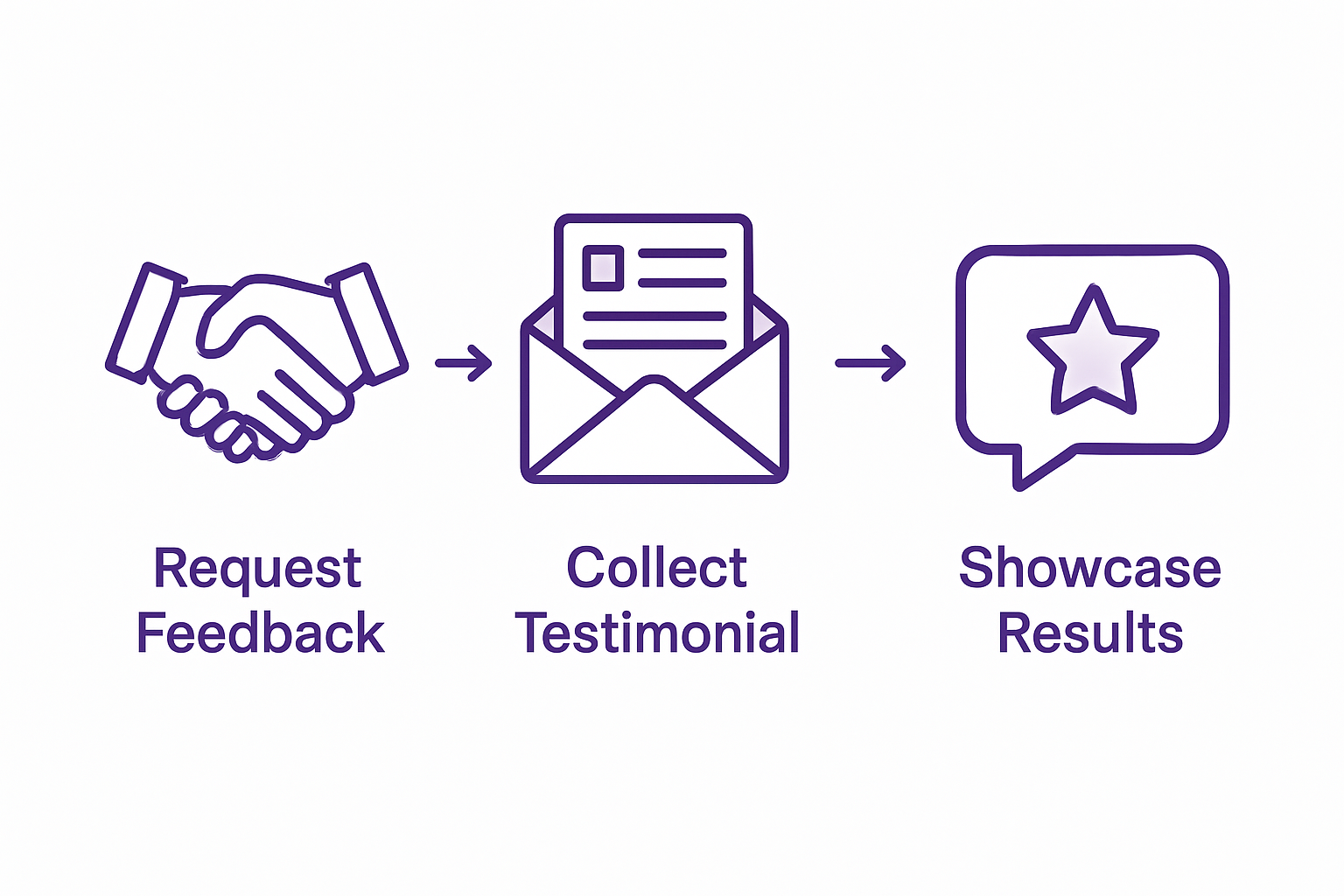
Research indicates that client feedback mechanisms are crucial for continuous improvement in event management services. Schedule a comprehensive post event debrief meeting within two weeks of event completion. Prepare a structured feedback questionnaire covering key aspects such as event organisation, team performance, problem solving capabilities, and overall satisfaction. Use a mix of quantitative rating scales and open ended questions that allow clients to provide detailed insights. During this meeting, actively listen to their experiences, acknowledge their perspectives, and demonstrate genuine interest in understanding their complete event journey.
When requesting testimonials, approach the process professionally and strategically. Choose clients who represent different event types within your specialisation and have experienced your services most comprehensively. Request written testimonials that highlight specific achievements and unique value propositions. Where possible, encourage clients to provide testimonials that can be used across multiple platforms such as your website, social media profiles, and professional networking sites. Consider offering to draft an initial version for their review to make the process easier for busy clients.
Pro tip: Authenticity trumps perfection. Genuine testimonials that showcase real challenges overcome and specific value delivered will resonate more powerfully than overly polished marketing language.
With robust client feedback and compelling testimonials collected, you are now equipped to enhance your professional reputation and attract future high quality event management opportunities.
Elevate Your Event Management Career with Proven Strategies and Expert Training
The article “How to Get Clients for Events: Proven Steps for Success” perfectly highlights the challenges of defining your niche, building a credible presence, and engaging clients with tailored proposals. These critical steps require not only practical knowledge but also hands-on experience to truly stand out in the competitive event management industry. If you are passionate about mastering these skills and turning them into a thriving career, specialised education tailored to your chosen event segment is essential.
At teami.org, you can unlock comprehensive learning through certification programmes that cover social, sports, wedding, and corporate events. Gain practical exposure via internships and real event participation while benefiting from our 24 years of industry expertise and partnerships with leaders like DNA Entertainment Networks. Don’t wait to build your confidence and credibility – explore our course offerings and industry collaborations to start attracting your ideal clients now. Visit our landing page to discover how our training can help you craft compelling proposals, build strategic partnerships, and secure glowing testimonials that propel your career forward.
Frequently Asked Questions
How do I identify my event management niche?
To identify your event management niche, assess your personal strengths and the market demand. Start by researching various sectors like corporate events, weddings, or music festivals to determine where your skills and passion can meet client needs.
What should I include in my event management proposals?
Your event management proposals should include an executive summary, detailed event strategy, budget breakdown, timeline, and case studies from past events. Tailor your proposal to reflect the specific needs and objectives of each client to enhance engagement.
How can I effectively network for event management opportunities?
To effectively network, attend industry conferences, join relevant professional associations, and engage in local networking events. Build genuine relationships and exchange contacts to expand your professional network and uncover potential client leads.
What are the most effective ways to collect client feedback?
To collect effective client feedback, schedule a comprehensive debrief meeting within two weeks of the event’s completion. Prepare a structured questionnaire covering key aspects of the event, and actively listen to your client’s experiences to gain valuable insights.
How do I build a compelling online presence for my event management business?
Building a compelling online presence involves creating a professional website that showcases your portfolio and successes. Maintain active social media profiles where you share industry insights and event highlights to attract potential clients and enhance credibility.
How can I establish strategic partnerships in event management?
To establish strategic partnerships, identify potential collaborators such as venue managers or catering companies and approach them with a clear value proposition. Attend networking events to foster these relationships, focusing on quality connections that align with your event management niche.
Recommended
- How Many Clients You Will Have After This Health Crisis Goes Away? – team I
- 7 Key Challenges in Event Planning and How to Overcome Them – team I
- How to Start Event Management Company: Complete Guide – team I
- 7 Essential Tips for Networking Events for Young Professionals – team I
Thinking about a career in event management?
team I is Bangalore’s only EEMA-certified event management institute, running for 24 years, where students work on real live events with real budgets and real deadlines rather than classroom simulations. See the full range of event management courses in Bangalore, or go straight to the flagship Certificate Program in Event Management (CPEM).