
An event management associate degree is a two-year, 60-credit hour programme that builds foundational skills in event planning, hospitality, marketing, and logistics, preparing graduates for entry-level careers across India’s fast-growing events industry. This is not a passive classroom qualification. It is your first real step into controlled chaos, the kind you will find backstage at a Bangalore corporate summit, inside a Mumbai wedding mandap, or coordinating crowd flow at a Delhi college festival. The degree combines core business subjects with specialised event modules and, critically, mandatory internships that put you on actual event floors before you graduate.
What does an event management associate degree curriculum include?
The standard 60-credit structure is split between core business subjects and specialised event management topics. You are not just studying theory. You are building a toolkit.

Core subjects typically cover business communication, hospitality accounting, marketing fundamentals, and customer service operations. These give you the commercial backbone every event professional needs when negotiating vendor contracts or presenting a budget to a client in Hyderabad.
The specialised modules are where it gets serious. Courses in risk management, convention planning, event marketing, and logistics are each typically structured as 3-credit units. That means you go deep, not just wide. By the time you finish, you understand showflows, site logistics, and how to build a pitch deck that wins corporate clients.
| Module | Credits | Skills developed |
|---|---|---|
| Hospitality accounting | 3 | Budgeting, cost control |
| Event marketing | 3 | Promotion, sponsorship strategy |
| Risk management | 3 | Safety planning, contingency protocols |
| Convention and event planning | 3 | Logistics, vendor coordination |
| Internship or practicum | 3–6 | Live event execution |
| Business communication | 3 | Client management, presentations |
Many programmes also offer stackable credentials, where you earn a technical diploma alongside your associate degree. That dual qualification saves time and makes your CV stand out before you have even attended your first industry networking event.
Pro Tip: Look for programmes where the industry-ready curriculum includes a mandatory internship in the final semester. Employers in India consistently favour graduates with documented, hands-on event experience over those with purely theoretical qualifications.
How does this degree prepare you for careers in India’s events industry?
India’s events sector is not waiting for you to be ready. It demands versatility from day one. The Indian event sector increasingly requires professionals who can handle event technology, sustainability planning, and data analytics alongside traditional coordination skills. An associate degree in events builds exactly that range.
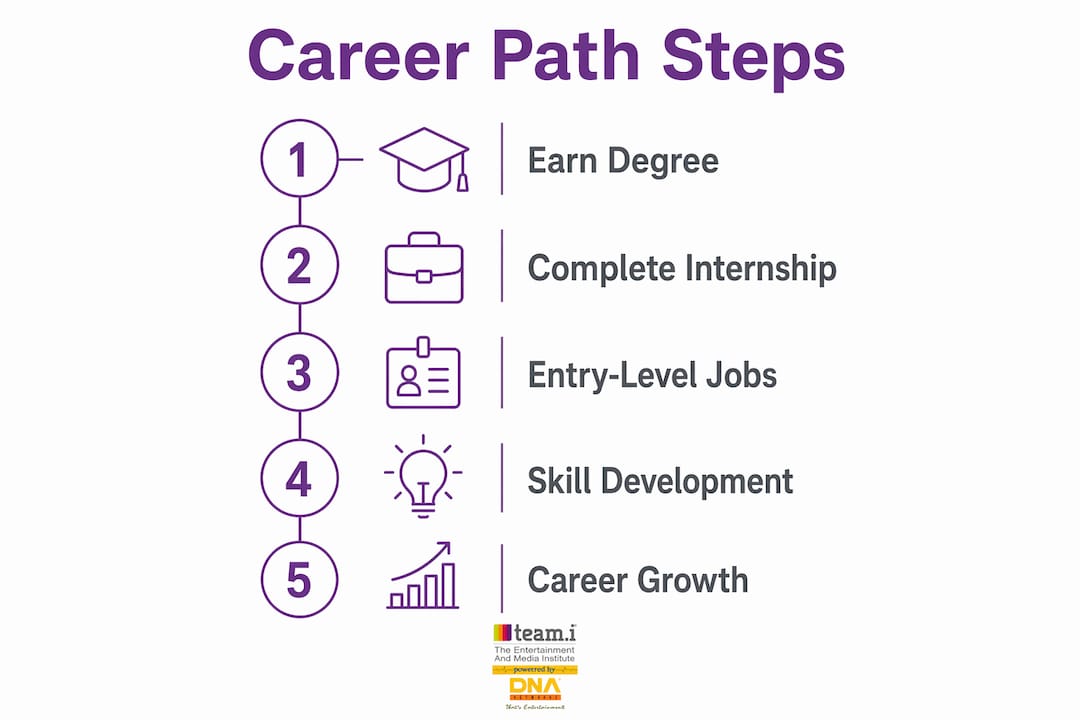
Think about what a typical week looks like for an entry-level coordinator in Bengaluru. Monday, you are managing vendor confirmations for a corporate product launch. Wednesday, you are on-site at a college fest in Pune, troubleshooting AV logistics. Friday, you are building a post-event analytics report for a client in Mumbai. The degree trains you for all three scenarios, not just one.
Entry-level roles accessible after graduation include:
- Assistant event coordinator at corporate event agencies in Mumbai or Delhi
- Wedding planning associate at boutique firms in Bangalore and Jaipur
- Event marketing executive managing digital promotion and sponsorship outreach
- Logistics coordinator for concert productions and large-scale college festivals
- Venue operations assistant at hotels and convention centres in Hyderabad
Careers in event management at this level are genuinely accessible post-associate degree, particularly in cities where the events calendar never stops. Mumbai alone hosts hundreds of corporate conferences, product launches, and entertainment productions every month.
The internship component is the real differentiator. Mandatory internships during the programme give you documented, real-world experience that Indian employers actively look for. You are not walking into an interview saying you studied events. You are walking in saying you ran one.
Pro Tip: From your first semester, start building your network. Attend industry events in your city, connect with faculty who have active industry ties, and seek programmes with strong partnerships with event companies. Industry mentorship and networking significantly improve early career placement chances, and in India’s relationship-driven events industry, who you know is as important as what you know.
Associate degree vs diploma vs bachelor’s: which suits you?
Choosing between an event planning diploma, an associate degree in events, and a full bachelor’s qualification is a decision about time, depth, and ambition. Each pathway has a distinct profile.
| Qualification | Duration | Depth | Cost | Career entry | Progression |
|---|---|---|---|---|---|
| Event planning diploma | 6–12 months | Practical focus | Lower | Fast | Limited without further study |
| Associate degree | 2 years | Balanced theory and practice | Moderate | Solid | Credits transfer to bachelor’s |
| Bachelor’s degree | 3–4 years | Broad theory and specialisation | Higher | Broader roles | Management and leadership tracks |
The associate degree offers a cost-effective pathway to employment compared to a bachelor’s degree, typically taking two years versus three or four. For a career changer or a school leaver who wants to be on event floors quickly, that time advantage is real.
Diplomas are faster but narrower. They train you for specific tasks rather than building the commercial and strategic thinking that makes you promotable. A bachelor’s degree opens doors to management roles and international opportunities, but it is a longer commitment with higher fees.
The smartest move for many students is the associate degree with a clear plan to transfer credits towards a bachelor’s later. Stackable associate programmes allow exactly that, so you enter the workforce in two years and continue studying part-time without starting from scratch. For a deeper comparison of related fields, the event management vs hospitality management breakdown is worth reading before you decide.
What should you look for when choosing a programme?
Not all programmes are equal. The difference between a degree that launches your career and one that leaves you scrambling for experience comes down to a few non-negotiable factors.
- Accreditation and industry recognition. A qualification that employers in Mumbai or Bangalore do not recognise is a qualification that does not open doors. Verify the institute’s standing with industry bodies before you enrol.
- Curriculum relevance. Does the programme cover event industry trends like hybrid events, sustainability, and digital marketing? India’s events market moves fast, and your curriculum should reflect that.
- Internship quality. A mandatory practicum with a reputable event company is worth more than any classroom module. Ask specifically which companies the institute places students with.
- Faculty experience. Lecturers who have personally managed large-scale productions in India bring a level of insight no textbook can replicate. When they tell you something does not work, it is not theoretical.
- Location and access to live events. Studying in Bangalore, Mumbai, Delhi, or Hyderabad gives you proximity to India’s biggest event markets and the networking opportunities that come with them.
Pro Tip: Ask the institute for alumni placement data before you commit. A programme confident in its outcomes will share that information openly. If they hesitate, that tells you something.
What 23 years in event education taught us about this degree
Here is the honest truth that most education guides will not tell you. The associate degree is not the destination. It is the launchpad. And the students who treat it that way, who show up to every internship like it is their first professional job, who network at every industry event they can access, who ask faculty for introductions rather than just grades, those students build careers that outpace graduates from far more expensive programmes.
India’s events industry does not care deeply about the prestige of your qualification. It cares about what you can do on the day. Can you manage a vendor who is two hours late? Can you keep a 500-person corporate audience engaged when the keynote speaker cancels? Can you read a crowd at a Hyderabad wedding and adjust the programme in real time?
The associate degree, when chosen well and taken seriously, builds exactly that instinct. The theory gives you a framework. The internship gives you the scars. And the combination makes you genuinely employable in one of India’s most exciting industries.
Continual learning matters after graduation too. Specialise in wedding management, sports events, or corporate productions. Explore online event management courses to stack credentials while you work. The best event professionals never stop learning, because the industry never stops changing.
— Teami
Start your event management career with Teami
Teami has spent 23 years training event professionals who go on to work with India’s biggest productions, from mega corporate IPs to large-scale entertainment events, through its partnership with DNA Entertainment Networks. The event management courses at Teami are built around the same practical, industry-connected model that this article describes: real internships, battle-tested faculty, and live event exposure from your first semester. Whether you are a school leaver in Bangalore or a career changer in Mumbai, Teami’s programmes are designed to get you onto event floors fast and keep you there. Explore your options and speak to the admissions team to find the right pathway for your goals.
FAQ
What is an event management associate degree?
An event management associate degree is a two-year, 60-credit hour qualification covering event planning, hospitality, marketing, risk management, and logistics, typically including a mandatory internship for practical industry experience.
How long does an event management associate degree take to complete?
Most programmes take two years of full-time study. Associate degrees are shorter than bachelor’s degrees, making them a faster route into entry-level event careers.
Can I transfer my associate degree credits to a bachelor’s programme?
Yes. Many associate degree programmes are structured as stackable credentials, allowing you to transfer credits towards a four-year bachelor’s degree if you choose to continue your education.
What jobs can I get after an event management associate degree in India?
Graduates typically enter roles such as assistant event coordinator, wedding planning associate, event marketing executive, or logistics coordinator, particularly in cities like Mumbai and Bengaluru.
Is an internship included in event management associate degree programmes?
Mandatory internships or practicum courses are a standard feature of most associate degree programmes and are one of the primary factors that improve job placement rates after graduation.