
An event logistics company is a specialised service provider that manages the physical movement, storage, and on-site handling of all materials and equipment needed for an event to function. This is not event management. It is the operational backbone that keeps everything from stage trusses to branded merchandise arriving at the right venue, at the right time, in the right condition. In India, where a single corporate summit in Hyderabad can involve freight from three cities and a destination wedding in Udaipur can require coordinating forty vendors simultaneously, the distinction matters enormously.
What does an event logistics company actually do?
Event logistics covers transportation, storage, on-site handling, and customs clearance for international events, each distinct from the broader planning scope of event management. That definition is the starting point for understanding why you need a dedicated logistics partner, not just a general event coordinator who “handles everything.”
Here is what a professional event logistics company delivers in practice:
- Transportation planning and execution. This includes route analysis, vehicle selection, and scheduling for urban Indian contexts where Bangalore’s ORR or Mumbai’s Western Express Highway can add two hours to a delivery window. Trucks, tempos, and refrigerated vehicles are all part of the fleet depending on the cargo.
- Warehousing and storage. Metro cities like Delhi and Mumbai have bonded warehouse facilities where event materials can be stored, staged, and dispatched in sequence. This is critical for multi-day exhibitions at venues like Bombay Exhibition Centre or Pragati Maidan.
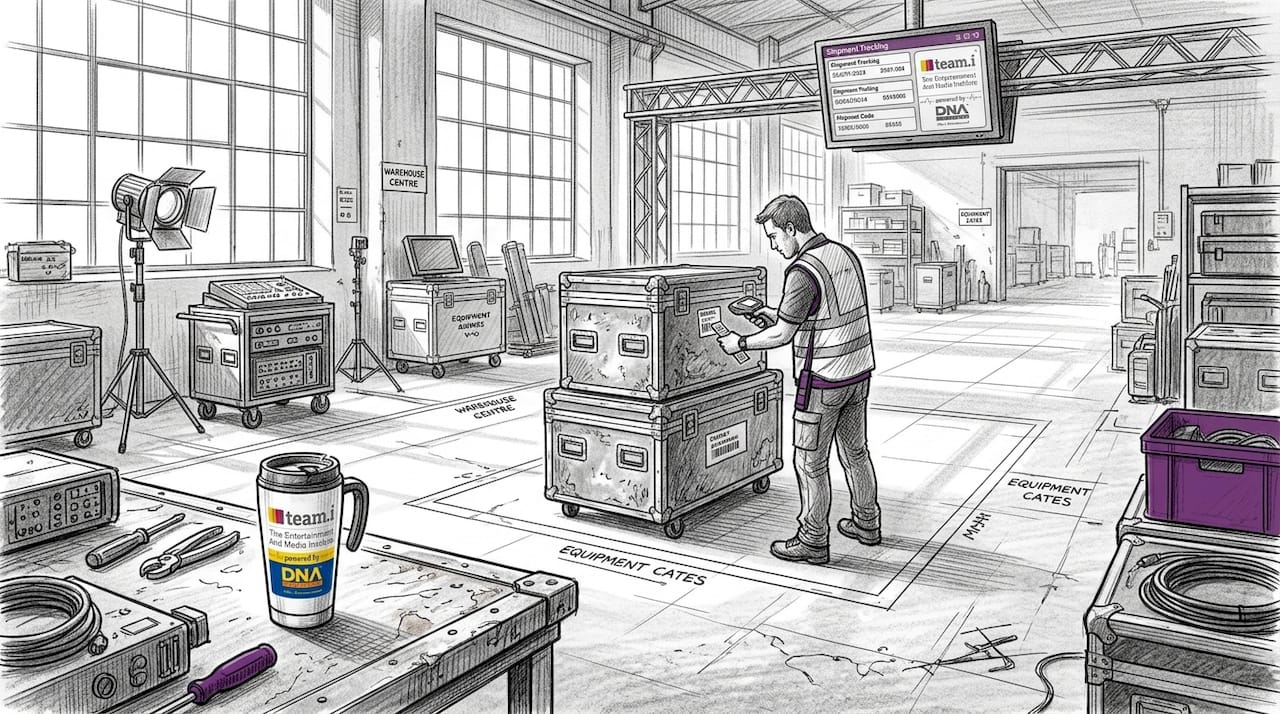
- On-site material handling. Load-in and load-out coordination at the venue, including forklift operation, manual handling teams, and dock management. Teams begin on-site checks 24 hours before doors open, covering badge printing, venue readiness, staff roles, and safety controls.
- Customs clearance. For international concerts, art fairs, or global corporate conferences, ATA Carnets serve as customs passports enabling temporary import and export of event materials, typically valid for twelve months.
- Registration and badge logistics. Many logistics providers now offer integrated registration data management, including badge design and on-site printing to accelerate attendee check-in and reduce bottlenecks at the gate.
Pro Tip: Use integrated onsite platforms that provide real-time visibility into check-ins and badge printing. Manual reconciliation at a 2,000-person corporate event in Bangalore is a disaster waiting to happen.
How does event logistics differ from event management?
This is the question most corporate clients get wrong, and the confusion costs them on the ground. Event management covers the full arc of an event: concept, vendor coordination, attendee experience, programming, and post-event reporting. An event logistics company focuses on one thing: the tactical physical movement of goods and materials from origin to venue and back.
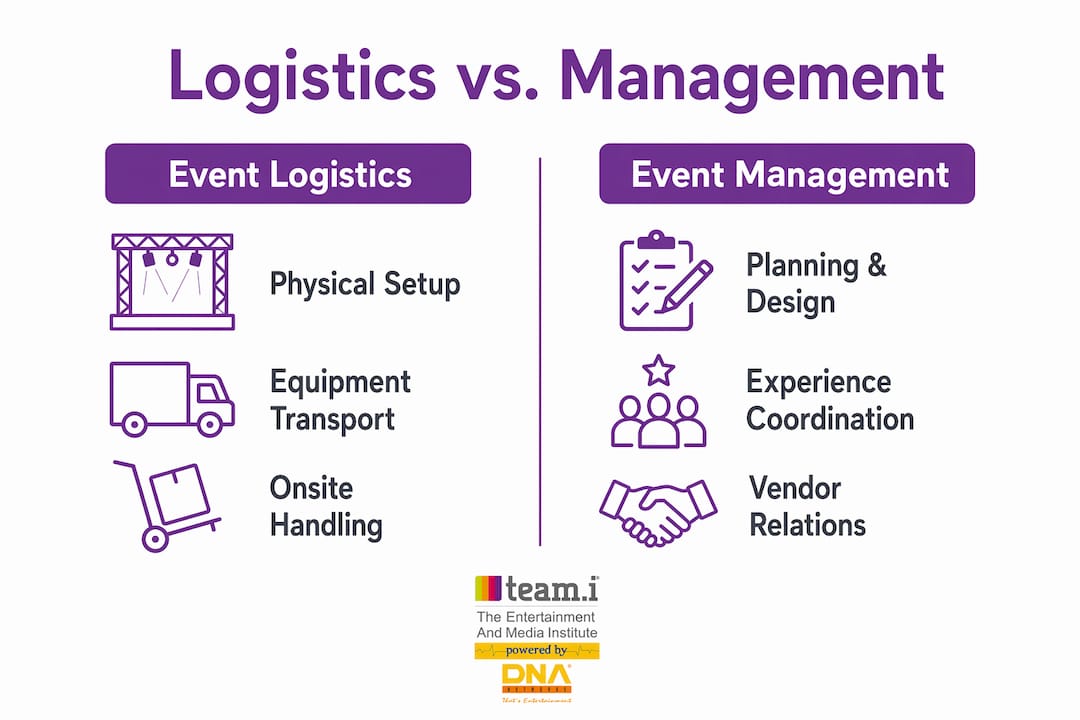
Think of it this way. The event manager decides that a product launch in Delhi needs a 40-foot LED wall. The logistics company figures out how to get that wall from a warehouse in Noida, through a narrow service entrance at the venue, onto the stage, and back out again after the show without damaging it or delaying the rehearsal.
| Function | Event management | Event logistics company |
|---|---|---|
| Vendor selection and negotiation | Yes | No |
| Transportation and routing | No | Yes |
| Attendee experience design | Yes | No |
| On-site material handling | No | Yes |
| Customs and freight documentation | No | Yes |
| Programme and runsheet management | Yes | No |
| Storage and warehousing | No | Yes |
The interdependence is real. Many programmes fail at the handoff between the carrier or warehouse and the venue loading dock, precisely because transport and on-site handling are managed by separate teams with no shared accountability.
“When the loading dock becomes a grey area between two teams, the event pays the price. One accountable workflow, spanning from truck arrival to material setup, is not optional. It is the only way to protect your timeline.”
For Indian weddings and corporate events growing in scale and complexity, having both specialisms working from a shared brief is what separates a smooth execution from a crisis at 6 AM on event day.
What challenges do logistics companies face at Indian events?
Indian events are not just logistically complex. They are logistically extreme. Here is what the best event logistics companies manage routinely, and how they do it.
Traffic congestion and access restrictions. Cities like Bangalore and Mumbai impose time-restricted heavy vehicle access in commercial zones. A logistics company plans delivery windows around these restrictions, often scheduling load-in between midnight and 5 AM to avoid fines and delays. Pre-planning transport requires documented collection and delivery locations, route analysis, and defined loading and unloading zones.
Venue constraints. Freight elevator dimensions, dock access timings, and power availability at the venue must drive the load-in schedule. Load-in schedules built around internal rehearsal times rather than venue constraints are a leading cause of costly overruns. A site visit and floor plan review before finalising any logistics plan is non-negotiable.
Multi-vendor coordination. A large wedding in Jaipur or a corporate awards night in Hyderabad can involve décor vendors, AV suppliers, catering equipment, and branded merchandise all arriving within the same four-hour window. The logistics company acts as the traffic controller, sequencing arrivals to prevent gridlock at the loading bay.
Sensitive and bulky equipment. Festival stages, concert sound systems, and exhibition booths require specialist handling. Dropping a line array speaker or mishandling a custom-built set piece is not just expensive. It can shut down the event entirely.
Safety protocols. Professional logistics teams treat the loading dock as a controlled operations area with clear safety and responsibility zones. Forklift operators, manual handling crews, and venue staff each have defined roles. Logistical success depends on structured planning, realistic scheduling with buffers, safety protocols, and thorough post-event evaluations.
Pro Tip: Always build a 90-minute contingency buffer into your event timeline planning for load-in at Indian metro venues. Traffic, security checks, and lift queues will consume it faster than you expect.
How to choose the right event logistics company in India
Choosing a logistics partner is not about finding the cheapest truck hire. It is about finding a company whose operational depth matches the complexity of your event. Here is what to assess:
- Relevant event experience. A company that has handled corporate summits at ITC Grand Chola in Chennai or multi-day exhibitions at India Expo Mart in Greater Noida understands venue-specific constraints that a general freight company simply does not.
- Full-service capability. Confirm they cover transportation, warehousing, on-site handling, and customs clearance if your event involves international freight. Gaps in capability create the handoff failures that derail timelines.
- Technology adoption. Ask whether they use digital tools for real-time tracking, route monitoring, and on-site coordination. A company still running operations on WhatsApp threads and spreadsheets is a liability at scale.
- Verified client references. Request case studies from Indian event contexts, not generic testimonials. A reference from a production company that ran a 10,000-person concert in Mumbai carries far more weight than a generic five-star review.
- Transparent cost structures. Understand exactly what is included: fuel surcharges, overtime rates, storage fees, and insurance coverage for high-value equipment. Surprises in the final invoice are a sign of a poorly scoped contract.
- Clear communication channels. Establish a single point of contact on both sides. The event management best practices that separate good events from great ones always include defined escalation paths and real-time communication protocols.
What we have learnt from watching logistics make or break Indian events
At Teami, we have spent 24 years watching events succeed and fail at the logistics stage. The pattern is consistent. When logistics is treated as a secondary task, something to sort out after the creative and programming decisions are locked, the event suffers. When it is integrated from the brief stage, everything else gets easier.
The demand for specialised logistics for events in India is growing fast, driven by larger corporate productions, destination weddings with international guest lists, and global artists touring Indian cities. Local regulations, venue-specific constraints, and the sheer density of Indian urban infrastructure mean that generic freight solutions do not cut it. You need a partner who knows that the service entrance at NSCI Dome in Mumbai has different access rules from the one at Jio World Convention Centre, and who has the relationships to navigate both.
The uncomfortable truth is that most event planners underestimate logistics until something goes wrong. Do not wait for the 3 AM call about a truck stuck at a state border checkpoint to start taking it seriously.
— Teami
Build the skills to manage event logistics at a professional level
Understanding how an event logistics company operates is one thing. Knowing how to brief one, manage the relationship, and integrate their work into your overall event management solutions is what separates a competent planner from an exceptional one. Teami’s event management courses cover logistics modules grounded in real Indian event scenarios, from corporate event logistics at large-scale conferences to event setup and breakdown at destination weddings. With 24 years of industry experience and direct ties to DNA Entertainment Networks, Teami trains you on the ground, not just in the classroom. Explore the online event management programme and start building the expertise that the industry actually demands.
FAQ
What is an event logistics company?
An event logistics company specialises in the physical movement, storage, on-site handling, and customs clearance of materials and equipment required for an event. It is distinct from event management, which covers overall planning, vendor coordination, and attendee experience.
How does event logistics differ from event management?
Event management handles the full planning and experience design of an event, while an event logistics company focuses specifically on transportation, warehousing, and on-site material handling. Both functions are required for large-scale events, and they must operate from a shared brief to avoid handoff failures.
Why do Indian events need specialised logistics support?
Indian events face unique challenges including urban traffic restrictions, complex venue access constraints, and multi-vendor coordination across tight timelines. A specialised logistics partner understands local regulations, venue-specific requirements, and contingency planning in ways that a general freight provider does not.
What is an ATA Carnet and when is it needed?
An ATA Carnet is an internationally recognised customs document that allows the temporary import and export of event materials, typically valid for up to twelve months. It is used when international artists, exhibitors, or corporate clients bring equipment into India for a specific event and need to export it again afterwards.
How early should a logistics company be brought into event planning?
A logistics company should be engaged at the same time as the venue is confirmed, not after the creative brief is finalised. Load-in schedules, storage requirements, and transport routes all depend on venue constraints that must be assessed before any other operational decisions are locked in.
Recommended
- Event Logistics Planning: Essential Steps and Tips for 2025 – team I
- Master Event Timeline Planning for Seamless Event Delivery – team I
- Event Planning Checklist 2025: Step-by-Step Guide for Success – team I
- Life of an Event Planner: Complete Expert Guide – team I
Thinking about a career in event management?
team I is Bangalore’s only EEMA-certified event management institute, running for 24 years, where students work on real live events with real budgets and real deadlines rather than classroom simulations. See the full range of event management courses in Bangalore, or go straight to the flagship Certificate Program in Event Management (CPEM).