

Stepping into the world of event management means swapping theory for real-world action, where every decision and detail directly shapes the success of live experiences. With India’s thriving events industry demanding creative, technical, and organisational skills, practical exposure becomes your strongest asset in this field. This guide breaks down what truly counts as events management work experience and reveals how hands-on roles, certifications, and smart specialisation can set recent graduates apart from the competition.
Table of Contents
- Events Management Work Experience Defined
- Types Of Events And Specialisations
- Essential Skills For Practical Exposure
- Requirements, Internships, And Certifications
- Risks, Challenges, And Common Mistakes
Key Takeaways
| Point | Details |
|---|---|
| Practical Experience is Essential | Hands-on work experience in events management provides invaluable skills that cannot be taught in a classroom. Internships are crucial for real-world application and industry networking. |
| Specialisation Matters | Understanding different event types allows you to choose a specialisation aligned with your strengths and interests. Specialising helps in building relevant networks and expertise. |
| Communication and Problem-Solving Skills are Key | Effective communication and quick problem-solving differentiate exceptional event managers from their peers. Master these skills to enhance your reliability and career prospects. |
| Risk Management is Critical | Anticipating potential risks and preparing contingency plans is essential for successful event execution. Avoid common mistakes like ignoring safety protocols and budget miscalculations. |
Events management work experience defined
Events management work experience refers to practical, hands-on involvement in planning, coordinating, and executing events of varying scales. It’s not just theoretical knowledge—it’s real-world application where you learn by doing, making decisions under pressure, and solving problems as they arise.
This type of experience encompasses project management principles applied to designing and delivering events, from intimate gatherings to large-scale festivals and conferences. You gain exposure to the creative, technical, and logistical sides of the industry simultaneously.
Work experience in event management typically includes responsibilities such as:
- Venue coordination and logistics planning
- Vendor management and contract negotiations
- Budget tracking and financial oversight
- Marketing and promotion strategies
- Timeline creation and deadline management
- On-ground execution and problem-solving
- Client communication and relationship building
Unlike sitting in a classroom, work experience forces you to understand how brands connect with audiences, how technical elements must sync perfectly with creative visions, and how a single oversight can derail months of planning. You see budgets become real numbers, not hypothetical figures.
In the Indian context, this experience often comes through internships at event agencies in cities like Bangalore, Mumbai, and Delhi, or through direct involvement with organisations like DNA Entertainment Networks that produce large-scale events. You might assist with corporate conferences, product launches, weddings, or sports events—each teaching you different skill sets.
Work experience transforms event management from a concept into muscle memory. You don’t just understand vendor coordination; you negotiate with actual vendors.
Pro tip: Document every event you work on—create a portfolio showing your role, challenges faced, and outcomes achieved. This becomes invaluable when applying for full-time positions, as hiring managers want proof of real-world impact, not just participation.
Types of events and specialisations
Event management isn’t a one-size-fits-all profession. Different event types demand vastly different skill sets, timelines, and expertise. Understanding these distinctions is crucial before choosing your specialisation path.
Corporate events form the backbone of the events industry in India. These include conferences, product launches, annual meetings, and team-building activities. They typically involve large budgets, detailed scheduling, and formal execution standards. Companies hire event professionals specifically for corporate expertise because the stakes are high and audiences are professional.
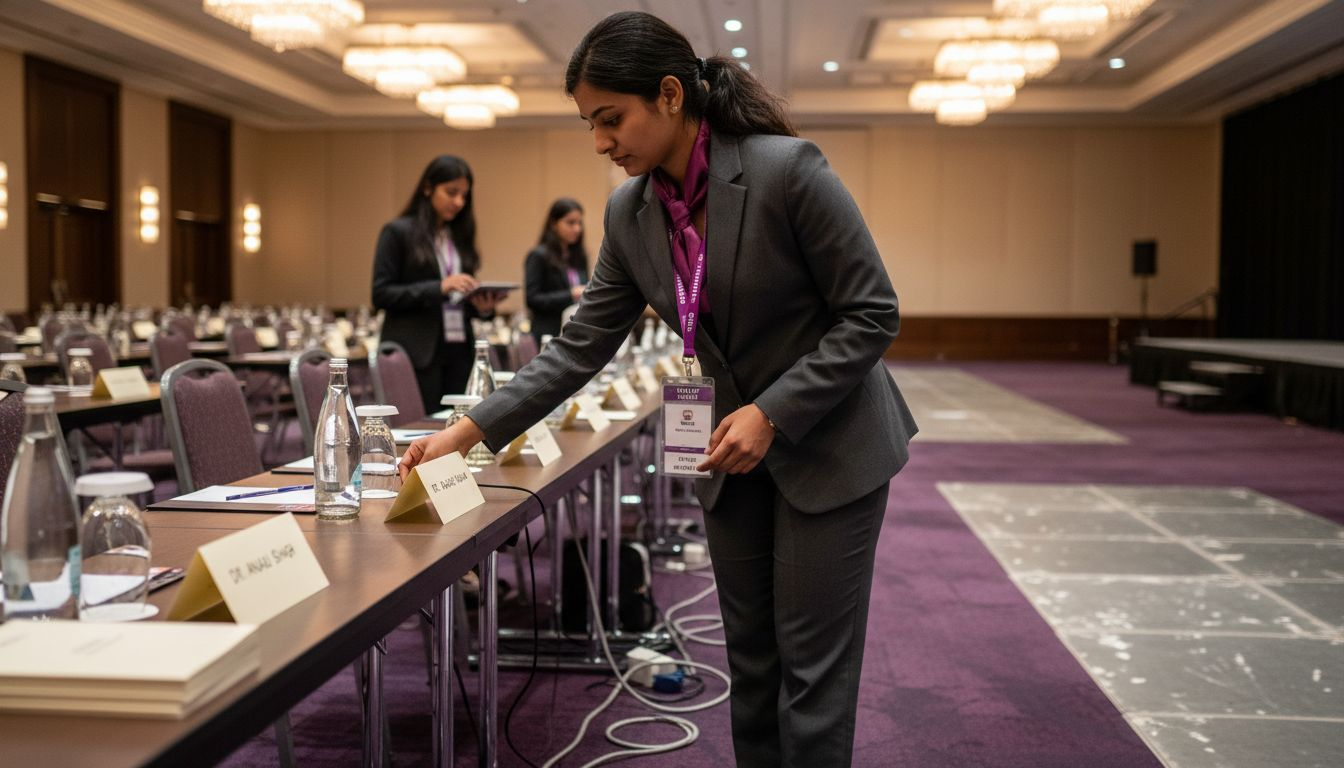
Weddings and social events represent a completely different beast. These are emotionally charged, highly personalised events where small details create lasting memories. Wedding planning requires vendor coordination, creative design thinking, and exceptional interpersonal skills. The Indian wedding market is particularly lucrative, with celebrations often spanning multiple days and involving hundreds of guests.
Professional events such as conferences and conventions demand meticulous planning around logistics, catering, and scheduling. These events connect professionals within industries and require knowledge of delegate management and networking spaces.
Other significant specialisations include:
- Sports events – stadium management, athlete logistics, spectator safety
- Music and entertainment festivals – crowd control, stage design, technical production
- Trade shows and exhibitions – booth management, vendor relations, visitor flow
- Press conferences and launches – media coordination, messaging control, timing precision
- Virtual and hybrid events – technology integration, platform management, audience engagement online
Each specialisation requires distinct knowledge. Wedding planners rarely handle conferences effectively. Sports event coordinators face entirely different challenges than festival organisers. Your work experience should begin focusing on one or two areas where you want to build expertise.
Below is a summary comparing major event management specialisations and the core challenges they present:
| Specialisation Type | Main Challenge | Required Expertise | Typical Audience |
|---|---|---|---|
| Corporate Events | High expectations, formalities | Scheduling, stakeholder management | Business professionals |
| Weddings & Social Events | Personalisation pressure | Creative design, emotional skills | Families and guests |
| Sports Events | Crowd safety, logistics | Security coordination, timing | Spectators, athletes |
| Festivals & Entertainment | Technical production | Audio-visual, crowd control | General public, fans |
| Trade Shows & Exhibitions | Visitor flow | Booth management, vendor relations | Businesses, buyers |
| Virtual/Hybrid Events | Tech reliability | Platform management, engagement | Online, remote parties |
Your specialisation determines which networks you build, which clients you attract, and which challenges you’ll master. Choose based on what genuinely excites you, not just market demand.
Pro tip: During your initial work experience, rotate through at least two different event types before settling on a specialisation. This breadth prevents you from committing to an area only to discover it doesn’t suit your strengths or interests.
Essential skills for practical exposure
Practical exposure teaches you skills that no classroom can replicate. You learn by handling real situations, managing actual budgets, and coordinating with genuine vendors who expect professionalism from day one.
Communication skills top the list. You must brief team members, negotiate with vendors, manage client expectations, and calm stressed stakeholders during crises. Poor communication derails events faster than any logistical oversight.
Problem-solving and adaptability separate competent professionals from exceptional ones. Weather changes venue plans. Vendors cancel. Speakers arrive late. You need the ability to think quickly and find workable solutions under pressure.
Event marketing, hospitality management, and promotional strategies form the creative side of your skill set. You learn how brands connect with audiences through events and how to position an event to attract the right attendees.
Core technical skills you’ll develop include:
- Budget management – tracking expenses, negotiating pricing, preventing cost overruns
- Vendor coordination – sourcing, contracting, relationship management, quality control
- Logistics and operations – timeline creation, resource allocation, on-ground execution
- Event marketing – audience targeting, promotional tactics, ticket sales strategy
- Risk management – identifying potential issues, creating contingency plans
- Crowd management – safety protocols, flow design, security coordination
In the Indian context, working with agencies in Bangalore or through DNA Entertainment Networks gives you exposure to large-scale production events where these skills matter intensely. A single miscommunication with a venue or vendor can disappoint thousands of people.
Emotional intelligence often gets overlooked but proves invaluable. You work with perfectionistic clients, demanding performers, and stressed team members. Understanding people’s motivations and managing personalities becomes your daily reality.
Here is a table outlining the value of practical skills gained through work experience, with their broader career impact:
| Practical Skill | Developed Through | Career Impact |
|---|---|---|
| Communication | Vendor and client negotiation | Builds trust, resolves conflicts efficiently |
| Problem-solving | On-ground issue handling | Increases reliability, enhances reputation |
| Budget Management | Real event cost tracking | Avoids financial overruns, supports sustainability |
| Emotional Intelligence | Team and client interactions | Improves team morale, client satisfaction |
The difference between an event coordinator and an event manager lies in skill depth. Coordinators execute tasks; managers anticipate problems and solve them before they surface.
Pro tip: Request mentorship from senior team members during your work experience specifically focused on problem-solving. Ask them to walk you through how they handle vendor disputes, budget cuts, or schedule conflicts. These conversations teach more than months of independent work.
Requirements, internships, and certifications
Breaking into event management requires a strategic combination of practical experience, formal qualifications, and demonstrable skills. There’s no single pathway, but understanding the landscape helps you chart the right course.
Educational requirements vary depending on your target role. Most entry-level positions prefer candidates with a secondary education qualification, though a diploma or degree in hospitality, marketing, or business management gives you a competitive edge. In India, institutions like team I offer specialised programmes that combine theory with hands-on projects, accelerating your entry into the industry.
Internships form the backbone of your work experience. These typically last three to six months and place you directly into live events. You’ll handle registration desks, coordinate vendors, manage timelines, and observe senior professionals solving real problems. Many Indian event agencies in Bangalore, Mumbai, and Delhi actively hire interns, and working with DNA Entertainment Networks through formal programmes provides exposure to large-scale productions.
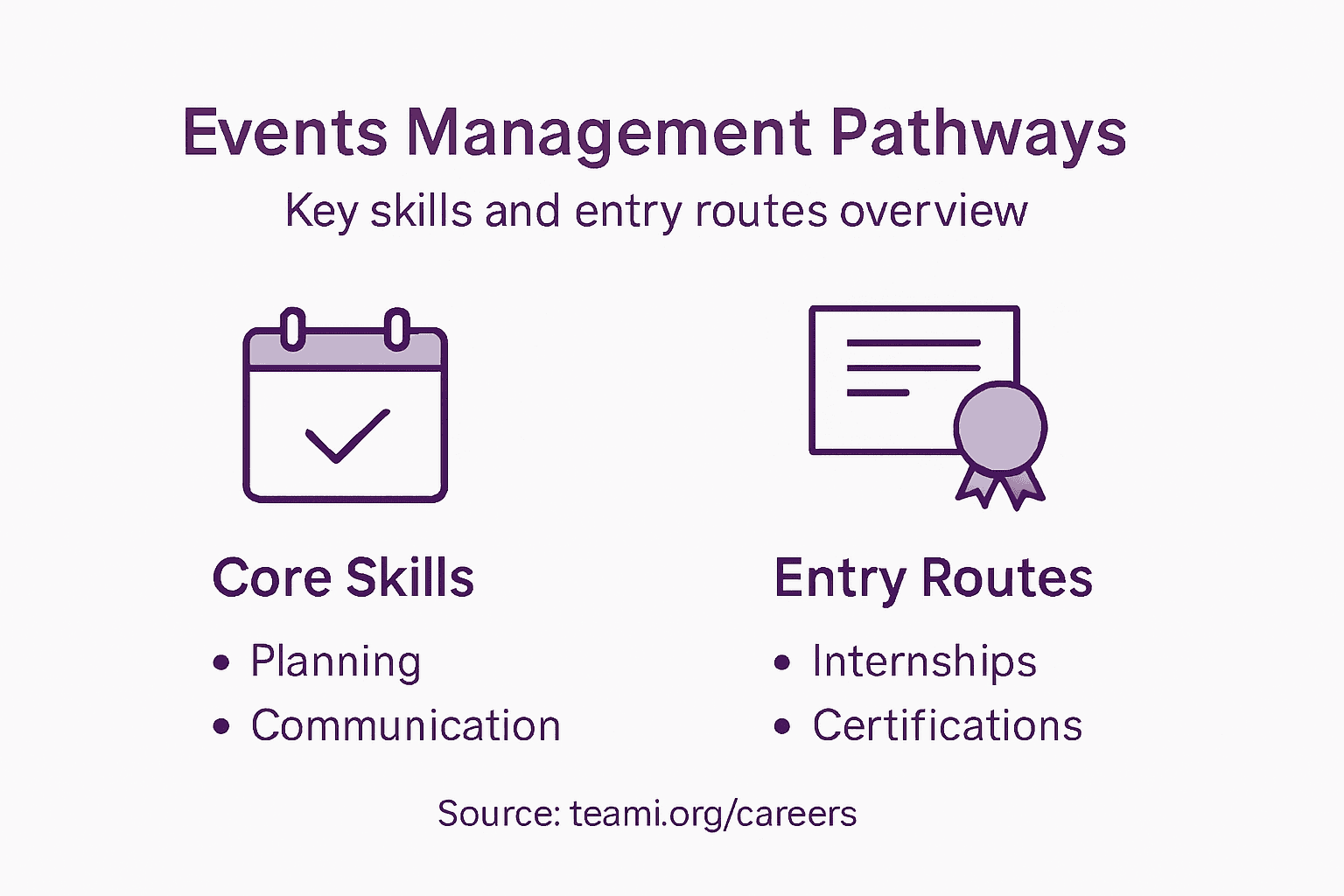
Internships teach you what no textbook covers: client management under pressure, quick decision-making, and the physical demands of events work. You build networks with industry professionals who often become mentors or future employers.
Certifications validate your expertise. Certified Event Planning Specialist credentials recognise proficiency in event logistics and coordination. These qualifications demonstrate to employers that you’ve mastered core competencies in budgeting, vendor management, and execution.
Key certifications to consider:
- Event Management Certification – general industry standard
- Project Management Professional (PMP) – valuable for corporate events
- Specialised certifications – wedding planning, sports events, or virtual event management
- Hospitality qualifications – enhancing your client service capabilities
The sequence matters. Start with practical internship experience while studying, then pursue certifications that align with your chosen specialisation. This progression demonstrates genuine industry knowledge rather than theoretical understanding alone.
Certifications open doors when your experience is limited, but experience opens doors when certifications fade into the background. Build both.
Pro tip: Choose internships at companies whose events genuinely excite you. Working on corporate conferences feels entirely different from wedding planning or music festivals. Your motivation during internships directly impacts the skills you absorb and the networks you build.
Risks, challenges, and common mistakes
Event management appears glamorous from the outside, but the reality involves constant risk management and problem-solving under pressure. Understanding common pitfalls helps you avoid costly mistakes early in your career.
Safety oversights cause the most serious consequences. Fire safety planning, crowd control, and severe weather preparedness are non-negotiable. Obstructed fire exits, inadequate signage, and missing emergency protocols create liability nightmares. In large Indian events, crowd management becomes critical—poor planning transforms an exciting event into a dangerous situation.
Underestimating complexity ranks high among beginner mistakes. New event professionals often assume a conference is straightforward until vendor cancellations, venue issues, or technical failures cascade into chaos. You think you’ve planned for everything, then weather changes venue logistics or a keynote speaker’s flight gets delayed.
Common mistakes to avoid:
- Ignoring contingency plans – assuming everything goes perfectly
- Poor communication – failing to brief teams on critical details
- Budget miscalculations – underestimating costs and over-committing resources
- Weak vendor relationships – treating suppliers as transactional rather than partnership-based
- Inadequate timeline buffers – scheduling activities too tightly with no flexibility
- Overlooking liability – not understanding insurance requirements or legal obligations
Coordination failures multiply in large events. Effective risk management requires detailed planning, training, and coordination exercises with clear communication. When multiple agencies work together—security, catering, technical crews—information gaps create dangerous situations. Someone assumes another person handled something critical, and suddenly you’re scrambling.
Many new professionals underestimate the physical and emotional demands. You’re on your feet for sixteen hours, managing stressed clients and crew members. Decision fatigue hits hard, making you vulnerable to poor choices when problems arise.
The difference between a successful event and a failed one often isn’t complexity; it’s whether you anticipated problems and prepared responses.
Pro tip: Create a “risks register” for every event listing potential issues, their likelihood, impact, and your response plan. Review it daily as the event approaches. This simple document prevents panic-driven decisions when problems actually occur.
Unlock Your Event Management Career with Real Work Experience
Navigating the complex world of event management requires more than theory. This article highlights the challenges of gaining practical exposure, mastering communication, problem-solving, and specialising in events such as corporate, weddings, or festivals. If you want to avoid common pitfalls and build the essential muscle memory that turns plans into successful events, it is crucial to combine hands-on work with structured learning.
At teami.org, we understand these exact needs. Our specialised programmes offer internships, real event participation, and certifications designed to transform your passion into a professional career. Explore our Career in Event Management resources, or deepen your expertise in meaningful areas like Wedding Planning. Don’t wait to gain the skills that hiring managers demand—contact us directly at https://team-i-app-code-production.up.railway.app/api/go/wa?src=events-management-work-experience for personalised guidance and start shaping your future today.
Frequently Asked Questions
What is events management work experience?
Events management work experience involves hands-on participation in planning, coordinating, and executing various events. It allows individuals to apply project management principles in real-world scenarios.
What skills are essential for succeeding in event management?
Essential skills include strong communication, problem-solving abilities, budget management, logistical planning, emotional intelligence, and vendor coordination.
How can I gain practical experience in event management?
You can gain practical experience through internships at event agencies, assisting with different types of events, or participating in programmes offered by institutions that focus on hands-on projects.
What are common challenges faced in event management?
Common challenges include safety oversights, underestimating event complexity, poor communication, budget miscalculations, and weak vendor relationships.