

Over eighty percent of British event management graduates say hands-on experience gave them a major edge in starting their careers. With the British events industry evolving rapidly, knowing where to begin can feel daunting for newcomers. This step-by-step guide gives you practical insights on building event management skills, choosing the right training, and making smart networking moves to help you navigate the British job market with greater confidence.
Table of Contents
- Step 1: Assess Your Event Management Interests And Goals
- Step 2: Research Event Management Courses And Certifications
- Step 3: Enrol In Accredited Training With Practical Exposure
- Step 4: Develop Industry Skills Through Real-World Projects
- Step 5: Network With Professionals And Seek Placements
- Step 6: Evaluate Readiness And Launch Your Career
Quick Summary
| Key Point | Explanation |
|---|---|
| 1. Assess your event goals | Reflect on your interests and strengths to find the right area in event management. |
| 2. Research certifications and courses | Identify relevant courses and certifications that provide practical training and enhance your qualifications. |
| 3. Gain practical experience through projects | Participate in real-world projects and internships to build essential skills and a professional portfolio. |
| 4. Expand your professional network | Engage with industry professionals and organisations to uncover job opportunities and gain insights. |
| 5. Evaluate readiness for career launch | Conduct a personal skills audit and prepare your professional materials to confidently pursue entry-level roles. |
Step 1: Assess your event management interests and goals
Starting a career in event management requires a thoughtful assessment of your personal interests and professional ambitions. The first step involves understanding your unique strengths and determining which areas of event management genuinely excite you. Event management encompasses diverse specialisations ranging from corporate conferences to wedding celebrations, social gatherings to sports events.
To effectively evaluate your potential fit, conduct a comprehensive self assessment by exploring different event management domains. Consider your personality traits, communication skills, creativity levels, and organisational capabilities. Are you detail oriented? Can you manage high pressure situations? Do you enjoy coordinating complex logistics? Successful event managers typically demonstrate strong interpersonal skills, adaptability, and the ability to multitask under challenging circumstances.
A practical approach involves researching industry requirements and speaking with experienced professionals. Attend industry networking events, participate in workshops, and connect with current event management practitioners to gain realistic insights into potential career pathways. Remember that passion combined with strategic preparation forms the foundation of a successful event management career. Your next step will involve developing specific skills and understanding the professional landscape that will support your career aspirations.

Step 2: Research event management courses and certifications
Learning about professional event management courses and certifications is a critical step in establishing your career trajectory. The best event management courses will provide comprehensive training that covers both theoretical knowledge and practical skills essential for success in this dynamic industry.
Professional certifications play a significant role in demonstrating your expertise and commitment. Certified event management credentials like the Certified Meeting Professional (CMP) and Certified Special Events Professional (CSEP) offer recognised validation of your skills. When researching courses, focus on programmes that provide comprehensive curriculum covering event planning, marketing, budgeting, logistics, and risk management. Look for institutions that offer practical workshops, industry connections, and opportunities for hands on experience.
Expand your research by attending industry seminars, connecting with professional networks, and reviewing alumni success stories. Each certification programme has unique requirements and specialisations, so carefully evaluate which aligns best with your career objectives. Your next step will involve selecting the most appropriate course that matches your professional aspirations and provides a solid foundation for your event management journey.
Step 3: Enrol in accredited training with practical exposure
Enrolling in a high quality event management programme requires strategic decision making and careful consideration of your career aspirations. Top event management workshops and courses provide structured learning pathways that combine theoretical knowledge with hands on practical experiences.
When selecting an accredited training programme, prioritise institutions that offer comprehensive curriculum and real world industry exposure. Look for courses that include practical project work, internship opportunities, and direct interactions with industry professionals. These experiential learning components are crucial for developing practical skills and building professional networks. Investigate the programme’s accreditation status, faculty expertise, alumni success rates, and industry connections to ensure you are investing in a credible educational experience.
Prepare thoroughly for your enrolment by gathering all necessary documentation, understanding programme requirements, and planning your financial investment. Consider factors such as course duration, schedule flexibility, and potential career advancement opportunities. Your next step will involve actively engaging with the programme, building professional relationships, and transforming your theoretical knowledge into practical event management expertise.
Step 4: Develop industry skills through real-world projects
Developing industry skills requires more than theoretical knowledge. Top event management skills in 2025 emphasise practical experience and hands on learning as critical components of professional growth. Real world projects provide the essential bridge between academic learning and professional competence.
Seek out opportunities that allow you to apply your skills in authentic environments. Event management internships offer structured platforms for gaining practical exposure and building professional networks. Focus on projects that challenge you to manage complex logistics, coordinate multiple stakeholders, and solve unexpected problems. These experiences will help you develop critical skills such as communication, problem solving, budget management, and client relations.
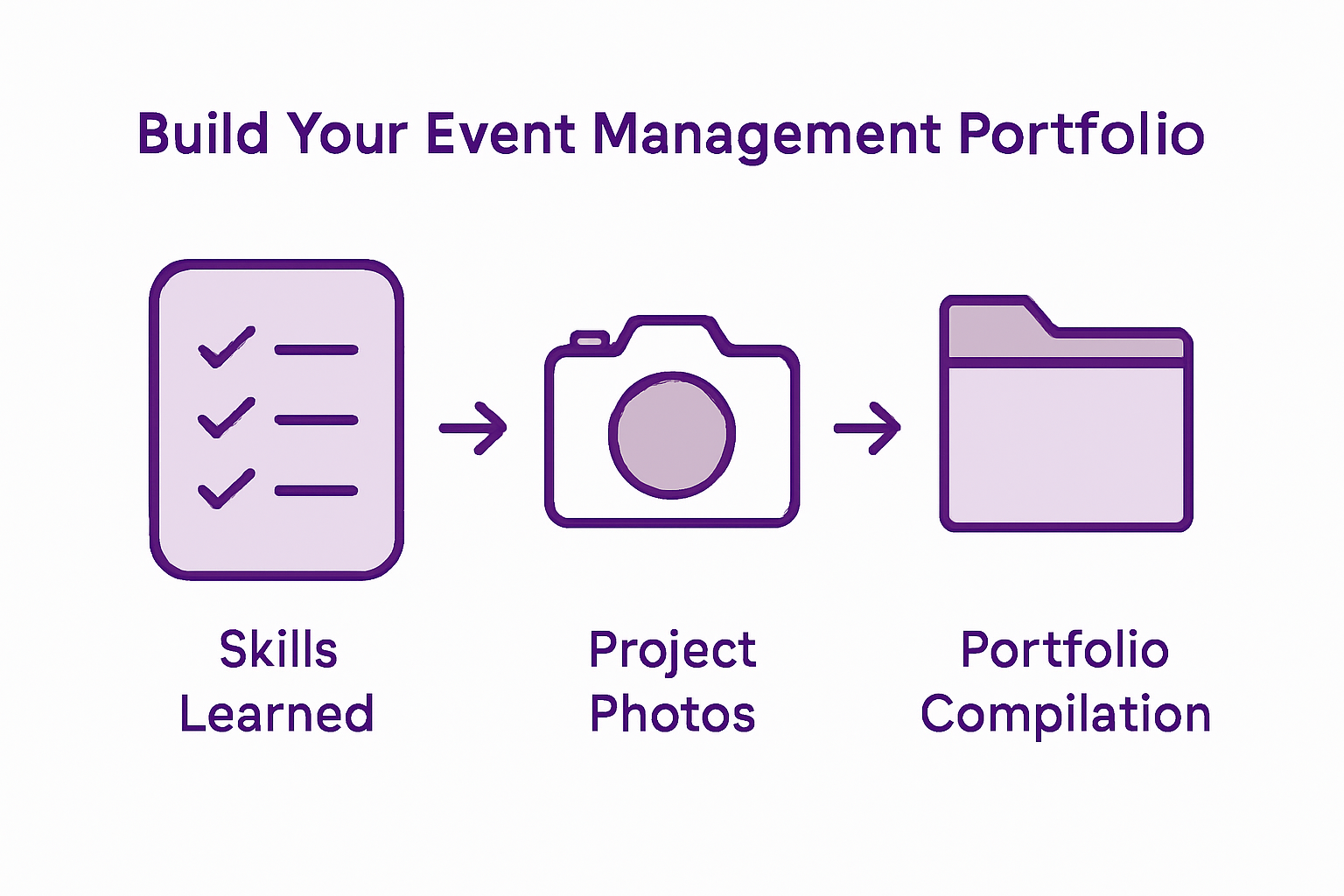
Document your project experiences carefully, creating a portfolio that showcases your practical achievements. Reflect on each project to understand your strengths and areas for improvement. Network with professionals who can provide mentorship and guidance, and remain open to constructive feedback. Your next step involves leveraging these experiences to build a compelling professional profile that demonstrates your practical capabilities in event management.
Step 5: Network with professionals and seek placements
Networking is a critical strategy for launching your event management career, providing opportunities to learn from experienced professionals and discover potential job openings. Essential networking strategies for young professionals can transform your career trajectory by connecting you with industry leaders and potential mentors.
Professional organisations like the International Association of Exhibitions and Events (IAEE) and the International Festivals and Events Association (IFEA) offer structured platforms for meaningful professional connections. Attend industry conferences, join professional forums, participate in webinars, and engage with online communities focused on event management. These interactions provide insights into industry trends, job market dynamics, and potential placement opportunities. Be proactive in your approach by preparing a compelling introduction, asking thoughtful questions, and demonstrating genuine interest in learning from experienced professionals.
Cultivate relationships strategically by following up with contacts, sharing relevant insights, and maintaining professional communication. Create a robust digital presence through platforms like LinkedIn, showcasing your skills, projects, and professional aspirations. Remember that networking is a reciprocal process where you offer value as much as you seek opportunities. Your next step involves translating these professional connections into tangible career advancements and potential job placements.
Step 6: Evaluate readiness and launch your career
Launching your event management career requires a comprehensive self assessment and strategic preparation. Understanding your career readiness involves evaluating multiple dimensions of professional capability beyond academic qualifications.
Conduct a thorough personal skills audit by critically examining your communication abilities, problem solving skills, creativity, stress management techniques, and organisational capabilities. Review your portfolio of completed projects, internship experiences, and professional networks to gauge your practical readiness. Consider seeking feedback from mentors or industry professionals who can provide an objective perspective on your strengths and potential growth areas. Pay special attention to your adaptability, interpersonal skills, and ability to manage complex logistical challenges.
Prepare a compelling professional narrative that highlights your unique skills, experiences, and passion for event management. Update your resume, create a professional digital profile, and start applying for entry level positions or freelance opportunities. Be open to diverse roles that can provide valuable experience and help you build a robust professional foundation. Your career journey is a continuous learning process where each opportunity contributes to your professional growth and expertise.
Launch Your Event Management Career with Expert Guidance and Practical Training
Starting a career in event management involves more than enthusiasm. The article highlights crucial challenges like acquiring industry relevant skills, gaining practical exposure, and building a strong professional network. If you find yourself aiming to master event planning, logistics, and client coordination while connecting with leading professionals, you need a trusted platform to guide your journey.
At teami.org, we understand these exact pain points. With over 23 years of industry experience, our accredited courses combine hands on workshops, real event participation, and internship opportunities to equip you with the skills employers seek. Whether you aspire to specialise in corporate conferences, social events, sports, or weddings, our tailored certification programmes align perfectly with your ambitions. Discover how our partnership with DNA Entertainment Networks ensures practical training coupled with promising job placements to help you step confidently into your career.
Take the first step today by exploring our event management courses. Don’t wait for opportunity to knock when you can create it through expert education and meaningful experience. Connect now and transform your passion into a thriving professional adventure.
Frequently Asked Questions
How do I identify my interests in event management?
To identify your interests in event management, conduct a self-assessment by considering your strengths and the aspects of event management that excite you. Create a list of your personality traits, skills, and preferred event types to pinpoint where you would thrive.
What qualifications should I look for in event management courses?
Look for event management courses that offer comprehensive training covering planning, marketing, logistics, and risk management. Ensure the course includes practical workshops and opportunities for hands-on experience to better prepare you for the industry.
How can I gain practical experience in event management?
You can gain practical experience by seeking internships or volunteer opportunities in event management. Aim for projects that challenge you and require you to manage logistics or coordinate teams, giving you valuable experience within 6-12 months.
What networking strategies should I use to advance my event management career?
Utilise networking strategies such as attending industry conferences, joining forums, and connecting with professionals on platforms like LinkedIn. Prepare a strong introduction and follow up with new contacts to build lasting professional relationships.
How do I know when I am ready to launch my career in event management?
Evaluate your readiness by reviewing your skill set, portfolio, and feedback from industry professionals. Conduct a self-assessment to gauge your preparedness and begin applying for roles once you feel confident in your abilities and experiences.
What types of entry-level positions should I consider in event management?
Consider applying for entry-level positions such as event coordinator or assistant roles in various settings, including corporate or non-profit organisations. These roles can provide foundational experience and help you build a professional network to support your career growth.