
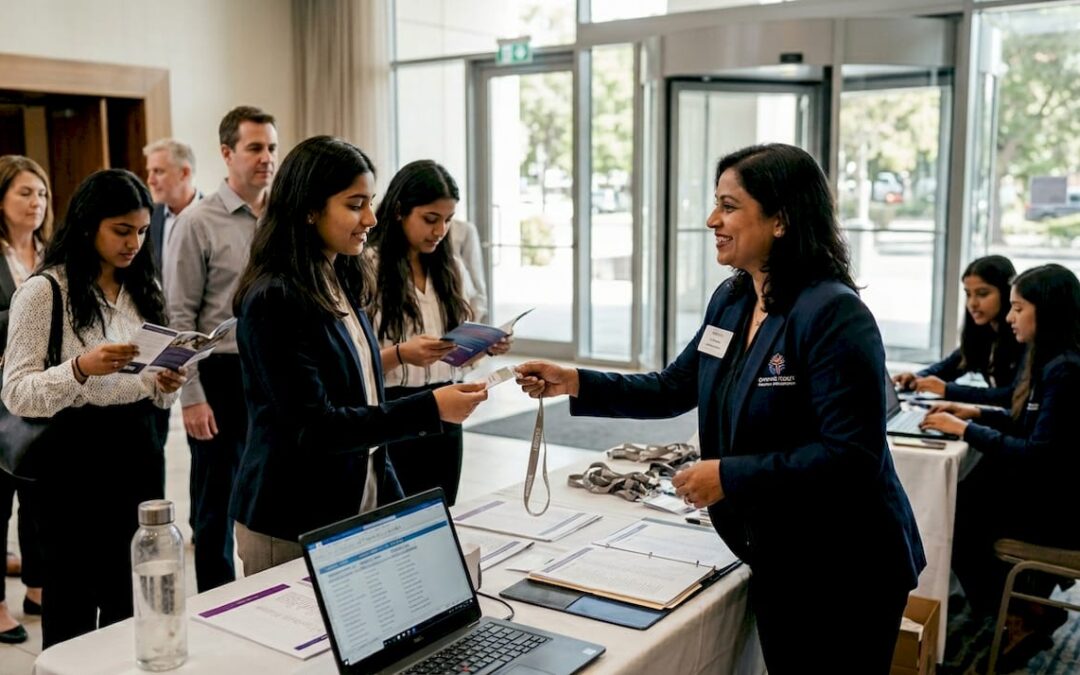
TL;DR:
- Customer service impacts attendee satisfaction, client retention, and event reputation in India.
- Challenges include managing linguistic diversity, balancing technology with personal warmth, and handling large crowds.
- Proven strategies involve proactive communication, empathetic listening, omnichannel support, and post-event feedback analysis.
Customer service can make or break an event career faster than almost any other skill. In India’s booming events industry, where AI-driven support has already delivered a 47% jump in guest satisfaction scores on ticketing platforms, the bar for attendee experience is rising sharply. Clients remember how you made them feel long after the lights go down and the stage is dismantled. If you’re an aspiring event manager or a student looking to stand out, mastering customer service is not optional. It is your competitive edge. This guide will show you exactly why it matters, what challenges you’ll face in India, and how to build skills that hiring managers genuinely value.
Table of Contents
- Why customer service matters in event management
- Key customer service challenges for Indian event managers
- Proven strategies for delivering exceptional customer service
- Training and career growth: The value of customer service skills
- What most Indian event managers miss about customer service
- Advance your event management career with expert-led training
- Frequently asked questions
Key Takeaways
| Point | Details |
|---|---|
| CSAT boosts careers | High customer satisfaction ratings help you get promoted and secure repeat clients. |
| Combine tech and empathy | Use AI tools but maintain personal connection for real event success in India. |
| Training sets you apart | Specialised customer service training makes you stand out in job interviews and promotions. |
| Adapt to local needs | Understanding India’s cultural and language diversity is key for aspiring event managers. |
Why customer service matters in event management
Customer service in event management is not just about smiling at guests. It covers every touchpoint: the first enquiry call, the on-site experience, and the post-event feedback loop. Every interaction shapes whether a client books you again or recommends you to someone else. That is the real definition of service in this industry.
Great service drives measurable results. CSAT improvements directly boost client retention and speed up problem-solving on the ground. When guests feel heard and supported, they post positive reviews, tag the event on social media, and refer your services to others. That word-of-mouth engine is priceless in a market as relationship-driven as India’s.
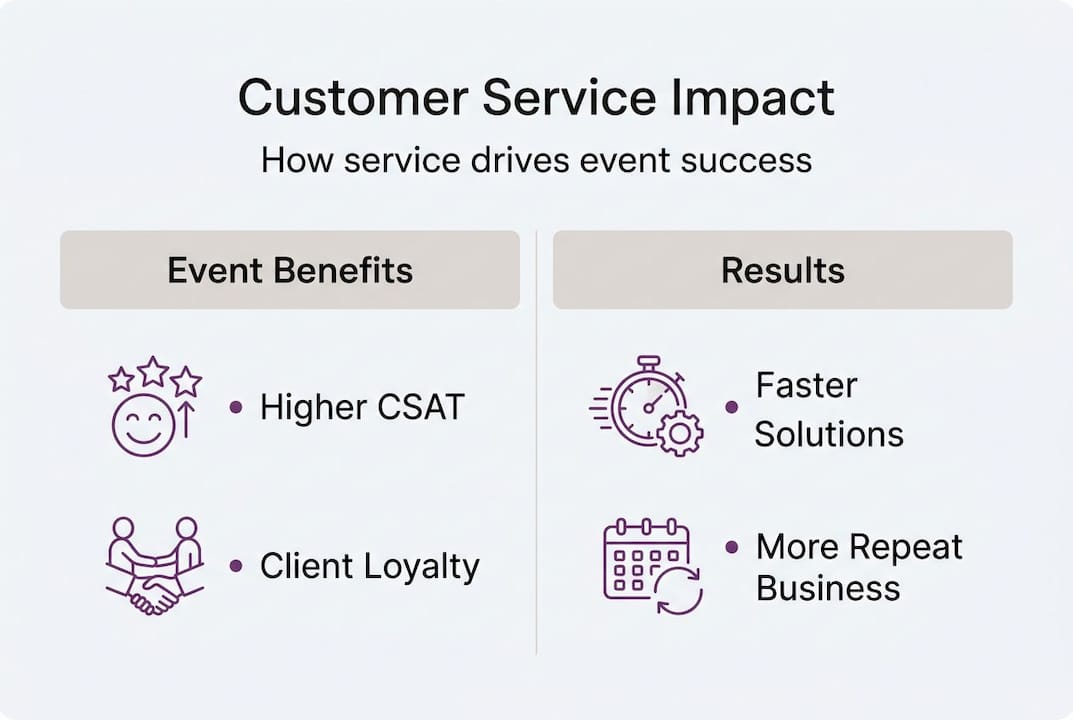
So what does “world-class” actually look like? According to customer service benchmarks, a CSAT score above 85% and a first contact resolution rate above 80% separate average teams from exceptional ones. Most events in India hover well below that threshold. That gap is your opportunity.
India adds its own layer of complexity. You’re managing guests who speak different languages, carry different cultural expectations, and respond to service cues in very different ways. A North Indian corporate crowd behaves differently from a South Indian wedding gathering. Understanding those nuances is not a soft skill. It’s a professional requirement. Studying hospitality best practices gives you the framework to navigate this diversity confidently.
Here’s what strong customer service actually delivers at events:
- Repeat business: Satisfied clients return and spend more on future events
- Stronger referrals: Happy attendees become unpaid brand ambassadors
- Crisis control: Trained service teams resolve issues before they escalate publicly
- Better reviews: High CSAT scores translate directly into online reputation
- Team morale: A service-first culture motivates on-ground staff to perform better
“The best event managers don’t just run logistics. They engineer experiences that make every guest feel like the most important person in the room.” This is the standard you should be building towards from day one.
Key customer service challenges for Indian event managers
Now that we’ve established the value of customer service, let’s look at the unique challenges you’ll face in the Indian events industry. Knowing the obstacles in advance is half the battle.
Language and cultural diversity top the list. India has 22 officially recognised languages and hundreds of dialects. A guest at a Mumbai corporate summit may speak Marathi, Hindi, or English. A wedding guest in Chennai may only be comfortable in Tamil. Your service team needs to bridge those gaps in real time, without making anyone feel excluded or awkward.
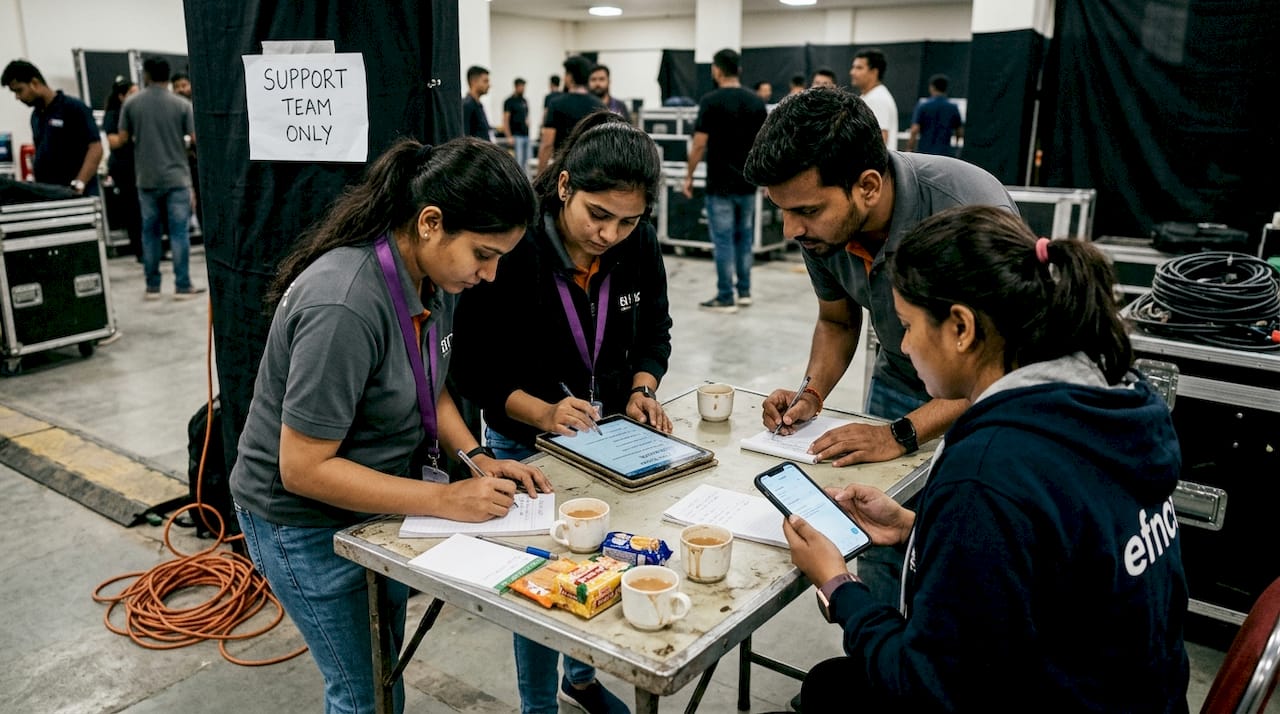
Balancing technology with personal warmth is another real tension. Multi-channel support tools, including AI chatbots, WhatsApp helplines, and automated FAQs, are improving CSAT and reducing wait times. But Indian guests often still want a human face, a real conversation, and the reassurance that someone genuinely cares. Deploying tech without losing that human touch is a skill in itself.
Handling large crowds and last-minute chaos is simply part of the job. A guest list of 2,000 means 2,000 different expectations. Add a power cut, a delayed performer, or a catering mix-up, and you have a live crisis on your hands. How you respond in that moment defines your reputation.
Here are the most common service failures at Indian events:
- Unclear communication about schedule changes
- Understaffed help desks during peak entry times
- No system for tracking and resolving guest complaints
- Ignoring feedback after the event ends
- Failing to brief volunteers on service standards
Solid vendor management strategies reduce many of these risks before they reach the guest. And building your overall approach around event success best practices ensures you’re not learning these lessons the hard way on a live stage.
Pro Tip: Build a multilingual support team by recruiting local volunteers or staff who speak the primary languages of your expected guest demographic. Brief them specifically on service language, not just logistics.
Proven strategies for delivering exceptional customer service
Having identified the typical challenges, here are actionable strategies you can apply to offer excellent service at events. These are not theoretical. They are field-tested approaches that separate good events from unforgettable ones.
- Communicate proactively. Send attendees event-day FAQs via WhatsApp or email before they even arrive. Announce schedule updates through mobile alerts. Guests who feel informed feel calm, and calm guests are easier to serve.
- Train your team in empathetic listening. When a guest is frustrated, the instinct is to explain or defend. The right move is to listen first, acknowledge the feeling, then solve the problem. This sequence changes the entire tone of a complaint interaction.
- Set up omnichannel support. Cover WhatsApp, email, an on-site help desk, and a dedicated phone line. AI chatbots and multi-channel support can boost CSAT by 47% and cut wait times by 38%. Use the tech, but staff it with real people who can escalate when needed.
- Debrief after every event. Collect guest feedback within 24 hours. Analyse it. Act on it. This loop is what separates event managers who grow from those who repeat the same mistakes.
For hybrid event solutions specifically, your service strategy must cover both physical and virtual attendees simultaneously. That doubles the complexity and doubles the opportunity to impress.
| Approach | Reactive service | Proactive service |
|---|---|---|
| Timing | Responds after a problem occurs | Anticipates issues before they arise |
| Guest experience | Frustration before resolution | Smooth, informed experience throughout |
| Team stress | High, firefighting mode | Lower, structured and prepared |
| CSAT outcome | Average to poor | Consistently high |
| Client perception | Competent but reactive | Professional and trustworthy |
Refer to customer service benchmarks to set realistic targets for your events and measure your team’s performance against industry standards. Benchmarks give your improvement efforts a real direction. Check event career tips for more on how to translate these skills into career wins.
Pro Tip: Keep a running log of every guest query and complaint at each event. After three events, you’ll start seeing patterns. Those patterns tell you exactly where to invest your training time and budget.
Training and career growth: The value of customer service skills
Beyond real-time strategies, let’s see how investing in the right training can set you apart in the job market. This is where your long-term career trajectory is shaped.
Here’s the uncomfortable truth: event-specific customer service training is still rare in India. Most programmes teach general communication or generic hospitality. Very few go deep on the specific scenarios you’ll face at a live event: managing a VIP complaint mid-show, de-escalating a crowd issue, or handling a sponsor’s last-minute demand. That scarcity makes specialised skills a serious differentiator when you’re applying for roles.
| Skill area | General CS training | Event-specific training |
|---|---|---|
| Communication | Broad, formal settings | Live event scenarios, crowd dynamics |
| Problem-solving | Standard complaint handling | Real-time crisis resolution |
| Cultural sensitivity | Basic awareness | India-specific guest diversity |
| Technology use | CRM and ticketing basics | Omnichannel event support tools |
| Career relevance | Applicable across industries | Directly valued by event employers |
Exploring online event management courses that integrate customer service modules gives you a structured path to build these skills. Understanding the importance of event education means recognising that formal learning accelerates what would otherwise take years of trial and error.
Here are the career paths where strong customer service skills directly improve your prospects:
- Event coordinator: First point of contact for clients and guests
- Guest relations manager: Responsible for the entire attendee experience
- Corporate event planner: Serving high-expectation business clients
- Wedding manager: Navigating emotionally charged, high-stakes events
- Team leader or operations head: Setting service standards for your entire crew
In interviews, candidates who can narrate a specific story of resolving a guest issue under pressure stand out immediately. Gaining real event management experience alongside your studies gives you those stories to tell. That combination of training and practical exposure is what employers actually hire for.
What most Indian event managers miss about customer service
Here is something that experience teaches you, and no textbook really captures: the biggest service failures at Indian events are rarely about systems. They’re about emotion.
Managers invest in chatbots, ticketing software, and feedback forms. All useful. But they forget that events are deeply personal experiences. A guest who remembers that a staff member recalled their dietary preference from last year’s conference will tell that story for years. That one small detail builds more loyalty than any automated follow-up email ever will.
The other trap is copying Western customer service models wholesale. Scripted responses, formal complaint procedures, and rigid escalation chains work in call centres. They often feel cold and impersonal at an Indian wedding or a regional cultural festival. Adapting your approach to the emotional register of the event and the cultural context of the guests is a skill that only comes from paying close attention.
Every event is feedback. Every awkward moment, every complaint, every confused guest is data. The managers who grow fastest are the ones who actively seek that feedback and treat it as a gift rather than a criticism. If you want to understand how getting event clients connects to service quality, start by listening more carefully to the clients you already have.
Advance your event management career with expert-led training
You now have a clear picture of what customer service excellence looks like in event management, and why it matters so deeply for your career in India. The next move is yours. Exploring online event management courses at teami.org gives you access to 24 years of industry experience, real-event exposure, and training built specifically for the Indian market. If you want formal recognition of your skills, the event certification programme adds credibility to your CV that employers notice. You don’t wait to graduate to feel like an event manager. You start becoming one the moment you commit to learning from the best.
Frequently asked questions
What are the most important customer service skills for Indian event managers?
Empathy, proactive communication, multilingual support, and rapid problem resolution are the skills that matter most. Proactive communication and empathy are particularly critical in live event environments where situations change by the minute.
How does AI technology improve customer service at events?
AI chatbots and multi-channel support can boost CSAT by 47%, improve first contact resolution by 40%, and increase client retention by 16%, making them powerful tools for event service teams.
Are there India-specific customer service training programmes for event management?
Event-specific training in India is still limited, so look for hybrid or internationally informed modules that cover live event scenarios and India’s cultural diversity.
What is a good CSAT or FCR score for event customer support?
A world-class CSAT score sits above 85%, and a world-class first contact resolution rate exceeds 80%, both strong targets to aim for when evaluating your event service team’s performance.
Recommended
- Tips for Success as a New Event Management Professional – team I
- Negotiation Skills for Managers: Achieve Event Success – team I
- Top Event Management Skills for Success in 2025 – team I
- Event Management Best Practices for Career Success – team I
Thinking about a career in event management?
team I is Bangalore’s only EEMA-certified event management institute, running for 24 years, where students work on real live events with real budgets and real deadlines rather than classroom simulations. See the full range of event management courses in Bangalore, or go straight to the flagship Certificate Program in Event Management (CPEM).