

A wedding planning guide free of charge is defined as a structured set of tools, checklists, timelines, and budget frameworks that couples can access without cost to organise every stage of their wedding. A typical wedding involves approximately 300–400 tasks, which makes unguided planning genuinely risky. Industry standards recommend starting 12–18 months in advance for full-scale weddings, and that timeline becomes even more critical in India, where multi-day ceremonies, large guest lists, and multiple venues are the norm. The right free guide does not just save money. It saves your sanity.
What should every free wedding planning guide include?
The best free wedding planning guides share a common structure. They open with budget and guest list, because those two decisions control everything else, from venue capacity to catering costs. Venue and catering typically consume 40–50% of the total wedding budget. That single figure should shape every financial decision you make from day one.
A solid guide covers these core elements:
- Budget framework with a contingency fund of 5–10% for unforeseen expenses
- Guest list tiers (confirmed, probable, and waitlisted) to manage venue and catering numbers
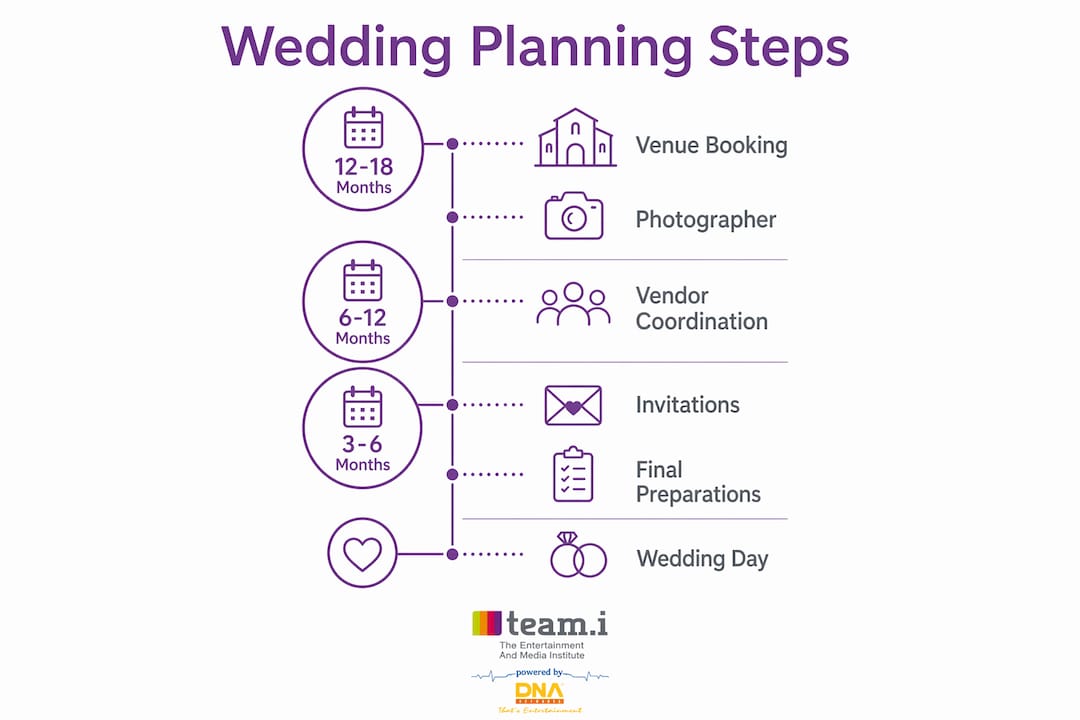
- Vendor booking priorities in order: venue, photographer, caterer, decorator, and entertainment
- Month-by-month timeline from 12–18 months out to the wedding week
- Contract and payment tracker with deposit dates and deadlines
- Day-of schedule template covering ceremony, reception, and vendor call times
- Printable and digital format options so you can plan on the go or at the desk
Popular venues book out 12–18 months ahead for peak dates. That means your venue search cannot wait until you feel ready. It must happen first, before almost anything else.
Pro Tip: Add a “vendor notes” column to every checklist row. Write down the name of the person you spoke to, the date, and what was agreed. This single habit prevents more disputes than any contract clause.
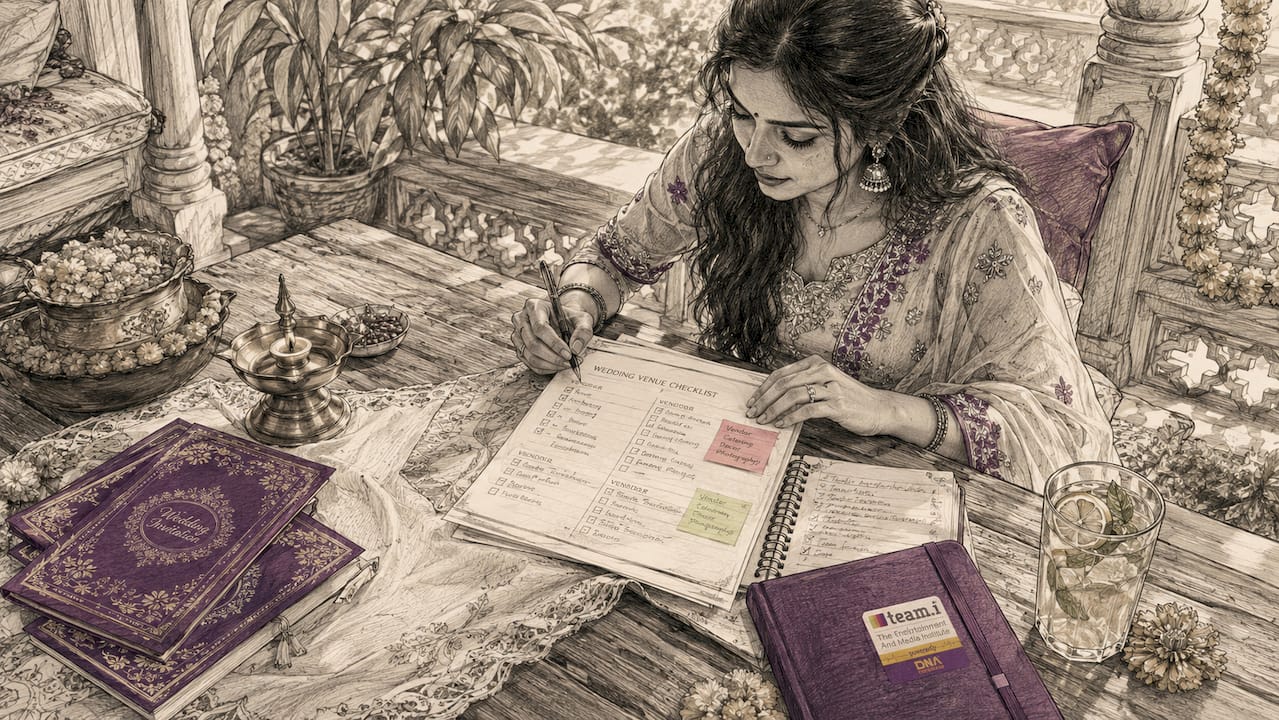
Photography deserves special mention. Photographers are booked soon after the venue is confirmed, because they have fewer available slots than most other vendors. Treat photographer availability with the same urgency as the venue itself.
How to use a free wedding planner checklist for Indian weddings
Indian weddings rarely fit a single-day template. A Hyderabad wedding, for example, might span a mehendi evening, a haldi ceremony, the main shaadi, and a reception across two or three venues over four days. Your free checklist must reflect that reality, not a generic Western template.
Here is a practical approach for adapting any free wedding planning checklist to an Indian context:
- Map every ceremony separately. List each event (sangeet, mehendi, pheras, reception) as its own planning block with its own vendor list, timeline, and budget line.
- Build a vendor matrix. Create one shared document with caterer, decorator, sound, lighting, and entertainment contacts for each day. For ideas on elegant wedding entertainment, research live music options early, as quality performers book fast in cities like Bangalore and Mumbai.
- Track every payment digitally. Use a shared Google Sheet with columns for vendor name, total cost, deposit paid, balance due, and due date. Documenting deposits and payment deadlines prevents the most common wedding planning stress.
- Schedule cultural rituals explicitly. Block time in your day-of schedule for rituals like the jaimala, saat pheras, and vidaai. Leaving these as vague entries causes timing chaos on the day.
- Delegate by ceremony. Assign a family member or trusted friend to own each event’s logistics. Delegating tasks to partners and family reduces couple burnout and speeds up execution.
- Book urban vendors early. In Delhi, Mumbai, and Hyderabad, top decorators and caterers are often committed 10–12 months out for peak wedding season (october through february).
Pro Tip: Create a WhatsApp group for each ceremony with only the relevant vendors in it. A mehendi group, a reception group, and so on. This stops critical messages getting buried in a single chaotic thread.
What free digital tools work best for personalising your wedding plan?
Free digital tools are the backbone of modern DIY wedding planning. Google Sheets is the most practical starting point. You can build a single source of truth for all vendor contacts, deposits, and due dates, then share it with your partner, parents, and key vendors in real time. That shared visibility eliminates the “I thought you confirmed it” conversations that derail planning.
Here is a comparison of free tool types and what each does best:
| Tool type | Best use | Key advantage |
|---|---|---|
| Google Sheets | Budget tracker, vendor matrix, guest list | Real-time sharing, fully customisable |
| Google Calendar | Timeline reminders, vendor call schedules | Automatic alerts, syncs across devices |
| Canva (free tier) | Printable checklists, seating charts | Visual, easy to personalise |
| Google Forms | RSVP collection, dietary preferences | Instant data collection, no manual entry |
| Trello (free tier) | Task boards by ceremony or category | Visual progress tracking, assignable tasks |
Beyond spreadsheets, printable binders still have a place. Printable wedding binders and digital tools complement each other by offering portability alongside real-time updates. Print your vendor sheet for the wedding day itself. Phones run out of battery. Paper does not.
For Indian weddings specifically, Google Sheets templates work well when you add columns for GST invoices and advance payment receipts. Many Indian vendors, particularly smaller decorators and caterers, operate on cash advances. Tracking those in writing protects you legally and financially. You can find free planning tools adapted for Indian event contexts that cover these local nuances.
What challenges do Indian couples face and how do free guides help?
Indian wedding planning carries a specific set of pressures that generic guides do not address. Free guides built for the Indian market solve these directly.
- Large guest lists. Indian weddings regularly host 300–800 guests. A tiered RSVP system (A-list, B-list, C-list) helps you manage numbers without offending anyone. Your checklist must include a column for RSVP status, meal preference, and accommodation needs.
- Multiple vendor payments. Coordinating advance payments across a caterer, decorator, sound company, florist, and photographer simultaneously is genuinely complex. A payment tracker with due dates and confirmation receipts is non-negotiable.
- Cultural rituals and customs. Every region has specific traditions. A Punjabi wedding in Delhi runs differently from a Tamil Brahmin wedding in Chennai. Your checklist must include a “rituals and customs” section with timings, responsible family members, and required materials for each.
- Cost control. Unplanned expenses are the biggest budget threat. Photography typically accounts for 10–15% of the total budget. Knowing these benchmarks in advance stops vendors from inflating quotes.
- Early vendor booking in urban centres. Bangalore, Mumbai, and Hyderabad have genuinely competitive vendor markets. The best makeup artists, live bands, and decorators are committed months ahead. Free guides that include a booking priority list save couples from settling for second choice.
“Documenting deposits, contract terms, and payment deadlines prevents the most common wedding planning stress. Clear, documented systems reduce anxiety regardless of budget size.”
Before you review wedding band videos and shortlist entertainment, confirm your venue and date. Entertainment choices depend entirely on the space, acoustics, and event format.
What I have learnt from watching couples plan Indian weddings
Couples who plan with a free guide and actually use it consistently outperform those who hire coordinators but stay disorganised. That is not a knock on professional planners. It is a recognition that documentation reduces stress more effectively than budget size does. The couples who struggle most are those who keep everything in their heads or scattered across WhatsApp messages.
The Indian wedding market is also genuinely unforgiving on timing. A venue in Bangalore that is available in january may be gone by the time you finish comparing options. The free planning resources available today, particularly those built around wedding planning essentials for Indian contexts, are sophisticated enough to replace expensive coordination software. Use them from day one. Not when you feel overwhelmed. Day one.
— Teami
Teami’s resources for couples and aspiring wedding planners
Wedding planning at scale is a professional skill. Teami has spent 24 years training event managers who go on to run exactly the kind of weddings you are planning right now. If you are an engaged couple wanting to plan your own wedding with confidence, Teami’s free articles and event management course resources give you the frameworks professionals use. If you are someone who wants to turn wedding planning into a career, Teami’s certification programmes, built in partnership with DNA Entertainment Networks, provide hands-on training across social, corporate, and wedding events. Either way, the knowledge that makes a wedding run perfectly is the same knowledge that builds a career in events. Start with the complete 2026 planning guide and go from there.
FAQ
What is a free wedding planning guide?
A free wedding planning guide is a structured set of checklists, timelines, and budget tools that couples can access at no cost to organise their wedding from engagement to the wedding day.
How far in advance should I start planning my wedding?
Start planning 12–18 months before your wedding date. Micro weddings with fewer than 50 guests can be planned within 3–6 months if the guest list and vendor needs are simplified.
What should I book first when planning an Indian wedding?
Book your venue first, then your photographer. Popular venues and photographers fill their dates 12–18 months ahead, particularly in cities like Bangalore, Mumbai, and Hyderabad.
How do I manage a large Indian wedding guest list for free?
Use a Google Sheets template with tiered RSVP columns (confirmed, probable, waitlisted) alongside meal preferences and accommodation needs. This keeps your numbers accurate without any paid software.
Is a printable checklist or a digital tool better for wedding planning?
Both work best together. Use a digital tool like Google Sheets for real-time updates and sharing with vendors, and a printed checklist on the wedding day itself when phone access is unreliable.