
An event planning business plan is a strategic document that defines your services, operations, marketing approach, and financial forecasts to launch and grow a profitable event management company. Think of it as your operating manual before the first client signs. Without one, you are pricing by gut feel, staffing by panic, and chasing cash flow between every event. Whether you are targeting destination weddings in Udaipur, corporate conferences in Bangalore, or college festivals in Hyderabad, a well-built plan is what separates a sustainable business from a very expensive hobby.
What should your event planning business plan include first?
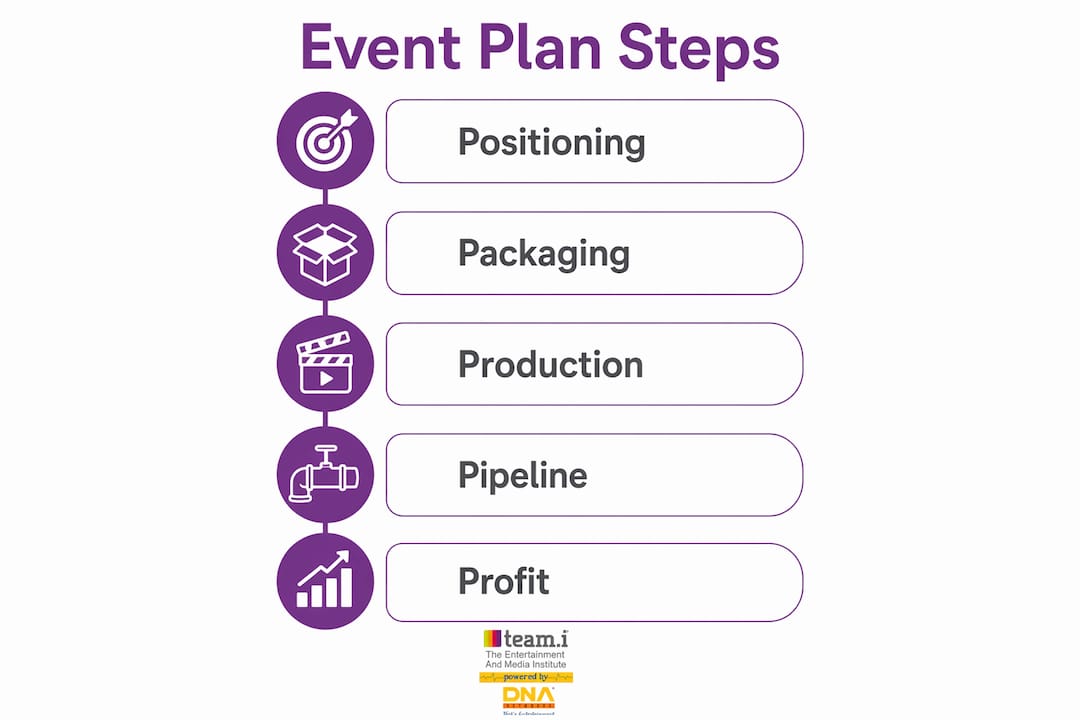
The strongest event management business models are built around five pillars: positioning, packaging, production, pipeline, and performance. Each pillar maps directly to a classic business plan section. That structure reduces pricing inconsistency, improves vendor leverage, and gives you real cash flow visibility from day one.

Start with positioning. Positioning answers one question: who do you serve, and why should they choose you over the next planner? A Bangalore-based planner specialising in tech company offsites has a completely different value proposition than one running destination weddings in Goa. Name your niche, name your city, and name what you do better than anyone else on that brief.
How do you define your services and pricing packages?
Tiered service packages are the single most effective tool for protecting your margins. They separate what you charge from how you deliver, which stops clients from negotiating your time away piece by piece.
A practical three-tier model for Indian events looks like this:
- Essentials: Two planning meetings, vendor sourcing, day-of coordination, and a post-event summary. Suited to small corporate gatherings or intimate social events in Delhi or Mumbai.
- Premium: Four planning meetings, full vendor management, rehearsal attendance, two on-site staff, and a detailed post-event report. Ideal for mid-size weddings or college festival productions.
- White-Glove: Unlimited consultations, end-to-end production management, dedicated on-site team, AV oversight, catering coordination, and 30-day post-event follow-up. Built for large-scale corporate events, concerts, or multi-day destination weddings.
Each tier must list explicit inclusions and exclusions. Vague packages invite scope creep, and scope creep kills margins faster than any vendor dispute.
Pro Tip: Write your packages into every proposal and contract before you send them. The proposal workflow should derive directly from your defined packages, not from bespoke scopes negotiated per client. This speeds up deal closure and cuts negotiation friction significantly.
What operational roles and risk controls belong in your plan?
Delivery structure is where most Indian event startups fall apart. You need defined roles before you need staff. Your business plan should outline staffing responsibilities clearly, even if one person fills multiple roles at launch.
A typical production structure for a mid-size Indian event includes:
- Event Director: Owns the client relationship, final budget sign-off, and vendor contracts.
- Production Coordinator: Manages showflows, venue logistics, and on-site timelines.
- Vendor Manager: Handles caterers, decorators, AV teams, and transport.
- On-Site Crew Lead: Directs ground staff, manages crowd flow, and handles real-time problem-solving.
Risk management is non-negotiable. Contract clarity is your first line of defence. Specify deliverables, meeting counts, vendor duties, and scope change triggers in every client agreement. Vague contracts cause costly post-event disputes, and in India’s wedding and corporate markets, those disputes travel fast by word of mouth.
Insurance is your second line. Budget for professional liability, general liability, and cancellation cover. Venues often require proof of insurance before you can even confirm a booking. Securing those certificates ahead of time prevents last-minute chaos on event day.
Pro Tip: Use a production event planning checklist for every event, regardless of size. A checklist is not a sign of inexperience. It is the mark of a planner who has been burned before and refuses to be burned again.
How do you build a marketing strategy and sales pipeline?
Your marketing strategy must match where Indian clients actually look for event planners. That is not always where you expect.
The most effective channels for Indian event planning businesses in 2026 include:
- Instagram and YouTube: Visual platforms where weddings, concerts, and corporate events get discovered. Post real event footage, behind-the-scenes reels, and client testimonials consistently.
- Google Business Profile: Critical for local search in cities like Bangalore, Mumbai, and Hyderabad. A well-maintained profile with photos and reviews drives inbound enquiries.
- Referral networks: Venue managers, caterers, photographers, and hotel banquet teams are your best referral sources. Build those relationships deliberately.
- LinkedIn: Underused by Indian event planners but highly effective for corporate clients and HR teams sourcing conference and offsite vendors.
Your client acquisition process needs a defined pipeline. Lead capture, proposal delivery, follow-up schedule, and contract sign-off should each have a clear owner and timeline. Track your conversion rate from enquiry to signed contract. If you are sending ten proposals and closing one, your pricing or your pitch needs work.
How do you create financial projections for your event business?
Financial planning is where most aspiring event entrepreneurs go vague. Do not. Model your revenues by service line and your costs by category, then stress-test both.
| Cost category | Home-based model | Office-based model |
|---|---|---|
| Startup costs | $2,000–$7,000 | $5,000–$30,000 |
| Annual insurance | $400–$2,000+ | $400–$2,000+ |
| Marketing (year one) | Low to moderate | Moderate to high |
| Tech and software | Low | Low to moderate |
These startup cost ranges reflect typical figures and should be validated against your specific niche, city, and tech stack. A home-based wedding planner in Bangalore operates very differently from a full-service corporate events agency in Mumbai.
Cash flow timing is the detail that separates sustainable businesses from fragile ones. Model your deposit schedules and supplier payment order carefully. Collect a deposit at booking, a second payment at the midpoint, and the balance before event day. Never pay vendors in full before you have received client funds.
Pro Tip: Build a worst-case cash flow scenario into your plan. Model what happens if two events cancel in the same month. If that scenario wipes out your runway, you need a larger cash reserve or a retainer-based service offering before you take on your first client.
How often should you review and update your business plan?
A business plan is not a document you write once and file. Review it quarterly during your first year to adapt to what the market is actually telling you. That cadence forces honest reflection on what is working and what is not.
Track these KPIs at every review: revenue per event, cost per event, lead-to-close conversion rate, average package tier sold, and client referral rate. A measurable event strategy with clear KPIs is what separates planners who grow from planners who stay stuck at the same revenue level year after year.
Update your service packages when you notice consistent scope creep in a particular tier. Update your marketing spend when a channel stops converting. Update your financial model when your cost base shifts. The plan is your operating system. Run it live, not in archive mode.
What we have learnt from watching event startups succeed and fail
The planners who struggle most are not the ones with the least talent. They are the ones who underpriced their first three events, wrote vague contracts, and then had no cash left when a fourth client cancelled. That pattern is entirely preventable with a solid plan built before the first pitch.
The single most underrated move in starting an event management company is writing your packages before you write your first proposal. When your tiers are defined, your proposals take 20 minutes instead of two hours, your pricing is consistent, and your client conversations stay professional. The moment you start building bespoke scopes for every enquiry, you lose control of your margins and your time.
Networking within the Indian event ecosystem matters more than most new planners expect. DNA Entertainment Networks, venue managers at ITC Hotels, and production houses running large-scale IPs in Mumbai and Delhi are not just potential clients. They are referral engines, co-production partners, and credibility signals. Build those relationships early and maintain them deliberately.
— Teami
How Teami prepares you to build and run a real event business
Knowing what goes into a business plan is one thing. Knowing how to execute it under pressure, in front of a real client, with a real budget on the line, is something else entirely. Teami’s event management courses are built around exactly that gap. With 24 years of industry experience and a direct partnership with DNA Entertainment Networks, Teami trains you on vendor negotiations, production management, financial planning, and client pitching through live events and real projects. Certification from Teami signals to clients and employers that you have been tested in the field, not just the classroom. If you are serious about starting an event planning business that lasts, structured training is the fastest path from plan to execution.
FAQ
What is an event planning business plan?
An event planning business plan is a strategic document covering your services, target market, operational structure, marketing approach, and financial projections. It functions as the operating roadmap for launching and growing your event management company.
What financial details should I include in my plan?
Include startup costs, package pricing, revenue projections by service line, insurance budgets, and a cash flow model with deposit schedules and worst-case scenarios. Home-based models typically require $2,000–$7,000 to launch; office-based agencies can require $5,000–$30,000.
How often should I update my event business plan?
Review and update your plan quarterly during the first year. Track KPIs including revenue per event, conversion rate, and average package tier sold, then adjust your services, pricing, and marketing based on real performance data.
Do I need a special licence to start an event planning business in India?
No special event planning licence exists in India. You need standard business registration and local permits, but venue-specific permits for food, alcohol, and public gatherings vary by city and must be budgeted and scheduled separately for each event.
Why are tiered service packages important in a business plan?
Tiered packages protect your margins by defining exactly what is included at each price point. They also speed up proposal writing, reduce client negotiation, and create consistent pricing across every event you deliver.
Recommended
- Event planning skills for Indian students: 2026 guide – team I
- Business event management companies: 2026 guide – team I
- Event planning jobs: find the best certification in India 2026 – team I
- BLOG – team I – Page 7
Thinking about a career in event management?
team I is Bangalore’s only EEMA-certified event management institute, running for 24 years, where students work on real live events with real budgets and real deadlines rather than classroom simulations. See the full range of event management courses in Bangalore, or go straight to the flagship Certificate Program in Event Management (CPEM).