
India’s event management industry is expanding at an impressive 20-25% annually, creating thousands of new career opportunities. Yet many aspiring event managers struggle to find diploma courses that deliver practical, industry-aligned training. This guide reveals how specialized diploma programs bridge the skill gap, combine classroom learning with real-world internships, and accelerate your path to a rewarding career in India’s booming event sector.
Table of Contents
- Introduction To Event Management Diploma Courses In India
- Detailed Course Content And Learning Outcomes
- Importance Of Practical Experience And Internships
- Comparison Of Different Specialization Streams In Event Management
- Accreditation And Certification Value In The Indian Event Sector
- Common Misconceptions About Event Management Education
- Bridging The Gap: teami.org’s Unique Value Proposition
- Conclusion: Advancing Your Career With An Event Management Diploma
- Advance Your Event Management Career With teami.org
- Frequently Asked Questions
Key Takeaways
| Point | Details |
|---|---|
| Industry Growth | India’s event sector expands 20-25% yearly, demanding skilled professionals. |
| Practical Training | Diploma courses integrate theory with mandatory internships and live projects. |
| Specializations | Focused streams like corporate, sports, and weddings align skills with market needs. |
| Industry Partnerships | Strategic collaborations increase placement success by 30-40%. |
| Accreditation Matters | Certified diplomas receive higher employer trust and better job offers. |
Introduction to Event Management Diploma Courses in India
The Indian event management industry has transformed from informal gatherings to sophisticated corporate productions worth billions. This rapid growth creates urgent demand for trained professionals who understand both creative execution and operational logistics.
Diploma courses fill this gap by providing structured pathways into the industry. Unlike informal learning or generic business degrees, specialized event management diplomas teach the exact skills employers seek. You learn event conceptualization, vendor negotiations, crisis management, and budget control through proven frameworks.
Accredited institutions like teami.org design curricula around real industry requirements. Their courses integrate classroom theory with hands-on practice, ensuring graduates enter the workforce with applicable competencies. This approach contrasts sharply with purely academic programs that lack practical components.
“Specialized diploma courses are key to bridging skill gaps for Indian event management careers.”
The career market increasingly favors candidates with formal diploma training. Employers recognize that structured education produces professionals who can manage complex projects from day one. Consider these advantages:
- Systematic understanding of event lifecycle stages
- Proven methodologies for handling logistics and stakeholders
- Familiarity with industry software and coordination tools
- Professional network access through institute connections
Students completing event management courses after graduation report faster job placement and higher starting salaries compared to self-taught competitors. The structured learning environment accelerates skill development that might take years to acquire through trial and error.
Diploma programs also provide exposure to diverse event types. You gain experience with corporate conferences, sports tournaments, weddings, and government functions during your training. This versatility makes you attractive to multiple employer segments.
Detailed Course Content and Learning Outcomes
Event management diploma curricula cover comprehensive skill sets required for professional success. Core modules address every aspect of event creation and execution.
You start with conceptualization and planning. This involves understanding client objectives, defining event themes, setting realistic timelines, and creating detailed project briefs. Courses teach frameworks for translating abstract ideas into actionable plans.
Vendor management forms another critical component. You learn to identify reliable suppliers, negotiate contracts, coordinate multiple service providers, and maintain quality standards. These skills directly impact event profitability and client satisfaction.
Budgeting and financial management receive extensive attention. Programs teach cost estimation, resource allocation, expense tracking, and financial reporting. You practice creating budgets for different event scales and managing funds under tight constraints.
Marketing and promotion modules cover audience targeting, promotional strategies, social media campaigns, and brand partnerships. Understanding how to attract attendees and sponsors makes you valuable to commercial event organizations.
Pro Tip: Focus on developing risk management skills during your diploma. The ability to anticipate problems and create contingency plans sets top performers apart in this high-pressure industry.
Legalities and compliance form essential knowledge areas. Courses address permits, licenses, insurance requirements, safety regulations, and contractual obligations. This prevents costly mistakes that could derail events or create legal liabilities.
The best event management courses in India integrate these theories with practical case studies. You analyze real event successes and failures, extracting lessons applicable to your future work.
Upon completion, you possess these marketable competencies:
- End-to-end event planning and coordination abilities
- Stakeholder communication and expectation management
- Crisis handling and real-time problem solving
- Team leadership and vendor supervision
- Post-event analysis and reporting skills
These outcomes align with employer expectations across India’s evolving event market. Graduates enter their first roles prepared to contribute immediately rather than requiring extensive on-job training.
Importance of Practical Experience and Internships
Theoretical knowledge alone cannot prepare you for event management’s dynamic challenges. Practical experience through internships and live projects separates competent graduates from exceptional ones.
Internships build critical soft skills that classrooms cannot replicate. You develop real-time communication abilities while coordinating with vendors under pressure. Adaptability grows as you respond to last-minute changes and unexpected obstacles.
“Internships and live projects increase event management diploma placement rates by 30-40%.”
Live event coordination exposes you to the intense pace of actual productions. You experience the adrenaline of managing moving parts simultaneously while maintaining quality standards. This builds confidence that theoretical study cannot provide.
Consider these tangible benefits of hands-on training:
- Understanding how theoretical concepts apply in unpredictable situations
- Building professional networks with industry practitioners
- Creating portfolio pieces demonstrating your capabilities
- Developing crisis management reflexes through real challenges
Students completing event management work experience components secure employment faster than peers who skip practical training. Employers recognize that internship experience reduces their onboarding investment and risk.

Starting salaries also reflect practical exposure. Candidates demonstrating hands-on competence command 15-25% higher initial compensation than graduates with only theoretical qualifications. This gap widens as careers progress.
Pro Tip: Document your internship projects thoroughly. Maintain detailed records of your responsibilities, challenges faced, and solutions implemented. This material becomes invaluable during job interviews and portfolio presentations.
Companies prefer candidates with proven field experience because events cannot tolerate learning curves. A wedding coordinator who has managed actual ceremonies understands guest dynamics better than someone who only studied them. A corporate event manager who has handled AV failures knows equipment backup planning intimately.
Practical training also reveals whether event management suits your temperament. The field demands grace under pressure, interpersonal finesse, and stamina. Internships help you confirm this career path matches your strengths before committing long term.
Comparison of Different Specialization Streams in Event Management
Event management encompasses diverse sectors with distinct requirements and opportunities. Understanding specialization options helps you align your training with career goals and market realities.
The major event management specializations include sports events, weddings, corporate functions, and social or government programs. Each demands unique skill emphases and offers different career trajectories.
| Specialization | Key Skills Required | Market Demand | Typical Budget Range |
|---|---|---|---|
| Sports Events | Logistics coordination, crowd management, sponsor relations | High in metro cities | ₹50 lakhs to ₹5 crores |
| Wedding Management | Creativity, cultural sensitivity, vendor networks | Very high nationally | ₹5 lakhs to ₹2 crores |
| Corporate Events | Professional protocols, brand alignment, ROI focus | Highest in business hubs | ₹20 lakhs to ₹10 crores |
| Social & Government | Compliance knowledge, stakeholder management, protocol | Steady demand | ₹10 lakhs to ₹3 crores |
Sports and corporate sectors typically offer higher budgets and systematic career progression. These areas value analytical skills, process management, and strategic thinking. If you enjoy structured environments and measurable outcomes, these specializations suit you well.
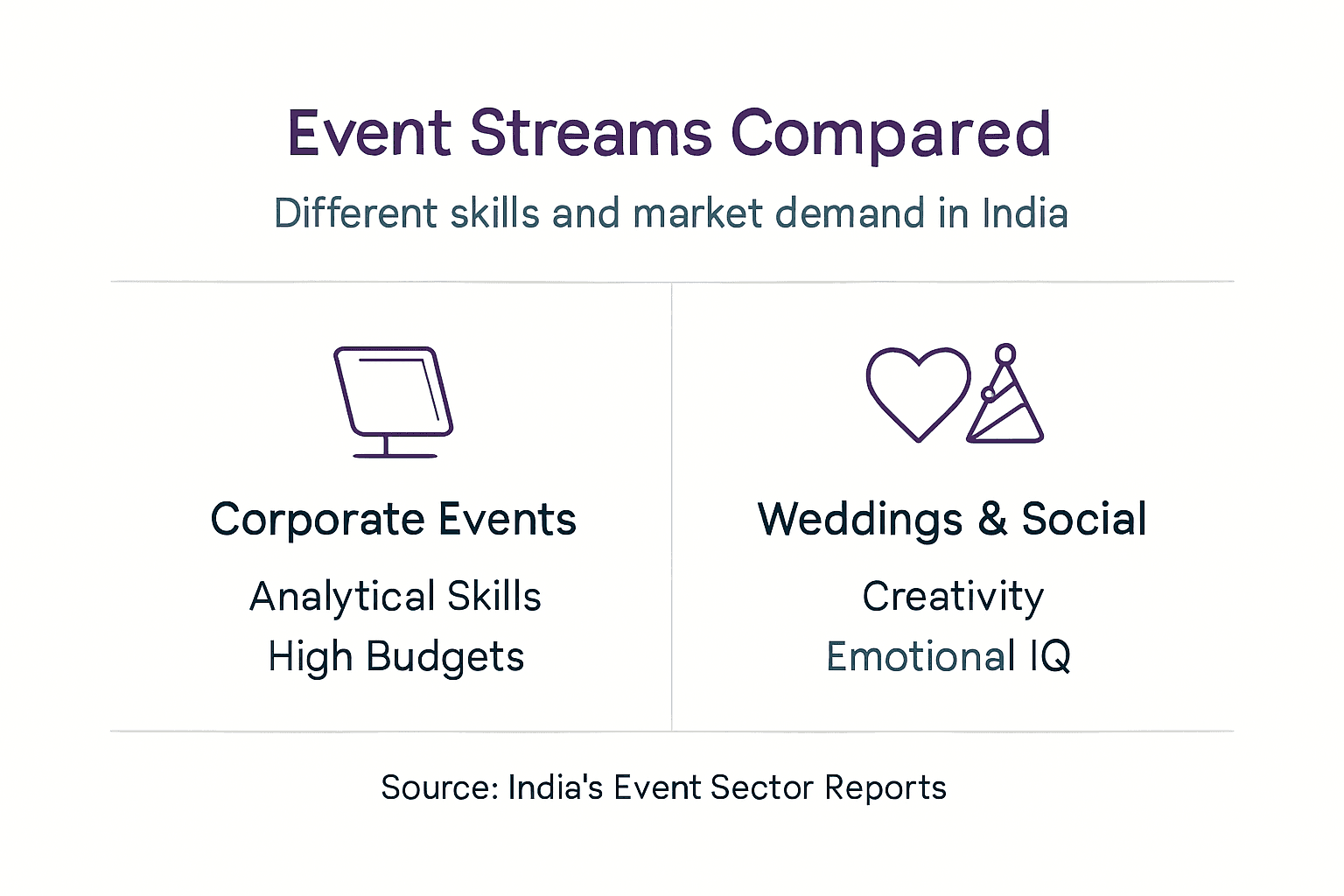
Wedding and social event management rely heavily on creativity and emotional intelligence. Success depends on understanding client visions, managing family dynamics, and delivering personalized experiences. These sectors reward interpersonal finesse and aesthetic sensibility.
Choosing the right specialization significantly impacts your earning potential and job satisfaction. Corporate event managers in major cities earn 20-30% more than wedding planners on average, but wedding specialists with strong reputations can command premium fees.
You can explore multiple streams through team I specialization options that allow flexibility during training. Many professionals start broadly before focusing as they discover their strengths and preferences.
Key considerations when choosing your specialization:
- Personal interest alignment with sector demands
- Geographic market opportunities in your target city
- Salary expectations versus passion for the event type
- Required networking investments and relationship building
Flexibility to switch streams exists, but focused expertise accelerates career advancement. Employers increasingly seek specialists who understand their sector’s nuances rather than generalists. Building deep knowledge in one area establishes your reputation and referral network faster.
Accreditation and Certification Value in the Indian Event Sector
Credentials matter significantly in India’s professionalizing event management industry. Accreditation ensures your diploma meets recognized standards and commands employer respect.
Accredited programs undergo external validation of curriculum quality, faculty qualifications, and assessment rigor. This verification provides employers confidence that graduates possess advertised competencies. Without accreditation, your certificate may face skepticism during hiring processes.
Employers prioritize accredited diplomas and certifications when evaluating candidates. In competitive job markets, accreditation becomes the differentiator between interview invitations and rejections.
teami.org offers accredited programs recognized by Indian event sector leaders and regulatory bodies. This institutional credibility transfers to your professional profile, opening doors that unaccredited certificates cannot.
Consider these verification steps before enrolling:
- Confirm the accrediting body’s legitimacy and industry recognition
- Verify course registration with educational authorities
- Check alumni placement records and employer partnerships
- Review testimonials from industry professionals about course quality
Unaccredited courses risk poor job market acceptance despite similar content. Many organizations have formal policies requiring accredited qualifications for event management positions. Graduating from non-accredited programs limits your opportunities unnecessarily.
Certification also affects salary negotiations. Accredited diploma holders justify higher compensation requests because employers trust their training quality. This credential value compounds throughout your career as you pursue senior positions.
The importance of certification extends beyond initial employment. Many industry associations and professional networks require accredited qualifications for membership. These connections provide ongoing learning opportunities and project referrals throughout your career.
Common Misconceptions About Event Management Education
Several persistent myths discourage talented individuals from pursuing event management diplomas. Correcting these misunderstandings helps you make informed educational decisions.
- Misconception: Event management is just party planning and decoration.
Reality: Professional event management encompasses complex logistics across diverse sectors. You manage budgets worth crores, coordinate hundreds of vendors, ensure legal compliance, and solve high-stakes problems under pressure. The field requires analytical thinking, negotiation skills, and operational excellence far beyond party aesthetics.
- Misconception: Diploma courses focus only on creativity and visual design.
Reality: Curricula dedicate substantial time to budgeting, marketing strategy, risk management, contract law, and technology systems. While creativity matters, successful event managers balance artistic vision with financial discipline and operational efficiency. Programs develop both hemispheres equally.
- Misconception: Practical experience is optional or supplementary to classroom learning.
Reality: Internships and live projects form mandatory, crucial components of quality programs. Employers specifically seek candidates with hands-on exposure because events cannot tolerate theoretical learning curves. Graduates without practical experience face significantly longer job searches and lower starting positions.
- Misconception: Event management skills come naturally and cannot be taught formally.
Reality: While interpersonal aptitude helps, professional competencies require systematic development. Structured education teaches proven methodologies, industry best practices, technology tools, and crisis management frameworks that self-taught individuals take years to discover through expensive mistakes.
Understanding these realities helps set appropriate expectations for your diploma journey. Event management education is rigorous, multidimensional, and professionally focused. Programs prepare you for demanding careers requiring both creative and analytical excellence.
Bridging the Gap: team i.org’s Unique Value Proposition
Several institutions offer event management training, but teami.org distinguishes itself through proven industry integration and comprehensive support systems.
The organization combines theoretical instruction with extensive hands-on training. Students participate in actual event productions throughout their programs, not just classroom simulations. This exposure builds genuine competence and professional confidence.
Industry collaborations ensure curriculum relevance and employment pathways. teami.org’s partnership with DNA Entertainment Networks provides students direct access to major event projects and hiring opportunities.
“teami.org leverages 23 years of industry experience with DNA Entertainment Networks for practical learning and placements.”
This experience depth manifests in program design and delivery quality. Faculty members bring decades of field expertise, teaching not just what to do but why certain approaches succeed. Their real-world insights cannot be replicated by purely academic instructors.
Key advantages students gain include:
- Mentorship from seasoned professionals actively working in the industry
- Networking opportunities with event companies and hiring managers
- Portfolio development through participation in recognized events
- Placement assistance leveraging institutional employer relationships
The platform’s placement facilitation extends beyond simple job listings. Career services include interview preparation, portfolio reviews, and employer introductions. This comprehensive support significantly improves employment outcomes compared to institutions offering only academic instruction.
Students also benefit from flexible learning formats. Online and hybrid options accommodate working professionals and geographically dispersed learners. This accessibility expands opportunities for individuals who cannot attend traditional campus programs.
teami.org’s success metrics speak clearly. Graduates consistently secure positions with leading event management companies, corporate event departments, and entertainment organizations. Their industry ready professionals reputation attracts recruiters seeking reliable talent pipelines.
Conclusion: Advancing Your Career with an Event Management Diploma
Specialized diploma education transforms aspiring event managers into competent professionals ready for India’s dynamic industry. Programs equip you with comprehensive skills spanning creativity, logistics, finance, and crisis management.
Practical training components prove essential for employability and career success. Internships and live projects build competencies that theoretical study alone cannot develop. Graduates with hands-on experience secure better positions faster and command higher salaries.
Accreditation and strategic specialization choices significantly impact your career trajectory. Recognized credentials open doors while focused expertise accelerates advancement in your chosen sector. Industry partnerships further enhance placement prospects through direct employer connections.
India’s event management sector will continue expanding as consumer spending and corporate activity grow. Entering this field now with proper diploma training positions you to ride this growth wave. The investment in quality education pays dividends throughout your professional journey.
Advance Your Event Management Career with team i.org
Ready to transform your passion into a professional career? Explore teami.org’s comprehensive, accredited diploma programs that blend theoretical foundations with intensive practical training.
Choose from flexible online event management diploma programs or traditional classroom formats based on your learning preferences and schedule. Both tracks provide the same rigorous event management course content and industry certifications.
Benefit from guaranteed internship and placement support through DNA Entertainment Networks and partner organizations. Gain hands-on experience with major events while building your professional network and portfolio.
Join thousands of graduates who have launched successful careers in India’s booming event sector. Start your journey today toward becoming an industry-ready event management professional.
Frequently Asked Questions
What prerequisites are needed for enrolling in event management diploma courses?
Most diploma programs require completion of 12th standard or equivalent qualification. No specific academic stream is mandatory, though commerce or arts backgrounds prove slightly advantageous. Strong communication skills and genuine interest in the field matter more than prior event experience.
How do internships enhance my chances of getting placed?
Internships increase placement rates by 30-40% because they provide verified proof of your practical capabilities. Employers view internship experience as reducing their training investment and hiring risk. You also build professional references and industry contacts that often lead directly to job offers.
Can I switch specializations after starting the diploma?
Most programs allow some flexibility during initial modules when you are exploring different event types. However, switching becomes difficult once you enter advanced specialization coursework. Choose carefully based on market research and self-assessment, but know that core skills transfer across specializations.
Is an online event management diploma as valued as offline?
Accredited online diplomas from recognized institutions carry equal weight with employers, especially post-pandemic. What matters is curriculum quality, practical components, and institutional reputation. Ensure your online program includes mandatory internships and live project participation for full credibility.
How important is accreditation for my diploma’s recognition?
Accreditation is critical for employer acceptance and career advancement. Many organizations have formal policies requiring accredited qualifications for event management positions. Unaccredited diplomas may face skepticism during hiring processes and limit opportunities for professional association memberships and certifications.