
Event management job requirements refer to the essential combination of education, skills, certifications, and hands-on experience needed to plan and execute events professionally. Whether you are eyeing a corporate conference in Bengaluru, a destination wedding in Udaipur, or a stadium concert in Mumbai, recruiters look for the same core building blocks. Most corporate event firms require at least a bachelor’s degree in hospitality, business, or marketing, though certifications like the Certified Meeting Professional (CMP) and tools like Asana, Cvent, and Eventbrite increasingly carry equal weight. This guide breaks down exactly what you need at every career stage.
What are the event management job requirements by qualification?
Formal education is the starting point most hiring managers use to filter candidates. Common degree paths include event management, hospitality, business administration, public relations, and communications. Smaller agencies and independent production houses in cities like Hyderabad and Pune often accept associate degrees, Higher National Diplomas (HND), or equivalent diplomas when applicants bring demonstrable practical experience.

Certifications separate candidates at the mid and senior levels. Mid-to-senior roles frequently require the CMP alongside 3–6 years of progressive experience. Other valued credentials include the Certified Special Events Professional (CSEP), the Digital Event Strategist (DES), and the Certified Professional in Catering and Events (CPCE). Each signals that you can manage complexity, not just coordinate logistics.
| Qualification | Best suited for | Career impact |
|---|---|---|
| Bachelor’s degree (hospitality, business) | Entry to mid-level corporate roles | Strong baseline; expected by most large firms |
| Diploma or HND | Entry-level at smaller agencies | Accepted widely; pair with experience |
| CMP certification | Mid to senior corporate events | Significantly boosts salary and credibility |
| CSEP certification | Special events and entertainment | Valued in weddings, concerts, and festivals |
| DES certification | Virtual and hybrid event roles | Growing demand post-pandemic |
Pro Tip: Check whether your chosen institute is affiliated with industry bodies recognised in India. Teami’s programmes, for instance, are built around practical exposure alongside formal certification, which is exactly what Indian employers now prioritise.
Institutes like Teami align their event management qualifications with real industry demands, covering both the academic framework and the on-ground skills that a degree alone rarely delivers.
What skills do event managers need to succeed?
Budget management is the skill that separates competent coordinators from trusted managers. Direct ownership of an event budget from start to finish greatly enhances a candidate’s appeal, even over formal education in some firms. If you have managed a ₹20 lakh corporate dinner in Delhi or reconciled vendor invoices after a three-day music festival, that experience speaks louder than a transcript.
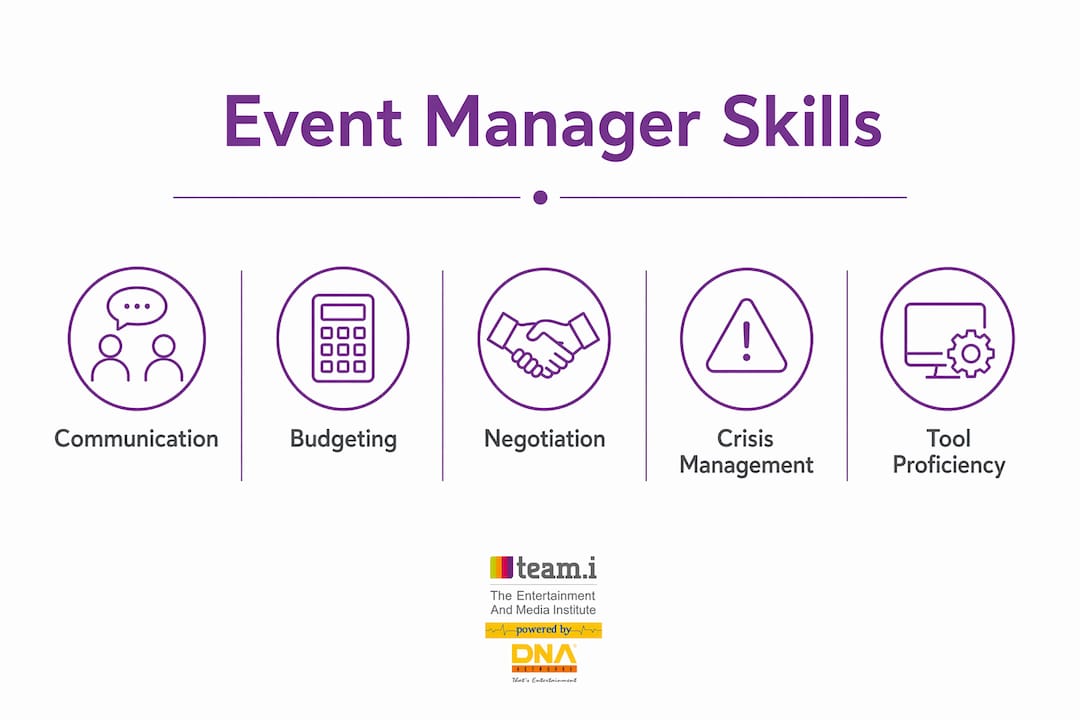
Key competencies for event managers include budget management, vendor negotiation, logistics planning, and proficiency with project platforms like Asana and Monday.com. Technical production knowledge matters equally. Briefing AV vendors and troubleshooting event technology on-site prevents operational chaos and is highly valued by employers across India’s entertainment and corporate sectors.
The top skills recruiters seek in 2026:
- Budget planning and financial reconciliation across multi-vendor events
- Vendor negotiation and contract management, including caterers, decorators, and AV teams
- Logistics and crowd flow planning, critical for large-scale concerts and college festivals
- Proficiency in Cvent, Asana, Eventbrite, and Monday.com for project tracking
- Crisis management and rapid problem-solving when vendors cancel or monsoons arrive uninvited
- Communication and stakeholder management across clients, sponsors, and on-ground crews
- Technical production knowledge, including stage setup, lighting rigs, and sound checks
Pro Tip: Practice your vendor negotiation skills on real events before you apply for roles. Even a college cultural festival in Bengaluru gives you genuine material to discuss in interviews.
Event management is essentially project management under pressure. The ability to handle unpredictable crises is what distinguishes a coordinator from a manager worth hiring.
How do internships and portfolios meet job requirements?
Networking and internships are often more effective for career entry than traditional job applications. This is especially true in India’s event industry, where most senior roles are filled through referrals and industry connections built over years of on-ground work. A well-placed internship with a production house in Mumbai or a wedding planning firm in Jaipur can open doors that no job board will.
No formal state or national licences are required for event planners in most jurisdictions, which means your portfolio and professional network become your primary credentials. A strong portfolio includes event photographs, client testimonials, run-sheets, budget summaries, and post-event reports. These documents prove you can execute, not just plan.
Here is how to build experience that actually gets you hired:
- Volunteer at college festivals. Events like Mood Indigo at IIT Bombay or Saarang at IIT Madras involve real logistics, real budgets, and real pressure. Treat them like professional assignments.
- Intern with a production company. Firms working on corporate summits, award shows, or IPL-adjacent events in Bengaluru and Mumbai offer exposure that classrooms cannot replicate.
- Document everything. Photograph your setups, save your run-sheets, and collect written feedback from clients or supervisors after every event.
- Build your network deliberately. Attend industry events, follow DNA Entertainment Networks and similar production houses on LinkedIn, and introduce yourself to professionals at every opportunity.
- Pursue internship opportunities through your institute. Structured internships arranged by training providers give you accountability and a verified record of experience.
A professional portfolio including photos, testimonials, and event run-sheets is crucial for securing senior roles or freelance work. This is especially vital for candidates who lack long-term employment history.
How do job requirements differ between junior and senior roles?
Entry-level event coordinator roles focus on foundational skills and supervised execution. You are expected to assist with logistics, manage vendor communications, and support senior managers on-site. A diploma or bachelor’s degree combined with one or two internships is typically sufficient to land your first role at an agency in Bengaluru or Delhi.
Senior event management positions demand a different profile entirely. Resilience and rapid problem-solving in crisis scenarios, such as vendor cancellations or sudden weather changes, distinguish senior managers in a competitive market. At this level, you are expected to lead teams, own budgets independently, and manage client relationships from brief to debrief.
| Competency | Junior coordinator | Senior event manager |
|---|---|---|
| Education | Diploma or bachelor’s degree | Degree plus CMP or CSEP preferred |
| Experience | 0–2 years, internships accepted | 3–6 years of progressive experience |
| Budget responsibility | Assisted or partial | Full ownership, multi-lakh budgets |
| Team leadership | None required | Managing coordinators and vendors |
| Crisis management | Basic; supervised | Independent, rapid decision-making |
| Technical production | Awareness level | Briefing AV vendors, troubleshooting |
| Portfolio | Basic; college or intern events | Documented large-scale event delivery |
The gap between junior and senior is not just time served. It is the depth of ownership you can prove. A senior manager in India’s entertainment sector, working on mega IPs or large-scale corporate summits, must demonstrate that they have run the whole show, not just parts of it.
What I have learnt about event management requirements in India
After years of working alongside India’s event industry, one thing stands out clearly. Recruiters care far more about what you have actually done than what your certificate says. A candidate who managed crowd flow logistics for a 5,000-person concert in Hyderabad will always outrank someone with a pristine transcript and zero on-ground hours.
That said, certifications are not decoration. The CMP and CSEP signal professional seriousness and open doors at multinational firms and large-scale production houses that simply will not interview without them. The real power comes from combining both: a credible qualification and a portfolio that proves you can handle controlled chaos.
The biggest mistake I see aspiring event managers make is waiting until they feel “ready” before pursuing real experience. You build readiness by doing, not by preparing to do. Get on-site. Volunteer. Intern. Negotiate your first vendor contract even if your hands are shaking. That is where the real curriculum lives.
— Teami
How Teami prepares you for real event management roles
Teami has spent 24 years building programmes that match exactly what Indian employers ask for. The event management courses cover budget planning, vendor negotiation, logistics, and technical production, with structured internships and real event participation built into the curriculum. Teami’s partnership with DNA Entertainment Networks means students work on live productions, not simulations. Whether you are starting from scratch or adding a certification to an existing career, Teami’s certified training programmes are designed to meet the qualification standards that Indian and international employers now expect.
FAQ
What qualifications are required for event management?
Most firms require a bachelor’s degree in hospitality, business, or a related field. Certifications like the CMP or CSEP significantly strengthen applications for mid-level and senior roles.
What are the core duties and responsibilities of an event manager?
Event managers handle budget planning, vendor negotiation, logistics coordination, on-site execution, and post-event reporting. Senior managers also lead teams and manage client relationships end to end.
Do event planners need a formal licence to work in India?
No formal licence is required for event planners in India or most other jurisdictions. Professional certifications and a strong portfolio serve as the primary credentials for career advancement.
What skills do recruiters look for in event management candidates?
Recruiters prioritise budget management, vendor negotiation, crisis management, and proficiency in tools like Cvent, Asana, and Eventbrite. Communication and on-ground problem-solving are equally valued.
How important are internships for breaking into event management?
Internships are often more effective for career entry than job applications alone. Practical experience from real events, documented in a professional portfolio, carries significant weight with Indian employers.
Recommended
- Job roles after event management course: your 2026 guide – team I
- Event management lifestyle: a practical guide for 2026 – team I
- Event management qualifications needed: your 2026 guide – team I
- Event planning university: your 2026 career guide – team I
Thinking about a career in event management?
team I is Bangalore’s only EEMA-certified event management institute, running for 24 years, where students work on real live events with real budgets and real deadlines rather than classroom simulations. See the full range of event management courses in Bangalore, or go straight to the flagship Certificate Program in Event Management (CPEM).