
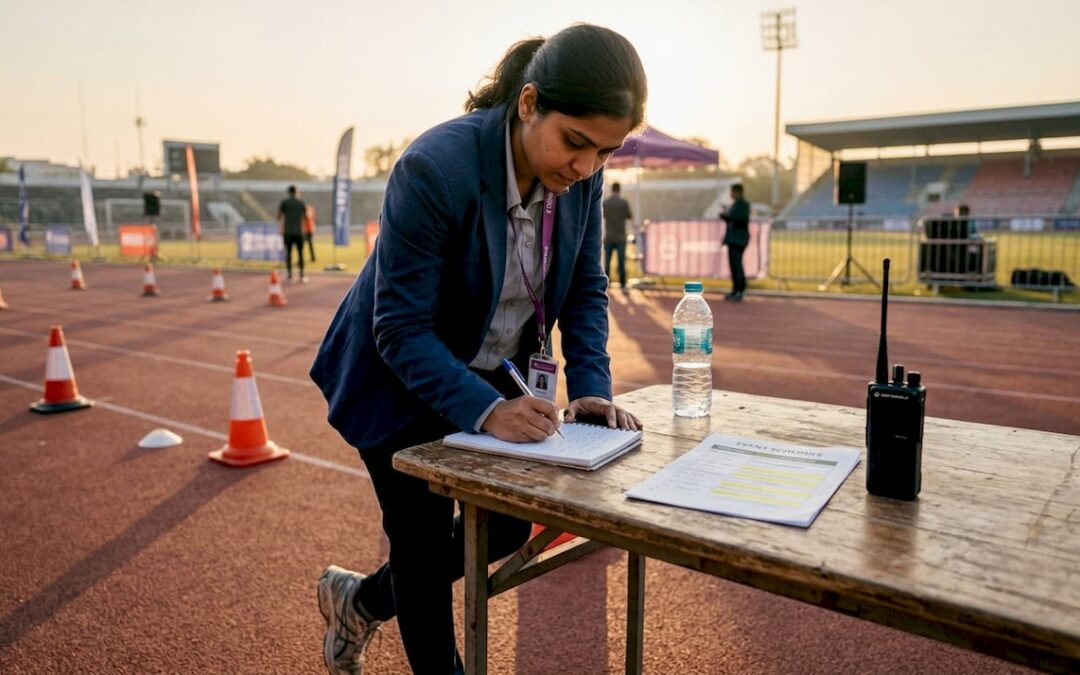
The sports event management market is valued at USD 1.06 billion in 2025 and is projected to reach USD 3.22 billion by 2035, growing at an 11.8% CAGR. That is not a niche industry quietly ticking along. That is a full-scale explosion of opportunity, and India sits right at the centre of it. Yet most aspiring event managers walk in thinking this career is about booking venues and printing schedules. It is so much more than that. From crowd safety protocols to sponsorship negotiations, from real-time logistics to post-event legacy planning, sports event management is a discipline that demands sharp thinking, serious preparation, and genuine passion for the craft.
Table of Contents
- What is sports event management?
- The core steps: Blueprint for managing a sports event
- Common challenges in sports event management
- Best practices and global standards
- Career pathways and next steps for aspiring sports event managers
- Advance your sports event management career with team I
- Frequently asked questions
Key Takeaways
| Point | Details |
|---|---|
| Start with clear goals | Successful sports event management begins by defining your objectives and audience. |
| Follow a proven framework | Managing a sports event involves a step-by-step process from planning through to post-event analysis. |
| Be ready for challenges | Anticipate logistical, financial, and safety issues and address them with strong risk management. |
| Aim for global standards | Adopting international best practices boosts your event’s success and your professional credibility. |
| Grow your career step-by-step | Combine hands-on experience, formal learning, and industry networking to thrive as an event manager. |
What is sports event management?
Let us clear something up immediately. Sports event management is not just about matchday logistics. It is the end-to-end process of planning, organising, and delivering sports events of every scale, from a school athletics day in Pune to an IPL fixture in a 60,000-seat stadium.
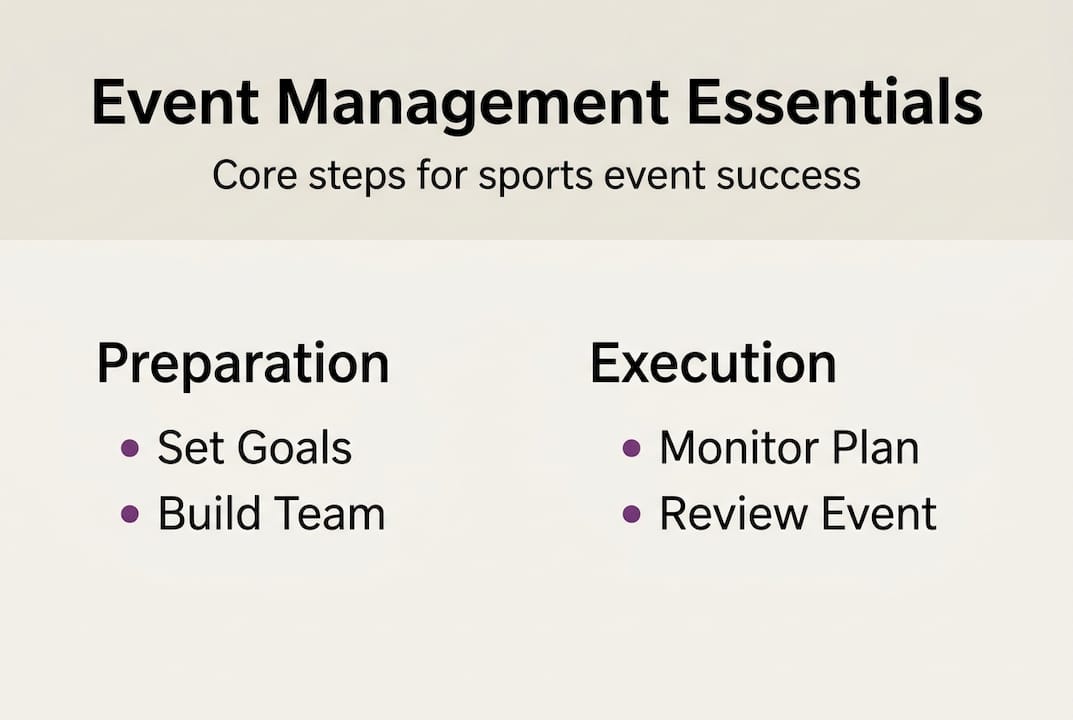
The core steps in sports event management include defining goals and audience, establishing a team and budget, selecting a venue, executing marketing, managing operations, and conducting a thorough post-event evaluation. Every single one of those steps demands a different skill set.
“Sports event management is not one job. It is ten jobs running simultaneously, and the best managers make it look effortless.”
Here is what the role actually covers:
- Goal-setting and audience analysis: Who is this event for, and what does success look like?
- Budgeting and financial planning: Allocating resources without overspending or underselling the experience.
- Venue selection and logistics: Matching the right space to the right event scale.
- Marketing and ticketing: Filling seats and building excitement before the first whistle blows.
- Safety and crowd management: Protecting every single person in that venue.
- Post-event review: Capturing what worked, what did not, and what to do better next time.
You might start as a logistics coordinator. You might grow into an operational planner or a marketing lead. The point is, the sports event management skills you build early will define how far and how fast you rise.
The core steps: Blueprint for managing a sports event
Now that we have defined the scope, let us break down the precise steps new managers follow to deliver a successful sports event. Think of this as your operational blueprint.
- Define goals and analyse your audience. What is the purpose of the event? Who are you serving? A corporate cricket tournament has a completely different audience profile than a national athletics championship.
- Establish your team and budget. Assign clear roles early. Budget overruns are one of the most common failure points in sports events, so build in a contingency buffer from day one.
- Select and secure your venue. Consider capacity, accessibility, transport links, and technical infrastructure. A great venue can elevate an average event. A poor one can sink a brilliant one.
- Plan marketing and ticketing. Use digital channels, social media, and partnerships to drive awareness. Technology in event planning has transformed how managers sell tickets and engage audiences before the event even begins.
- Manage operations and logistics. Coordinate vendors, volunteers, equipment, catering, and transport. This is where controlled chaos becomes your daily reality.
- Execute in real time. On the day, you are the conductor. Every department reports to you, and every problem lands on your desk. Stay calm. Stay decisive.
- Conduct a post-event review. The core steps in sports event management always end here, and the best managers treat this phase as seriously as the planning phase.
| Step | Manual approach | Tech-driven approach |
|---|---|---|
| Goal-setting | Whiteboard sessions and spreadsheets | Data analytics and audience segmentation tools |
| Budgeting | Manual tracking in Excel | Real-time budget management software |
| Marketing | Print and word-of-mouth | Social media campaigns and email automation |
| Logistics | Paper checklists and radio comms | Event management platforms and live dashboards |
| Post-event review | Verbal debrief | Automated reporting and attendee feedback tools |
Stay across entertainment industry trends to understand which technologies are reshaping how events are planned and delivered right now.
Pro Tip: Always run a post-mortem review within 48 hours of your event. Memory fades fast. Document what went wrong, what surprised you, and what you would change. That document becomes your most valuable planning asset for the next event.
Common challenges in sports event management
Even the strongest plans can face serious obstacles. Here is what you will need to tackle in the real world, and how to approach each one with confidence.
- Weather unpredictability: Outdoor events are always at the mercy of the sky. Have indoor contingency plans or weather insurance in place.
- Venue and transport logistics: Bottlenecks at entry points, parking chaos, and delayed equipment deliveries can derail an otherwise smooth event.
- Regulatory compliance: Permits, safety certifications, and local authority approvals take longer than you expect. Start early.
- Budget constraints: Costs escalate. Sponsorships fall through. Build financial buffers and have backup revenue strategies ready.
- Staff and volunteer management: High turnover and poor briefing lead to gaps on the ground. Train your team thoroughly and brief them repeatedly.
- Fluctuating crowd engagement: Audiences are unpredictable. Have activation plans ready to maintain energy throughout the event.
The key challenges in sports events consistently include logistical hurdles, financial pressures, regulatory compliance, and audience engagement. None of these are insurmountable. All of them require preparation.
“Risk management is not a backup plan. It is the plan. Practice drills, insurance coverage, and real-time technology for crowd and safety monitoring are non-negotiable for any serious sports event manager.”
Look at the Delhi Commonwealth Games 2010. Poor governance, massive overspending, and a complete absence of legacy planning turned what should have been India’s proudest sporting moment into a cautionary tale. The lesson? Preparation and accountability are not optional extras. They are the foundation. Solid event crowd management strategies can mean the difference between a celebrated event and a crisis.
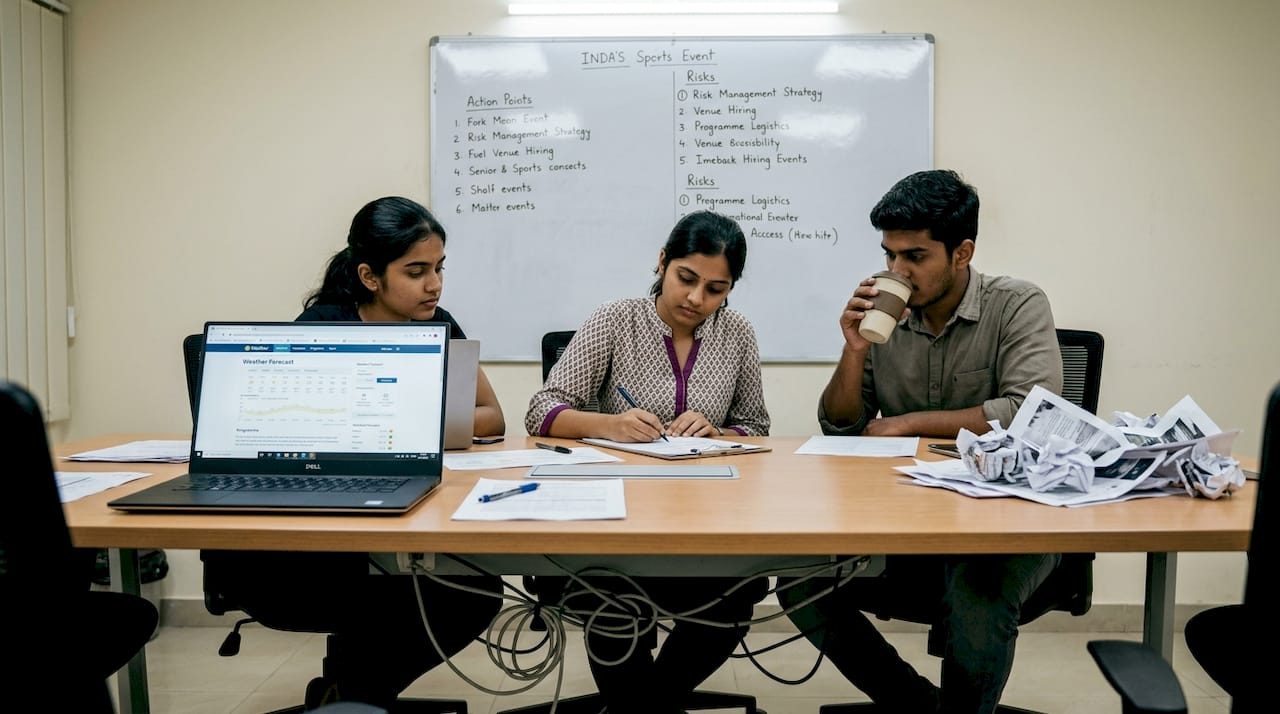
Pro Tip: Build a contingency plan for every major risk before your event date. Weather, power failure, medical emergencies, and crowd surges all need pre-written response protocols. If you are scrambling to write a plan on the day, you are already behind.
Best practices and global standards
Having seen what can go wrong, let us look at global best practices and what sets top event managers apart from the rest.
The two most important international frameworks you need to know are ISO 20121, which sets the standard for sustainable event management, and the IOC-OECD guidelines, which govern transparency and governance for major sporting events. These are not just bureaucratic checklists. They are the benchmarks that serious organisations use to protect their reputation and deliver lasting value.
Here is what best-in-class sports event management looks like in practice:
- Stakeholder transparency: Keep sponsors, local authorities, and community groups informed at every stage.
- Sustainability planning: Minimise waste, reduce carbon footprint, and plan for environmental impact from day one.
- Legacy planning: What does this event leave behind? Infrastructure, community engagement, and economic impact all matter.
- Consistent team training: Your team is only as strong as their preparation. Invest in regular briefings and skills development.
- Post-event evaluation: Use data, not just gut feeling, to assess performance and plan improvements.
| Event | Approach | Outcome |
|---|---|---|
| Delhi CWG 2010 | Poor governance, overspending, no legacy plan | Governance failures and reputational damage |
| ISO 20121-compliant events | Sustainability-first planning, stakeholder engagement | Reduced costs, stronger community trust |
| IOC-OECD-aligned events | Transparent governance, accountability frameworks | Long-term legacy and international credibility |
The numbers back this up. High-performing event organisations run 25 events per year with a 52% attendance rate. That level of output is only possible with standardised processes, strong teams, and a commitment to continuous improvement. Understanding the future of event management will help you align your skills with where the industry is genuinely heading.
Career pathways and next steps for aspiring sports event managers
With the core principles and challenges in mind, here is how you can put this knowledge into action and launch your career with real momentum.
- Build a strong portfolio. Document every event you touch, no matter how small. A school sports day you helped organise is a legitimate portfolio entry when you are starting out.
- Gain internship or volunteer experience. Nothing replaces being on the ground. Volunteer at local tournaments, college fests, or community sports events to build practical instincts.
- Pursue relevant certifications. Formal training signals credibility to employers and gives you structured knowledge that self-study rarely provides.
- Network actively in the industry. Attend industry events, connect with working professionals, and follow organisations that are shaping the sports event landscape in India.
- Stay updated on emerging trends. Digital tools, hybrid event formats, and data-driven planning are reshaping the industry fast. Keep learning.
The skills most in demand right now are digital fluency, crisis management, communication under pressure, and adaptability. These are not soft skills. They are survival skills in this industry.
India’s sports event sector is growing at a pace that creates genuine opportunity for young professionals who are prepared. The global market growth from USD 1.06 billion to USD 3.22 billion by 2035 is not happening in a vacuum. India’s expanding sports calendar, rising sponsorship investment, and growing fan culture are all contributing to that trajectory. Stay sharp on event management trends in India to understand exactly where the opportunities are emerging.
Start small. Scale up. Every event you manage teaches you something a classroom alone cannot.
Advance your sports event management career with team I
You now have the blueprint. You understand the steps, the challenges, the global standards, and the career moves that matter. The next question is: where do you get the training that actually prepares you for the real thing?
At teami.org, we have spent 24 years building programmes that put you inside real events, not just classrooms. Our event management course covers every stage of the event lifecycle, with practical exposure built in from day one. If flexibility matters to you, our online event management programme lets you build industry-ready skills on your own schedule. And when you are ready to get your hands on real work, our event management work experience opportunities connect you with live events and industry professionals who will push you to perform at your best. This is where knowledge becomes a career.
Frequently asked questions
What is the most important first step in sports event management?
Defining your event goals and understanding your target audience is always the essential starting point. Every subsequent decision, from budget to venue to marketing, flows from that clarity.
How do sports event managers handle unpredictable challenges?
By building detailed contingency plans before the event, running practice drills for likely scenarios, and using real-time technology for crowd monitoring and safety management. Preparation is the only reliable answer to unpredictability.
Which global standards are relevant for sports event management?
ISO 20121 for sustainability and IOC-OECD guidelines for transparency and governance are the two most widely recognised international frameworks in the industry.
What qualifications help start a career in sports event management in India?
Certifications, hands-on internships, and practical event experience are the most valued by employers. High-performing professionals combine structured learning with consistent real-world exposure to build the credibility that gets them hired.
Recommended
- BLOG – team I – Page 10
- What Is Event Management? Guide for Aspiring Professionals – team I
- Sports Event Management: Essential Skills, Jobs, and Certifications 2025 – team I
- Tips for Success as a New Event Management Professional – team I
- How to organize get to know each other games (2026 guide) – The World Game