

Over eighty percent of british event planners agree that clear purpose and audience engagement matter more than sheer attendance numbers. Relying only on headcounts or basic logistics often overlooks what truly drives memorable, high-impact experiences. This article brings clarity on what sets successful events apart, showing how intentional objectives, strategic planning, and thoughtful design create results that impress attendees and satisfy stakeholders alike.
Table of Contents
- What A Successful Event Means
- Defining Clear Purpose And Objectives
- Audience‑Centred Design And Personalisation
- Seamless Logistics And Vendor Coordination
- Elevating Attendee Engagement And Experience
- Sustainability, Safety And Contingency Planning
- Post‑Event Analysis And Improvement
Key Takeaways
| Point | Details |
|---|---|
| Strategic Planning is Essential | Successful events require clear, measurable objectives that guide every aspect of planning and execution. |
| Audience-Centred Design Enhances Experience | Tailoring experiences to audience preferences fosters engagement and ensures meaningful interactions. |
| Logistics and Vendor Coordination Matter | Effective coordination and risk management are crucial for seamless event operations and participant satisfaction. |
| Post-Event Analysis Fuels Improvement | Comprehensive evaluation of event performance informs future strategies and enhances organisational learning. |
What A Successful Event Means
A successful event transcends mere logistical execution and represents a strategic orchestration of purpose, people, and place. Event management experts define events as ‘happenings with objectives’, emphasising that true success hinges on clear strategic planning and deliberate goal achievement.
Beyond surface-level metrics like attendance or budget management, a successful event creates meaningful experiences and delivers tangible outcomes for participants and stakeholders. This requires meticulous planning where establishing clear aims and objectives becomes critical for strategic direction, enabling organisers to design intentional experiences that resonate deeply with their audience.
Key elements that distinguish successful events include:
- Precise goal alignment
- Seamless logistical execution
- Meaningful participant engagement
- Measurable impact and outcomes
- Positive stakeholder experiences
Pro Tip – Strategic Planning: Always define specific, measurable objectives before event design, ensuring every element of your event directly supports those core goals and delivers tangible value to participants.
Successful events are not accidents but carefully crafted experiences that transform initial concepts into memorable, impactful moments.
Here is a summary of how different event management pillars contribute to overall event success:
| Event Pillar | Primary Focus | Typical Business Impact |
|---|---|---|
| Clear Objectives | Goal-setting and strategic alignment | Drives purposeful event outcomes |
| Audience-Centred Design | Tailoring experiences to attendees | Increases satisfaction and engagement |
| Seamless Logistics | Efficient operations and coordination | Reduces risks and enhances reliability |
| Attendee Engagement | Fostering active participation | Strengthens loyalty and brand recall |
| Sustainability & Risk | Safety and environmental practices | Minimises disruption and supports reputation |
| Post-Event Analysis | Performance review and learning | Enables continuous organisational improvement |
Defining Clear Purpose And Objectives
Establishing precise objectives is the foundational cornerstone of successful event management. Universities recommend using SMART criteria when defining event objectives: ensuring they are Specific, Measurable, Accurate, Relevant, and Timely, which transforms vague aspirations into actionable strategic plans.
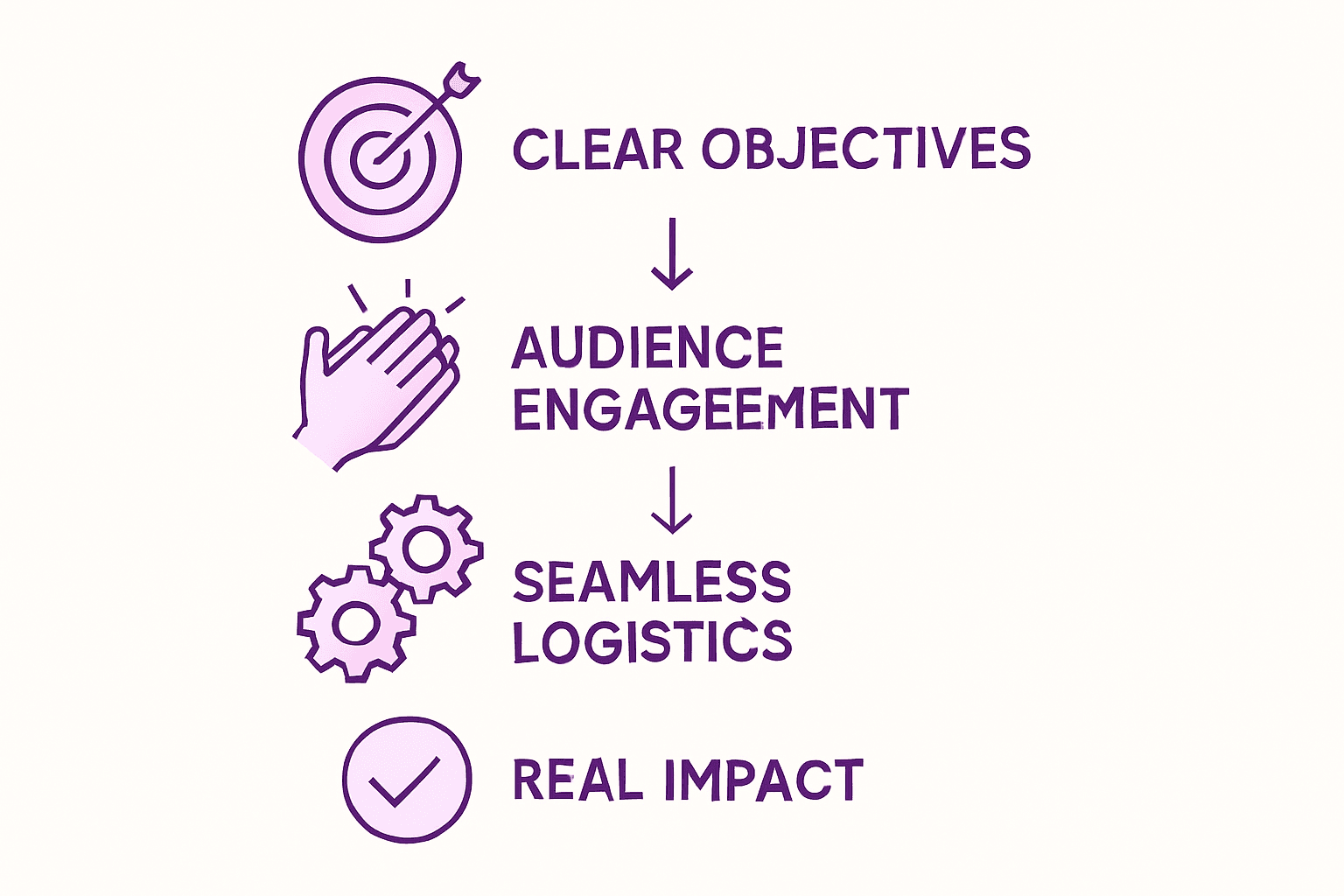
Effective event objectives serve multiple critical functions beyond simple goal-setting. They provide a strategic framework for resource allocation, help organisers maintain focus, enable meaningful performance evaluation, and create a clear roadmap for success. By articulating precise objectives, event professionals can align every aspect of their planning—from venue selection to marketing strategies—with the event’s core purpose.
Key components of well-defined event objectives include:
- Crystal-clear desired outcomes
- Quantifiable success metrics
- Alignment with broader organisational goals
- Realistic and achievable targets
- Specific target audience identification
These objectives should not merely exist on paper but serve as a dynamic blueprint guiding every decision throughout the event lifecycle. Detailed objectives help anticipate potential challenges, allocate resources efficiently, and create meaningful experiences that deliver genuine value to participants.
Pro Tip – Objective Refinement: Regularly review and refine your event objectives during the planning process, ensuring they remain relevant and adaptable to changing circumstances and stakeholder expectations.
Audience‑Centred Design And Personalisation
Audience-centred design represents the strategic cornerstone of contemporary event management, transforming traditional approaches by placing participants’ experiences and expectations at the absolute forefront of planning and execution. This approach transcends generic event strategies, requiring deep empathy, meticulous research, and a nuanced understanding of diverse participant profiles and engagement preferences.
Successful audience-centred design demands comprehensive demographic and psychographic analysis, enabling event organisers to craft highly personalised experiences that resonate authentically with specific audience segments. By segmenting participants based on characteristics such as age, professional background, interests, and learning styles, event professionals can design targeted interactions, curate relevant content, and create meaningful engagement pathways that feel individually tailored.
Key strategies for effective audience-centred personalisation include:
- Conducting thorough audience research and segmentation
- Developing flexible event formats accommodating diverse preferences
- Implementing interactive and participatory design elements
- Creating personalised communication and engagement touchpoints
- Utilising technology for customised attendee experiences
Modern event design requires a holistic approach that views participants not as passive recipients but as active co-creators of the event experience. This means developing dynamic, responsive event architectures that can adapt in real-time to participant feedback and evolving expectations.
Below is a comparison of traditional versus modern approaches to event management:
| Approach Type | Participant Role | Measurement Focus | Key Tools/Strategies |
|---|---|---|---|
| Traditional | Passive audience | Attendance, budget spent | Fixed agendas, static sessions |
| Modern | Active co‑creator | Engagement, experience | Personalisation, interactivity, real-time feedback |
Pro Tip – Audience Mapping: Develop detailed audience personas before event design, capturing not just demographic data but deeper motivational insights that help you craft truly resonant participant experiences.
Seamless Logistics And Vendor Coordination
Seamless logistics and vendor coordination represent the intricate operational backbone of successful event management, transforming complex planning challenges into meticulously executed experiences. Comprehensive planning, including strategic budgeting and robust contingency frameworks, is crucial for ensuring efficient management of all event aspects.
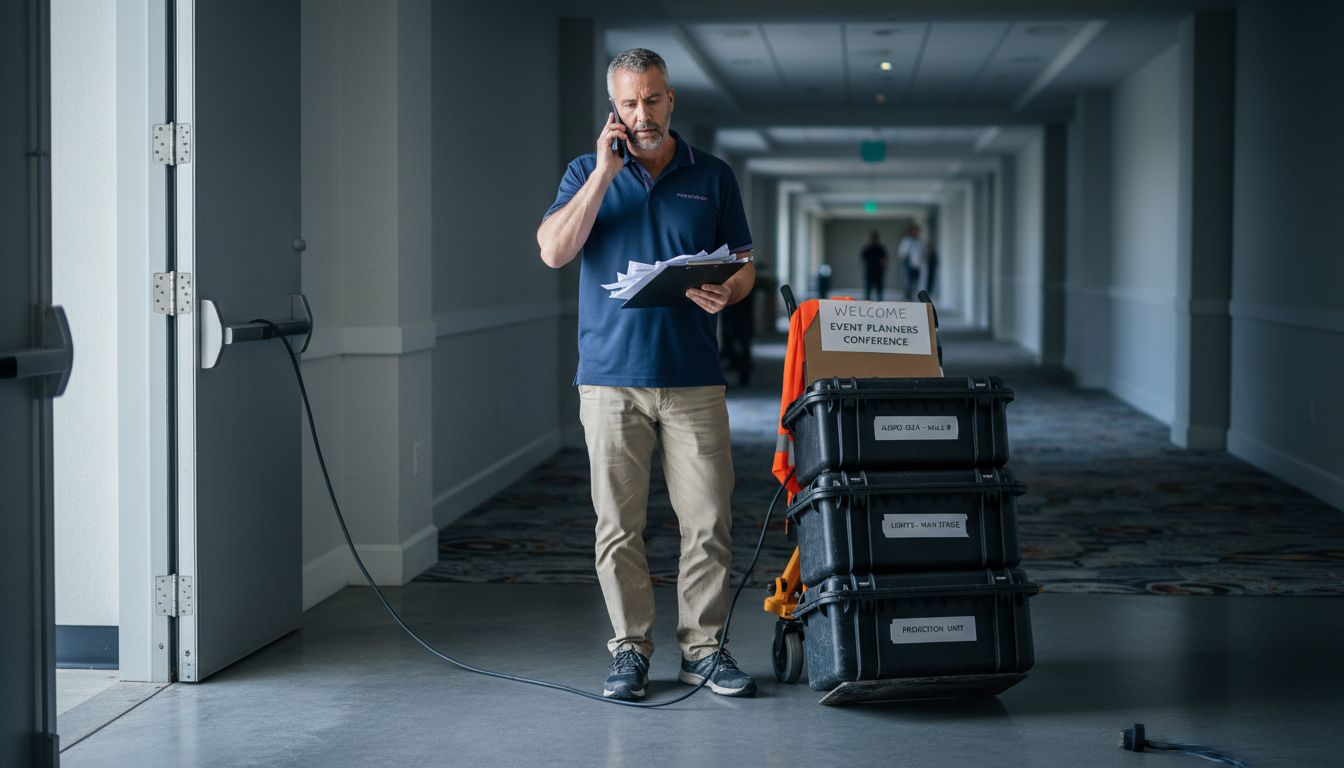
Effective vendor coordination demands a sophisticated approach that goes beyond simple contract management. Event professionals must develop comprehensive communication strategies, establish clear performance expectations, and create flexible collaboration mechanisms that allow for real-time problem-solving and adaptive responses. This requires developing detailed vendor relationship maps, understanding each partner’s capabilities, potential limitations, and creating integrated operational workflows that facilitate seamless interactions.
Key elements of exceptional logistics and vendor management include:
- Detailed contract negotiations with clear deliverables
- Comprehensive vendor performance tracking
- Robust communication protocols
- Proactive risk management strategies
- Flexible contingency planning
- Technology-enabled coordination platforms
Successful logistics management is not about eliminating all potential challenges but creating resilient systems that can quickly adapt and respond to unexpected scenarios. This requires a dynamic approach that balances meticulous planning with the ability to make rapid, informed decisions under pressure.
Pro Tip – Vendor Integration: Develop collaborative vendor briefing sessions before the event, ensuring all partners understand the holistic event vision and their specific role in delivering an exceptional participant experience.
Elevating Attendee Engagement And Experience
Elevating attendee engagement represents the transformative core of exceptional event design, where participants transition from passive observers to active contributors. Modern brand activation strategies demonstrate how strategic engagement can create profound, memorable experiences that resonate long after the event concludes.
Successful engagement requires a multidimensional approach that integrates interactive technologies, personalised experiences, and strategic psychological triggers. Event professionals must craft immersive environments that stimulate multiple sensory channels, encourage participant interaction, and create meaningful connection points that transform traditional event participation into dynamic, collaborative experiences.
Key strategies for exceptional attendee engagement include:
- Creating interactive technology-enabled participation zones
- Developing personalised networking opportunities
- Implementing real-time feedback mechanisms
- Designing multi-sensory experience pathways
- Incorporating storytelling and emotional connection elements
- Utilising gamification and competitive interaction techniques
The most compelling events blur the boundaries between audience and experience, treating participants as co-creators rather than mere spectators. This requires a holistic approach that anticipates individual preferences, provides multiple engagement channels, and creates opportunities for meaningful personal and professional connections.
Pro Tip – Engagement Architecture: Design your event with intentional ‘interaction moments’ that provide natural, low-pressure opportunities for participants to connect, share, and contribute to the collective experience.
Sustainability, Safety And Contingency Planning
Modern event management demands a holistic approach to sustainability, safety, and risk mitigation that transcends traditional planning methodologies. Developing comprehensive backup plans for contingencies is non-negotiable, ensuring robust preparedness for unforeseen circumstances.
Strategic event planning requires carefully considering potential impacts and implementing proactive safety measures, transforming risk management from a reactive process to a strategic advantage. This approach encompasses environmental sustainability, participant safety, operational resilience, and ethical event design that anticipates and mitigates potential challenges before they emerge.
Key components of comprehensive sustainability and safety planning include:
- Detailed risk assessment protocols
- Environmental impact monitoring
- Emergency response infrastructure
- Adaptive safety technology integration
- Inclusive accessibility considerations
- Sustainable resource management
- Comprehensive insurance and liability coverage
Successful event safety requires a multilayered strategy that balances technological solutions, human expertise, and proactive planning. This means creating flexible frameworks that can quickly adapt to changing circumstances while maintaining participant wellbeing and minimising potential disruptions.
Pro Tip – Holistic Risk Management: Develop a dynamic risk register that evolves throughout the event planning process, treating contingency planning as an ongoing dialogue rather than a static document.
Post‑Event Analysis And Improvement
Establishing clear objectives during the event planning process simplifies comprehensive post-event evaluation and facilitates strategic decision-making, enabling event professionals to transform individual experiences into systematic organisational learning.
Post-event analysis represents a critical moment of reflection and strategic recalibration, transcending simple performance measurement to become a sophisticated framework for continuous improvement. This multidimensional approach involves collecting quantitative and qualitative data, synthesising participant feedback, assessing organisational objectives, and identifying nuanced insights that can inform future event strategies.
Key elements of comprehensive post-event analysis include:
- Systematic participant feedback collection
- Comparative performance benchmarking
- Detailed financial and resource utilisation review
- Stakeholder satisfaction assessment
- Alignment with original event objectives
- Identification of unexpected outcomes and learnings
- Technology-enabled data aggregation and insights generation
Successful post-event analysis requires a holistic perspective that balances empirical data with narrative insights, recognising that meaningful improvement emerges from understanding both measurable metrics and subjective participant experiences. This approach transforms events from isolated occurrences into strategic learning opportunities that continuously evolve organisational capabilities.
Pro Tip – Feedback Integration: Develop a standardised yet flexible feedback mechanism that captures both quantitative ratings and qualitative narrative insights, ensuring a comprehensive understanding of event performance.
Master the Art of Successful Event Management Today
Creating a successful event demands more than just good intentions. It requires clear objectives, audience-centred design, seamless logistics, and impactful engagement as highlighted in the article “What Makes a Successful Event: Real Impact Revealed”. If you find yourself wrestling with aligning event goals or elevating participant experiences while managing intricate operational challenges, you are not alone. These critical pain points often stand between an event that simply happens and one that truly leaves a lasting impression.
At teami.org, we empower aspiring and current event professionals to overcome these challenges through comprehensive, specialised training. With over 24 years of industry expertise, our certification programmes blend practical exposure with theory, guiding you through strategic planning, vendor coordination, and innovative audience engagement techniques essential to crafting memorable events. Discover how our hybrid and online courses in various event specialisations can transform your passion into real-world success. Take the next step towards mastering event management by connecting with us at teami.org and unlock the potential to create events that make a real impact.
Frequently Asked Questions
What are the key elements that contribute to a successful event?
Successful events typically feature precise goal alignment, seamless logistical execution, meaningful participant engagement, measurable impact and outcomes, and positive stakeholder experiences.
How can I define clear objectives for my event?
Use the SMART criteria to define your objectives: make them Specific, Measurable, Accurate, Relevant, and Timely. This transforms vague goals into actionable plans that guide your event.
What is audience-centred design, and why is it important?
Audience-centred design focuses on tailoring event experiences to meet the needs and preferences of participants. It’s important because it increases satisfaction and engagement by making attendees feel more involved and valued.
How can I elevate attendee engagement during my event?
Elevate engagement by creating interactive participation zones, implementing real-time feedback mechanisms, and designing activities that encourage storytelling and personal connections among attendees.
Recommended
- Complete Guide to Event Evaluation Techniques – team I
- Influencer Marketing for Events: Success Strategies Revealed – team I
- Understanding Corporate Social Responsibility Events – team I
- How to Organise Events for Maximum Impact: Step-by-Step Guide – team I
- Understanding the Importance of Customer Communication – My WordPress
Thinking about a career in event management?
team I is Bangalore’s only EEMA-certified event management institute, running for 24 years, where students work on real live events with real budgets and real deadlines rather than classroom simulations. See the full range of event management courses in Bangalore, or go straight to the flagship Certificate Program in Event Management (CPEM).