

Standing in front of a group at a lively Bengaluru event, many young professionals feel their heart racing as they search for the right words. Public speaking is not just a skill, it is the foundation for meaningful client communication and confident event leadership in the competitive world of Event Management. Mastering effective communication techniques helps transform nervous energy into clear, engaging presentations that inspire and connect. Whether leading team briefings or pitching ideas to clients, you will discover proven strategies to elevate your impact and advance your career.
Table of Contents
- Defining Public Speaking In Event Management
- Core Communication Skills And Techniques
- Overcoming Anxiety And Building Confidence
- Practical Applications In Event Scenarios
- Common Pitfalls And How To Avoid Them
Key Takeaways
| Point | Details |
|---|---|
| Importance of Public Speaking | Public speaking is a vital communication skill for event professionals, transforming information into engaging narratives beyond mere presentation techniques. |
| Communication Skills in Event Management | Effective communication encompasses verbal and non-verbal skills, emotional intelligence, and digital proficiencies, crucial for navigating diverse event contexts. |
| Overcoming Public Speaking Anxiety | Managing anxiety through cognitive reframing, gradual exposure, and relaxation techniques can enhance a speaker’s confidence and performance. |
| Common Pitfalls in Public Speaking | Recognising and addressing errors such as slide overload and poor body language is essential to maintain credibility and audience engagement. |
Defining Public Speaking in Event Management
Public speaking represents a critical communication skill for event professionals, far beyond mere presentation techniques. At its core, public speaking is a strategic interaction that transforms information into compelling narratives for live audiences. Effective communication techniques demonstrate that this skill transcends traditional monologues, functioning more like an engaging conversation.
In the event management landscape, public speaking involves several nuanced dimensions:
- Delivering conference presentations
- Facilitating panel discussions
- Conducting client pitches
- Managing event stakeholder communications
- Leading team briefings and debriefings
Professional public speaking is not about perfection, but authenticity and strategic message delivery. Communication skills in live settings require speakers to understand key components: the speaker, the message, the audience, communication channels, feedback mechanisms, and contextual dynamics.
Event professionals must recognise that public speaking extends beyond verbal communication. It encompasses body language, tone modulation, emotional intelligence, and the ability to read and respond to audience engagement. Storytelling emerges as a powerful tool, allowing speakers to connect logically and emotionally with their listeners.
The following table contrasts formal and informal public speaking contexts within event management:
| Context Type | Typical Audience | Speaker Objectives | Common Challenges |
|---|---|---|---|
| Formal Presentations | Delegates, executives | Convey expertise, persuade | Maintaining engagement, nerves |
| Informal Interactions | Colleagues, guests | Build rapport, network | Adapting style, time pressure |
Pro tip: Practice your presentations in front of diverse audiences to develop adaptability and confidence in your communication approach.
Core Communication Skills and Techniques
Effective communication represents a complex interplay of verbal, non-verbal, and digital skills crucial for event professionals. Communication strategies in collaborative environments highlight the importance of clarity, emotional intelligence, and adaptive interaction techniques that transcend traditional communication models.
Core communication skills for event professionals encompass multiple dimensions:
- Verbal communication: Clear, concise message delivery
- Non-verbal communication: Body language and facial expressions
- Emotional intelligence: Reading audience reactions
- Digital communication: Utilising technological platforms
- Interpersonal skills: Building rapport with diverse stakeholders
Public speaking techniques demonstrate that professional communication involves more than content delivery. It requires confident presentation, strategic visual aid usage, and the ability to engage audiences dynamically. Event professionals must master both oral and visual communication components to effectively convey complex information.

Successful communication in event management demands continuous skill refinement. This involves understanding audience psychology, developing adaptive communication strategies, and cultivating emotional awareness. Professionals must learn to modulate their communication style across different contexts, from formal conference presentations to informal networking interactions.
Pro tip: Record and review your presentations regularly to identify communication patterns and areas for improvement.
Overcoming Anxiety and Building Confidence
Public speaking anxiety is a significant challenge for many event professionals, creating psychological barriers that can hinder career progression. Psychological factors affecting communication performance reveal that personality traits and self-confidence play crucial roles in managing performance-related stress and developing effective communication strategies.
Key strategies for overcoming public speaking anxiety include:
- Cognitive reframing: Transforming negative thoughts into positive perspectives
- Gradual exposure: Incrementally increasing speaking opportunities
- Structured preparation: Developing comprehensive presentation frameworks
- Relaxation techniques: Implementing breathing and mindfulness practices
- Peer support: Creating supportive professional networks
Successful public speaking strategies demonstrate that confidence is not an innate trait but a skill developed through consistent practice and strategic intervention. Event professionals can systematically build confidence by understanding their anxiety triggers, developing personalised coping mechanisms, and progressively challenging themselves in controlled environments.
Building resilience requires a multifaceted approach that addresses both psychological and practical dimensions of public speaking. This involves developing self-awareness, practising emotional regulation techniques, and creating supportive professional ecosystems that encourage continuous personal development. Professionals must view anxiety as a natural response that can be managed and transformed into a powerful communication asset.
Here is a summary of confidence-building strategies and their positive effects for event professionals:
| Strategy | Implementation Example | Positive Impact |
|---|---|---|
| Gradual exposure | Speak at small meetings | Reduces performance anxiety |
| Peer support | Join speaker groups | Boosts self-assurance |
| Cognitive reframing | Replace negative thoughts | Encourages a growth mindset |
Pro tip: Create a pre-presentation ritual that helps centre your emotions and build confidence before speaking engagements.
Practical Applications in Event Scenarios
Event communication demands sophisticated application of public speaking skills across diverse professional contexts. Exemplary speaker case studies reveal that successful communication transcends traditional presentation models, emphasising adaptability and authentic engagement in real-world scenarios.
Practical event communication scenarios include:
- Conference keynote presentations: Delivering compelling narratives
- Networking interactions: Building professional relationships
- Crisis management communications: Maintaining composure under pressure
- Virtual event moderation: Facilitating digital engagement
- Client pitch sessions: Persuasive communication strategies
Public speaking simulations demonstrate how structured speaking experiences enhance professionals’ readiness for complex event management challenges. Event professionals must develop nuanced communication approaches that accommodate different audience expectations, technological platforms, and organisational contexts.
Effective communication in event scenarios requires continuous skill development and contextual adaptability. Professionals must learn to read audience dynamics, modulate their communication style, and leverage both verbal and non-verbal communication techniques. This involves understanding cultural nuances, technological constraints, and the psychological dimensions of audience engagement.
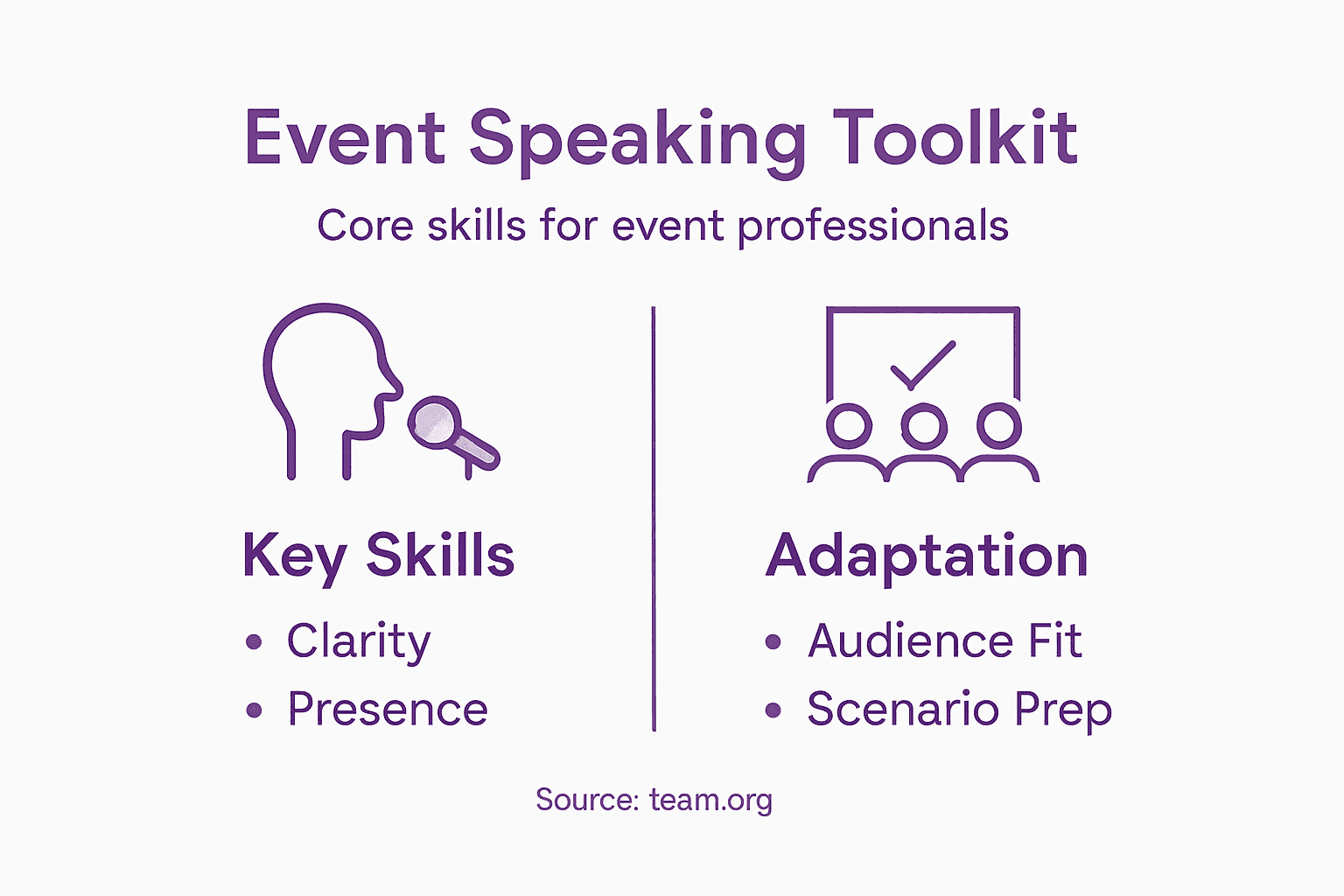
Pro tip: Develop a flexible communication toolkit that allows you to adapt your speaking style across different event scenarios and audience demographics.
Common Pitfalls and How to Avoid Them
Public speaking challenges can derail even experienced event professionals, creating significant barriers to effective communication. Presentation mistakes in professional settings reveal common pitfalls that systematically undermine speaker credibility and audience engagement.
Most frequent public speaking errors include:
- Slide overload: Cramming too much information on visual aids
- Monotone delivery: Speaking without vocal variation
- Lack of preparation: Insufficient content research
- Poor body language: Inconsistent non-verbal communication
- Ignoring audience dynamics: Failing to read crowd responses
Communication error prevention strategies demonstrate that most speaking challenges can be systematically addressed through targeted practice and self-awareness. Event professionals must develop a keen understanding of their communication patterns, learning to recognise and quickly correct potential performance obstacles.
Successful communication requires continuous self-evaluation and adaptive techniques. Professionals should regularly record their presentations, seek constructive feedback, and consciously work on refining their speaking skills. This involves developing emotional intelligence, understanding audience psychology, and maintaining a flexible approach to public speaking that prioritises authentic connection over rigid performance metrics.
Pro tip: Create a personal feedback loop by recording your presentations and critically analysing your communication strengths and improvement areas.
Master Public Speaking Skills with Expert Guidance from team.i.org
Struggling with public speaking anxiety or unsure how to engage diverse event audiences confidently is a common challenge outlined in “Public Speaking Essentials for Event Professionals”. This article highlights key pain points such as overcoming nerves, building authentic connections, and adapting communication styles for varied event scenarios. At team.i.org, we understand these hurdles and provide specialised training that goes beyond theory to include practical exposure, hands-on projects, and real event participation. Our courses are designed to help you develop clarity, emotional intelligence, and a flexible communication toolkit essential for every aspiring event professional.
Take the next step towards transforming anxiety into confidence and mastering the art of public speaking within your event career. Explore our certification programs tailored for young professionals seeking impactful communication skills. Benefit from industry-driven curricula in partnership with DNA Entertainment Networks and gain access to placement opportunities that put your new abilities to work. Don’t wait to boost your event management career—connect with us today through team.i.org and start shaping your future with confidence.
Frequently Asked Questions
What are the key components of effective public speaking for event professionals?
The key components include understanding the speaker, the message, the audience, communication channels, feedback mechanisms, and contextual dynamics. It also involves mastering verbal and non-verbal communication, emotional intelligence, and storytelling techniques.
How can event professionals overcome public speaking anxiety?
Event professionals can overcome anxiety by implementing strategies such as cognitive reframing to change negative thoughts, gradual exposure to speaking opportunities, structured preparation, relaxation techniques, and seeking peer support.
What common mistakes should I avoid in public speaking during events?
Common mistakes include slide overload, monotone delivery, lack of preparation, poor body language, and ignoring audience dynamics. Being aware of these pitfalls can help enhance your communication effectiveness.
How can I improve my public speaking skills for different event scenarios?
Improving skills involves continuous practice, developing a flexible communication toolkit, understanding audience dynamics, and adapting your style according to different contexts—from formal presentations to networking events.
Recommended
- Event Management and Public Relations: Skills and Success in 2025 – team I
- Importance of Networking Skills for Event Careers – team I
- How to Organise Events for Maximum Impact: Step-by-Step Guide – team I
- 7 Essential Tips for Networking Events for Young Professionals – team I
- Special Occasion Shuttles: Elevating High Country Events » Ashe County Livery blog
- 7 esempi di servizi a noleggio indispensabili per eventi | NoleggioQui