

Over 80 percent of british event managers believe that mastering virtual and hybrid event formats gives them a strong edge in the global job market. For young professionals in Bangalore, understanding these digital-first strategies can unlock new career paths and open doors to exciting international collaborations. This article offers practical insights that help you stand out by designing events that are accessible, engaging, and future-ready.
Table of Contents
- Core Definitions And Event Formats Explained
- Key Differences: Audience, Engagement, Logistics
- Planning Essentials For Hybrid And Virtual Events
- Technology, Accessibility And Compliance Requirements
- Costs, Risks, And Common Mistakes To Avoid
- Career Impact: Skills For New Event Formats
Key Takeaways
| Point | Details |
|---|---|
| Understanding Event Formats | Distinguish between virtual and hybrid events to effectively engage diverse audiences. |
| Technological Infrastructure | Invest in robust technology and staff training to ensure smooth operations and participant interaction. |
| Audience Engagement | Design inclusive engagement strategies to provide equal opportunities for both physical and virtual participants. |
| Budget Management | Anticipate higher costs for technological resources and allocate a contingency fund for unexpected expenses. |
Core definitions and event formats explained
Event management has dramatically transformed with digital technologies, creating new formats that challenge traditional gathering models. Virtual and hybrid events represent two innovative approaches that offer unprecedented flexibility for organisers and participants alike.
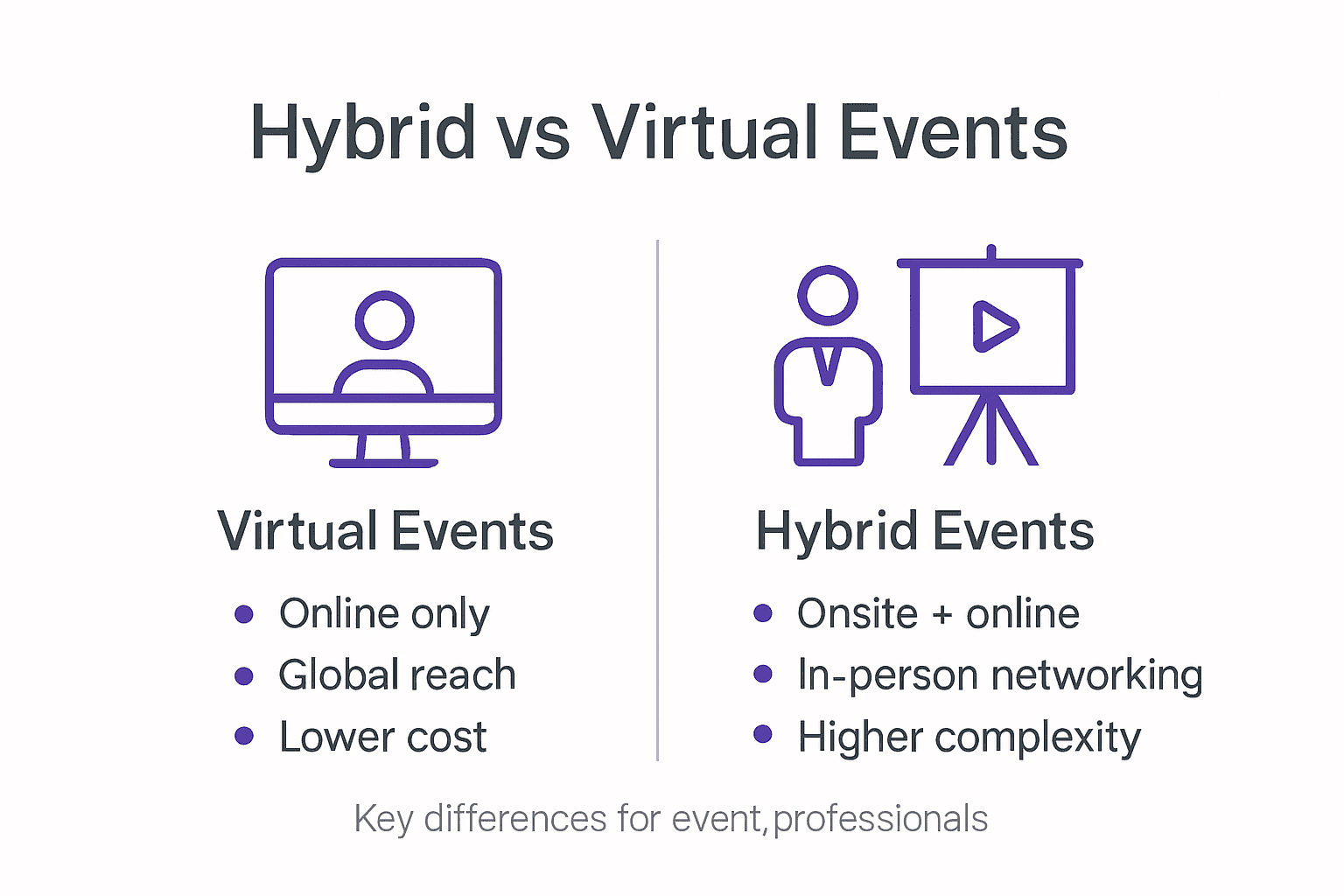
A virtual event operates entirely online, where all interactions, presentations, and networking occur through digital platforms. Participants join from diverse locations using computers, tablets, or smartphones, eliminating physical venue constraints. These events range from webinars and conference streams to fully immersive digital experiences with interactive elements like virtual networking rooms and digital exhibition spaces.
Conversely, hybrid events blend physical and digital participation, creating a multi-dimensional experience. In this format, some attendees are present physically at a venue while others join remotely. Hybrid models can vary significantly from simple livestreaming of an in-person event to complex setups with multiple physical nodes interconnected virtually, allowing for dynamic engagement across geographical boundaries.
Pro tip: Research the technological infrastructure and participant engagement strategies before designing your hybrid or virtual event to ensure seamless interaction and professional execution.
The following table outlines key considerations for choosing between virtual and hybrid event formats:
| Aspect | Virtual Events | Hybrid Events |
|---|---|---|
| Geographical Reach | Global access, no location limits | Combines local and remote access |
| Technology Requirements | Powerful platforms, stable internet | Complex integration, multi-channel |
| Cost Structure | Lower travel/venue costs | Dual costs: venue and digital |
| Engagement Methods | Chat, polls, breakout sessions | Synchronised physical & digital tools |
Key differences: audience, engagement, logistics
Event managers must understand the nuanced distinctions between virtual and hybrid events to effectively design strategies that maximise audience participation. Hybrid event models fundamentally transform traditional event engagement approaches by creating multi-dimensional experiences that cater to diverse attendee preferences and technological capabilities.
Audience composition represents the most critical differentiator between these event formats. Virtual events attract global participants unrestricted by geographical limitations, enabling organisations to reach broader audiences with minimal travel expenses. Hybrid events, however, offer a sophisticated blend where local attendees experience in-person interactions while remote participants connect through digital platforms, creating a more inclusive and flexible engagement model.
The engagement dynamics vary significantly across these formats. Virtual events rely heavily on digital interaction tools like chat functions, polling, and breakout rooms to simulate networking opportunities. Hybrid events demand more complex technological integration, requiring seamless synchronisation between physical and digital participants to ensure equal interaction quality. This complexity necessitates advanced technical skills and strategic planning from event professionals.
From a logistical perspective, hybrid events present more intricate challenges compared to purely virtual or traditional in-person gatherings. Organisers must simultaneously manage physical venue requirements, technological infrastructure, and dual audience experience standards. Event logistics become increasingly sophisticated, involving synchronised audio-visual setups, real-time streaming capabilities, and interactive platforms that bridge physical and digital spaces effectively.
Pro tip: Invest in robust technological infrastructure and comprehensive staff training to successfully navigate the complex engagement requirements of hybrid and virtual event formats.
Planning essentials for hybrid and virtual events
Successful hybrid and virtual events demand meticulous planning that transcends traditional event management approaches. Comprehensive event planning requires strategic consideration of accessibility and inclusion across all event phases, ensuring meaningful engagement for diverse participant groups.

Strategic objective setting forms the cornerstone of effective event planning. Organisers must define precise goals that account for both physical and digital participant experiences. This involves understanding audience demographics, technological capabilities, and engagement preferences. Mapping out clear objectives helps determine the most appropriate event format, whether fully virtual, partially hybrid, or a sophisticated multi-node digital experience that accommodates varied attendee needs.
Technological infrastructure represents another critical planning dimension. Event professionals must evaluate and select robust digital platforms that support seamless interaction between in-person and remote participants. Virtual event management strategies require sophisticated technical integration, including high-quality streaming capabilities, interactive digital tools, and reliable network infrastructure that can handle multiple simultaneous connection points.
Budgeting and resource allocation become more complex with hybrid and virtual events. Organisers must allocate resources across physical and digital domains, considering expenses like digital platform subscriptions, audio-visual equipment, professional streaming services, and technical support staff. Preparing comprehensive contingency plans for potential technological disruptions ensures smooth event execution and maintains participant confidence.
Pro tip: Conduct comprehensive technical rehearsals and create detailed communication protocols to mitigate potential digital engagement challenges in hybrid and virtual event formats.
Technology, accessibility and compliance requirements
Event professionals must prioritise technological inclusivity and legal compliance when designing hybrid and virtual experiences. Digital accessibility represents a critical foundation for equitable participant engagement, requiring comprehensive strategies that address diverse technological needs and individual participant capabilities.
Assistive technology integration forms a fundamental aspect of modern event planning. This involves implementing robust digital tools that support participants with varying accessibility requirements. Screen reader compatibility, closed captioning, sign language interpretation, and alternative text descriptions become essential features rather than optional add-ons. Event managers must proactively design interfaces that accommodate participants with visual, auditory, and cognitive disabilities, ensuring everyone can fully participate regardless of their technological or physical capabilities.
Compliance requirements extend beyond technological considerations into legal and ethical domains. Organisers must navigate complex regulations surrounding data protection, digital privacy, and international accessibility standards. This includes implementing secure data transmission protocols, obtaining necessary participant consents, and ensuring that digital platforms meet international accessibility guidelines such as Web Content Accessibility Guidelines (WCAG).
Technological infrastructure must be rigorous and adaptable, supporting multiple engagement pathways for diverse participant groups. This means selecting platforms with advanced customisation options, robust security features, and seamless integration capabilities. Event professionals need to conduct comprehensive accessibility audits, test digital interfaces across multiple devices and assistive technologies, and develop contingency plans that maintain inclusive participation standards.
Pro tip: Conduct comprehensive accessibility testing with users representing diverse ability levels to identify and address potential digital engagement barriers before your event.
Here is a summary of accessibility features and compliance requirements for successful hybrid and virtual events:
| Accessibility Feature | Purpose | Compliance Consideration |
|---|---|---|
| Closed Captioning | Supports participants with hearing loss | Required for legal inclusivity |
| Screen Reader Compatibility | Enables access for visually impaired | Aligned with WCAG guidelines |
| Sign Language Interpretation | Assists those with complex needs | Ensures equal participation |
| Secure Data Protocols | Protects attendee privacy | Complies with GDPR and standards |
Costs, risks, and common mistakes to avoid
Hybrid and virtual events introduce complex financial and operational challenges that demand strategic planning and risk mitigation. Identifying and addressing potential planning mistakes becomes crucial for successful event delivery, requiring comprehensive understanding of potential pitfalls and proactive management strategies.
Financial considerations represent a significant risk factor in hybrid event planning. Organisers must budget for dual technological infrastructures, including sophisticated streaming equipment, robust digital platforms, and comprehensive technical support systems. Hidden costs often emerge from advanced audio-visual requirements, professional streaming services, multiple platform subscriptions, and additional technical personnel needed to manage complex digital interactions. Event professionals should anticipate spending approximately 30-50% more on technological resources compared to traditional in-person events.
Operational risks demand meticulous contingency planning to prevent potential disruptions. Common hybrid event mistakes include inadequate technology testing and poor audience engagement strategies, which can compromise the entire event experience. Critical risk management involves developing comprehensive backup communication channels, conducting multiple technical rehearsals, ensuring redundant internet connections, and creating clear protocols for managing potential technological failures that could interrupt event flow.
Participant experience represents another crucial risk dimension that directly impacts event success. Unequal engagement opportunities between physical and virtual attendees can lead to participant dissatisfaction and potential reputational damage. Event managers must design intentional interaction mechanisms that provide comparable experiences across different participation formats, including interactive digital tools, balanced networking opportunities, and inclusive communication strategies that prevent any audience segment from feeling margininalised.
Pro tip: Allocate at least 15% of your event budget as a contingency fund specifically for technological backup and unexpected digital infrastructure requirements.
Career impact: skills for new event formats
The emergence of hybrid and virtual event formats has fundamentally transformed career pathways in event management, creating unprecedented opportunities for professionals willing to adapt and upskill. New career roles are emerging that demand a sophisticated blend of technological and interpersonal capabilities, challenging traditional event management skill sets.
Technical proficiency has become a cornerstone of modern event management careers. Professionals must now demonstrate advanced digital literacy, including expertise in digital platform management, streaming technologies, and interactive digital engagement tools. Virtual event producers increasingly require skills that bridge creative content design with technical production capabilities, encompassing areas like audience analytics, real-time problem solving, and seamless digital experience curation.
The skill landscape now demands multi-dimensional competencies that extend beyond traditional event planning. Emerging professionals need to develop capabilities in augmented and virtual reality integrations, social media engagement strategies, and complex logistical coordination across physical and digital spaces. This requires a holistic approach to skill development, combining technical knowledge with creative communication strategies and robust project management techniques.
Career progression in this evolving landscape depends on continuous learning and adaptability. Event management professionals must cultivate a growth mindset, remaining current with emerging technologies, digital communication platforms, and innovative engagement methodologies. Networking, obtaining specialised certifications, and developing a portfolio of diverse digital event experiences will be crucial for career advancement in this dynamic professional environment.
Pro tip: Invest in online courses and practical certifications focusing on digital event technologies and interactive engagement strategies to remain competitive in the evolving event management marketplace.
Elevate Your Event Management Career with Expert Training
The shift towards hybrid and virtual events demands a new set of skills that blend technological expertise with creative engagement strategies. If you feel overwhelmed navigating this evolving landscape or aim to sharpen your abilities in digital event production, you are not alone. The challenges of managing complex digital platforms and ensuring seamless interaction between physical and virtual audiences are real barriers that many aspiring event managers face.
At teami.org, we understand these challenges and transform them into career opportunities. Our specialised certification programmes—offered through online and hybrid courses—equip you with practical experience in managing both virtual and hybrid formats. Benefit from our 24 years of industry insight, hands-on projects, and exclusive partnerships like DNA Entertainment Networks to secure your place in the dynamic event industry. Ready to future-proof your event management career with industry-leading training Visit us today at https://team-i-app-code-production.up.railway.app/api/go/wa?src=hybrid-vs-virtual-events-impact-careers and take the first step towards mastering the skills that the hybrid and virtual event world demands.
Frequently Asked Questions
What are hybrid events?
Hybrid events combine physical and digital participation, allowing some attendees to be present at a venue while others join remotely, creating a multifaceted experience.
How do virtual events differ from traditional in-person events?
Virtual events are conducted entirely online, eliminating geographical constraints and allowing participants to join from anywhere, while traditional events require physical attendance at a specific location.
What skills are essential for managing hybrid and virtual events?
Event managers need technical proficiency in digital platforms, expertise in streaming technologies, and strong interpersonal skills to facilitate engagement across both physical and digital spaces.
Why is technology critical for hybrid and virtual event success?
Robust technological infrastructure ensures seamless interaction between in-person and remote participants, supporting engagement tools like streaming, chat functions, and real-time collaboration, which are vital for delivering a positive attendee experience.