
You know that feeling when a massive corporate event in Bangalore is three weeks out, the vendor has gone quiet, the client keeps changing the brief, and you genuinely cannot make yourself open your laptop? That is not weakness. That is what happens when motivation meets real-world pressure without the right tools. Figuring out how to stay motivated is not about willpower or inspiration strikes. It is about understanding why motivation drops and having a system ready when it does. This article gives you that system, built on research and grounded in the realities of India’s event industry.
Table of Contents
- How to stay motivated: fix your mindset first
- Using if-then plans to trigger action
- Behavioural activation: act first, feel motivated later
- Fuelling intrinsic motivation through psychological needs
- Common motivation traps and how to escape them
- My honest take on staying motivated in this industry
- Build your skills alongside your motivation
- FAQ
How to stay motivated: fix your mindset first
Before any technique works, you need to drop one deeply held belief. Most people treat motivation like the weather — something that arrives when conditions are right, and you simply wait it out. That thinking will wreck your event career before it starts.
Motivation is a fluctuating state, not a fixed personality trait. It rises and falls based on your environment, your sleep, your last client call, and a dozen other variables. The professionals who consistently deliver — whether it is a 500-person wedding in Udaipur or a corporate product launch in Hyderabad — are not more motivated than you. They act despite feeling unmotivated, and the motivation catches up.
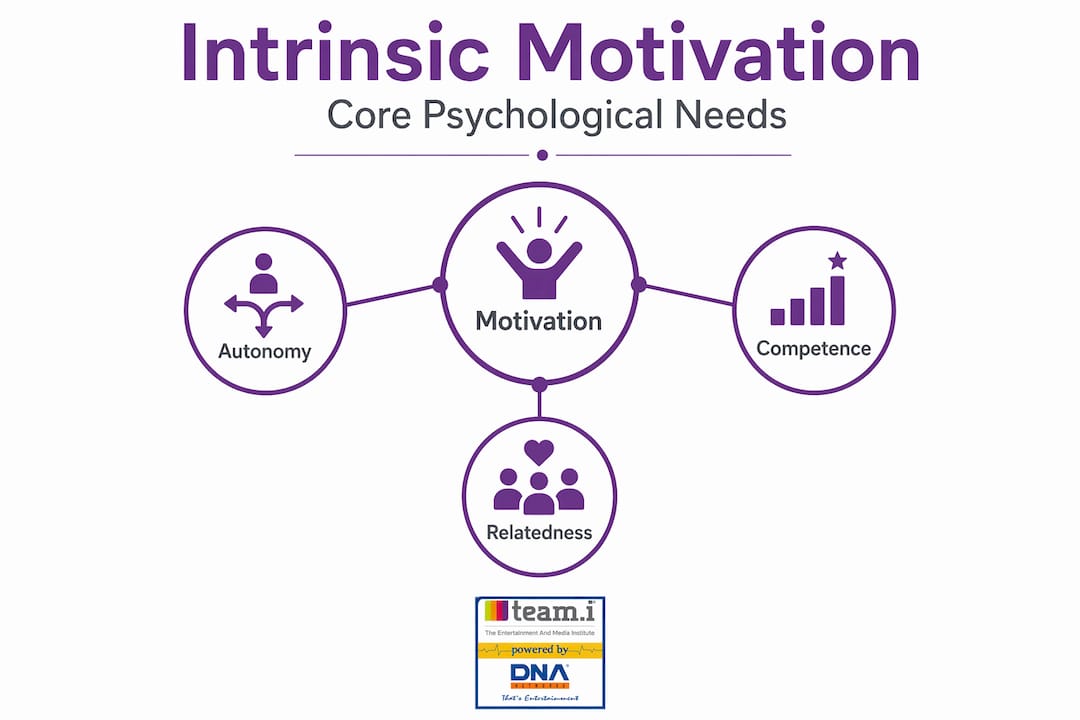
Research in Self-Determination Theory points to three basic psychological needs that fuel genuine, lasting engagement:
- Autonomy: The feeling that you have real creative control, not just executing someone else’s checklist. In event work, this looks like owning the décor concept or the entertainment runsheet rather than simply executing instructions.
- Competence: The confidence that comes from mastering something. Every time you successfully negotiate a vendor contract or manage a crowd flow logistics problem, you are building this.
- Relatedness: The sense of belonging to a team or community that values your contribution. Late-night show builds feel genuinely energising when the crew trusts each other.
Pro Tip: Do not wait until you feel ready. Pick the smallest possible version of your next task and start. Action generates motivation far more reliably than inspiration does.
Using if-then plans to trigger action
Here is a technique that genuinely surprises people with how well it works. Implementation intentions — known more simply as if-then plans — triple goal completion rates compared to setting a goal with no structured plan. The effect size is d = 0.65, which in research terms is substantial.
The format is straightforward: “When [specific situation occurs], I will [specific action].”
The key word there is specific. Vague triggers fail consistently. “When I feel motivated, I’ll work on the event budget” is not a plan. “When I close my client call at 3 PM, I’ll open the budget spreadsheet and update the catering line” is a plan. The situational cue does the motivational heavy lifting for you by automating action initiation rather than relying on willpower in the moment.
Here is how to build one in four steps:
- Identify the task you keep postponing. Be honest. Is it calling a difficult vendor? Writing the post-event report?
- Find a reliable external cue in your existing daily routine. After a specific meeting, after lunch, when you sit down at your desk at 9 AM.
- Write one concrete first action. Not “work on the event proposal.” Instead: “open the proposal document and write the client overview section.”
- Add a coping plan for likely obstacles. If your 9 AM plan gets derailed by a surprise vendor call, your fallback is: “When the call ends, I’ll spend 15 minutes on the proposal before checking messages.”
| Element | Weak version | Strong version |
|---|---|---|
| Cue | “When I feel ready” | “When I finish my 11 AM team call” |
| Action | “Work on the event” | “Draft the venue layout for Section B” |
| Obstacle plan | None | “If the call runs late, I’ll do this at 1 PM” |
Pro Tip: Pair your if-then plan with an accountability partner from your event team. Telling someone your specific plan makes you significantly more likely to follow through.
Behavioural activation: act first, feel motivated later
Behavioural activation flips the assumption most people carry: that you need to feel motivated before you can act. Action stimulates motivation chemically and psychologically. Clinically, behavioural activation shows an effect size of 0.83 in reducing the kind of low-mood, stuck-in-place feelings that accompany burnout.
In practical event management terms, this means:
- Break it smaller than feels necessary. Do not tell yourself to “review the full event budget.” Tell yourself to open the budget file and update one vendor’s quote. That is it. Starting smaller than resistance is the entire point.
- Schedule tasks as appointments. Block time in your calendar for creative tasks the same way you would a client meeting. Your subconscious treats scheduled items differently from vague intentions.
- Track micro-progress. Tick off small completions visibly. A wedding planner in Mumbai returning from burnout used a physical checklist with tasks as small as “email florist re: colour palette” to rebuild her daily momentum. By day three, she was back at full capacity.
The principle holds whether you are managing a Diwali corporate celebration in Delhi or completing an assignment for an event management programme. Momentum is manufactured, not discovered.
Pro Tip: When motivation feels near zero, productivity habits for students in event management suggest starting with a task that takes under five minutes. The completion itself releases enough energy to carry you forward.

Fuelling intrinsic motivation through psychological needs
Ways to boost motivation that actually last come from inside, not from external rewards. Intrinsic motivation is directly linked to satisfying autonomy, competence, and relatedness in your working environment. Autonomy is the strongest predictor, with a standardised coefficient of β = .39. External rewards — bonuses, praise, validation — can undermine intrinsic motivation when they replace the internal sense of purpose.
Here is how the three needs translate differently depending on how you are working:
| Psychological need | Working alone | Working in a team |
|---|---|---|
| Autonomy | Choose your own creative brief or workflow | Own a defined section of the event |
| Competence | Set personal mastery milestones per project | Take on a stretch responsibility |
| Relatedness | Join online communities of event professionals | Celebrate small team wins actively |
In Indian cultural events particularly, relatedness runs deep. The sense of belonging during a large mehendi ceremony setup or a college cultural festival in Pune is genuinely motivating in ways that no bonus payment can replicate. Lean into that. Build it deliberately. The media and entertainment industry is shifting fast, and the professionals who thrive are those who connect their work to something that genuinely matters to them.
Common motivation traps and how to escape them
Knowing how to find motivation is only half the battle. The other half is recognising what is killing it.
- Over-ambition at the start. You plan to complete the entire sponsorship deck in one sitting and end up completing nothing. Downsize the task to one slide. Build from there.
- Leaning too hard on external validation. Waiting for a client to say “great job” before you feel good about your work is a losing strategy. The intention-behaviour gap widens every time you wait for someone else’s approval to act.
- Environment that invites distraction. Your phone, the group chat, the open office during show build — these are motivation predators. Move your workspace, use a timer, and treat distraction as a logistics problem rather than a willpower problem.
- Missing the signs of burnout. Persistent flatness, zero creative ideas, dreading tasks you used to enjoy. These are not motivational slumps. They are signals to pause, reduce load, and potentially seek support.
Pro Tip: Build a “motivation reset ritual” for high-pressure event weeks. For some it is a ten-minute walk before the day’s first big task. For others it is a specific playlist during commute. Consistency makes the ritual work, not its complexity.
My honest take on staying motivated in this industry
I’ve seen every motivational strategy imaginable attempted in the middle of show day, and most of them fail precisely because they depend on the person feeling inspired first. What I’ve learned across years of working in and around Indian event management is this: the professionals who consistently deliver are the ones who stopped waiting for fire and started lighting it themselves.
What keeps you motivated in this industry is rarely glamour. More often it is the tiny, daily habits. The if-then plan that gets you opening the venue checklist at 9:05 AM. The team that celebrates when the AV test runs clean. The sense that you are genuinely getting better at something difficult.
My take is that creative event professionals who build motivation systems early in their careers outlast those who rely on passion alone. Passion fluctuates. Systems do not.
— Teami
Build your skills alongside your motivation
Staying inspired is significantly easier when you are growing. Teami’s event management programmes are built precisely for this. Whether you are a student in Bangalore figuring out your first vendor brief, or a young professional in Mumbai ready to specialise, Teami’s hands-on training connects psychological principles like autonomy and competence to live event experience with DNA Entertainment Networks. You will not just learn theories about motivation. You will practise strategies in real productions. Explore the full event management course overview to see how Teami’s curriculum builds both the skills and the drive to succeed in India’s demanding event industry. Flexible online event management options are also available for those who need to learn around existing commitments.
FAQ
What is the fastest way to overcome lack of motivation?
Start with the smallest possible version of your next task rather than the full goal. Research on behavioural activation shows that action precedes motivation, not the other way around.
How do if-then plans help with staying motivated?
If-then plans link a specific situational cue to a concrete action, removing the need for in-the-moment motivation. Studies show they triple completion rates compared to setting a goal with no structured plan.
What keeps you motivated for the long term?
Satisfying your psychological needs for autonomy, competence, and relatedness sustains intrinsic motivation. External rewards alone tend to undermine long-term engagement over time.
How do you maintain motivation during burnout?
Reduce task size to its smallest meaningful unit and schedule tasks as fixed appointments. Recognise that burnout signals a need to reduce load, not simply push harder through it.
Are maintaining motivation tips different for event professionals?
The core strategies are universal, but event professionals benefit from environment-specific tactics such as if-then plans tied to client calls or production schedules, and team accountability structures that reflect the collaborative nature of live event work.