

Over 80 percent of British event organizers admit that defining clear goals at the very start makes all the difference between a successful gathering and a struggle. Without strong objectives and a focused target audience, every decision becomes a guessing game. This guide lays out a step-by-step approach for British planners who want to deliver memorable events, from the first brainstorming session to gathering meaningful feedback when the last guest departs.
Table of Contents
- Etape 1: Define Objectives And Target Audience
- Etape 2: Create A Comprehensive Event Plan
- Etape 3: Coordinate Resources And Logistics
- Etape 4: Promote The Event Effectively
- Etape 5: Execute And Manage The Event Day
- Etape 6: Evaluate Outcomes And Gather Feedback
Quick Summary
| Key Point | Explanation |
|---|---|
| 1. Define Objectives Clearly | Use the SMART framework to outline specific, measurable, achievable, relevant, and time-bound goals for your event planning. |
| 2. Identify Your Target Audience | Create a detailed profile of your audience based on demographics, interests, and motivations to tailor the event experience effectively. |
| 3. Develop a Comprehensive Event Plan | Construct a detailed project timeline and resource matrix to ensure all elements and responsibilities are clearly mapped out. |
| 4. Execute Effective Promotion | Implement a multi-channel marketing strategy that begins early, fuels anticipation, and features tailored messaging for different segments. |
| 5. Conduct Thorough Post-Event Evaluation | Collect and analyse feedback through surveys and interviews to gauge success and identify improvement areas for future events. |
Etape 1: Define objectives and target audience
Before diving into event planning, you need a crystal clear understanding of why you are hosting the event and who exactly will attend. This crucial first step sets the foundation for every subsequent decision you will make.
Start by defining your primary event objectives using the SMART framework recommended by University of Oxford. Your goals should be Specific (what precisely do you want to achieve), Measurable (how will you track success), Accurate (realistic and precise), Relevant (aligned with broader organisational goals), and Timely (with a clear timeframe). For instance, if you are planning a corporate conference, your objective might be “Increase industry networking opportunities for 100 technology professionals by facilitating meaningful connections during a four-hour summit”.
Next, identify your target audience with surgical precision. According to the University of Waterloo’s event planning guidelines, understanding demographics and interests is paramount. Create a detailed audience profile including age range, professional background, interests, and potential motivations for attending. Consider factors like professional level, industry sector, geographical location, and specific pain points your event might address.
Pro tip: Do not make assumptions about your audience. Conduct preliminary research through surveys, industry reports, or past event data to validate your audience understanding. This granular approach ensures your event resonates deeply with participants and delivers genuine value.
With your objectives and audience clearly defined, you are now ready to move into the next phase of event design and strategic planning.
Etape 2: Create a comprehensive event plan
Building a comprehensive event plan transforms your initial objectives into a strategic roadmap that guides every aspect of your event execution. Your plan will serve as the critical blueprint that ensures seamless coordination and successful delivery.

Stanford University’s Office of Student Engagement recommends a structured approach to mapping out your event details systematically. Begin by creating a detailed project timeline that breaks down key milestones and assigns specific responsibilities to team members. This timeline should include critical phases such as initial conceptualisation, venue selection, marketing strategy, vendor coordination, technical requirements, and logistical management.
Your event plan must encompass multiple interconnected elements. Develop a comprehensive document that includes your event budget, detailed schedule, marketing and promotional strategy, technical production requirements, staffing plans, and contingency protocols. Allocate sufficient time for each planning phase and build in buffer periods to address unexpected challenges. Consider creating a visual project management tool or spreadsheet that allows you to track progress across different planning domains.
Pro tip: Always maintain flexibility within your plan. While structured planning is crucial, events rarely unfold exactly as initially conceived. Build adaptability into your strategy by creating backup scenarios and maintaining open communication channels with your core planning team.
With your comprehensive event plan now established, you are prepared to move forward into the critical phase of resource allocation and detailed implementation.
Etape 3: Coordinate resources and logistics
Coordinating resources and logistics is the intricate process of transforming your event plan into a practical, executable strategy. This critical phase demands meticulous attention to detail and strategic resource management to ensure your event runs smoothly.
Texas Wesleyan University’s Student Event Planning Guide highlights the importance of creating a comprehensive timeline for resource allocation. Begin by conducting a thorough inventory of all required resources including technical equipment, venue specifications, personnel, and support materials. Break down each resource requirement into specific categories and assign clear ownership to team members who will be responsible for procurement and management.
Develop a detailed resource matrix that maps out every logistical element of your event. This should include precise schedules for equipment setup, staff deployment, vendor arrivals, and technical rehearsals. Consider potential contingencies and build flexibility into your resource allocation strategy. Create backup plans for critical components such as audiovisual equipment, catering, and staffing to mitigate potential disruptions.
Pro tip: Always conduct a comprehensive risk assessment during your resource coordination. Anticipate potential challenges by creating multiple scenario plans and maintaining open communication channels with all stakeholders. This proactive approach will help you navigate unexpected complications with minimal stress.
With your resources and logistics carefully coordinated, you are now prepared to move into the next phase of event preparation and implementation.
Etape 4: Promote the event effectively
Event promotion is the strategic art of generating excitement and driving attendance through targeted marketing approaches. Your promotional efforts will transform your event from a mere concept into an anticipated experience that attracts and engages your intended audience.
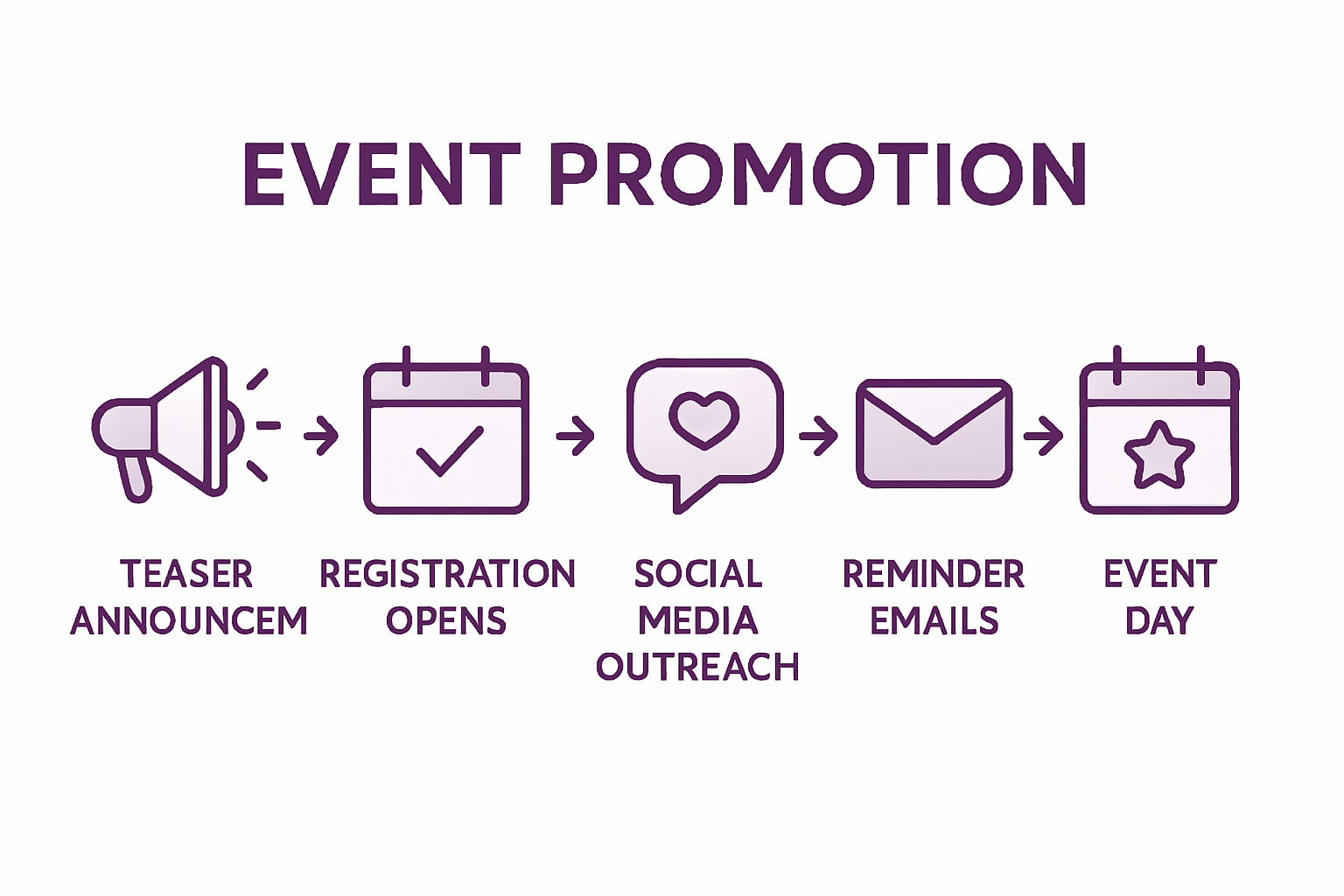
William Paterson University’s event planning guide emphasises the critical importance of selecting appropriate marketing channels that align with your event objectives and target demographic. Begin by developing a multi channel promotional strategy that leverages digital platforms social media networks professional networks email marketing and potentially traditional media outlets. Craft a compelling narrative around your event that highlights unique value propositions compelling speakers or exclusive networking opportunities.
Create a comprehensive marketing timeline that sequences your promotional activities strategically. Start with teaser content to generate initial interest about six to eight weeks before the event gradually increasing communication frequency and detail as the event date approaches. Develop targeted messaging for different audience segments ensuring that each communication feels personalised and relevant. Utilise visually engaging graphics professional video content and testimonials from previous events to build credibility and generate anticipation.
Pro tip: Track your promotional efforts meticulously. Implement unique tracking links analytics tools and registration codes to measure the effectiveness of different marketing channels. This data will help you refine your promotional strategy in real time and provide valuable insights for future event marketing.
With your promotional strategy in place you are now prepared to transition into the final stages of event preparation and execution.
Etape 5: Execute and manage the event day
The event day represents the culmination of weeks of meticulous planning where every strategic decision transforms into a live experience. Your primary goal is to ensure seamless execution while maintaining flexibility to address unexpected challenges.
Western Carolina University’s Event Planning Handbook emphasises the critical importance of creating detailed on site coordination protocols to manage potential disruptions. Begin by conducting a comprehensive pre event briefing with your entire team establishing clear communication channels and defining specific roles and responsibilities. Assign team members dedicated responsibilities such as guest registration technical support vendor coordination and emergency response. Ensure everyone understands their precise function and has the necessary tools and information to perform effectively.
Implement a real time communication strategy that allows rapid information exchange between team members. Use discrete communication tools like professional walkie talkies or secure messaging platforms to enable instant updates and problem solving. Develop a flexible yet structured event timeline that allows for minor adjustments while maintaining overall event flow. Monitor key performance indicators throughout the event such as attendee satisfaction guest engagement and logistical efficiency.
Pro tip: Always maintain a contingency mindset. Prepare emergency response protocols for potential scenarios including technical failures unexpected attendee numbers venue issues or last minute speaker changes. Having these backup plans will help you manage stress and maintain professional composure during unexpected situations.
With the event successfully executed you are now ready to transition into the crucial post event evaluation and reflection phase.
Etape 6: Evaluate outcomes and gather feedback
Post event evaluation transforms your event experience from a singular moment into a strategic learning opportunity. This crucial phase allows you to understand the true impact of your event and develop insights for future improvements.
Barry University’s Event Planning Guide recommends creating comprehensive evaluation mechanisms that capture both quantitative and qualitative data. Design a multi dimensional feedback approach that includes attendee surveys participant interviews and objective performance metrics. Your evaluation should measure key indicators such as audience engagement speaker effectiveness networking opportunities and overall event satisfaction. Construct survey questions that provide nuanced insights beyond simple numerical ratings asking participants to share specific experiences challenges and recommendations.
Develop a systematic approach to data collection and analysis. Create standardised evaluation forms with a mix of multiple choice and open ended questions that allow participants to provide detailed contextual feedback. Utilise digital survey platforms that enable easy data aggregation and provide visual analytics. Compare the actual event outcomes against your initial objectives to determine the extent of goal achievement and identify potential areas for enhancement in future events.
Pro tip: Do not view feedback as criticism but as a valuable strategic resource. Approach evaluation with curiosity and openness understanding that each piece of feedback represents an opportunity for growth and refinement.
With your comprehensive evaluation complete you are now equipped to translate insights into actionable improvements for future event planning.
Master Event Planning with Expert Training to Maximise Your Impact
Organising a successful event requires precise planning, resource coordination and effective promotion all of which are key challenges explored in the step-by-step guide. From defining clear objectives using the SMART framework to executing seamless event day management every stage demands specialised skills and strategic insight to avoid costly mistakes and ensure your event truly resonates with attendees.
Unlock your potential with teami.org where you can access industry-leading education and training designed specifically for aspiring event professionals. Benefit from 24 years of experience through certified courses, hands-on projects and unique internship opportunities that build the confidence needed to handle complex logistics and dynamic challenges. Don’t leave your goals to chance instead enhance your expertise now with event management certification programmes. Take the step to transform your passion into a thriving career in events by joining teami.org today and learn how to create events that leave a lasting impression.
Frequently Asked Questions
How can I define clear objectives for my event?
To define clear objectives for your event, use the SMART framework: ensure your goals are Specific, Measurable, Accurate, Relevant, and Timely. For example, aim to increase attendance by 30% over your last event within the next year.
What steps should I take to create a detailed event plan?
Start by creating a comprehensive project timeline that outlines key milestones and assigns specific responsibilities to your team members. Ensure your plan includes elements like budget, schedule, marketing strategy, and contingency protocols, and aim to have this completed at least eight weeks prior to your event.
How do I coordinate resources effectively for my event?
Conduct a thorough inventory of all necessary resources, categorising them and assigning clear ownership to specific team members. Develop a detailed resource matrix that maps out schedules for equipment setup and personnel deployment, ensuring everything is in place at least one week before the event.
What promotional strategies should I use to maximise attendance?
Implement a multi-channel promotional strategy that utilises social media, email marketing, and possibly traditional media to reach your audience. Start promotions six to eight weeks before the event with targeted messaging, and increase communication frequency as the event date approaches, aiming for at least three reminders.
How can I evaluate the success of my event?
To evaluate the success of your event, create a multi-dimensional feedback approach that includes attendee surveys and performance metrics. Collect data using standardised evaluation forms and analyse results to compare against your initial objectives within two weeks after the event to identify areas for improvement.