
Choosing a career path in event management feels overwhelming when faced with unclear options and conflicting advice. Many aspiring event managers struggle to identify which specialisation, certification, or course will genuinely improve their job prospects. This guide introduces a clear four-step framework covering prerequisites, certifications, specialisations, and practical experience to help you make informed career decisions and launch successfully in India’s growing event industry.
Table of Contents
- Understanding The Indian Event Management Industry
- Prerequisites: What You Need Before Starting
- Step-By-Step Career Choice Process
- Choosing The Right Certification
- Exploring Specialisation Options
- Gaining Practical Exposure Through Internships And Projects
- Common Mistakes And How To Avoid Them
- Expected Outcomes And Career Timelines
- Explore Event Management Courses And Certifications With Team I
Key takeaways
| Point | Details |
|---|---|
| Certification impact | Certification boosts employability by 35% in India’s event management sector. |
| Practical experience value | Internships increase placement success by 40% compared to theory-only learning. |
| Specialisation timing | Build broad foundational skills first before committing to a single event niche. |
| Common pitfalls | Avoid choosing courses by cost alone and neglecting essential soft skills development. |
| Career timeline | Expect job placement within 6 to 12 months after completing recognised certification programmes. |
Understanding the Indian event management industry
India’s event management sector is experiencing remarkable expansion, with the market growing at 12 to 15% annually driven by increasing demand across multiple event categories. This growth creates substantial career opportunities for skilled professionals who understand how to navigate the industry effectively.
The expansion stems from diverse event types gaining prominence:
- Corporate events including conferences, product launches, and team building activities
- Wedding celebrations incorporating traditional and modern elements across regions
- Social functions such as milestone celebrations, festivals, and community gatherings
- Sports tournaments and entertainment events requiring specialised coordination
This rapid growth translates directly into expanding job opportunities across India’s major cities and emerging markets. The industry now requires professionals who combine creative vision with operational expertise, making choosing event management as a career increasingly attractive for students and young professionals.
Successful event managers develop adaptable skill sets that work across different event categories. Understanding this industry landscape helps you make informed decisions about which skills to prioritise and how to position yourself for maximum career opportunities in 2026 and beyond.
Prerequisites: what you need before starting
Entering event management successfully requires meeting basic education requirements and developing essential personal qualities that support long-term career growth. The minimum education requirement is passing 12th standard or holding a diploma certificate in any field, making event management accessible to students from diverse academic backgrounds.
Core skills form the foundation for event management success:
- Strong verbal and written communication to coordinate teams and clients
- Exceptional organisational abilities to manage multiple tasks simultaneously
- Creative problem solving to address unexpected challenges during events
- Attention to detail ensuring flawless event execution
Beyond formal qualifications, a flexible mindset proves critical for managing the dynamic nature of event work. Stress tolerance matters because events operate on tight deadlines with high stakes. You must remain calm under pressure whilst making quick decisions that impact event outcomes.
Pro Tip: Start building your network whilst still studying by attending local events as a volunteer. This provides early exposure to industry professionals and demonstrates genuine interest to potential employers.
Willingness to network actively separates successful event managers from those who struggle to find opportunities. Understanding event management course eligibility requirements helps you plan your educational path strategically, ensuring you meet prerequisites before investing time and money into certification programmes.
Step-by-step career choice process
Following a structured approach helps you align personal strengths with market opportunities, leading to better career decisions and faster placement success. This four-step method provides clarity when evaluating options in India’s diverse event management landscape.
-
Self-assessment of interests and strengths: Evaluate which aspects of event work genuinely excite you, whether creative design, logistical coordination, or client relationship management. Identify your natural strengths and areas needing development. Consider your long-term career goals and whether you prefer working with corporate clients, social celebrations, or specialised event categories.
-
Industry trend research: Analyse current demand patterns in India’s event sector by reviewing job postings, industry reports, and market forecasts. Identify which event categories show strongest growth and where skills gaps exist. Understanding market dynamics helps you position yourself strategically rather than following outdated advice.
-
Strategic certification selection: Choose programmes offering recognised credentials with proven placement records. Prioritise hybrid formats combining online learning with practical workshops over purely theoretical courses. Verify that certifications provide actual industry connections and hands-on project opportunities rather than just classroom instruction.
-
Practical experience accumulation: Secure internships with established event companies or join real projects through your certification programme. Build a portfolio showcasing actual events you’ve contributed to, demonstrating operational competence to potential employers. Develop professional relationships during internships that often convert to job opportunities.
This methodical approach, detailed further in our starting event management career guide, prevents common mistakes and accelerates your path from student to employed event professional in India’s competitive market.
Choosing the right certification
Certification significantly impacts your employability, with recognised programmes increasing job prospects by approximately 35% compared to candidates with only informal training. Selecting the right programme requires evaluating multiple factors beyond marketing claims and initial cost.
Hybrid course formats combining online theory with practical workshops consistently yield higher student satisfaction and better skill development than purely online or classroom-only approaches. These programmes let you learn fundamental concepts remotely whilst gaining hands-on experience during intensive practical sessions, matching how actual event work operates.
Pro Tip: Request detailed curriculum breakdowns and ask about specific industry partnerships before enrolling. Programmes with active corporate connections provide superior internship placements and job referrals.
Course fees across India typically range from INR 50,000 to 200,000, reflecting variations in content depth, practical components, and institutional reputation. Lower-cost programmes often lack essential practical training, whilst premium options may include unnecessary features for entry-level careers. Understanding event planning certification costs helps you budget appropriately without overspending.
| Certification Type | Typical Duration | Practical Component | Best For |
|---|---|---|---|
| Short Certificate | 3 to 6 months | Limited workshops | Career switchers needing quick entry |
| Comprehensive Certificate | 6 to 12 months | Extensive internships | Students building strong foundations |
| Diploma Programme | 12 to 24 months | Major project work | Those seeking advanced specialisation |
Evaluating certification versus diploma in event management depends on your career timeline and depth of expertise required. Review top event management certification courses to compare specific programme features, placement records, and industry recognition before making final decisions.
Exploring specialisation options
Event management offers multiple specialisation paths, each requiring distinct skill sets and serving different market segments. Understanding these options helps you align career choices with personal interests and market demand patterns across India’s diverse event landscape.
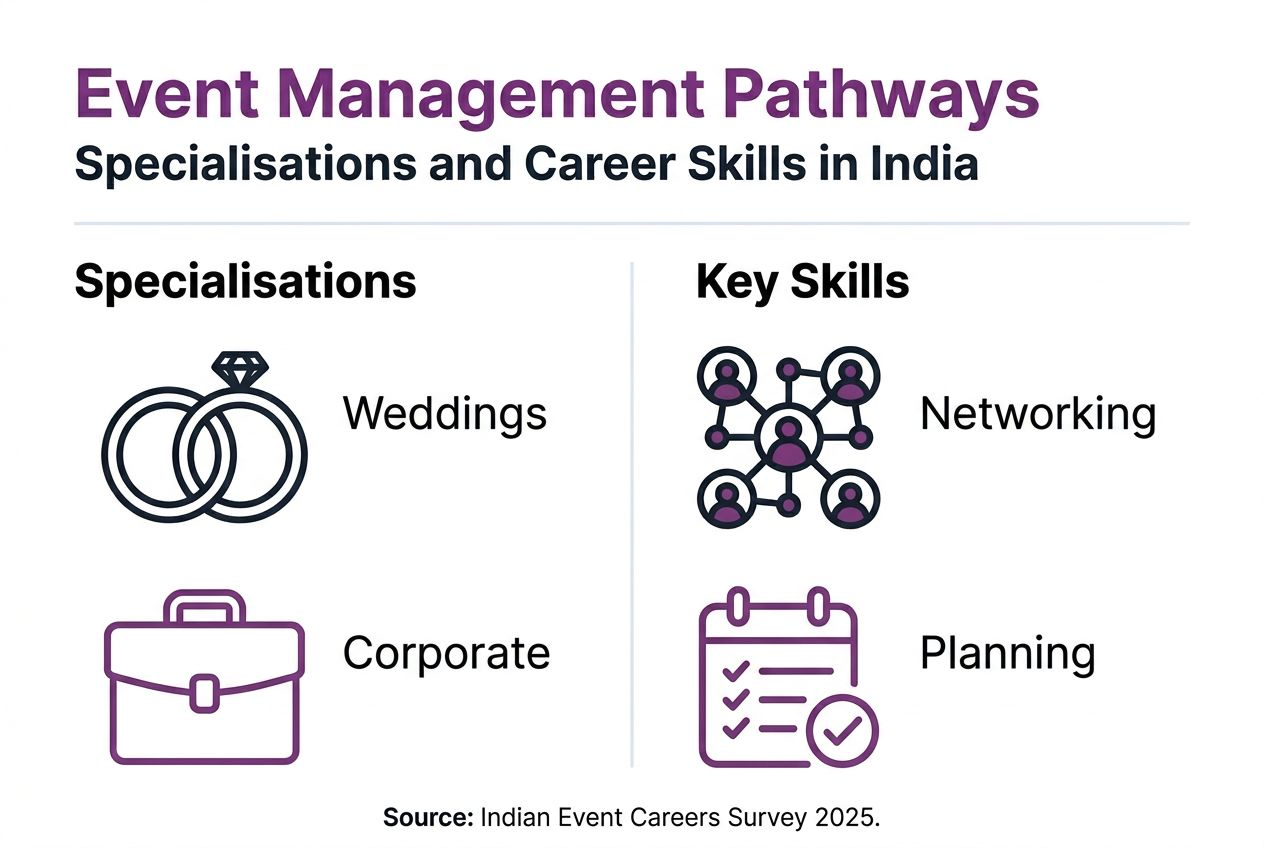
Key specialisation areas include:
- Social events: Birthday celebrations, anniversaries, and community functions requiring cultural sensitivity and creative personalisation
- Corporate events: Conferences, product launches, and team building activities demanding professional presentation and business acumen
- Wedding management: Traditional and contemporary wedding ceremonies needing vendor coordination and family diplomacy skills
- Sports event management: Tournaments, marathons, and athletic competitions requiring logistics expertise and safety coordination
Early specialisation provides depth in specific event categories but potentially limits flexibility in India’s dynamic market. Employers increasingly value adaptable professionals who understand multiple event types, especially when market conditions shift or client needs evolve unexpectedly.
Broad exposure during initial career stages helps you develop transferable skills applicable across event categories. You learn which aspects genuinely interest you through actual experience rather than assumptions. Many successful event managers begin with general training before specialising after two to three years of varied project work.
Different event management specialisations experience varying demand cycles throughout the year. Wedding season peaks differ from corporate event timing, affecting job stability and income patterns. Understanding these market dynamics helps you make realistic career plans aligned with financial needs and lifestyle preferences in 2026.
Gaining practical exposure through internships and projects
Hands-on experience dramatically improves job placement success, with internships boosting placement rates by approximately 40% for event management graduates in India. Theoretical knowledge alone rarely convinces employers you can handle real event pressure and operational complexities.
Seek certification programmes maintaining strong industry partnerships that facilitate genuine project participation. Working on actual events teaches skills impossible to learn in classrooms:
- Real-time problem solving when vendors fail to deliver or weather disrupts plans
- Client communication under pressure whilst maintaining professional composure
- Team coordination across diverse personalities and working styles
- Budget management with actual financial constraints and accountability
These experiences build operational confidence whilst demonstrating readiness to potential employers. Your internship portfolio becomes tangible evidence of capabilities beyond academic transcripts and certificates.
Networking during practical projects often leads directly to job offers. Event companies prefer hiring interns they’ve observed performing under actual event conditions rather than unknown candidates with only classroom credentials. Understanding the importance of internships in event management helps you prioritise programmes offering substantial hands-on components.
Seek opportunities providing diverse event exposure rather than repetitive tasks. Quality internships rotate you through planning, coordination, and execution phases, building comprehensive skill sets. This practical foundation separates successful event professionals from those struggling to transition from student to employed manager.
Common mistakes and how to avoid them
Aspiring event managers frequently make preventable errors that delay career success or lead to dissatisfaction. Learning from others’ mistakes helps you avoid wasting time and resources on ineffective strategies.
Choosing courses based purely on low cost without evaluating quality leads to 70% student dissatisfaction rates according to industry feedback. Inexpensive programmes often lack practical training, industry connections, and recognised credentials that employers value. Prioritise programme quality, placement records, and practical components over initial cost savings.
Neglecting soft skills development reduces interview success rates by approximately 50% compared to candidates with strong communication and leadership abilities. Event management demands exceptional interpersonal skills for client management, team coordination, and vendor negotiations. Develop these capabilities through deliberate practice, not just technical training.
Pro Tip: Join public speaking clubs or volunteer for event coordination roles whilst studying. These activities build confidence and provide conversation material for job interviews.
Failing to network actively limits job opportunities significantly. Many event positions fill through referrals before public advertising. Attend industry events, join professional associations, and maintain contact with internship supervisors to access hidden job markets.
Key fixes include:
- Research programme reputations thoroughly through alumni feedback and placement data
- Dedicate specific time to developing communication, negotiation, and leadership skills
- Build professional relationships systematically through consistent networking efforts
- Balance cost considerations with long-term career value when selecting programmes
Avoiding these common pitfalls, detailed in our starting event management career guide, accelerates your transition from student to successfully employed event professional in India’s competitive market.
Expected outcomes and career timelines
Setting realistic expectations about placement timelines, costs, and career progression helps you plan effectively and maintain motivation during your event management journey. Understanding typical patterns prevents discouragement from unrealistic benchmarks.
Job placement typically occurs 6 to 12 months after completing recognised certification programmes, depending on market conditions, your networking effectiveness, and practical experience quality. This timeline accounts for application processes, interviews, and potential initial freelance projects before securing permanent positions.
| Career Stage | Typical Timeline | Expected Outcome |
|---|---|---|
| Course completion | 6 to 12 months | Recognised certification obtained |
| First job placement | 6 to 12 months post-certification | Entry-level coordinator or assistant role |
| Career advancement | 2 to 3 years experience | Senior coordinator or specialist position |
| Management level | 5+ years experience | Event manager or team leader role |
Course fees commonly range between INR 50,000 and 200,000 depending on programme duration, practical components, and institutional reputation. Budget for additional costs including transportation to practical sessions, professional attire for events, and potential unpaid internship periods requiring financial support.
Active networking increases job lead generation by approximately 45% compared to relying solely on job boards and formal applications. Maintain relationships with instructors, internship supervisors, and fellow students who become your professional network throughout your career.
Planning finances and realistic timelines upfront prevents stress and enables you to focus on skill development rather than financial pressure. Most successful event managers invest 12 to 18 months total from starting certification to securing stable employment, though individual timelines vary based on prior experience, location, and market conditions in 2026.
Explore event management courses and certifications with team i
team i offers recognised event management programmes tailored specifically for Indian students seeking practical career pathways in 2026. Our comprehensive event management courses combine industry-relevant curriculum with hands-on project experience, providing the practical skills employers actively seek.
Flexible learning options include hybrid and online event management courses accommodating different schedules whilst maintaining quality practical components. Industry partnerships provide genuine project exposure rather than simulated exercises, building authentic portfolios that demonstrate operational competence.
Our event management work experience programmes connect students directly with active event companies, facilitating internships that frequently convert to permanent positions. Explore team i’s offerings to confidently launch your event management career with recognised credentials and practical industry connections.
FAQ
What is the minimum education requirement to start a career in event management?
The minimum requirement is passing 12th standard or holding a diploma certificate in any field. Event management programmes accept students from diverse academic backgrounds, making the career accessible to those with basic secondary education completed.
How important is certification for employability in Indian event management?
Certification raises employability by approximately 35% according to industry placement data. However, choosing recognised programmes with proven industry connections matters significantly more than obtaining any generic certification without practical value.
Can I specialise early or should I get broad exposure first?
Broad exposure is strongly recommended initially to develop adaptable skills across event categories. Early specialisation can limit career flexibility, so most successful professionals specialise only after gaining two to three years of varied experience.
Why are internships crucial for event management students in India?
Internships increase placement success rates by approximately 40% compared to theory-only learning. They provide essential hands-on skills, industry networking contacts, and demonstrate operational readiness that employers value when making hiring decisions.
What common mistakes should I avoid while choosing my event management career path?
Avoid selecting courses based solely on low cost without evaluating quality, placement records, and practical components. Neglecting soft skills development and professional networking drastically reduces your interview success and job opportunity access rates.