
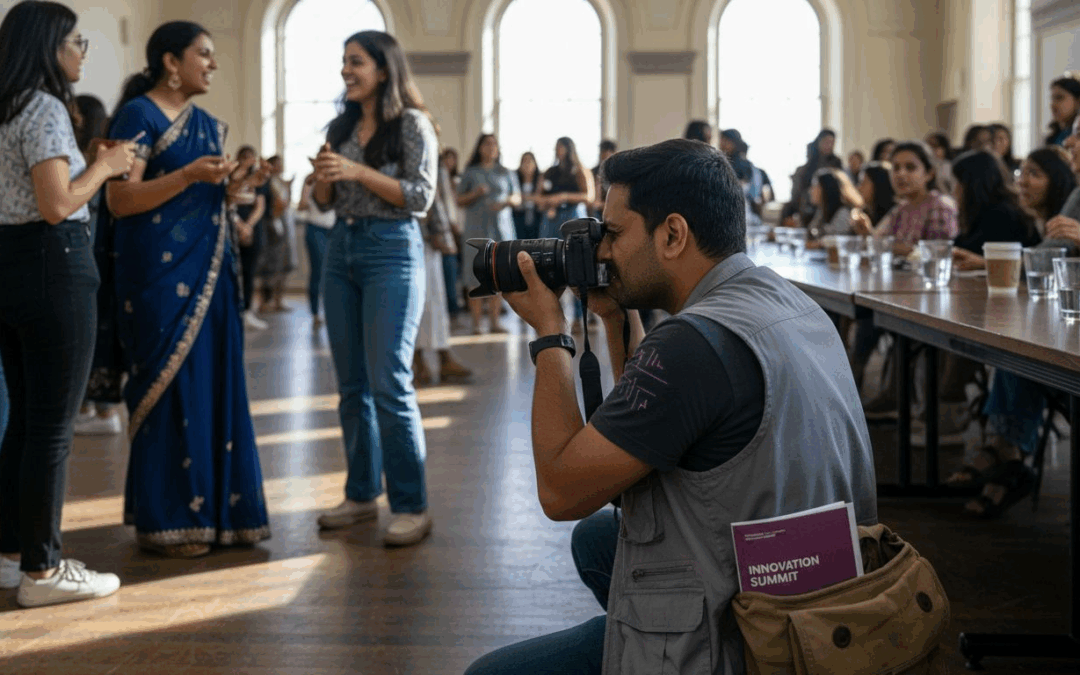
Every british event tells a unique story, and capturing those moments takes more than just technical skill. With over 80 percent of professional photographers relying on fast reflexes and instinctive timing, event photography transforms fleeting emotions and celebrations into lasting memories. Whether you are planning a corporate function, a wedding, or a cultural festival, understanding what defines british event photography will help you appreciate the craft, choose the right photographer, and gain deeper insight into what makes each moment unforgettable.
Table of Contents
- Defining Event Photography And Its Core Concepts
- Major Types Of Event Photography Explained
- Essential Equipment And Shooting Techniques
- Challenges And Responsibilities On Event Day
- Common Pitfalls And Professional Best Practices
Key Takeaways
| Point | Details |
|---|---|
| Event Photography is a Craft | It captures genuine moments and emotions at various gatherings, demanding both technical and interpersonal skills. |
| Types of Event Photography Vary | Each type, such as Wedding and Corporate Photography, has distinct focuses and challenges requiring specific techniques and approaches. |
| Equipment and Preparation are Crucial | Professional event photographers must invest in suitable equipment and execute thorough preparation to navigate variable environments successfully. |
| Professionalism is Essential | Maintaining a high standard of conduct and effective communication is key to ensuring client satisfaction and successful event coverage. |
Defining Event Photography and Its Core Concepts
Event photography represents a specialised visual storytelling craft that captures the authentic moments, emotions, and atmosphere of professional and personal gatherings. Professional photographers documenting event occurrences understand that their role extends far beyond simply taking pictures; they are narrative documentarians who freeze ephemeral experiences into lasting memories.
At its core, event photography encompasses multiple styles and techniques designed to chronicle different types of occasions. Whether capturing corporate conferences, wedding celebrations, cultural festivals, or sporting competitions, photographers must possess technical skills and interpersonal abilities to successfully document unfolding narratives. Event photographers typically focus on documenting spontaneous moments as they happen, requiring quick reflexes, adaptive equipment, and an intuitive understanding of human interactions.
The discipline demands proficiency across multiple photographic domains, including photojournalistic approaches, portraiture, and documentary techniques. Professional event photographers must navigate complex environments, anticipate significant moments, and produce high-quality images under varying lighting conditions and dynamic scenarios. Their toolkit includes professional-grade cameras, versatile lenses, portable lighting equipment, and sophisticated post-processing skills to transform raw captures into polished visual narratives.
Pro Tip – Preparation is Key: Always scout your event location beforehand, familiarise yourself with the venue’s layout, lighting conditions, and potential photographic opportunities to ensure you capture the most compelling moments with precision and creativity.
Major Types of Event Photography Explained
Professional event photographers specialise in capturing distinct styles of visual narratives, each demanding unique technical skills and creative approaches. The landscape of event photography is diverse, encompassing multiple specialisations that require photographers to adapt their techniques to specific contexts and client expectations.
Wedding Photography represents one of the most emotionally charged and technically challenging event photography disciplines. Photographers must navigate complex interpersonal dynamics, manage lighting variations, and capture spontaneous moments while maintaining a professional and unobtrusive presence. Typical assignments involve documenting pre-ceremony preparations, formal group portraits, candid interactions, and ceremonial highlights that tell a comprehensive narrative of the couple’s significant day.
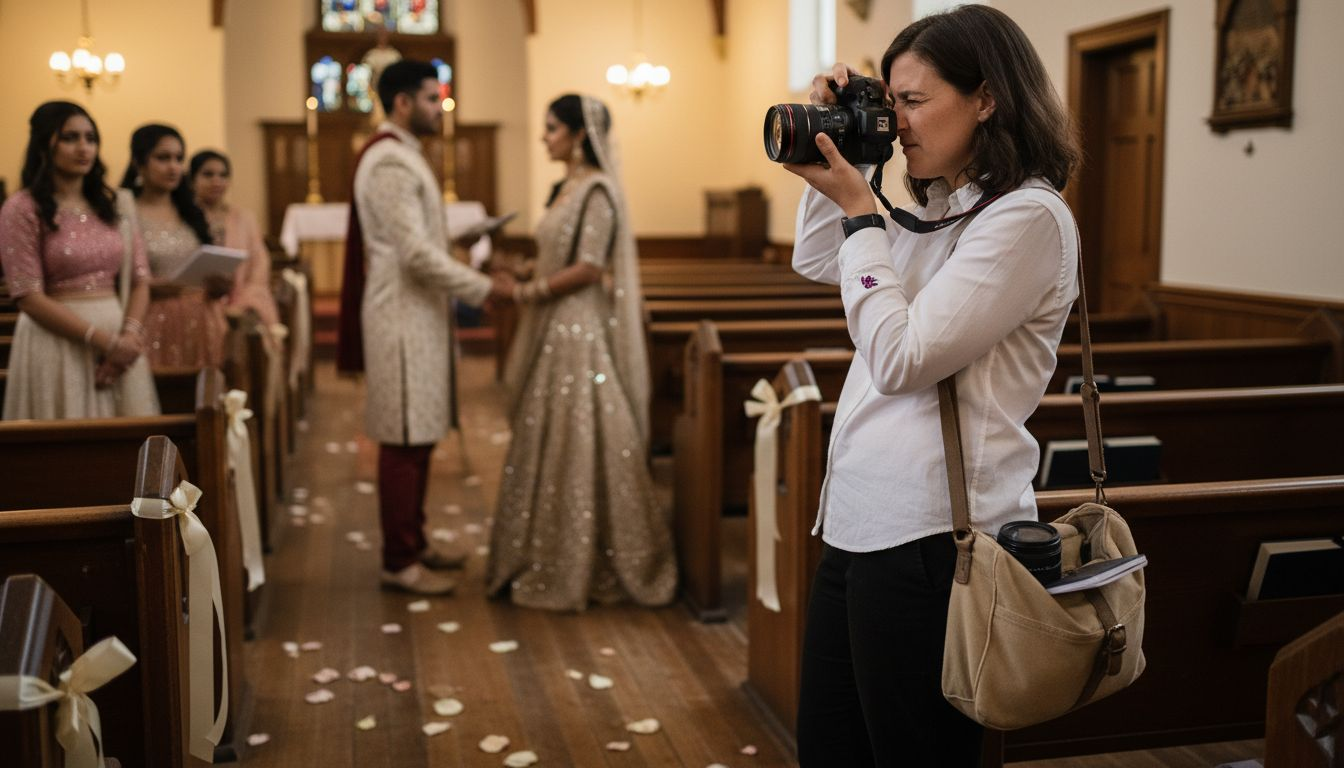
Corporate Event Photography differs substantially from wedding photography, focusing on professional settings such as conferences, product launches, award ceremonies, and corporate meetings. These assignments prioritise documenting professional interactions, keynote speakers, audience engagement, and brand representation. Photographers must balance capturing authentic moments with maintaining a polished, corporate-appropriate aesthetic that aligns with the organisation’s visual branding and communication strategies.
Photojournalistic Event Photography represents another critical specialisation, particularly in documenting social and cultural events in a news context. This approach emphasises storytelling through candid, unscripted images that capture the genuine emotion and dynamic energy of concerts, festivals, political rallies, and community gatherings. Photojournalists prioritise authenticity, requiring rapid technical reflexes and an intuitive understanding of human interaction and social dynamics.
Pro Tip – Versatility is Key: Develop a comprehensive skill set that allows you to seamlessly transition between different event photography styles, as flexibility and adaptability are crucial for building a successful career in this dynamic visual profession.
Here’s a comparison of the main types of event photography and their distinctive demands:
| Type of Event Photography | Key Focus | Common Challenges | Photographer’s Approach |
|---|---|---|---|
| Wedding Photography | Emotional storytelling | Unpredictable moments | Remain unobtrusive, capture emotions |
| Corporate Event Photography | Brand and interaction | Professional expectations | Polished, align with branding |
| Photojournalistic Event Photography | Spontaneity & authenticity | Fast-paced, dynamic environments | Capture candid, unscripted action |
Essential Equipment and Shooting Techniques
Professional event photographers require sophisticated equipment and technical expertise to consistently produce exceptional visual documentation across diverse event environments. The foundation of successful event photography lies in understanding both technological capabilities and nuanced shooting techniques that transform ordinary moments into compelling visual narratives.
Camera Equipment represents the critical backbone of event photography. Professional photographers typically invest in full-frame digital cameras with exceptional low-light performance, complemented by a versatile range of lenses that allow rapid adaptation to changing scenarios. Prime lenses with wide apertures (f/1.4 to f/2.8) enable photographers to capture crisp images in challenging lighting conditions, while zoom lenses provide flexibility for capturing both intimate details and broader event landscapes.
Lighting Techniques are paramount in event photography, requiring photographers to master artificial and natural light manipulation. External flash units, diffusers, and reflectors become essential tools for managing complex lighting scenarios. Understanding compositional techniques for capturing dynamic event moments involves anticipating movement, selecting appropriate camera settings, and maintaining a keen awareness of environmental dynamics. Photographers must rapidly adjust exposure, white balance, and ISO to preserve image quality across varying light conditions.
Technical Accessories complement core photography equipment, including high-capacity memory cards, backup batteries, portable lighting equipment, and robust camera straps designed for extended use. Professional event photographers often carry multiple camera bodies to facilitate quick lens changes and provide redundancy in case of equipment failure. Portable hard drives and reliable backup systems ensure the preservation of captured imagery, protecting against potential data loss during high-stakes event assignments.
Pro Tip – Equipment Preparation: Always perform a comprehensive equipment check before each event, ensuring all cameras, lenses, and accessories are clean, fully charged, and functioning optimally to prevent potential technical complications during critical shooting moments.
Challenges and Responsibilities on Event Day
Event photographers encounter complex challenges that demand exceptional adaptability and technical proficiency, transforming each assignment into a dynamic test of professional skill and creative problem-solving. The ability to navigate unpredictable environments while maintaining a high standard of photographic documentation requires meticulous preparation and sophisticated interpersonal capabilities.
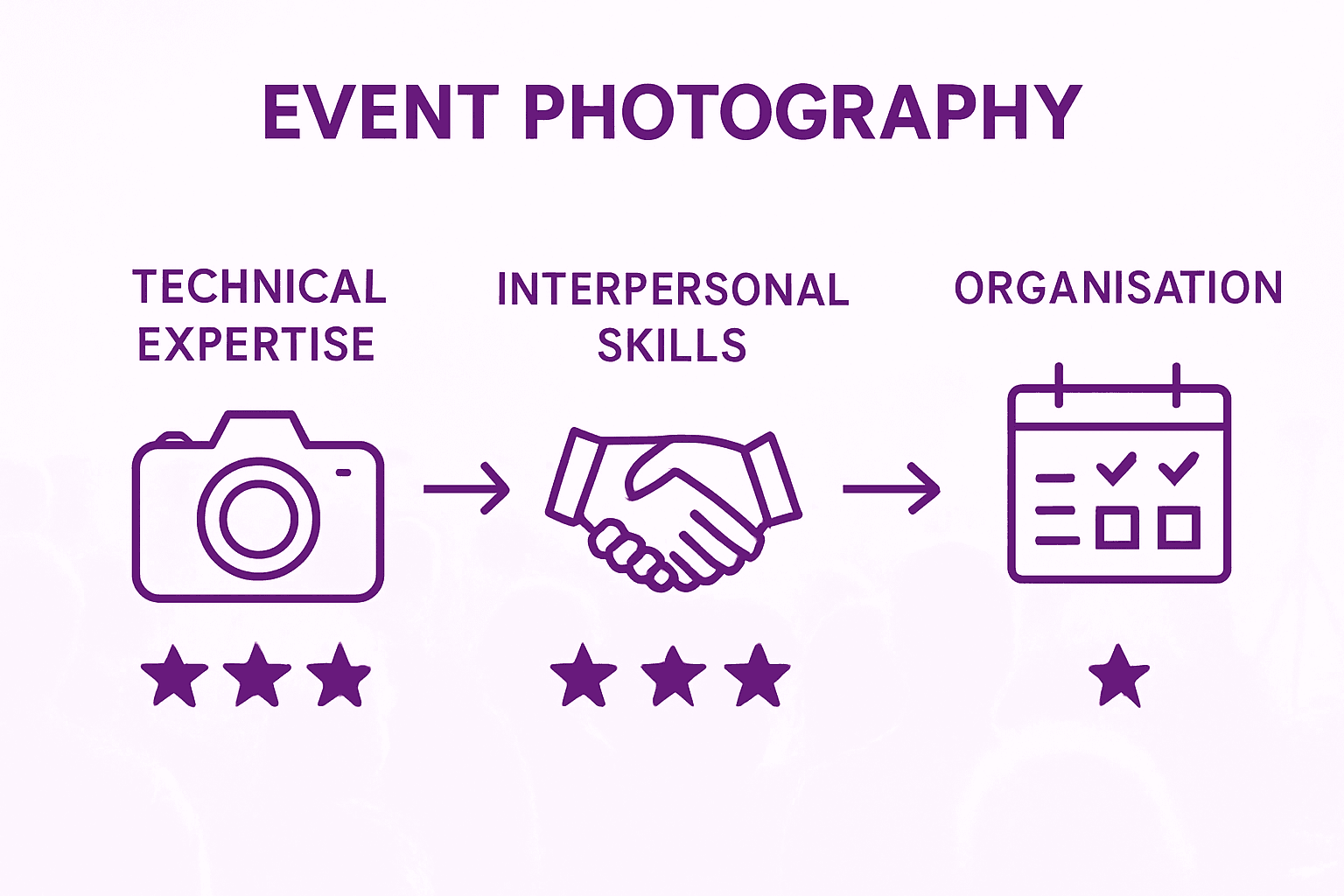
Technical Challenges represent the first layer of complexity in event photography. Photographers must rapidly adapt to fluctuating lighting conditions, manage multiple camera settings instantaneously, and predict movement patterns to capture spontaneous moments. Venues ranging from dimly lit conference halls to bright outdoor festivals demand instantaneous technical adjustments, requiring photographers to possess an intuitive understanding of exposure, white balance, and ISO settings that can be modified in milliseconds.
Interpersonal Responsibilities are equally critical, involving sophisticated coordination with event organisers and participants. Professional event photographers must negotiate complex social dynamics, remain unobtrusive while capturing intimate moments, and maintain a professional demeanour under potentially stressful circumstances. This requires exceptional communication skills, the ability to read social cues rapidly, and an understanding of appropriate boundaries in diverse event contexts.
Logistical Management demands rigorous organisational skills beyond pure photography. Photographers must develop comprehensive shot lists, coordinate with multiple stakeholders, manage complex equipment setups, and ensure comprehensive event coverage within prescribed timeframes. Successful event photographers create detailed pre-event plans, conduct venue reconnaissance, and develop contingency strategies to address potential technical or logistical complications.
Pro Tip – Situational Awareness: Cultivate a proactive mindset that anticipates potential photographic opportunities and challenges before they arise, allowing you to position yourself strategically and capture exceptional moments with precision and creativity.
This table summarises challenges faced by event photographers and effective strategies to address them:
| Challenge Type | Example Situation | Effective Strategy |
|---|---|---|
| Technical | Changing light conditions | Master rapid camera adjustments |
| Interpersonal | Distracting guests | Communicate discreetly, stay respectful |
| Logistical | Multiple events overlapping | Detailed planning and time management |
Common Pitfalls and Professional Best Practices
Professional event photographers must navigate complex challenges that can significantly impact their reputation and client satisfaction, requiring a strategic approach to avoiding common technical and interpersonal mistakes while maintaining the highest professional standards.
Technical Pitfalls represent a critical area of potential failure in event photography. Inexperienced photographers frequently encounter challenges such as insufficient memory storage, battery depletion, improper white balance settings, and inadequate lens selection. These technical oversights can result in missed opportunities, compromised image quality, and potentially irretrievable moments. Professionals mitigate these risks through meticulous pre-event equipment preparation, carrying redundant camera bodies, multiple memory cards, backup batteries, and a comprehensive range of lens options to address diverse photographic scenarios.
Professional Conduct is equally paramount, demanding sophisticated interpersonal skills and unwavering professionalism throughout the event. Common interpersonal pitfalls include being overly intrusive, dressing inappropriately, failing to communicate effectively with event organisers, and demonstrating poor time management. Successful event photographers cultivate a nuanced understanding of social dynamics, maintaining a delicate balance between capturing authentic moments and respecting participant boundaries. This requires exceptional emotional intelligence, the ability to read social cues rapidly, and adapting one’s approach to suit diverse event contexts.
Client Relationship Management extends beyond the event itself, encompassing post-production communication, timely image delivery, and maintaining professional standards throughout the entire engagement. Critical best practices include providing clear timelines for image processing, offering diverse delivery formats, maintaining transparent communication about editing processes, and developing a comprehensive post-event workflow that ensures client satisfaction. Photographers must also establish robust backup and archiving systems to protect clients’ invaluable memories against potential data loss or technological failures.
Pro Tip – Continuous Improvement: Develop a systematic approach to reviewing your performance after each event, critically analysing both technical execution and interpersonal interactions to refine your skills and professional approach continuously.
Master Event Photography with Expert Training from team.i.org
Capturing the perfect moment in event photography requires more than just a camera. As the article highlights, mastering technical skills, adapting to unpredictable environments, and managing interpersonal dynamics are major challenges photographers face. If you are eager to overcome these hurdles and elevate your event photography career, specialised education is essential. Understanding the nuances of wedding, corporate, and photojournalistic styles while sharpening your equipment handling and situational awareness can set you apart in this competitive field.
At team.i.org, we offer comprehensive courses designed to build your expertise in event management and photography. Benefit from hands-on projects, industry collaborations with DNA Entertainment Networks, and certifications that boost your professional profile. Whether you want to specialise in social, corporate, or sports events, our programmes equip you with practical skills and insider knowledge. Start your journey to becoming a confident and adaptable event photographer today by connecting with us here https://www.wa.me/919901998899/. Unlock your potential and capture memories that last forever.
Frequently Asked Questions
What are the key skills needed for successful event photography?
Successful event photography requires a blend of technical skills, including camera operation, lighting techniques, and composition, as well as interpersonal skills such as effective communication and adaptability in dynamic environments.
How can I prepare for an event photography assignment?
To prepare for an event photography assignment, scout the location in advance, familiarise yourself with the layout and lighting conditions, and develop a shot list to ensure comprehensive coverage of key moments and details.
What types of equipment are essential for event photography?
Essential equipment for event photography includes a full-frame digital camera, a versatile range of lenses (both prime and zoom), external flash units, and technical accessories such as high-capacity memory cards and backup batteries to ensure reliability during events.
What are some common challenges faced by event photographers?
Common challenges faced by event photographers include managing varying lighting conditions, capturing spontaneous moments in fast-paced environments, and maintaining professionalism while navigating complex social dynamics at events.
Recommended
- Top Event Management Skills for Success in 2025 – team I
- Wedding Planning Essentials: Key Skills and Tools for 2025 – team I
- How to Organise Events for Maximum Impact: Step-by-Step Guide – team I
- 7 Key Challenges in Event Planning and How to Overcome Them – team I
- Οδηγός φωτογραφικού μακιγιάζ: Τεχνικές και λάθη – MakeUp Closet