
Most people picture event management as the glamorous bit: the mood boards, the venue tours, the floral arrangements. But the moment a 500-person corporate summit in Hyderabad loses its badge printer 20 minutes before registration opens, you realise very quickly that event operations explained properly is not about aesthetics. It is about who owns the problem, who has the backup printer, and who calls the vendor. Event operations are the engine room of every successful event in India, from a Delhi wedding for 2,000 guests to a Bangalore tech conference. If you are serious about a career in this industry, this is where you start.
Table of Contents
- Event operations explained: the core framework
- Contingency planning for Indian events
- Technology in event operations
- Final preparation and staff coordination
- Post-event debrief and performance tracking
- My honest take on event operations in India
- Build your event operations career with Teami
- FAQ
Event operations explained: the core framework
At its most fundamental level, event operations turn creative visions into reality by defining who does what and when. Three components form the backbone of this: the run of show, logistics, and on-site coordination.
The run of show is your bible for the day. It is a live document that lists every task, every cue, and every responsible person in sequence. Critically, dependencies and status columns in run of show templates prevent cascading delays by showing what must finish before the next task can begin. At a Mumbai product launch, for instance, if the AV test has not been signed off, the rehearsal cannot start. The run of show makes that dependency visible to everyone.
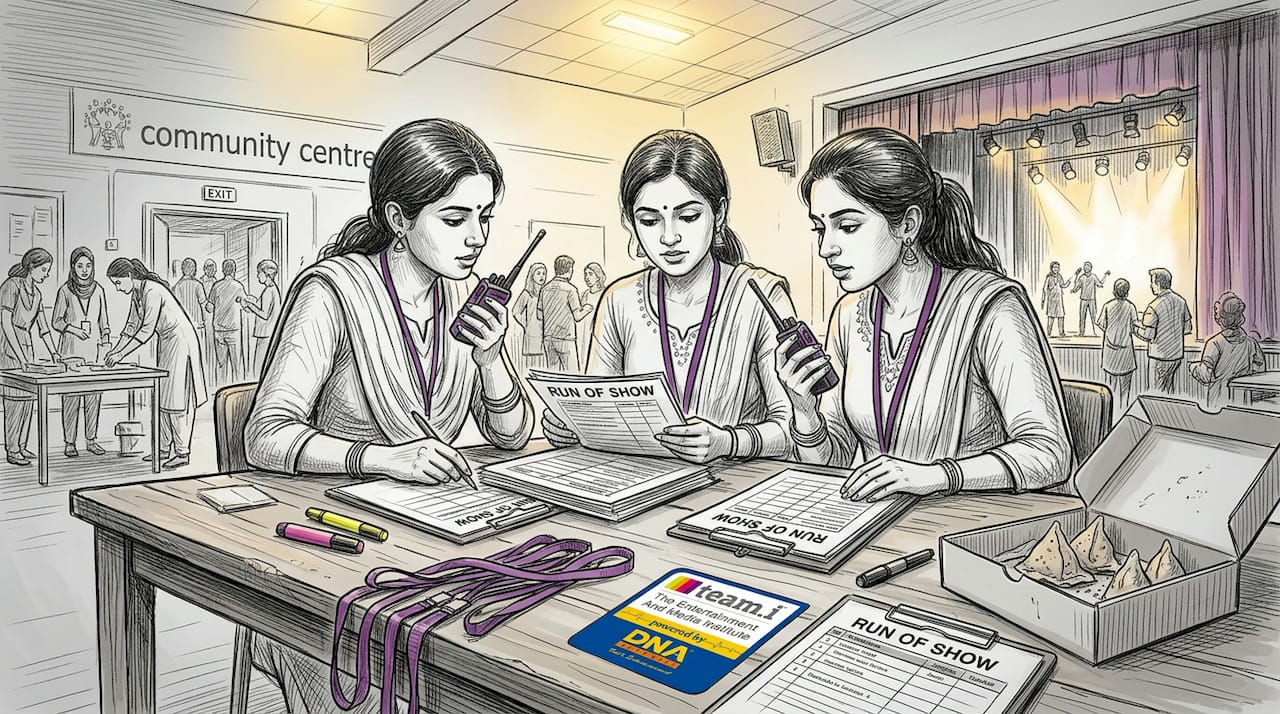
Logistics covers your load-in and load-out manifests, vendor coordination timelines, and the physical movement of people and equipment. This is the event logistics overview that aspiring professionals often underestimate. Getting 15 vendor trucks to a venue in central Bangalore during peak morning traffic requires scheduling precision, not just goodwill.
On-site coordination is where it all comes alive and where things go wrong fastest. Your responsibilities here include:
- Managing registration queues and attendee flow from the moment doors open
- Supervising crowd control and ensuring clear pathways in high-density areas
- Coordinating session turnarounds, speaker movements, and F&B service timings
- Communicating live updates to team leads via walkie-talkies or event apps
Pro Tip: Separate registration into three lanes for self-service QR scans, staffed walk-ups, and reprint or issue resolution. Mixing all three in one lane is one of the most common and preventable bottlenecks in Indian event check-ins.
Contingency planning for Indian events
No event runs without a crisis. The question is how fast you recover. Structured tiered contingency planning is not a safety net. It is a performance strategy.
- Tier 1 (5-minute response): Immediate fixes using on-hand resources. A badge printer jams at a Chennai corporate event. Your operations lead already has a spare unit on standby and switches within minutes. No queue forms.
- Tier 2 (30-minute fix): Moderate disruptions requiring vendor calls or room reconfigurations. A keynote speaker is delayed. The programme is reshuffled, a networking break is moved forward, and attendees barely notice.
- Tier 3 (2-hour buffer): Major structural issues. Power failure at an outdoor concert in Mumbai. The generator protocol kicks in, your generator vendor is on speed dial, and the backup plan is already on paper.
Structured tiered contingency planning reduces recovery time by 50%, which protects not just the guest experience but your client’s ROI and your own professional reputation. Cross-training your staff is equally non-negotiable. Every team member should know at least one other role beyond their own, so that a no-show does not create a gap.
“Rehearsing onsite workflows before event day shifts your team from firefighting to managing experience.” This is the difference between a team that reacts and a team that leads.
Pro Tip: Named decision-makers and backups remove hesitation onsite. Before every event, assign a financial threshold per lead so that no one is waiting for approval when seconds matter.
Technology in event operations
The shift from clipboards to real-time dashboards has genuinely changed what understanding event coordination looks like on the ground. Here is a direct comparison of where Indian events have come from and where the smart operators are now:
| Workflow area | Traditional approach | Tech-enhanced approach |
|---|---|---|
| Attendee check-in | Manual list verification | QR scan with live count sync |
| Badge printing | Pre-printed batch | On-demand badge printing in under 5 seconds |
| Session capacity | Visual estimation | Live dashboard with alerts |
| Team communication | Walkie-talkies only | Event app with role-based channels |
| Incident reporting | Verbal relay | Timestamped digital log |
Real-time attendance and session capacity dashboards transform event management from reactive to proactive. At a Hyderabad tech summit with 18 breakout sessions running simultaneously, a live capacity alert tells your coordinator to redirect overflow before a room becomes a safety risk, not after.
Indian events at scale, such as the Sunburn festival circuit or large-scale corporate summits in Bengaluru’s convention centres, have moved aggressively toward integrated registration and communication platforms. The operations teams behind these events are not just logisticians. They are data readers who make decisions off live numbers.
Pro Tip: Always build an offline fallback into your tech plan. A good backup includes offline scanning capability, spare printers, pre-printed blank badges, and a contingency room for overflow. Technology fails. Your plan should not.
Final preparation and staff coordination
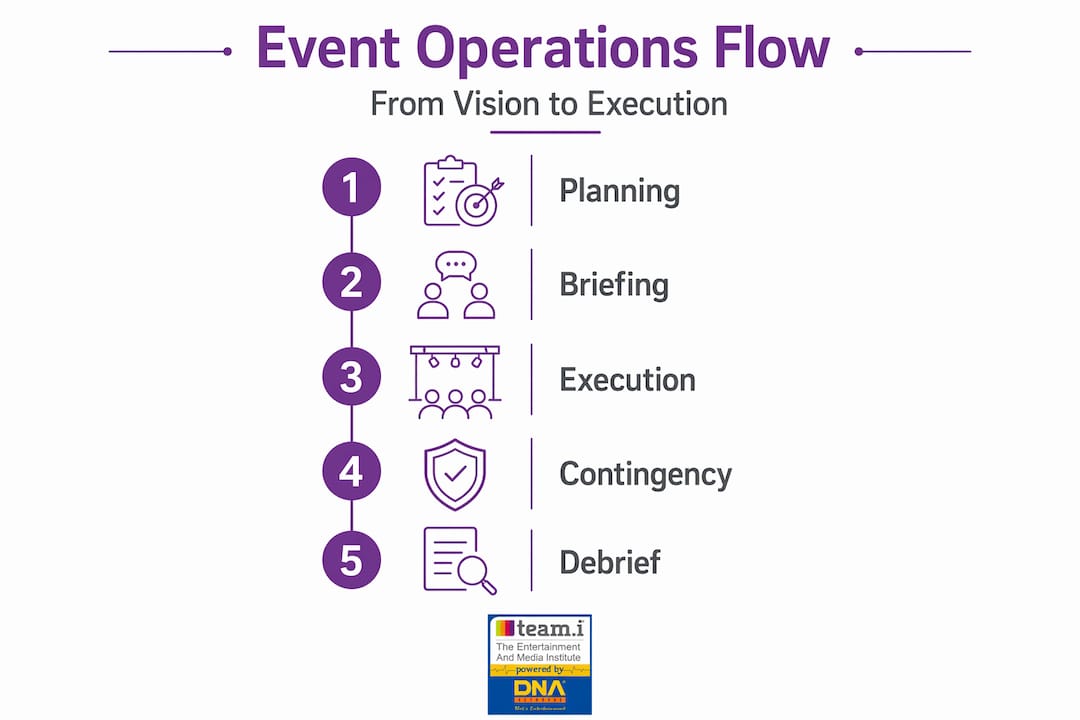
The 48 hours before an event open are not for making structural changes. They are for rehearsals, minor tweaks, and making sure every person on your team knows exactly what they own. Structured timeline-driven checklists reduce last-minute event stress by 65%, and the data backs up what experienced operators already know from instinct.
Your pre-event walkthrough should cover five areas without exception:
- Safety and security: Emergency exits marked, first aid stations staffed, security briefed on crowd flow and escalation points
- Staging and production: Stage set confirmed, lighting cues tested, microphones checked across all positions
- AV and technical: Presentation files loaded, screen resolutions confirmed, backup laptops connected and ready
- Vendor readiness: Catering timelines confirmed, decor installations signed off, transport schedules locked
- Venue orientation: All team members have walked the space, know the service entrances, and can direct attendees without hesitation
The final command briefing is where you align every department lead, clarify who reports to whom, and communicate the escalation protocol clearly. Supervisors need formal training on escalation, decision-making, and documentation. A brief talk at call-time is not enough, particularly for events involving large crowds in cities like Mumbai or Delhi where crowd surges are a genuine operational risk. Read Teami’s detailed resource on crowd management strategies to understand what proper supervisor preparation looks like in practice.
Post-event debrief and performance tracking
Key event operations do not end when the lights go off. The debrief, completed within 48 hours of the event, is where professional teams separate themselves from average ones. The metrics you track tell the full story:
- Attendance rate vs. registration: Did your registration pipeline convert? Where did drop-off happen?
- Net Promoter Score (NPS): Collected through post-event surveys, this tells you how attendees experienced the event emotionally
- Budget variance: How much did actual spend deviate from the planned budget, and why?
- Incident log review: Every reported issue, timestamped, with the response action recorded
- Staff performance notes: Which roles were understaffed, which protocols worked, and what needs rewriting for next time
The post-event report covering what went well, what failed, and what changes before the next event is not a formality. It is the foundation of a learning culture inside any serious event operations team. At Teami, the event management best practices we teach are built on exactly this cycle of execution, reflection, and refinement.
My honest take on event operations in India
I have seen aspiring event professionals walk in with a passion for design, sponsorship pitches, or talent management, and completely underestimate the engine underneath. Here is the truth: the creative vision gets the applause, but operations gets the contract renewed.
In my experience, the most common gap in young professionals is not knowledge. It is the instinct to own a problem under pressure. When the generator fails at 8 PM during an outdoor gala in Jaipur, no one wants to hear “that is not my department.” What clients remember is who stepped up.
Flexibility, communication, and on-ground leadership are not soft skills in this industry. They are the job. Technology will support you, checklists will guide you, and contingency plans will protect you. But none of it works without people who are trained to think clearly when things go sideways. If you are building a career in events, invest deeply in operations. It is where the real competence lives, and it is what separates a professional from someone who just attended a lot of events.
— Teami
Build your event operations career with Teami
If this article has shown you anything, it is that the event management process is far more structured and skilled than most outsiders realise. Teami’s event management programmes are built on 24 years of industry experience, real event participation, and direct partnerships with DNA Entertainment Networks, one of India’s largest live entertainment companies. You will not just study run-of-show documents. You will build them for real events. Explore Teami’s online event management courses and find out how to turn everything you have just read into hands-on professional capability.
FAQ
What does event operations mean?
Event operations refers to the on-ground execution of an event, covering logistics, staffing, run of show management, vendor coordination, and real-time decision-making. It is the practical layer that turns an event plan into a live experience.
What are the key event operations roles?
Key event operations roles include operations manager, registration coordinator, floor supervisor, and logistics lead. Each role owns a specific part of the event day and reports into a central command structure.
How does contingency planning fit into event operations?
Contingency planning is a core part of event operations, with tiered response systems covering minor, moderate, and major disruptions. Structured tiered contingency planning reduces recovery time by 50%, protecting both the guest experience and client ROI.
Why is a run of show critical for event success?
A run of show synchronises every team member by showing task sequences, responsible owners, and dependencies in one live document. Without it, teams work in silos and delays in one area cascade across the entire event.
How do you measure event operations performance?
Event operations performance is measured through attendance rate, Net Promoter Score, budget variance, incident logs, and staff performance reviews. A post-event debrief completed within 48 hours captures these metrics while the detail is still fresh.
Recommended
- instaform – team I
- Event Management Course: Everything You Need to Know – team I
- Understanding Event Management for Beginners – team I
- Types of Event Management: A Practical Guide for Aspiring Professionals – team I
Thinking about a career in event management?
team I is Bangalore’s only EEMA-certified event management institute, running for 24 years, where students work on real live events with real budgets and real deadlines rather than classroom simulations. See the full range of event management courses in Bangalore, or go straight to the flagship Certificate Program in Event Management (CPEM).