

More than 80 percent of british event organisers say that simply counting attendees never reveals the full story of an event’s success. As events grow more complex and expectations rise, understanding what really works requires more than surface-level numbers. Learning the principles of solid event evaluation helps professionals move beyond guesswork, turning each event into sharper insights and stronger future results.
Table of Contents
- Defining Event Evaluation and Its Importance
- Types of Event Evaluation Methods Explained
- Key Metrics and Measurement Approaches
- Data Collection Tools and Techniques
- Common Pitfalls and How to Avoid Them
Key Takeaways
| Point | Details |
|---|---|
| Importance of Event Evaluation | Robust event evaluation transforms subjective experiences into measurable insights that enhance future planning and organisational success. |
| Diverse Evaluation Methods | Employing multiple event evaluation methodologies allows for comprehensive assessment tailored to specific objectives and stakeholder needs. |
| Critical Metrics for Success | Utilising a range of key performance indicators (KPIs) enables event professionals to capture the multifaceted nature of event effectiveness and participant experiences. |
| Avoiding Common Pitfalls | Recognising and addressing methodological weaknesses, such as confirmation bias and incomplete data collection, is essential for ensuring accurate and effective evaluations. |
Defining Event Evaluation and Its Importance
Event evaluation represents a systematic process of critically assessing an event’s performance, effectiveness, and overall impact across multiple dimensions. Understanding this strategic approach allows event managers to transform subjective experiences into measurable insights that drive future planning and organisational success.
At its core, event evaluation encompasses multiple assessment methodologies designed to analyse key performance indicators (KPIs), participant experiences, and tangible outcomes. Professionals utilising event industry insights recognise that comprehensive evaluation goes far beyond simple attendance numbers or basic financial metrics. Instead, it involves a nuanced examination of qualitative and quantitative data points that reveal deeper strategic learnings.
The importance of robust event evaluation cannot be overstated. By systematically collecting and analysing feedback, organisations can unlock critical improvements in event design, participant engagement, and return on investment. Particularly in complex event scenarios like corporate social responsibility events, evaluation provides crucial insights into stakeholder perceptions, programmatic effectiveness, and potential areas for future refinement.
Key elements of effective event evaluation typically include:
- Participant satisfaction measurements
- Performance against predefined objectives
- Financial and resource utilisation analysis
- Long-term impact assessment
- Comparative benchmarking with industry standards
Ultimately, event evaluation transforms individual experiences into strategic intelligence, enabling event professionals to continually enhance their craft and deliver increasingly sophisticated, impactful experiences.
Types of Event Evaluation Methods Explained
Event evaluation methodologies offer diverse approaches for comprehensively assessing event performance, each providing unique insights into organisational objectives and participant experiences. Realist evaluation represents a sophisticated theory-driven technique that examines how different contextual factors influence event outcomes, recognising that interventions may produce varied results across different environments.
Professionals typically employ multiple evaluation methods to capture a holistic understanding of event effectiveness. These methods range from quantitative approaches focusing on numerical data to qualitative techniques exploring participant perceptions. Types of event management significantly influence the selection of appropriate evaluation strategies, ensuring alignment with specific event goals and organisational requirements.
Some prominent event evaluation methods include:
- Formative Evaluation: Conducted during event planning to improve design and implementation
- Summative Evaluation: Assessing overall event impact after completion
- Goal-free evaluation, which examines actual outcomes without preconceived objectives, helping identify unintended consequences and reducing potential bias
- Participant feedback surveys
- Comparative performance benchmarking
- Economic impact analysis
Key considerations when selecting an evaluation method involve understanding the specific event’s complexity, stakeholder expectations, and desired insights. By strategically choosing appropriate assessment techniques, event professionals can transform raw data into actionable intelligence that drives continuous improvement and strategic decision-making.
Key Metrics and Measurement Approaches
Event evaluation requires a sophisticated approach to measuring performance across multiple dimensions, integrating both quantitative and qualitative metrics. Marketing mix modeling provides a robust analytical framework for understanding the complex interactions between various event elements and their ultimate impact, enabling event professionals to develop nuanced performance assessments.

Comprehensive event measurement strategies typically encompass a diverse range of key performance indicators (KPIs) that capture the multifaceted nature of event success. Event crowd management plays a critical role in this assessment, with metrics extending beyond traditional attendance figures to include participant engagement, satisfaction levels, and overall experience quality.
Critical metrics for robust event evaluation include:
- Attendance and Participation Rates
- Audience Engagement Levels
- Social Media Reach and Interaction
- Financial Performance
- Revenue Generation
- Cost-Effectiveness
- Networking Opportunities Created
- Soft event detection metrics, which incorporate temporal tolerance for more nuanced performance assessment
Strategic measurement approaches require event professionals to develop customised evaluation frameworks that align with specific organisational objectives. By integrating advanced analytical techniques and comprehensive metric collection, professionals can transform raw data into actionable insights that drive continuous improvement and strategic decision-making in event management.
Data Collection Tools and Techniques
Effective event evaluation relies on sophisticated data collection methodologies that capture comprehensive insights across multiple dimensions. Event evaluation and assessment techniques encompass a diverse range of tools designed to gather both quantitative and qualitative data, enabling event professionals to construct a nuanced understanding of event performance and participant experiences.
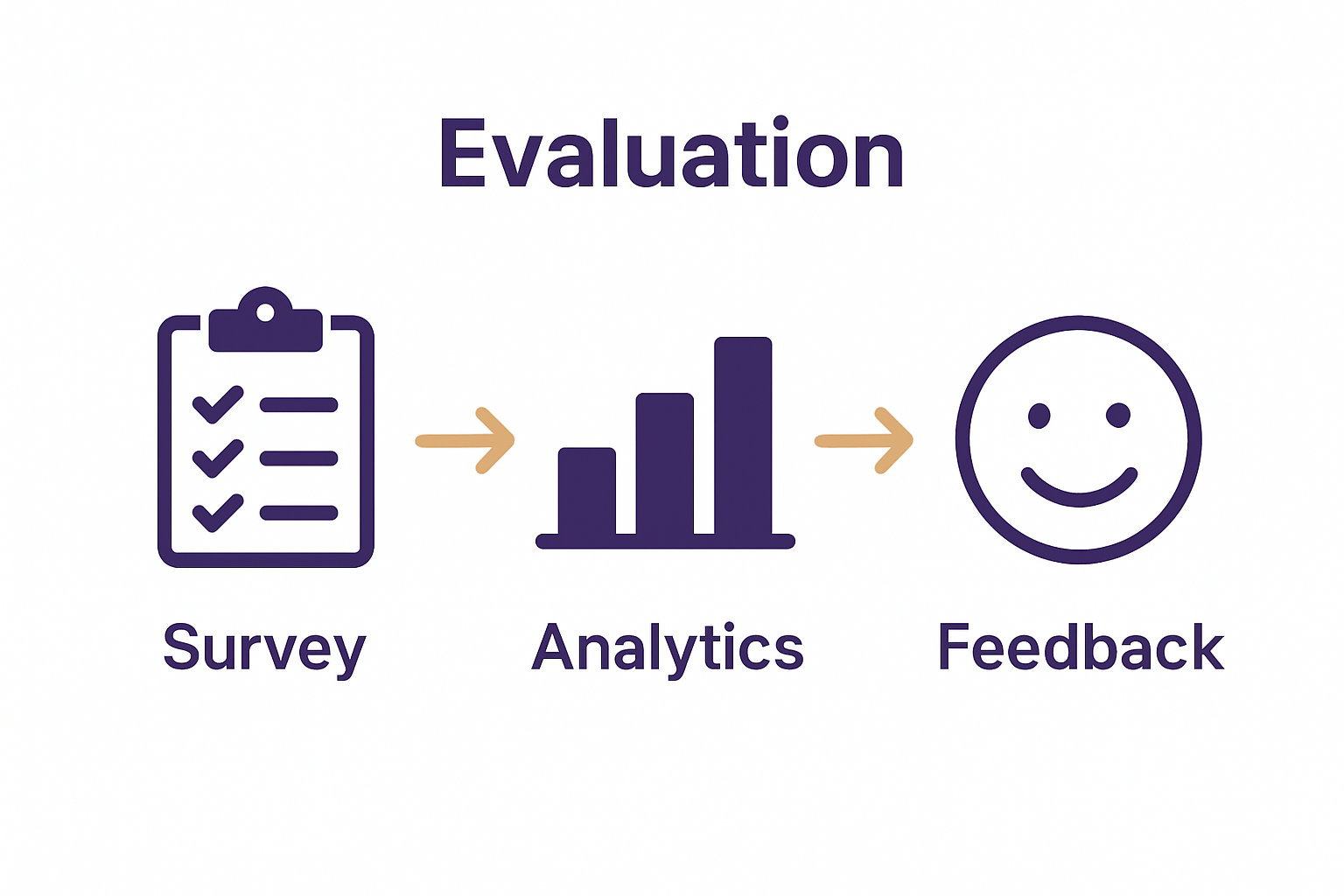
Data collection strategies must be carefully designed to ensure robust and reliable information gathering. Expert review methods provide critical validation mechanisms that help mitigate potential data collection issues, ensuring the accuracy and reliability of evaluation instruments. Event risk assessment further emphasises the importance of systematic and rigorous data collection approaches.
Key data collection tools include:
- Digital Surveys
- Online rating scales
- Mobile-responsive questionnaires
- Real-time Feedback Mechanisms
- Live polling
- Interactive feedback stations
- Analytical Tracking
- Website analytics
- Social media engagement metrics
- Attendance tracking systems
- Participant Observation
- Interview Protocols
- Financial and Sales Data Analysis
Successful data collection requires a strategic approach that balances comprehensive information gathering with participant engagement, ensuring that evaluation methods are both insightful and user-friendly. By integrating multiple data collection techniques, event professionals can develop a holistic understanding of event performance and participant experiences.
Common Pitfalls and How to Avoid Them
Event evaluation processes are fraught with potential challenges that can significantly compromise the accuracy and effectiveness of performance assessments. Types of event management require nuanced understanding to navigate the complex landscape of data collection and interpretation, with professionals needing to be acutely aware of potential methodological traps.
One of the most critical errors event professionals encounter involves confirmation bias, where preconceived expectations inadvertently influence data interpretation. Event risk assessment becomes paramount in mitigating these systematic biases, ensuring that evaluation processes remain objective and comprehensive. Professionals must consciously develop strategies to maintain analytical distance and prevent subjective interpretations from skewing results.
Common evaluation pitfalls include:
- Incomplete Data Collection
- Overlooking critical metrics
- Relying on limited feedback channels
- Confirmation Bias
- Seeking only supportive evidence
- Dismissing contradictory insights
- Measurement Errors
- Inconsistent survey design
- Poorly constructed evaluation instruments
- Insufficient Contextual Analysis
- Neglecting Qualitative Feedback
- Lack of Longitudinal Perspective
Successful event evaluation demands a disciplined, multi-dimensional approach that balances quantitative precision with qualitative depth. By recognising and proactively addressing potential methodological weaknesses, event professionals can develop more robust, insightful assessment frameworks that genuinely capture the complexity of event experiences.
Elevate Your Event Evaluation Skills with Expert Training
Understanding the complexities of event evaluation techniques is vital for turning feedback and data into actionable improvements. The article highlights common challenges such as ensuring comprehensive data collection, avoiding confirmation bias, and effectively measuring participant engagement and financial outcomes. These pain points often leave event managers feeling overwhelmed or unsure about how to confidently analyse and apply evaluation results to future events.
At team.i.org, we address these exact hurdles by offering specialised certification programmes that build your expertise in robust event evaluation and management. Our courses blend theory with hands-on projects and real event participation, helping you master key concepts like performance metrics, qualitative feedback analysis, and strategic decision-making. Whether you aim to refine your skills in corporate social responsibility events or expand your knowledge across event types, our expert-led training ensures you gain practical insights and industry-recognised qualifications.
Want to transform your understanding of formative and summative evaluation into a career advantage Take the next step by exploring our detailed course offerings on event evaluation techniques and leverage 23 years of industry experience combined with real-world learning opportunities. Don’t wait for uncertainty to limit your impact. Connect today through team.i.org and start excelling in event management with confidence.
Frequently Asked Questions
What is event evaluation?
Event evaluation is a systematic process of assessing an event’s performance, effectiveness, and impact across various dimensions, transforming subjective experiences into measurable insights that inform future planning.
Why is event evaluation important for organisations?
Event evaluation is crucial as it helps organisations unlock improvements in event design, participant engagement, and return on investment by systematically collecting and analysing feedback.
What are some common methods used for event evaluation?
Common methods for event evaluation include formative evaluation, summative evaluation, goal-free evaluation, participant feedback surveys, and economic impact analysis, each offering unique insights into event effectiveness.
How can data collection tools enhance event evaluation?
Data collection tools enhance event evaluation by capturing both quantitative and qualitative data through mechanisms like digital surveys, real-time feedback, analytical tracking, and participant observation, providing a comprehensive understanding of event performance.