
Many aspiring event managers believe short courses suffice for career success, yet degree holders earn 30% higher initial salaries on average than short-course holders. Accredited event management degrees substantially improve job readiness and earning potential in India’s competitive events industry. This guide helps you understand accredited degrees and how to choose the right programme for your career ambitions.
Table of Contents
- What Is An Accredited Event Management Degree?
- Course Structure And Practical Exposure
- Industry Partnerships And Real-World Experience
- Specialisations In Event Management Degrees
- Online, Hybrid, And On-Campus Programme Comparisons
- Common Misconceptions About Event Management Education
- Career Prospects And Skill Development
- Choosing The Right Event Management Degree Programme In India
- Explore Accredited Event Management Programmes With Team I
Key takeaways
| Point | Details |
|---|---|
| Accredited degrees balance theory with practical exposure | Programmes blend academic learning with hands-on training through internships and live events. |
| Internships boost placement success | Students with internship experience see 40% higher job placement rates on average. |
| Industry partnerships enhance learning | Collaborations with event companies provide real-world projects and networking opportunities. |
| Specialisations align with market demand | Focused training in sports, wedding, or corporate events improves career prospects. |
| Online degrees gain credibility | Industry-connected online programmes offer flexible learning without sacrificing practical experience. |
What is an accredited event management degree?
Event management degree programmes provide structured education in planning, executing, and managing events across various sectors. Accredited programmes comply with UGC and AICTE standards, ensuring quality and recognition by employers and educational institutions throughout India. These degrees cover essential business skills alongside creative event design.
Accreditation by bodies like the University Grants Commission (UGC) and All India Council for Technical Education (AICTE) guarantees government recognition. This recognition matters when applying for jobs, pursuing higher education, or seeking professional certifications. Employers prioritise candidates with accredited qualifications because these programmes meet established educational benchmarks.
Unaccredited courses pose significant risks to your career trajectory. Without proper recognition, your qualification may not be accepted by employers or universities. You could waste time and money on education that fails to open career doors. Event management diploma course placement rates demonstrate how accredited programmes consistently outperform unrecognised alternatives.
Key benefits of accredited event management degrees include:
- Government recognition ensuring qualification validity across India
- Industry credibility improving employment prospects
- Standardised curriculum covering essential business and creative skills
- Eligibility for further education and professional certifications
- Better placement support through institutional networks
Course structure and practical exposure
Degree programmes typically span 3 years undergraduate or 1 to 2 years postgraduate, blending theoretical knowledge with practical application. The curriculum covers event planning fundamentals, marketing strategies, budgeting techniques, vendor management, and client relations. Most programmes integrate workshops, live event participation, and industry projects throughout the academic calendar.
Balanced curricula ensure you develop both conceptual understanding and hands-on skills. Theory modules teach business principles, marketing frameworks, and operational planning. Practical components involve working on real events, managing budgets with actual constraints, and coordinating with vendors. This combination prepares you for the multifaceted demands of professional event management.
Internships dramatically increase employability and placement success rates. Working within established event companies exposes you to industry standards, professional workflows, and networking opportunities. The importance of internships for event students cannot be overstated, as employers strongly favour candidates with verified practical experience. Events management work experience distinguishes graduates in competitive job markets.
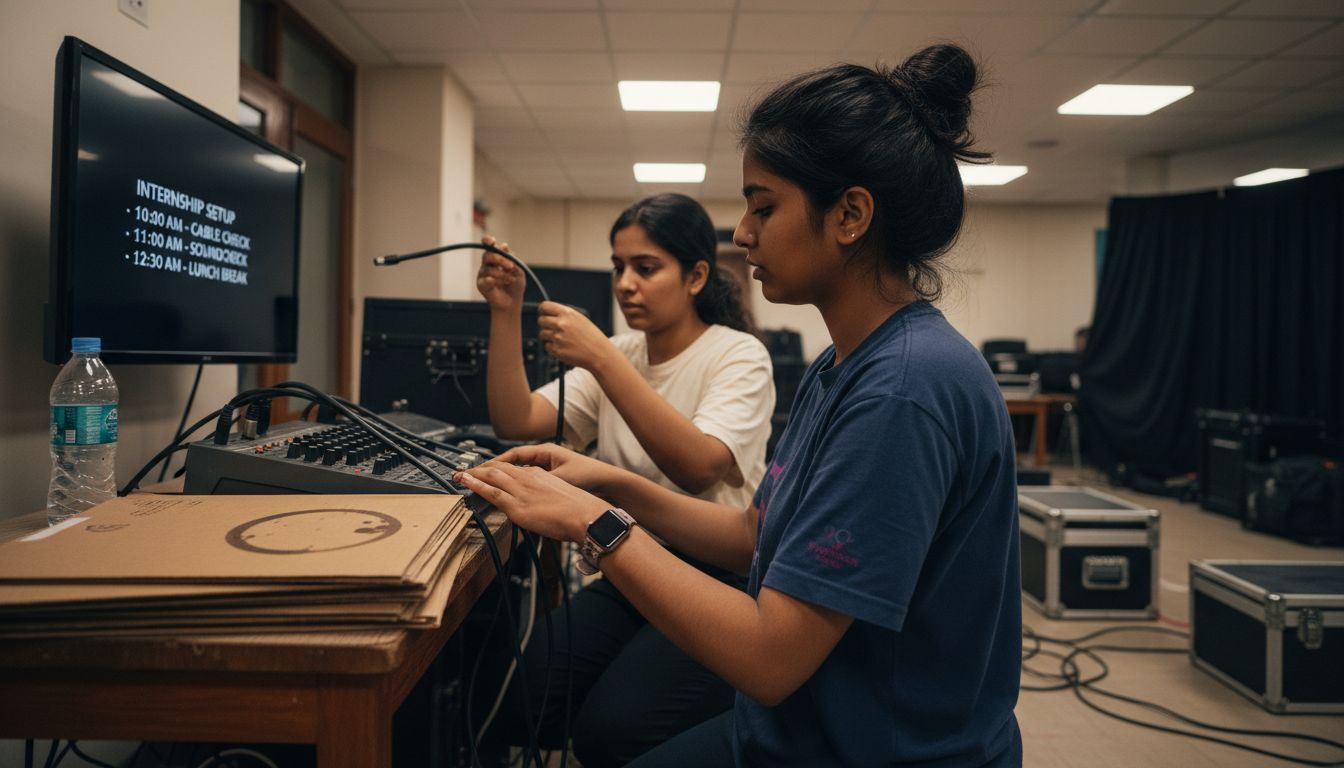
Pro Tip: Choose programmes with strong practicum components and verified internship support from established industry partners, as these dramatically improve job readiness and starting salaries.
Typical practical elements in accredited programmes include:
- Live event participation in corporate functions, weddings, or sports events
- Industry workshops led by experienced event professionals
- Internship placements lasting 3 to 6 months
- Capstone projects requiring full event planning and execution
- Vendor management simulations and budget exercises
Industry partnerships and real-world experience
Collaborations between educational institutions and event companies significantly enhance programme quality. Industry-connected event management institutes provide students with access to live projects, guest lectures from successful professionals, and placement opportunities. These partnerships ensure curricula reflect current market demands and emerging industry trends.
Types of industry partnerships include direct collaborations with event management companies, relationships with venue operators, and networks with entertainment agencies. These connections bring practical benefits like exposure to actual client briefs, participation in high-profile events, and mentorship from experienced event managers. Students gain insights into professional standards and workflow expectations before graduation.
Industry ties directly impact curriculum updates and relevance. When institutions partner with active event companies, they receive feedback on skill gaps and emerging requirements. This input helps programmes adjust content to address real-world needs. Partnerships like the DNA Entertainment Networks and Team I collaboration demonstrate how strategic alliances create industry-ready professionals.
Key benefits of strong industry partnerships:
- Access to live event projects providing authentic learning experiences
- Guest lectures and masterclasses from successful event professionals
- Internship placement assistance with reputable companies
- Networking opportunities leading to job offers
- Curriculum updates reflecting current industry practices
- Higher placement rates compared to programmes without industry ties
Specialisations in event management degrees
Event management degrees offer various specialisations allowing you to focus on specific sectors with distinct demands. Common options include sports event management, wedding planning, corporate events, social gatherings, and entertainment production. Each specialisation develops targeted skills aligned with particular market segments and client expectations.
Market demand varies significantly across specialisations and geographic regions. Wedding event management shows consistent demand across India, particularly in metropolitan areas and traditional wedding destinations. Corporate event management thrives in business hubs like Mumbai, Bangalore, and Delhi. Sports event management opportunities concentrate around major sporting venues and franchises. Understanding these patterns helps you choose specialisations with strong career prospects.
Specialisations in event management enable diverse career pathways beyond generic event coordination roles. Focused training equips you with specialised knowledge, from wedding traditions and vendor networks to corporate branding requirements and sports logistics. This expertise makes you more valuable to employers seeking specialists rather than generalists. Specialisations offered by Team I illustrate how targeted programmes prepare graduates for specific industry niches.
| Specialisation | Typical Job Roles | Average Starting Salary Range |
|---|---|---|
| Wedding Events | Wedding Planner, Coordinator, Vendor Manager | ₹3.5L to ₹5L annually |
| Corporate Events | Corporate Event Manager, Conference Planner, Brand Activation Specialist | ₹4L to ₹6L annually |
| Sports Events | Sports Event Coordinator, Tournament Manager, Venue Operations Manager | ₹4.5L to ₹7L annually |
| Social Events | Social Event Planner, Party Coordinator, Festival Organiser | ₹3L to ₹4.5L annually |
Benefits of specialising during your degree:
- Deeper expertise in high-demand sectors
- Competitive advantage when applying for specialist roles
- Higher earning potential through specialised knowledge
- Targeted networking within specific industry segments
Online, hybrid, and on-campus programme comparisons
Event management degrees are delivered through three primary modes: on-campus, hybrid, and fully online. On-campus programmes provide traditional classroom learning, direct faculty interaction, and immediate peer networking. Hybrid programmes combine online theory modules with in-person practical sessions and workshops. Fully online programmes deliver content digitally whilst incorporating virtual collaboration and remote project work.
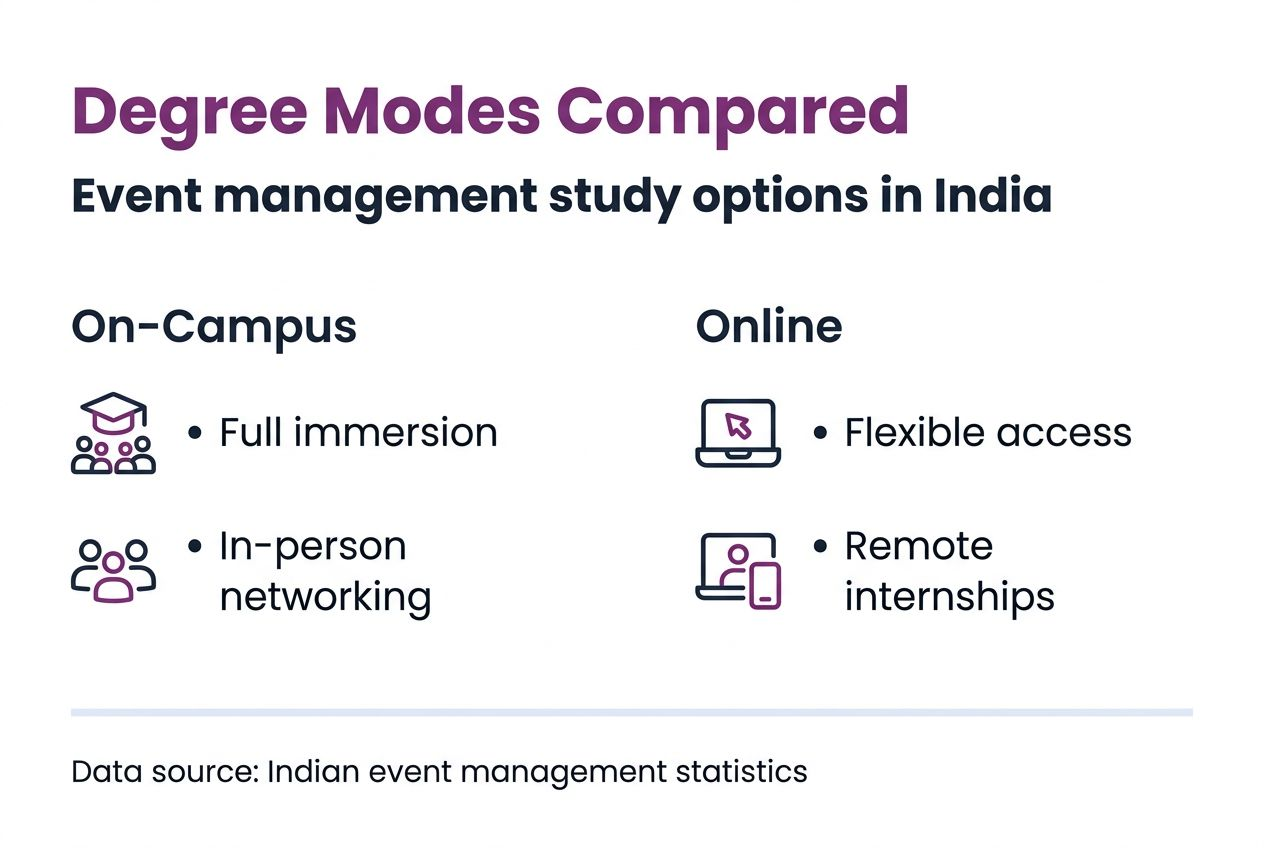
Online enrolments have increased 30%, supported by credible industry partnerships ensuring quality practical exposure despite remote delivery. Online and hybrid options suit working professionals, those in remote locations, or students requiring flexible schedules. However, these modes demand strong self-discipline and proactive engagement to maximise learning outcomes and networking opportunities.
Quality assurance in online event management education depends heavily on industry collaborations. Reputable online programmes maintain practical training through virtual internships, remote project management, and partnerships with event companies offering supervised experiences. Best online event management courses India 2026 demonstrate how technology and industry ties can deliver credible qualifications without traditional campus requirements.
| Mode | Learning Experience | Networking Opportunities | Practical Training | Flexibility |
|---|---|---|---|---|
| On-Campus | Face-to-face lectures, immediate interaction | High through daily peer and faculty contact | Extensive through campus events and local partnerships | Low, fixed schedule |
| Hybrid | Mixed online theory and in-person practicals | Moderate through scheduled sessions | Good through planned workshops and internships | Medium, some flexibility |
| Fully Online | Digital content, virtual collaboration | Lower but growing through online forums | Depends on remote internship quality | High, self-paced learning |
Pro Tip: Select your programme mode based on personal schedule constraints, current career stage, and networking needs, as each offers distinct advantages for different circumstances.
Considerations when choosing programme delivery mode:
- On-campus suits those prioritising immediate networking and structured learning
- Hybrid works for professionals balancing work and study commitments
- Online serves remote students or those needing maximum flexibility
- All modes can be credible if backed by strong industry partnerships
Common misconceptions about event management education
Many believe event management education focuses primarily on creativity and party planning, ignoring substantial business components. Accredited programmes teach budgeting, contract negotiation, risk management, marketing strategy, and operational logistics. These business skills often prove more critical to career success than creative flair alone.
A persistent misconception equates short-term courses with accredited degrees. Whilst certificate courses provide basic introductions, they lack the comprehensive curriculum, practical depth, and industry recognition of full degrees. Employers distinguish clearly between certificate holders and degree graduates, with the latter receiving preference for management positions and higher starting salaries.
Some assume online event management degrees lack credibility compared to on-campus programmes. Modern online degrees from accredited institutions maintain rigorous standards through industry partnerships, supervised internships, and practical project requirements. The delivery mode matters less than accreditation status and institutional reputation.
Other common misconceptions include:
- Event management is only for extroverts: Successful event managers need analytical skills, attention to detail, and project management capabilities alongside interpersonal skills.
- You don’t need formal education to succeed: Whilst some enter the field without degrees, accredited education significantly improves earning potential and career advancement opportunities.
- Event management is a glamorous career without hard work: The profession demands long hours, high-pressure situations, and meticulous planning beyond visible event execution.
- Degrees guarantee immediate high-paying jobs: Education improves prospects, but career success depends on combining qualifications with practical experience, networking, and continuous skill development.
Career prospects and skill development
Accredited event management degrees open diverse career pathways across multiple industries. Common job roles include event coordinator, event planner, wedding planner, corporate event manager, marketing manager, venue manager, and production coordinator. Each role requires specific skill combinations and offers distinct responsibilities and advancement opportunities.
Salary benchmarks reveal degree holders earn notably higher initial salaries than those with only short courses or no formal qualifications. Entry-level event coordinators with accredited degrees typically earn ₹3 lakh to ₹5 lakh annually, whilst those with diplomas or certificates start at ₹2 lakh to ₹3 lakh. Experienced event managers with degrees progress to ₹8 lakh to ₹15 lakh annually within five to seven years.
Critical skills developed through accredited programmes include budgeting and financial management, marketing and promotion strategies, vendor negotiation and relationship management, project coordination and timeline management, client communication and expectation management, risk assessment and contingency planning, and team leadership and delegation. These competencies apply across event types and enhance employability in related fields.
Event management courses after graduation in India provide additional specialisation for those entering the field later. Career advancement often involves moving from coordination roles to planning positions, then progressing to management levels overseeing multiple events or teams. Some graduates establish independent event planning businesses leveraging skills and networks developed during their studies. Event management career options extend beyond traditional event roles into hospitality, tourism, marketing, and entertainment industries.
Key skills enhancing employability and career progression:
- Financial planning and budget adherence
- Multi-stakeholder communication and diplomacy
- Time-sensitive project execution under pressure
- Creative problem-solving within resource constraints
- Digital marketing and social media promotion
- Contract negotiation and vendor management
Choosing the right event management degree programme in India
Selecting the most suitable event management degree requires evaluating multiple factors aligned with your career ambitions. Start by verifying accreditation and government recognition through UGC or AICTE listings. Only accredited programmes guarantee qualification validity across India and acceptance by employers and educational institutions.
Prioritise programmes with strong internship and practicum offerings supported by documented industry partnerships. Request specific information about internship duration, company partnerships, and placement rates. Quality programmes transparently share placement statistics and alumni success stories demonstrating tangible career outcomes.
Consider specialisation options matching your career interests and regional market demand. If you aspire to work in corporate events within business hubs, choose programmes with corporate event specialisations and relevant industry networks. For wedding event careers, seek programmes with strong vendor networks and practical wedding planning components.
Assess programme delivery mode against your lifestyle and networking needs. Working professionals may benefit from hybrid or online options, whilst fresh graduates might prioritise on-campus networking. Evaluate how each mode delivers practical training, as this remains crucial regardless of delivery format.
Research institutional placement records and industry ties thoroughly. Request data on average placement rates, starting salaries, and employer partnerships. Strong programmes maintain ongoing relationships with leading event companies facilitating internships and job placements. The best event management courses in India comparison reveals how top programmes differentiate through these factors.
Key evaluation criteria when selecting programmes:
- Verified UGC or AICTE accreditation status
- Documented internship partnerships with reputable companies
- Specialisation options aligned with career goals
- Programme delivery mode matching personal circumstances
- Transparent placement statistics and alumni outcomes
- Industry recognition through employer partnerships
- Faculty qualifications and industry experience
Online programmes in event management expand access for remote students whilst maintaining quality through industry collaborations. The importance of certification in event management extends beyond initial employment, influencing career advancement and professional credibility throughout your working life.
Explore accredited event management programmes with Team I
Team I offers accredited event management degrees combining rigorous academic training with extensive practical exposure through 23 years of industry experience. Our programmes meet UGC and AICTE standards whilst incorporating real-world learning through partnerships with leading event companies and DNA Entertainment Networks.
Our flexible programme modes include online options designed for working professionals and traditional students seeking quality education with practical industry integration. Strong placement support, verified internship opportunities, and specialisation choices ensure you develop industry-ready skills aligned with current market demands. Explore our event management course details to understand how our curriculum prepares you for successful careers.
Discover how our online event management courses deliver accredited qualifications with practical training through industry collaborations. Gain valuable events management work experience through supervised internships and live event participation, ensuring you graduate with both theoretical knowledge and professional competencies.
FAQ
Are event management degrees recognised across India?
Accredited degrees by UGC and AICTE are recognised across India for employment and higher education purposes. Government recognition ensures your qualification maintains validity regardless of location. Employers nationwide accept these credentials when evaluating candidates for event management positions.
Can I pursue an event management degree online without losing practical experience?
Modern online event management courses include supervised internships and industry projects maintaining practical learning despite remote delivery. Industry partnerships help bridge the gap between theory and experience through virtual collaboration and remote project work. Quality online programmes ensure practical components remain integral to qualification requirements.
Does specialising in one event type limit my job opportunities?
Specialisations in event management broaden employability by focusing skills on growing event sectors with specific demands. Many graduates work across multiple event types regardless of initial specialisation, as core competencies transfer between sectors. Specialised knowledge actually increases marketability whilst maintaining career flexibility through transferable skills.