
A bachelor’s degree in event management, hospitality management, business, or communications is the most recognised and valued qualification for breaking into professional event planning. Employment in event planning is projected to grow 8% through 2029, with the strongest job prospects going to candidates who hold a bachelor’s degree or equivalent structured training. In India, where the events industry spans everything from 2,000-guest Bangalore weddings to massive corporate summits in Mumbai and Hyderabad, knowing what degree for event planning actually delivers on the ground matters more than picking a title that sounds impressive on paper.
What degree do you need to be an event planner?
The short answer: a bachelor’s degree in event management is the most direct route, but it is not the only one that works. Think of it as the fast lane, not the only road.
Four degree types consistently produce capable, hireable event planners:
- Event management degrees offer the most specialised curriculum, covering vendor contracts, showflows, crowd flow logistics, budgeting, and live production. These are purpose-built for the industry.
- Hospitality management degrees focus on guest experience, venue operations, and service delivery. Hospitality and event management overlap significantly, particularly for hotel-based corporate events and destination weddings.
- Business administration degrees build the financial, marketing, and management muscle that every senior event planner needs when handling multi-crore budgets for concerts or brand activations.
- Communications and public relations degrees sharpen client-facing skills, media coordination, and promotional strategy, all of which are critical for managing press at large-scale events in Delhi or Mumbai.
Indian universities including Christ University Bangalore, Amity University, and the Indian School of Hospitality offer bachelor’s programmes that blend these disciplines with practical exposure. Bachelor’s level preparation combined with internships is what corporate clients and venue operators consistently look for when hiring coordinators and production managers.
Pro Tip: When comparing programmes, check whether the curriculum includes live event execution, not just classroom modules. A degree that puts you on the ground at real events before you graduate is worth far more than one that keeps you in a lecture hall.

Can you enter event planning without a degree?
Yes, and a significant number of working professionals do exactly that. Up to 40% of meeting professionals do not hold a hospitality or event-related degree. That figure tells you the industry rewards execution over credentials, at least at the independent and freelance end of the market.
Here is how non-degree pathways typically work in practice:
- Diploma and associate programmes. Shorter, more affordable, and intensely practical. A well-structured diploma covers contracts, accounting, risk management, and internships in roughly one to two years. Associate degrees in event management that mirror real planner responsibilities are recognised by employers more for what they teach than for the credential itself.
- Volunteering at college festivals and local events. In India, events like Mood Indigo at IIT Bombay or Rendezvous at IIT Delhi are run almost entirely by student volunteers. Managing logistics for 50,000 attendees teaches you more about crowd control and vendor coordination than most textbooks ever will.
- Certifications. The Certified Meeting Professional (CMP) designation and the Certified Special Events Professional (CSEP) are internationally recognised. They signal competence to corporate clients even when a formal degree is absent.
- Portfolio building. Practical event tasks such as documented budgets, vendor negotiation records, logistics plans, and post-event reports build credibility faster than a degree title alone.
The honest trade-off: skipping a degree speeds up your entry into the field but can slow your progression into senior corporate or agency roles, where a bachelor’s qualification is often a non-negotiable filter at the hiring stage.
Pro Tip: If you are going the non-degree route, treat every college fest, charity gala, or local brand activation as a portfolio project. Document everything. Your evidence of execution is your degree.
Do postgraduate degrees add real value in event management?
For professionals aiming at leadership, strategy, or international markets, a master’s degree is a genuine accelerator. Master’s programmes in event and experience management typically run 12 to 18 months online, require around 30 credits, and are designed specifically for working professionals who cannot step away from the industry.
The curriculum at this level shifts from execution to strategy. You are no longer learning how to run a show. You are learning how to build a business around shows, manage financial risk across a portfolio of events, and lead teams through the controlled chaos of large-scale productions.
Here is a quick comparison of postgraduate options:
| Qualification | Duration | Focus area | Best suited for |
|---|---|---|---|
| Master’s in event management | 12 to 18 months | Strategy, leadership, finance | Mid-career planners moving into director roles |
| MBA with events specialisation | 2 years | Business, marketing, operations | Planners targeting corporate or agency leadership |
| CMP certification | Self-paced | Industry standards, ethics, logistics | Planners seeking credibility without full postgrad study |
| CSEP certification | Self-paced | Special events execution | Wedding, social, and entertainment planners |
Postgraduate event management programmes often require prior event experience as an entry condition. That is not a barrier. It is a signal that the degree is designed to evolve practitioners into leaders, not introduce beginners to the field.
How to choose the right educational path for your goals
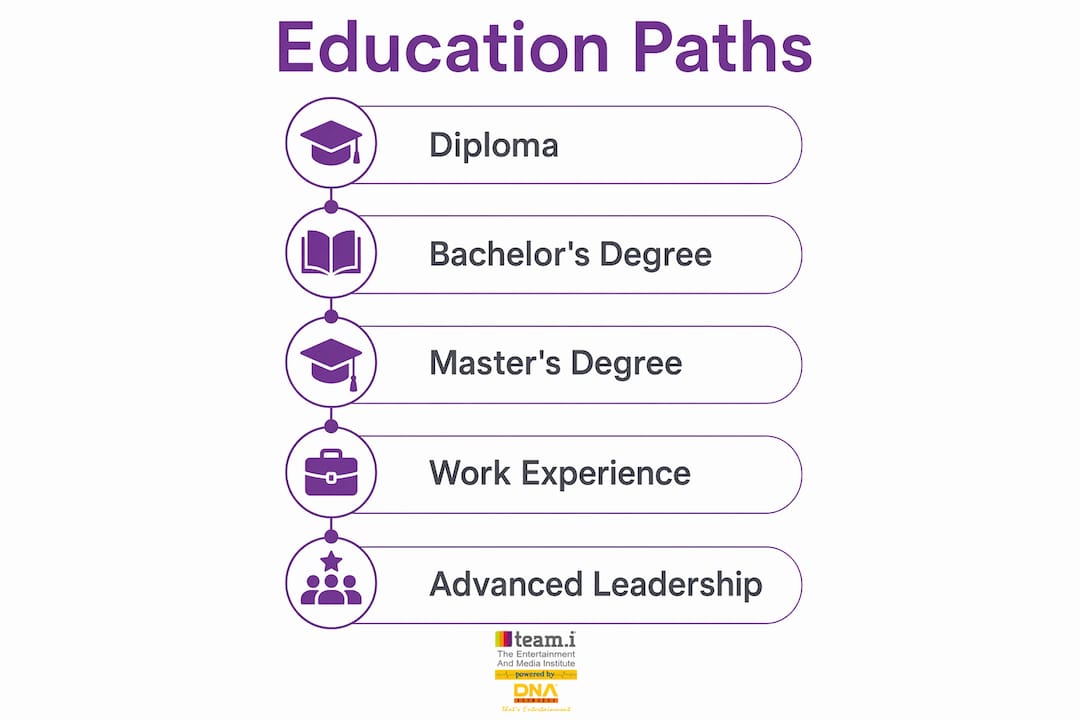
The education needed to be an event planner depends almost entirely on the type of events you want to produce and the career level you are targeting. There is no universal answer, but there is a logical framework.
| Career goal | Recommended path | Why it works |
|---|---|---|
| Wedding planner in India | Diploma or event management degree | Practical curriculum, fast entry, strong local demand |
| Corporate event coordinator | Bachelor’s in business or event management | Client-facing roles require degree-level credibility |
| Concert and live production | Event management degree plus internships | Technical and logistical complexity demands structured training |
| Independent freelance planner | Certifications plus portfolio | Clients judge by track record, not transcripts |
| Senior event director | Bachelor’s plus master’s or MBA | Leadership roles in agencies and hospitality groups require both |
Diploma versus degree is the most common decision point for Indian students. Diplomas get you into the field faster. Degrees open more doors at the corporate and agency level. The right choice depends on how quickly you need to start earning versus how high you want to climb.
Whichever path you choose, prioritise programmes that offer real event placements, not just simulated projects. In cities like Bangalore and Mumbai, where the events calendar runs year-round, the best programmes put students on actual production floors before graduation.
What we have learnt from 24 years in this industry
Here is the uncomfortable truth about event planning education: the degree gets you the interview. What happens in the room after that is entirely about what you have actually done.
We have seen candidates with first-class honours degrees struggle to manage a 200-person corporate dinner because they had never negotiated a vendor contract under pressure. We have also seen diploma holders run flawless 5,000-person concerts in Hyderabad because they spent two years doing exactly that during their training.
Experience and portfolio can substitute for credentials depending on the sector and the employer. That is not a loophole. It is how this industry actually works. The formal education matters most when you are targeting structured corporate environments, large hospitality groups, or international event agencies where HR teams use degree filters before a human even reads your CV.
For Indian students specifically, the advice is this: do not choose between education and experience. Demand both from your programme. If your course does not put you backstage at a real event within the first six months, you are paying for theory you could read in a book.
— Teami
Start your event management education with Teami
If you are serious about building a career in event management, Teami offers event management courses that combine structured education with real industry exposure. With 24 years of experience and a direct partnership with DNA Entertainment Networks, Teami places students inside actual productions, from corporate summits to large-scale concerts, before they graduate. Programmes range from diplomas to advanced certifications, with online event management options for students who need flexibility. If you want education that counts on the ground, not just on paper, Teami is where that starts.
FAQ
What degree is best for event planning?
A bachelor’s degree in event management, hospitality management, or business administration provides the strongest job prospects. Employment growth of 8% through 2029 favours candidates with bachelor’s level qualifications, particularly for corporate and venue-based roles.
Can I become an event planner without a degree?
Yes. Up to 40% of working event planners do not hold an event or hospitality-related degree, relying instead on experience, certifications like CMP or CSEP, and a strong portfolio of executed events.
What is the difference between an event management diploma and a degree?
A diploma takes one to two years and focuses on practical skills, making it a faster route into the field. A degree takes three to four years and opens more doors at the corporate and agency level, particularly for coordinator and director roles.
Do I need a master’s degree to advance in event management?
A master’s degree is not required but accelerates progression into leadership and strategic roles. Master’s programmes in event management typically run 12 to 18 months and are best suited for mid-career planners targeting director or senior management positions.
What qualifications do Indian students need for event management careers?
A bachelor’s degree or diploma from a recognised institute, combined with internship experience at real events, is the standard entry point. Certifications and a documented portfolio of executed events significantly strengthen your position in the Indian market.
Recommended
- Blog – team I
- What is Event Planning? A Guide for Future Professionals 2025 – team I
- Event planning skills for Indian students: 2026 guide – team I
- Event management diploma vs degree: choose wisely in 2026 – team I
Thinking about a career in event management?
team I is Bangalore’s only EEMA-certified event management institute, running for 24 years, where students work on real live events with real budgets and real deadlines rather than classroom simulations. See the full range of event management courses in Bangalore, or go straight to the flagship Certificate Program in Event Management (CPEM).