

Freelancing as event planner sounds like the dream: pick your clients, set your rates, attend glamorous events, and call yourself your own boss. But here’s what most people don’t tell you. The Indian events industry is fiercely competitive, client expectations are sky-high, and turning up with enthusiasm but no credentials is the fastest route to being underpaid or overlooked entirely. This guide cuts through the noise. You’ll learn what freelance event management actually looks like on the ground in India, why certification is your sharpest competitive weapon, and how to build a business that lasts beyond your first few gigs.
Table of Contents
- Understanding freelancing as an event planner in India
- The importance of certification and training for freelance event planners
- Managing finances, fees, and insurance as a freelance event planner
- Practical skills and daily operations for freelance event planners
- Why certification and local expertise are game changers for Indian freelance event planners
- Launch your freelance event planning career with team i training and certification
- Frequently asked questions
Understanding freelancing as an event planner in India
The role is nothing like the glamorous Instagram version. On any given day, you are sourcing caterers in Bangalore, renegotiating a decorator’s contract in Mumbai, and building a contingency timeline for a Hyderabad corporate conference, all before lunch.
Freelance event planners typically specialise in weddings, corporate meetings, and cultural events in Indian cities, relying heavily on deep local vendor relationships built over years. That local network is not a bonus feature. It is your core product.
Here is what freelance event management actually covers day to day:
- Vendor sourcing and negotiation across catering, décor, AV equipment, security, and transport
- Venue coordination including site visits, layout planning, and permissions in Indian municipal contexts
- Timeline and budget management from initial brief through to post-event reconciliation
- Client communication that is direct, personal, and far more attentive than a large agency can offer
- Risk and contingency planning for weather disruptions, vendor cancellations, and last-minute changes
The most common event types you will handle include Indian weddings (multi-day, multi-vendor extravaganzas), corporate offsites and product launches, college festivals, concerts, and social gatherings. Each one demands a different skill set and a different network.
The advantage freelancers hold over large companies is genuine personal attention and cost efficiency. Clients in tier-two cities especially value knowing exactly who is managing their event. If you are thinking about starting an event planning business in India, understanding this local nuance from the outset separates the professionals from the enthusiasts.

The importance of certification and training for freelance event planners
Here is the uncomfortable truth: the Indian events market is flooded with self-proclaimed event planners. A WhatsApp group and a few vendor contacts do not make a career. Certification does.
The Certified Meeting Professional (CMP) credential, recognised globally, is one of the most respected markers in the industry. CMP certification covers essential modern event planning pillars including risk management, sustainability, and technology integration. That is not just theory. Those are the exact conversations clients are having with you when they decide whether to hire you or your competitor.
The financial argument is just as strong. CMP holders earn more and gain skills vital for advancing in competitive event industries. When you walk into a pitch for a ₹30 lakh corporate event, your certification is the reason the client signs with you and not the cheaper freelancer down the road.
Training today also covers areas that were simply not on the syllabus five years ago:
- AI integration for scheduling, budgeting, and post-event analytics
- Sustainability practices including zero-waste event planning and carbon footprint reporting
- Neurodiversity awareness to create inclusive events for all attendees
- Crisis and risk management with real scenario-based practice
“Certification is not the finish line. It is the credential that gets you in the room. What you do once you are in the room is the real test.”
Pro Tip: Before committing to a certification programme, verify it aligns with global standards like the CMP. Indian institutes that build their curriculum around internationally recognised frameworks give you dual credibility, locally and globally. Explore event planner certification benefits and understand what becoming a certified event manager actually requires before you enrol.
Managing finances, fees, and insurance as a freelance event planner
Most new freelancers underprice themselves badly. Then they overdeliver, burn out, and quit. Pricing your services correctly from day one is not just good business practice. It is self-preservation.
Freelancers charge between $2,000 and $8,000 per event, with fees often structured as flat rates or 10 to 15 per cent of the total event budget. In the Indian context, those figures translate differently by city and client type, but the principle holds. Know your floor before you quote.
Here is a simple comparison of common freelance fee structures:
| Fee model | Best suited for | Typical range |
|---|---|---|
| Flat rate | Weddings, fixed-scope events | ₹50,000 to ₹3,00,000 |
| Percentage of budget | Corporate events, large productions | 10 to 15% of total budget |
| Day-of coordination services | Clients who self-plan but need execution | ₹25,000 to ₹75,000 |
| Hourly consulting | Partial planning, vendor advice | ₹2,000 to ₹5,000 per hour |
Insurance is not optional. It is the thing that saves your business when a tent collapses or a vendor delivers the wrong floral arrangement for a televised wedding. General liability insurance (roughly $500 to $1,500 annually) and professional liability (errors and omissions) coverage ($800 to $2,500) are both essential and required by most reputable venues.
Key insurance facts every freelancer must know:
- Venues often require a certificate of insurance naming them as an additional insured party, submitted at least 30 days before the event
- Professional liability (E&O) protects you if a client claims your planning error caused financial loss
- General liability covers third-party injury or property damage at the event
Pro Tip: Get event planner insurance sorted before you pitch to five-star hotels or corporate clients. They will ask for it before they even review your portfolio.
Practical skills and daily operations for freelance event planners
The difference between a hobbyist and a battle-tested freelancer is operational discipline. You need to manage vendors, enforce contracts, coordinate logistics, and still be the calmest person in the room when the AV system goes silent thirty minutes before a keynote.
Successful freelancers often bring 5 to 15 years of experience managing vendors, timelines, budgets, and day-of execution personally. You build that depth faster when you train systematically, not by trial and error on a paying client’s wedding.
Here are the core operational skills you need to develop:
- Vendor liaison and contract management: Know how to write airtight contracts, enforce deliverables, and manage relationships without burning bridges.
- Logistics coordination: Ground transport, equipment loading, crew briefings, and site-specific crowd flow planning for venues from Mumbai’s Taj to a rooftop in Bengaluru.
- Client management: Set expectations early, document every decision in writing, and always confirm verbally important changes.
- Showflow creation: A detailed minute-by-minute run-of-show document is the difference between a smooth event and controlled chaos.
- Financial reconciliation: Track every vendor invoice, every client payment, and every petty cash receipt.
Building a formal business plan matters more than most freelancers admit. Creating a business plan with market analysis and financial projections is key for sustainable business growth, especially when applying for venue credit lines or pitching corporate retainer contracts.
Pro Tip: Treat every Indian wedding or corporate event you manage as a case study. Document what worked, what broke down, and how you solved it. That documentation becomes your pitch deck for the next client and your personal operations manual for the next event.
Start with a solid foundation by revisiting business planning for event planners before you take on your first paid project.
Why certification and local expertise are game changers for Indian freelance event planners
Here is the perspective most career guides miss entirely. In India, the events industry runs on relationships and reputation above almost everything else. A client in Chennai does not just hire your skills. They hire your word. Your guarantee. Your network.
Certification equips planners with strategic, technology, and sustainability skills crucial for evolving Indian markets. But certification without local fluency is like having a pilot’s licence and never having seen Indian air traffic. Both matter, and neither works alone.
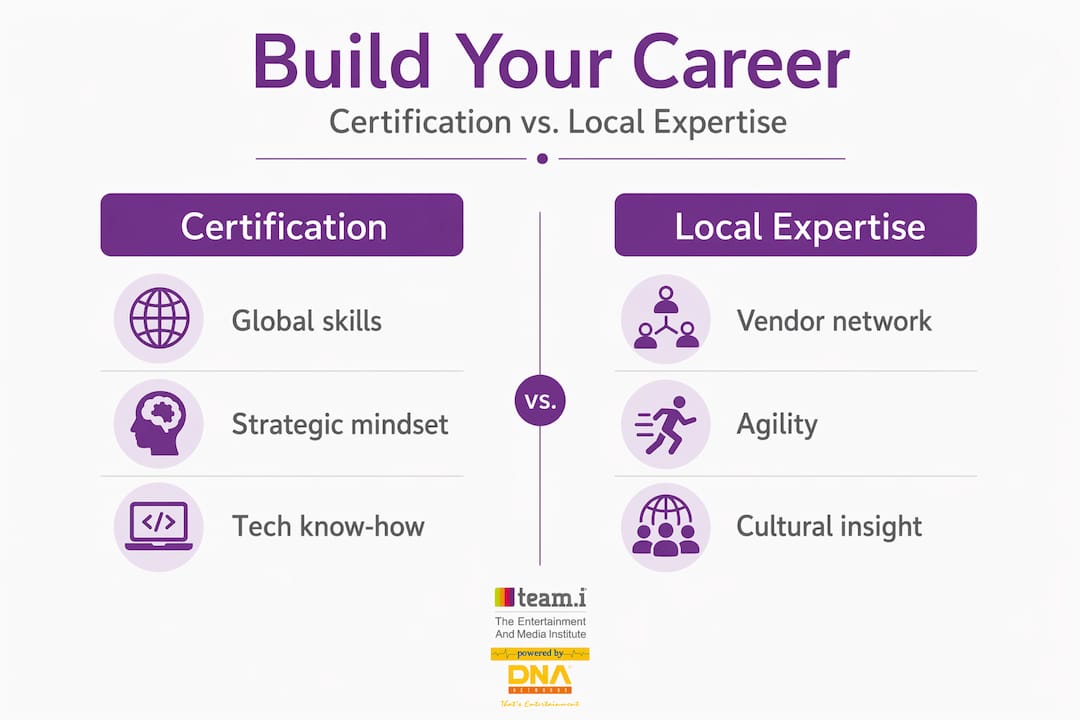
What we see consistently is this: the freelancers who burn out or lose clients are not the least skilled. They are the ones who skipped the foundational work, whether that meant bypassing formal training, neglecting insurance, or underestimating how much a single failed event can damage a reputation built over years.
The Indian market rewards agility. A monsoon hits your outdoor wedding venue in Goa. Your caterer cancels six hours before a Bangalore product launch. These are not hypothetical scenarios. They are Tuesday. The freelancers who handle those moments well are the ones who trained for them, not the ones who assumed experience would be enough. Explore the importance of certification if you are serious about building a career that holds up under pressure.
Launch your freelance event planning career with team i training and certification
If you are ready to professionalise your freelance event career, team i offers the structured foundation that aspirational event planners in India need. With 23 years of industry experience and direct partnerships with DNA Entertainment Networks, team i’s programmes are built around the realities of Indian events, not generic textbook theory.
Explore the full event management course offerings, or take a closer look at the certificate programme in event management designed to align with global standards like the CMP. Practical training includes hands-on projects in Mumbai, Bangalore, and Hyderabad, giving you real vendor relationships and live event exposure before you go freelance. When you are ready to work, team i’s event management job placements network opens doors that cold outreach simply cannot.
Frequently asked questions
How much can I charge as a freelance event planner in India?
Freelance event planners typically charge between $2,000 and $8,000 per event depending on size and complexity, with day-of coordination fees ranging from $1,500 to $3,000. In India, equivalent rupee rates vary significantly by city, client type, and event scale.
Is certification necessary for freelance event planners?
While not legally mandatory, CMP certification meaningfully improves your skills, earning potential, and credibility with corporate clients and premium venues who expect verifiable professional standards.
What insurance do I need to work as a freelance event planner?
General liability (covering up to $1 to $2 million) and professional liability insurance are both required by most serious venues and corporate clients before they will work with you. Secure both before pitching high-value events.
Can training from Indian institutes prepare me for international certifications?
Yes, quality Indian training programmes, including those from team i, align with CMP content and global standards, giving you a strong foundation for international certification exams without studying abroad.
How do I manage vendor relationships as a freelancer in India?
Freelancers rely on local vendor relationships built through consistent, professional conduct over years. Reliability, clear communication, and timely payments build the trust that keeps your preferred vendors answering your calls first.