
Imagine two event managers. One is sprinting across a venue at 6 PM, shouting into a walkie-talkie because the caterer just arrived two hours late and the sound system has not been tested. The other is calmly briefing her team, ticking off a checklist she built three weeks ago. Same industry. Same city. Same type of event. The only real difference? One of them mastered time management. In India’s fast-paced, vendor-heavy, weather-sensitive events scene, that difference is not small. It is everything.
Table of Contents
- Why time management is the backbone of event success
- Event cycle mastery: Phase-based workflows that work
- Mastering prioritisation, delegation, and scheduling
- Timeline tactics: Work-back planning, buffers, and risk management
- Measuring, adapting, and improving your time discipline
- The reality: Why perfect time plans still require agility in India
- Take your event time management from theory to practice
- Frequently asked questions
Key Takeaways
| Point | Details |
|---|---|
| Phase-based workflow | Breaking events into pre-event, event day, and post-event phases makes time management far more effective. |
| Prioritisation and delegation | Delegate tasks and rank them by urgency and importance to avoid burnout and last-minute work. |
| Buffers prevent overruns | Adding buffer time for vendors, approvals, and key tasks keeps your event on schedule even when surprises occur. |
| Track and adapt | Review your actual vs planned schedule to spot improvements and boost your time management skills over time. |
| Plan for the unexpected | In India, always prepare for common disruptions by having backups for venues and vendors in your risk plan. |
Why time management is the backbone of event success
Time mismanagement does not just create stress. It creates real consequences: budget overruns, angry clients, missed vendor windows, and events that fall apart in front of a paying audience. The importance of time management cannot be overstated for anyone building a career in this field.
“The most dangerous phrase in event management is ‘we’ll sort it on the day.’ By then, your options have run out.”
Top professionals do not work harder. They work with sharper structure. The best use three core disciplines: prioritisation, delegation, and focused scheduling. Structured time management means ranking tasks by urgency and importance, handing off what others can handle, and protecting time for strategic decisions that only you can make.
In India specifically, this discipline matters even more. Vendors frequently confirm bookings and then go silent. Permits take longer than expected. Monsoon season rewrites outdoor plans overnight. Time discipline is not a nice-to-have skill in this context. It is your professional survival kit.
Key foundations every aspiring event manager needs to build:
- Understand which tasks require your direct attention and which do not
- Use structured decision tools to avoid reactive, crisis-mode working
- Schedule breathing room between major milestones, not just between tasks
- Treat your calendar as sacred — guard it against unnecessary meetings
Pro Tip: Use the Eisenhower Matrix (an urgent vs important grid) for daily decisions. Tasks that are urgent and important: do now. Important but not urgent: schedule them. Urgent but not important: delegate. Neither: delete. It sounds simple. Used consistently, it changes how you operate.
Event cycle mastery: Phase-based workflows that work
The single biggest productivity leap for event managers comes from treating each event as three distinct phases rather than one long to-do list. Separating your planning lifecycle into pre-event, event-day, and post-event stages gives every task a home, every deadline a phase, and every team member clear accountability.
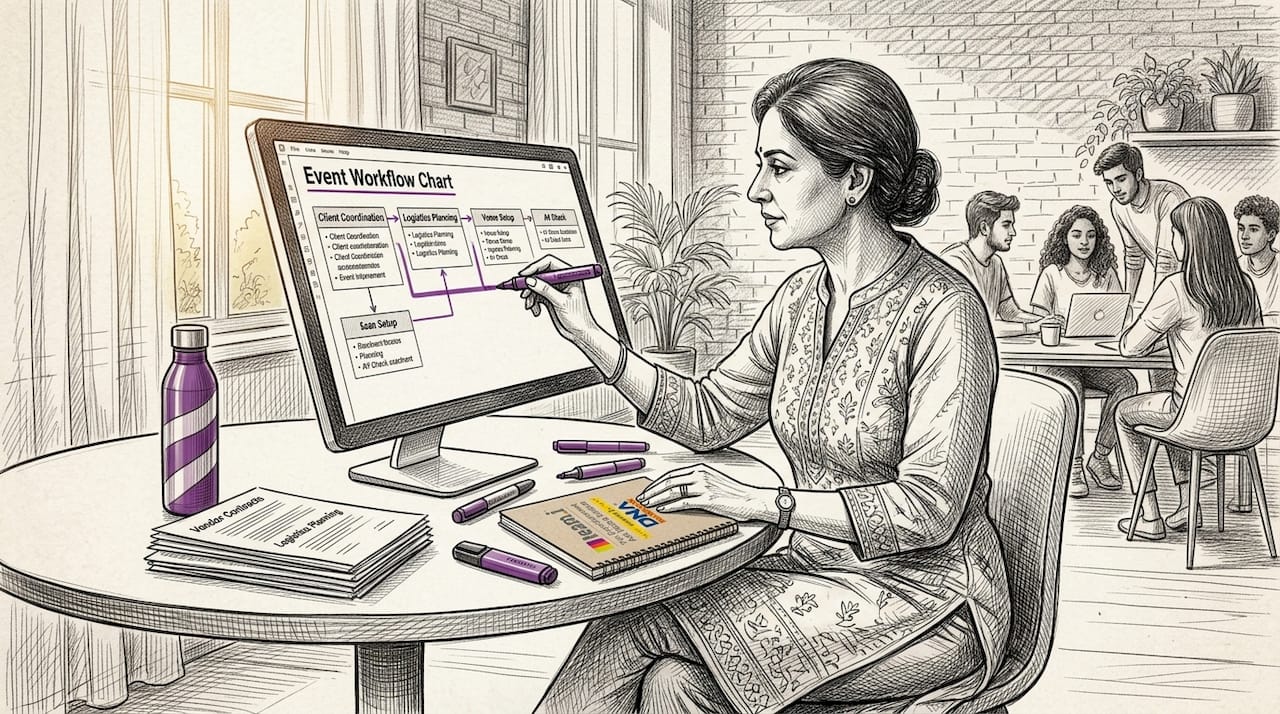
Here is how a phase-based approach compares to the traditional single-list method:
| Approach | Task visibility | Accountability | Risk detection | Adaptability |
|---|---|---|---|---|
| Traditional task list | Low | Shared and vague | Reactive | Slow |
| Phase-based workflow | High | Assigned by phase | Proactive | Fast |
The difference is not cosmetic. When you know that vendor confirmations belong to the pre-event phase with a hard deadline six weeks out, you stop treating them as a “whenever” task. They become non-negotiable milestones.
To build a phase-based workflow for your next event, follow these steps:
- Map every task across pre-event, event-day, and post-event categories
- Assign a specific owner and deadline to each task within its phase
- Identify dependencies: which tasks must complete before others can begin
- Review the entire workflow two weeks before the event and adjust for delays
- Build your event-day schedule as a separate, tighter document with minute-by-minute cues
For event timeline planning to work in real conditions, your workflow documents need to be living tools. Review them weekly. A seamless event planning workflow is not built once and forgotten. It is adjusted and sharpened as the event approaches.
Pro Tip: Always allocate more time to pre-event approvals and vendor lead-ins than you think you need. If you expect a venue permit to take five days, plan for ten. The Indian administrative landscape respects patience, not optimism.
Mastering prioritisation, delegation, and scheduling
Once your phase structure is in place, the daily grind begins. And daily grind in event management means constant decisions about where your time goes. This is where most aspiring event managers struggle because the default is to try to do everything yourself.
Reactive multitasking is the enemy. It feels productive. It is not. Effective delegation is one of the most underrated skills in the industry, and it is something great managers build deliberately over time.
Here is the framework that works for day-to-day time allocation:
- Identify your top three priorities each morning before checking messages. These are your non-negotiables for the day.
- Batch low-priority tasks into a single block later in the day rather than scattering them throughout.
- Delegate with clarity. Do not just hand over a task. Hand over the outcome you expect, the deadline, and how you want to be updated.
- Use focus blocks of 60 to 90 minutes for complex planning work. No phone. No team interruptions. Your best thinking requires uninterrupted time.
Common traps to avoid: checking messages every five minutes, attending every meeting because you feel you should, and treating every incoming request as urgent simply because someone sent it urgently. For practical productivity tips for event managers, the answer is always the same. Structure protects you.
If you find yourself stressed under accumulating pressure, visit this guide on dealing with work pressure to build resilience alongside discipline.
Pro Tip: Replace constant team check-ins with two scheduled touchpoints per day, once in the morning and once in the afternoon. This reduces interruptions dramatically while keeping communication tight.
Timeline tactics: Work-back planning, buffers, and risk management
Here is a technique the best event managers use religiously: working backwards from the event date. Start with the event day. Then trace every required task backwards to today, assigning realistic lead times and deadlines along the way. This forces you to confront the truth about whether you actually have enough time, before it is too late to do anything about it.
Here is a sample timeline for a one-day corporate event:
| Timeline milestone | Days before event | Buffer added | Contingency note |
|---|---|---|---|
| Venue confirmed | 60 days | Plus 10 days | Backup venue identified |
| Vendor contracts signed | 45 days | Plus 7 days | Alternates shortlisted |
| AV and décor brief sent | 30 days | Plus 5 days | Written confirmation required |
| Run-of-show draft completed | 14 days | Plus 3 days | Shared with all leads |
| Final headcount confirmed | 7 days | Plus 2 days | Caterer notified same day |
| Full rehearsal completed | 1 day | Plus 2 hours | Contingency walk-through done |
Buffer time and contingency planning are not signs of pessimism. They are signs of experience. Industry benchmarks suggest adding 10 to 15% extra time to all major deadlines as a baseline buffer.
In India, disruptions like monsoon weather and vendor reliability must be treated as normal risk inputs, not surprises. Build a risk matrix. List your top five potential failures. For each one, write your contingency response before the event begins.
Five steps to building a resilient timeline:
- Start with the event date and work every deadline backwards
- Add explicit buffers of 10 to 15% to every major milestone
- Identify your critical path: the sequence of tasks where any delay cascades
- Build your risk matrix with at least five scenarios and pre-planned responses
- Share your timeline with all vendors and confirm their deadlines in writing
Statistic to note: High-performing event programmes achieve a 98.5% session completion rate. That figure does not happen by accident. It is the result of disciplined scheduling and structured run-of-show processes.
For more on event management timeline tips, explore frameworks built for both part-time and full-scale events.
Measuring, adapting, and improving your time discipline
Building a plan is step one. Tracking whether you are actually executing against it is where most event managers drop the ball. Tracking actual time versus planned schedule gives you early warnings before small slippages become major crises.
Use a simple spreadsheet or event management software to monitor:
- Task completion rate by phase: are pre-event tasks finishing on schedule?
- Vendor response lag: how long are vendors taking to confirm after you reach out?
- Approval turnaround time: how many days between brief submission and sign-off?
- Overrun frequency: which types of tasks consistently run over their allocated time?
- Buffer consumption: how much of your planned buffer are you actually using?
Review this data after every event. Look for patterns. If vendor response lag is consistently high, you build longer lead times into your next timeline. Benchmarks from top event programmes show that the best in the industry operate at near-complete schedule adherence. That should be your target.
For emerging professionals, this habit of self-measurement is what separates quick starters from those who genuinely advance. Read more on success tips for new event managers to build the full picture.
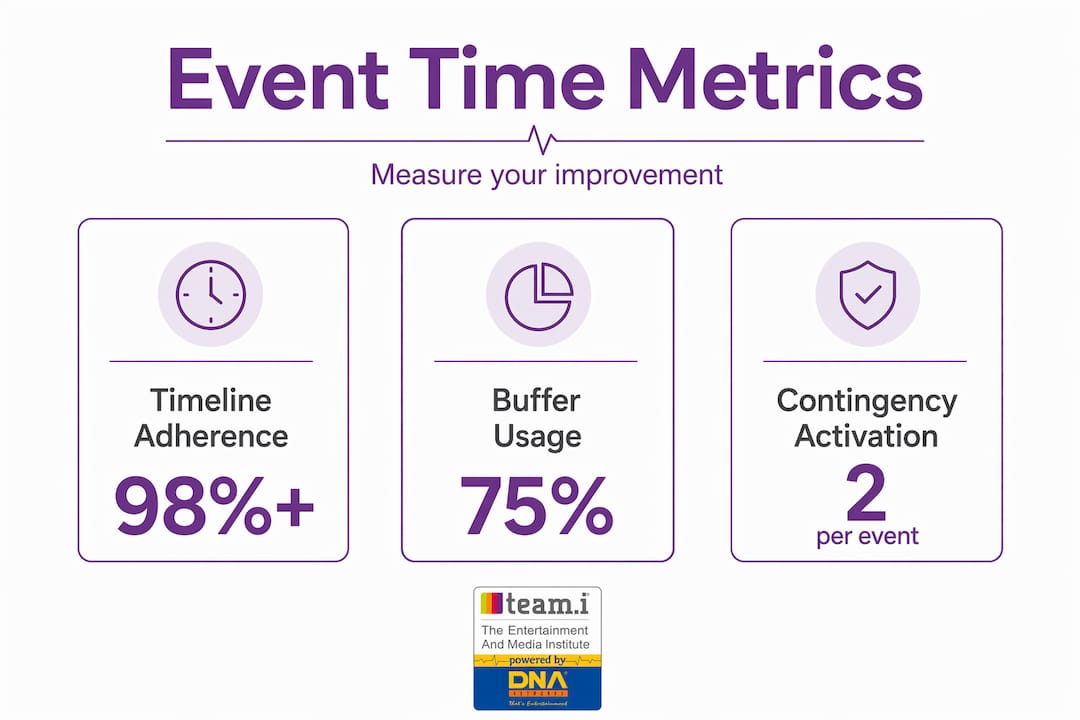
Pro Tip: After every event, score yourself on three metrics: timeline adherence, buffer usage, and contingency activation. Over time, your scores tell you exactly where to improve your planning process.
The reality: Why perfect time plans still require agility in India
Here is the honest truth that no planning template will tell you. Your timeline will be tested. Vendors will go silent the week before a major event. A sudden downpour will reroute an outdoor production. A venue will shift its policy on the morning of the event. These are not edge cases in Indian event management. They are standard operating conditions.
Treating disruptions as normal risk inputs is not pessimism. It is professional maturity. The managers who thrive are not those with the most pristine plans. They are the ones who build their plans knowing they will need to pivot, and who practise making fast, confident decisions when things shift.
Structure gives you control. Agility gives you durability. You need both. And the work-life balance for event managers you protect through good time discipline is what keeps you sharp enough to pivot when the plan meets reality.
The most respected event professionals in India are not calm because nothing goes wrong. They are calm because they have trained for what goes wrong. That is the real mark of mastery.
Take your event time management from theory to practice
Reading frameworks is valuable. Applying them on real events, with real vendors and real stakes, is where careers are actually built. At teami.org, you get both: structured learning grounded in 23 years of industry experience, with hands-on exposure to live events, vendor negotiations, and production timelines from day one. Whether you prefer classroom intensity or flexible study, the online event management programmes give you industry-recognised qualifications backed by real placements. Start with the frameworks you have learnt here, then accelerate with training that puts you inside the events industry rather than just reading about it.
Frequently asked questions
What is the most effective way for new event managers to avoid last-minute chaos?
The best approach is to work backwards from the event date, add buffer time, and schedule all major tasks early so you control the critical path rather than reacting to it.
What if a major vendor cancels at the last minute due to monsoon weather?
Always have contingencies planned by listing backup vendors and venues, especially in India, where disruptions like weather delays must be treated as normal risk inputs with pre-planned contingency responses.
How can I ensure my event schedule actually runs on time?
Track actual progress versus your planned schedule and add buffers between key sessions or tasks, so you have flexibility to absorb small overruns before they affect the whole programme.
Are there proven benchmarks for good event time management?
Top event programmes achieve upwards of 98% schedule adherence by using detailed timelines, disciplined transitions, and structured run-of-show processes at every stage.
What is prioritisation in event management, and why does it matter?
Prioritisation means ranking tasks by urgency and importance, so you focus first on what drives event success rather than staying busy with details that could wait, be delegated, or be dropped entirely.