
Social event management is nowhere near as simple as it looks from the front row. Behind every flawlessly executed wedding, milestone celebration, or large-scale social gathering is a disciplined professional running vendor negotiations, guest logistics, budget controls, and real-time problem-solving simultaneously. If you are an aspiring event manager or student in India, understanding what this profession truly demands is the first step towards building a career that is both thrilling and sustainable. This article breaks down the full picture, from lifecycle stages and success metrics to training pathways and the skills that actually get you hired.
Table of Contents
- What is social event management?
- Breaking down the event lifecycle: From planning to post-mortem
- Benchmarks and key metrics: How top programmes measure success
- Indian social event management: Unique approaches and real-world application
- Getting skilled and certified: Training pathways for aspiring social event managers
- Why adaptability is the real secret behind successful social event managers
- Take the next step: Courses and resources for your event management career
- Frequently asked questions
Key Takeaways
| Point | Details |
|---|---|
| End-to-end process | Successful social event management involves thorough planning, expert execution, and careful post-event evaluation. |
| Data-driven metrics | Top managers rely on registration, conversion, and feedback data to measure and improve event impact. |
| Tailored training | Participating in Indian-focused courses and certifications offers practical skills and local expertise for career growth. |
| Flexibility matters | Adapting to the unexpected is as crucial as strict planning for social events in India. |
What is social event management?
Social event management is the organised process of planning, coordinating, and executing events that bring people together for personal, cultural, or community reasons. Think weddings, engagement ceremonies, birthday galas, anniversaries, and large family functions. It is not just logistics. It covers guest experience design, supplier management, marketing and branding, budgeting, and post-event evaluation.
In India, social events often stretch across multiple days and functions. A single wedding can include a mehendi, sangeet, haldi, pheras, and reception, each requiring its own timeline, vendor set, and guest management protocol. That is five events within one event. The complexity is staggering, and it demands the kind of structured thinking you would expect from a seasoned project manager.
As a professional discipline, event management is commonly framed as a project-management process, with clearly defined phases, accountabilities, and deliverables. The key responsibilities of a social event manager include:
- Defining the event’s purpose, theme, and guest profile
- Developing detailed budgets and negotiating vendor contracts
- Coordinating logistics including venue, catering, décor, and entertainment
- Managing the guest experience from invitation to departure
- Gathering post-event feedback and reporting outcomes
Understanding the event management career benefits early helps you see why this field rewards those who are rigorous, creative, and unafraid of controlled chaos.
“Event management is not a job you prepare for at a desk alone. It is a profession you learn by doing, one function at a time.”
Breaking down the event lifecycle: From planning to post-mortem
Now that you understand what social event management is, let us examine how the full event cycle plays out in practice. Every professional event follows a structured sequence. Skip a phase and you feel it on the day. Rush the post-event analysis and you repeat the same mistakes at the next brief.
A practical event-planning methodology uses structured phases: set goals, plan, budget, brand, coordinate, execute, and evaluate. Here is how that plays out step by step:
- Goal-setting — Define what success looks like. Is it a guest count? A particular atmosphere? A budget ceiling?
- Detailed planning — Build your master timeline, vendor list, and communication schedule.
- Marketing and branding — Create the event’s visual identity, digital invitations, and promotional assets.
- Coordination and logistics — Finalise venue layouts, transportation, accommodation, and accessibility.
- Execution — Run the show with precision. Brief every team member. Anticipate problems before they surface.
- Post-event evaluation — Conduct a debrief, collect guest feedback, review the budget, and write a formal report.
Social event management curriculum in India emphasises end-to-end lifecycle skills, which means good training programmes do not stop at execution. They teach you how to close the loop with rigorous evaluation.
| Phase | Key deliverable | Timeline |
|---|---|---|
| Goal-setting | Event brief document | 8 to 12 weeks before |
| Planning | Master timeline and budget | 6 to 10 weeks before |
| Marketing | Invite and promo assets | 4 to 6 weeks before |
| Coordination | Confirmed vendor contracts | 2 to 4 weeks before |
| Execution | Live event management | Event day |
| Evaluation | Post-event report | Within one week after |

Pro Tip: Build your post-event debrief template before the event starts. When the dust settles, you will be exhausted. Having a ready framework means you capture the right data while it is still fresh. Look at event courses after graduation that explicitly teach debrief methodology, and check top certification courses that include post-event reporting as a graded module.
Benchmarks and key metrics: How top programmes measure success
With the event lifecycle in mind, let us look at how elite programmes and professionals actually quantify success. Numbers matter in this industry. They tell you whether your event converted curiosity into attendance, whether guests stayed engaged, and whether the budget produced real value.
According to 2026 event benchmarks, registration rates, conversion flow efficiency, attendance ratios, and session completion are the core indicators every professional social event manager should track. Dynamic registration processes, where invitations are personalised and follow-ups are timed strategically, consistently outperform static, one-size-fits-all approaches.
| Metric | What it measures | Why it matters |
|---|---|---|
| Registration rate | How many people signed up vs. were invited | Shows marketing effectiveness |
| Conversion rate | Registrants who actually attended | Measures engagement quality |
| Attendance ratio | Live attendance vs. capacity | Indicates venue and format fit |
| Session completion | Guests who stayed for entire event | Reflects experience design quality |
| Post-event feedback score | Guest satisfaction rating | Drives improvement for future events |
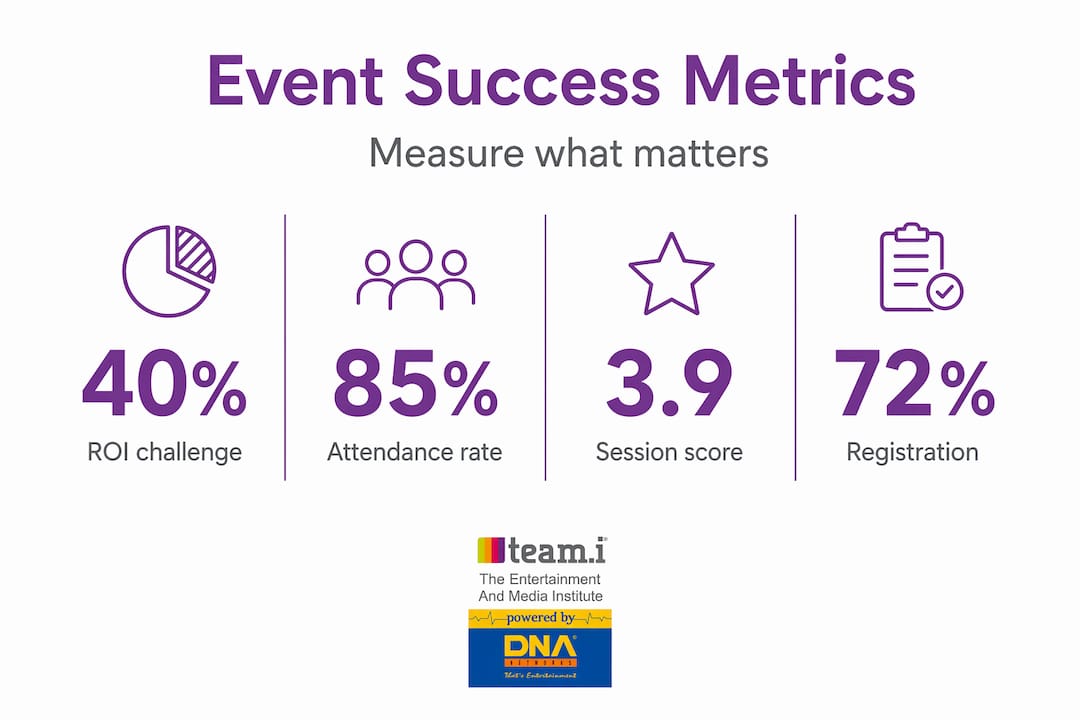
Here is an uncomfortable truth: 40% of organisers report difficulty proving event ROI in 2026. That means nearly half the industry is still guessing at value. If you understand how to measure and communicate ROI, you are immediately ahead of the field.
Pro Tip: Tie your measuring event ROI strategy to specific goals set in phase one of your lifecycle. If the goal was brand awareness, track social media mentions. If it was community building, track repeat attendees. Metrics should always mirror objectives.
Indian social event management: Unique approaches and real-world application
To make this journey real, let us step into the Indian context and see how these principles are applied to the country’s largest social events. Indian weddings are the ultimate case study in multi-event management, and they are not just culturally significant. They are professionally demanding in ways that few other events in the world can match.
Indian wedding coordination uses a multi-event master timeline with per-function vendor and guest tracking. That means you are not managing one event. You are managing five or six interconnected functions, each with its own caterer, décor team, entertainment act, and guest subset.
Key competencies for managing Indian social events include:
- Building function-specific vendor contracts while maintaining a single overarching budget
- Managing guest lists that include family sub-groups with different seating and dietary needs
- Coordinating traditional ceremonies alongside modern entertainment elements
- Adapting in real time when a vendor is delayed, a guest count changes, or weather intervenes
- Communicating across multiple family stakeholders who may all have different opinions
Flexibility is not a soft skill here. It is survival. The ability to pivot mid-execution, keep your team calm, and protect the guest experience is what separates a competent manager from a truly excellent one.
“In Indian social events, the best plan is the one you are willing to change. Preparation gives you options. Adaptability lets you use them.”
Exploring top event planning certifications that use Indian weddings and multi-day functions as capstone projects will prepare you far more effectively than purely theoretical coursework ever could.
Getting skilled and certified: Training pathways for aspiring social event managers
Finally, if you are inspired to make social event management your career, here is how you can build your skillset and get certified. The right training programme does not just hand you a certificate. It puts you through the full lifecycle, repeatedly, with feedback at every stage.
Course and certification pathways in India teach event management fundamentals including planning, budgeting, permissions, execution, and post-mortem analysis. When evaluating programmes, look for:
- Hands-on case studies using real Indian social events, particularly weddings and large celebrations
- Industry mentors who have managed live events at scale, not just lectured about them
- Internship or live event exposure built into the curriculum, not offered as an afterthought
- Post-course feedback loops that help you identify and fix weak areas
- Placement support and industry connections that open doors after graduation
Before enrolling, research event management course costs so you can plan your investment realistically. Then understand why certification matters for credibility when pitching to clients or applying for roles at established agencies. Certification signals that you understand the full lifecycle and can be trusted with a client’s most important day.
Consider these additional factors when choosing a programme:
- Eligibility requirements and whether the course suits your current qualification level
- Whether the curriculum is updated to reflect current industry trends and technology
- The reputation of the institute’s alumni network and placement track record
Why adaptability is the real secret behind successful social event managers
Now, let us address the unstated realities of the profession and what truly sets successful managers apart. Most people entering this industry obsess over planning. They want the perfect timeline, the perfect checklist, the perfect vendor roster. And all of that matters. But here is the truth the textbooks sometimes gloss over: events are inherently unruly.
Events demand adaptation and flexibility, even with the best methodology. The rain comes. The caterer is thirty minutes late. The sound system fails at the exact moment the family has been waiting all year for. Your job is not to prevent chaos. Your job is to manage it so the guest never sees it.
The best social event managers we know treat their plans like a compass, not a map. The direction stays fixed. The route adapts. They are thoroughly prepared and completely ready to abandon three hours of that preparation in an instant if the situation demands it.
Continuous learning is equally non-negotiable. Earning your certification is a milestone, not a finishing line. The industry evolves fast. Trends shift. Technology changes how guests register, how vendors communicate, and how organisers prove value to clients. Managers who stay curious and keep building on their qualifications consistently outperform those who stop learning the moment they receive their certificate.
Real-world experience is the accelerant. Theory gives you the framework. Live events give you the instincts. The two together are what unlock your event management career at the level you are actually aiming for.
Take the next step: Courses and resources for your event management career
You now have a clear picture of what social event management involves, how the lifecycle works, and what skills you need to build. The next move is yours. At teami.org, you will find a range of programmes built specifically for aspiring event managers in India, covering everything from foundations to advanced specialisations.
Start by exploring the comprehensive event management course to understand the full scope of what professional training looks like. If flexibility is important to you, browse the online event management courses that let you build skills around your existing schedule. And if you are ready to go deep, the event resource training programme offers structured, certification-backed learning with real industry exposure baked in.
Frequently asked questions
What does a social event manager actually do?
A social event manager plans, organises, and coordinates all aspects of events like weddings or parties, managing everything from concept and vendor contracts to guest experience and post-event feedback as part of a structured project-management process.
Which metrics matter most for evaluating social event success?
Registration, attendance, conversion rates, and post-event feedback are the top indicators, with 2026 benchmarks confirming these as the core measures used by high-performing event programmes.
Is certification necessary for a social event management career in India?
Professional certification significantly boosts your credibility and career prospects, and industry-aligned curricula consistently recommend comprehensive training and certification as essential for those aiming at large-scale or corporate events.
How do Indian weddings shape event management training and practice?
Indian weddings use integrated multi-event timelines and complex vendor coordination, and best-practice event frameworks applied to this context make them ideal capstone projects in professional training programmes.
Why is post-event evaluation important in social event management?
Post-event evaluation identifies what worked, what did not, and drives improvement for future events, forming a critical component in any professional event management cycle.