TL;DR:
- India’s media events industry is rapidly growing, creating diverse job opportunities for skilled professionals.
- Practical experience, industry certification, and adaptability are essential for success in this high-pressure sector.
- Training programs that include live projects and focus on emerging technologies like hybrid and AI events offer a significant career advantage.
India’s media events industry is not waiting for you to feel ready. It’s growing at a pace that is creating hundreds of new roles every year, from live concert coordinators to digital experience producers, and it is doing so with an urgency that rewards the prepared and leaves the unprepared behind. Growing at over 10% CAGR from 2024 to 2029, this sector is one of the most exciting career frontiers in the country right now. But enthusiasm alone won’t get you backstage. You need the right skills, the right training, and a strategy that turns ambition into actual job offers. This article gives you that roadmap.
Table of Contents
- Understanding the media events industry in India
- Essential skills and qualifications for media events careers
- Gaining practical experience: internships, live projects, and networking
- Navigating placements and accelerating your growth
- Hard-won lessons for breaking into media events in 2026
- Take your first step towards a media events career
- Frequently asked questions
Key Takeaways
| Point | Details |
|---|---|
| Industry growth | India’s media events sector is expanding rapidly, creating new job opportunities for trained professionals. |
| Certification matters | Accredited programmes increase your placement and earnings potential compared to self-taught routes. |
| Practical skills | Hands-on experience through internships and live projects gives you a distinct edge in hiring. |
| Tech and trends | Staying updated on hybrid formats, AI, and sustainability is vital for long-term career growth. |
Understanding the media events industry in India
Before you can break in, you need to know exactly what you’re breaking into. ‘Media events’ is not just a fancy term for parties with cameras. It covers a wide and wildly exciting range of productions: film promotional tours, music festivals, award nights, brand activations, digital live experiences, sports broadcasts, and entertainment expos. These are high-stakes, high-visibility productions where brands spend serious money and expect serious results.
The scale of this industry is genuinely staggering. India’s M&E sector hit INR 2.78 trillion in 2025, growing 9% year on year, driven largely by live experiences and digital content. That kind of growth creates real jobs. Not someday jobs. Right now jobs.
Here’s why media events are one of the most high-growth career fields you can enter today:
- Diverse entry points: You can start as a coordinator, PR executive, logistics assistant, or production runner and grow fast
- Cross-industry demand: Bollywood, sports, fashion, tech, and FMCG brands all run media events regularly
- Skill transferability: The skills you build here apply across live events, digital content, and brand strategy
- Speed of growth: Promotions in this field can happen in 12 to 18 months if you perform
- Creative plus commercial: It’s one of the few careers where creative thinking and budget management sit side by side
The range of roles in this sector is equally impressive. You might start as an event coordinator managing vendor timelines, move into a project manager role overseeing full productions, or develop a specialisation in PR, technical production, or digital content strategy. The event management media industry career guide breaks down these role pathways in detail.
| Media event type | Typical employers |
|---|---|
| Film premieres and promotions | Production houses, studios, PR agencies |
| Music festivals | Live entertainment companies, sponsors |
| Award nights | Broadcast networks, OTT platforms |
| Brand activations | Marketing agencies, FMCG brands |
| Sports events | Sports federations, broadcasting firms |
| Digital live experiences | Tech companies, social media platforms |
If you’ve ever wondered whether event management as a career can really compete with traditional corporate paths, the numbers above answer that question quite convincingly.
With the landscape established, the next step is identifying precisely what skills and qualifications set you apart.
Essential skills and qualifications for media events careers
Here’s the honest truth: the media events industry doesn’t care much about what you know in theory. It cares deeply about what you can do under pressure, with limited time, and often with a client breathing down your neck. So what does that mean for your training?
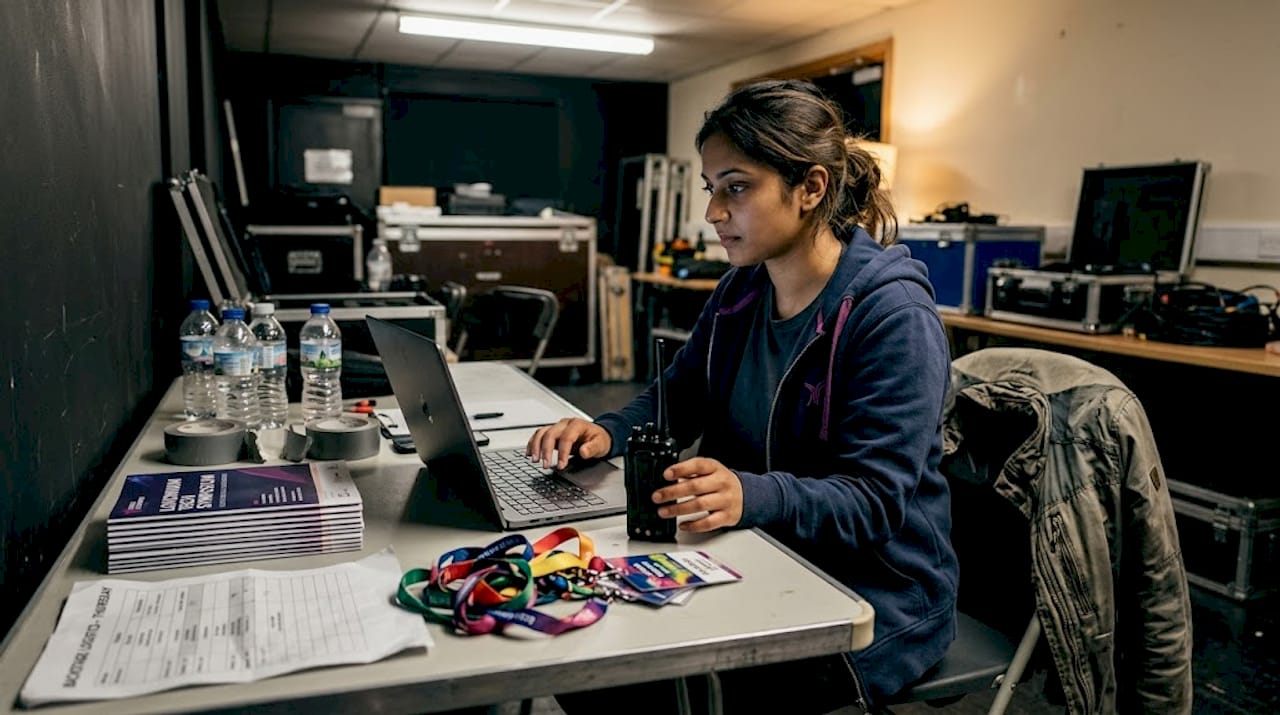
Let’s start with technical skills. You need to be comfortable with budgeting and cost tracking, production scheduling, vendor negotiation, live and digital broadcast coordination, and the basics of PR and communications. These are not optional extras. They are the baseline.
Beyond the technical, the skills that genuinely separate good professionals from great ones are human ones:
- Crisis management: When the AV fails 30 minutes before showtime, you need a solution, not a panic
- Leadership under pressure: You’ll often manage teams, vendors, and clients simultaneously
- Creative problem-solving: Budgets get cut, venues change, artists cancel. Your creativity is your greatest asset
- Communication: Clear, calm, fast communication keeps productions on track
- Adaptability: The ability to pivot quickly is what media event employers look for most
The importance of certification in event management cannot be overstated. Certified programmes boost placement rates by 40% and salaries by 15 to 20% compared to uncertified candidates. That’s not a small gap. That’s the difference between your first salary negotiation going well or not.
Emerging skills are also becoming non-negotiable in 2026. Hybrid event tools, AI-assisted planning software, sustainability reporting, and virtual production platforms are now appearing in job descriptions regularly. If your course doesn’t cover these, you are training for a version of this industry that no longer exists.
The best programmes follow a 70/30 split: 70% practical, 30% theory. That ratio matters enormously. Real media event management skills are built on stage, not in a lecture hall.
Pro Tip: When evaluating courses, ask specifically about live project exposure, tech tool integration, and whether the programme includes real media events or only simulated ones. If they can’t answer clearly, keep looking.
Understanding which skills matter, the question becomes: how do you gain hands-on exposure and prove yourself to employers?
Gaining practical experience: internships, live projects, and networking
You can read every textbook on event logistics and still be completely unprepared for the moment a sound system cuts out mid-performance. Practical experience is not a bonus. It is the curriculum. The best training programmes recognise this, which is why the 70/30 practical model has become the industry standard for serious education providers.
So how do you actually secure and succeed in internships that matter? Here’s a step-by-step approach:
- Start early: Don’t wait for your final semester. Approach event companies, PR agencies, and entertainment firms from your first year
- Be specific: Target companies that work on the type of media events you want to specialise in, film, sport, music, or brand
- Show initiative: Arrive knowing the company’s recent projects. Reference them in your application or interview
- Document everything: Build a portfolio of every event you contribute to, photographs, reports, testimonials
- Ask for more responsibility: Interns who volunteer for harder tasks get remembered when roles open up
- Follow up: A thank-you message and a LinkedIn connection after your internship ends costs nothing and is remembered
Networking in India’s media events world has its own rhythm. Industry mixers, award show after-parties, and festival production floors are where careers genuinely get built. The relationships you form through event work experience become your most reliable referral network later on.
“Adaptability and strong PR are essential when last-minute changes occur. Clients don’t remember the problem; they remember how you handled it.”
The internships for event management that land you full-time roles are the ones where you treated every task, from setting up chairs to briefing a celebrity, with the same level of professionalism.
Pro Tip: Update your LinkedIn profile to reflect every event you work on during your training. Tag the organiser, name the event, and write two sentences about your specific contribution. Recruiters in this industry actively search profiles this way.
Armed with real-world experience, it’s vital to plan your next steps for landing your first role and advancing your career quickly.
Navigating placements and accelerating your growth
Getting placed in this industry is less about luck and more about preparation. The best Indian institutes have dedicated placement cells that connect students directly with entertainment firms, PR agencies, and live event companies. But you still need to show up ready.
Here’s a numbered approach to building a CV that actually stands out in media events recruitment:
- Lead with your live project experience, not your degree
- List specific events by name, scale, and your exact role
- Include technical tools you can use: scheduling software, production management platforms, hybrid event tools
- Add a brief skills summary at the top that mirrors the language used in job listings
- Include at least one testimonial or reference from a real industry professional
The media event job placements landscape in India is shifting. Traditional in-person events are no longer the only game in town.
| Event type | Key skills required | Growth potential |
|---|---|---|
| Traditional live events | Logistics, vendor management, on-ground coordination | Steady, experience-led |
| Hybrid events | Digital production, streaming tools, dual-audience management | High, fast-growing |
| AI-driven digital events | Data analytics, AI planning tools, virtual production | Very high, emerging |
Hybrid and AI-driven events are rising rapidly, with sustainability benchmarks and VR integration becoming standard expectations for senior roles. If you want to accelerate, you need to be ahead of these shifts, not catching up to them.
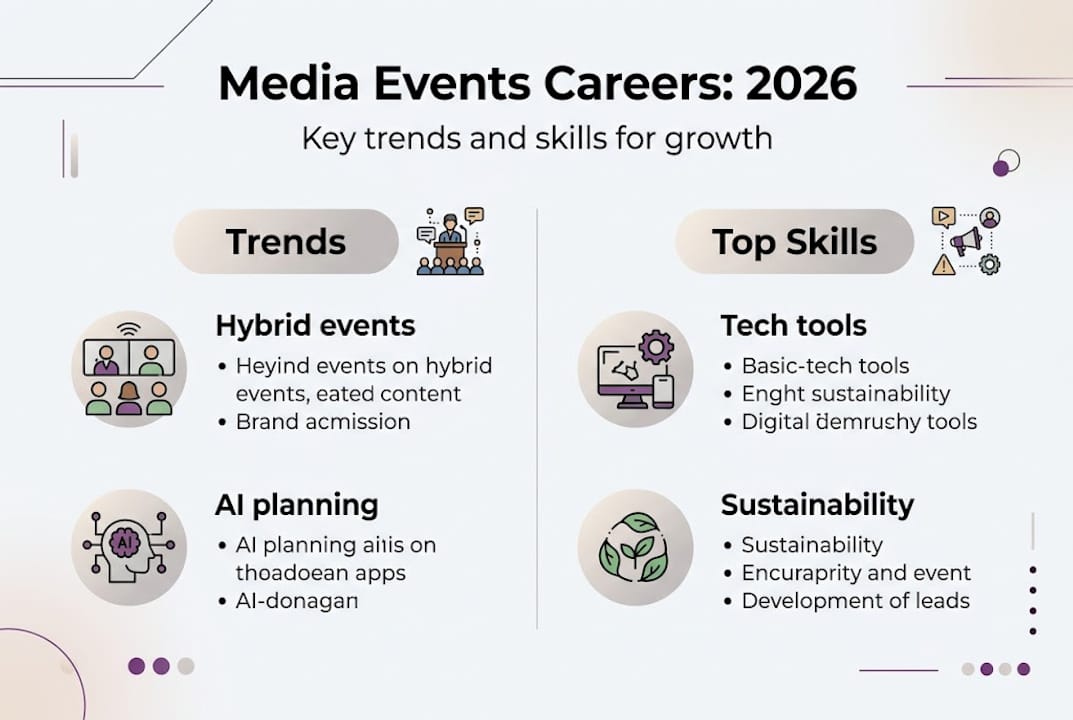
The broader entertainment tourism’s impact on media events is also creating new roles in destination events, international productions, and cultural festivals that didn’t exist five years ago. The event management course benefits that matter most today are the ones that prepare you for this expanded, tech-forward landscape.
These practical suggestions position you for long-term growth. Here’s our take on what ambitious professionals need to know going forward.
Hard-won lessons for breaking into media events in 2026
After 24 years of watching professionals succeed and stumble in this industry, we’ll tell you what textbooks rarely admit: your degree is the entry ticket, not the performance. Once you’re in the room, nobody cares where you studied. They care whether you can hold it together when the production timeline collapses at 9 PM with 800 people outside.
The mistakes we see most often from new professionals are consistent. Overdependence on theory. Neglecting PR and digital communication skills. Treating networking as something to do after you’re established rather than from day one. These habits are career-slowing, and they’re entirely avoidable.
Brands and clients have changed significantly from 2024 to 2026. They now ask about sustainability credentials, digital reach metrics, and turnaround speed in the same breath. If you can’t speak to all three, you are not fully prepared for modern media events briefs.
The event management career guide we’ve built reflects this reality. Because we believe in saying it plainly:
“It’s your agility and ability to communicate under pressure that gets you noticed, not the degree on your CV.”
Build that agility deliberately. Seek out the hardest projects. Volunteer for the events where things might go wrong. That’s where your real career begins.
Take your first step towards a media events career
If this article has made one thing clear, it’s that building a media events career in India takes more than passion. It takes structured training, real-world exposure, and industry connections that open actual doors. At team I, with 24 years of experience and a direct partnership with DNA Entertainment Networks, we offer exactly that through our online event management courses and certification pathways.
Our programmes follow the 70/30 practical model, include live project placements, and give you access to a network that spans India’s biggest entertainment and media brands. Explore the certification for event management options available, or review our event management job placements record to see where our alumni are building their careers right now. Your stage is waiting.
Frequently asked questions
What are the best accredited event management programmes in India for media events careers?
The best programmes combine strong placement records with a practical, project-based curriculum. Look for institutes with accredited certifications and a focus on media event specialisations, as certified programmes boost placement rates by 40%.
Is hands-on experience or certification more important in the Indian media events market?
Both are essential and work together. Certifications provide a 15 to 20% salary advantage, but placement rates rise by 40% when training includes real-world project exposure, making the combination far more powerful than either alone.
How can I prepare for new trends like hybrid or AI-driven events?
Choose a training programme that actively includes hybrid tools, AI planning platforms, and sustainability practices, since AI and VR integration are now appearing in standard job requirements across India’s media events sector.
What salaries can freshers expect in media events management roles?
Freshers with formal certification typically earn 15 to 20% more than peers without accredited training, giving structured programmes a measurable financial advantage right from your first role.
Recommended
- Event management in media: Skills for entertainment careers – team I
- What Does It Take to Succeed in Event Management As A Career? – team I
- Advance your career: event management in media industry – team I
- 8 Tips For A Successful Career In Event Management – team I
- Role of Champagne Displays in Media Events
Thinking about a career in event management?
team I is Bangalore’s only EEMA-certified event management institute, running for 24 years, where students work on real live events with real budgets and real deadlines rather than classroom simulations. See the full range of event management courses in Bangalore, or go straight to the flagship Certificate Program in Event Management (CPEM).