

India’s event management industry is worth over USD 14 billion and growing at double digits annually, yet many still see it as mere party planning or logistics. In reality, event management is a dynamic creative career blending artistry, technology, and strategic planning to craft immersive experiences that resonate emotionally with audiences. From conceptualising themes and integrating AR/VR technology to managing budgets and coordinating vendors, this field demands both imagination and precision. For aspiring professionals, understanding the career pathways, essential skills, and value of accredited certifications is critical to breaking into this competitive yet rewarding industry. This guide explores how you can build a successful creative career in event management through practical training, strategic skill development, and recognised certifications tailored to the Indian market.
Table of Contents
- Key takeaways
- Understanding event management as a creative career
- Key skills and methodologies that make event management creative
- Certification pathways and practical training crucial for success
- Challenges and career growth strategies in the Indian event industry
- Explore specialised event management training and certification with Team I
- Frequently asked questions
Key Takeaways
| Point | Details |
|---|---|
| Market growth in India | The Indian event management market is expanding rapidly with double digit growth and was valued at about USD 14.3 billion in 2024. |
| Creative career essence | It is a dynamic creative career that combines artistry, technology and strategic planning to deliver immersive audience experiences. |
| Certifications boost employability | Accredited certifications and practical internships significantly boost employability in a competitive market tailored to the Indian industry. |
| Salary and metros | Salaries rise with experience and are higher in metropolitan hubs such as Mumbai, Delhi and Bengaluru due to strong demand. |
Understanding event management as a creative career
Event management is far more than coordinating logistics or booking venues. It is a sophisticated blend of creative vision and operational excellence, where professionals design immersive experiences that engage audiences emotionally whilst managing complex budgets, timelines, and vendor networks. You conceptualise themes, curate atmospheres through decor and lighting, and increasingly integrate cutting-edge technology like augmented reality and virtual reality to create memorable moments. At the same time, you handle the practical realities of budgeting, contract negotiation, crowd control, and post-event evaluation.
India’s event management market is growing rapidly at 10-12% CAGR, valued at around USD 14.3 billion in 2024 and projected to reach USD 29.75 billion by 2034. This growth is driven by increasing corporate brand activations, sports events, weddings, and hybrid formats combining physical and digital experiences. For aspiring professionals, this expansion translates into abundant career opportunities across diverse event types including social celebrations, corporate conferences, sports tournaments, and entertainment festivals.
Salary potential in this field is competitive and grows with experience. Entry-level event management salaries in India range from ₹3-7 lakhs per annum, whilst mid-career professionals with 5-10 years of experience can earn ₹10-12 lakhs or more. Senior event managers and those specialising in high-value corporate or destination events command even higher compensation, particularly in metropolitan markets like Mumbai, Delhi, and Bangalore.
Key components that define event management as a career include:
- Conceptualisation and creative design: developing themes, visual identities, and experiential elements that align with client objectives
- Budget planning and financial management: allocating resources efficiently whilst maximising impact and maintaining profitability
- Vendor coordination and negotiation: selecting and managing caterers, decorators, technology providers, and entertainment acts
- Technology integration: leveraging event management software, hybrid streaming platforms, and immersive tech like AR/VR
- On-site execution and crisis management: coordinating logistics, managing crowds, and solving real-time challenges
The creative freedom to design unique experiences combined with the management challenge of orchestrating multiple moving parts makes event management a uniquely fulfilling career. You are not simply executing tasks, you are crafting moments that create lasting memories and drive business outcomes for clients.
Key skills and methodologies that make event management creative
Successful event managers master a diverse skill set spanning creative ideation, operational planning, and technological fluency. Understanding the methodologies that structure event delivery helps you approach each project systematically whilst leaving room for creative innovation.
The event management process typically unfolds in three main stages. First, event planning involves conceptualising the event vision, defining objectives, creating detailed budgets, and coordinating vendors. You develop timelines, design floor plans, and establish contingency protocols. Second, execution focuses on on-site logistics, crowd management, real-time problem solving, and ensuring seamless delivery of the planned experience. For hybrid events, this includes managing virtual attendees, streaming technology, and digital engagement tools. Third, post-event evaluation assesses return on investment, gathers attendee feedback, and analyses both quantitative metrics like attendance and qualitative impacts like emotional resonance and brand perception.
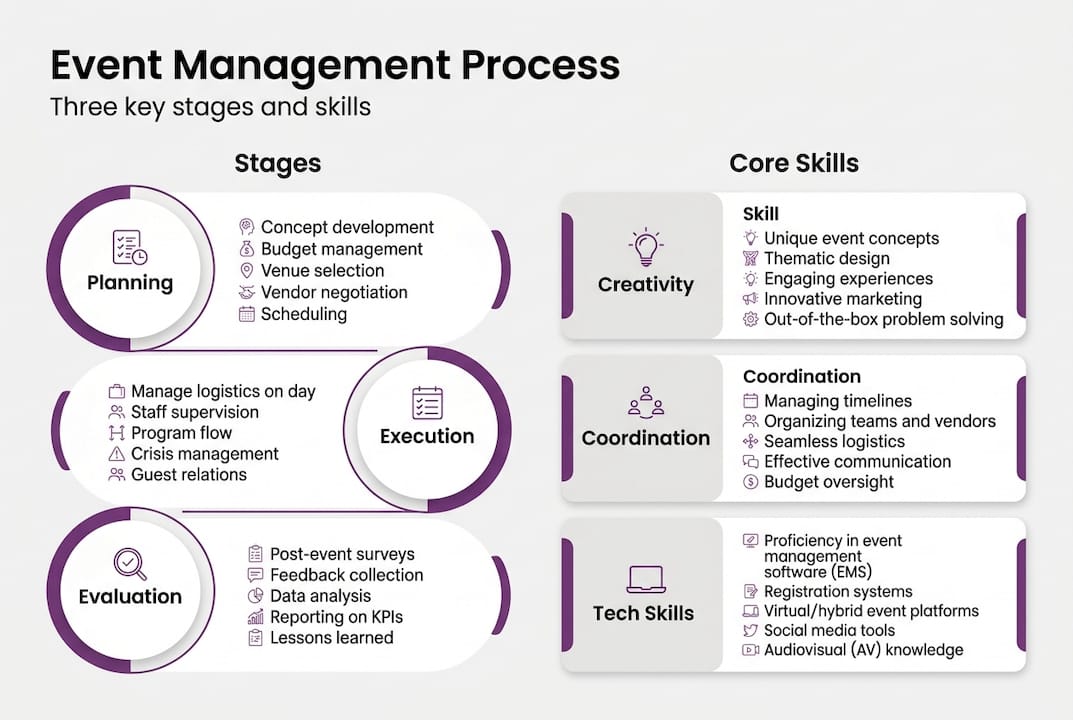
Core methodologies include event planning, execution, post-event evaluation; creative aspects include theme design, AR/VR integration and data-driven audience segmentation. Modern event managers increasingly use analytics to personalise experiences, predict attendee behaviour, and optimise event formats based on past performance data.
Essential skills you must develop include:
- Conceptualisation and storytelling: translating client briefs into compelling event narratives and visual themes
- Budget management and cost control: balancing creative ambitions with financial constraints to deliver value
- Vendor negotiation and relationship management: building reliable supplier networks and securing favourable terms
- Technology integration: adopting event management platforms, ticketing systems, and immersive technologies
- Crowd and logistics management: coordinating large teams, managing attendee flow, and maintaining safety protocols
- Crisis management and adaptability: responding to unexpected challenges with composure and creative solutions
Pro Tip: Prioritise practical learning and internships to master these skills beyond theory. Classroom knowledge provides foundations, but real-world event experience teaches you to handle the unpredictable nature of live events, manage stakeholder expectations, and refine your creative instincts under pressure.
As one industry expert notes:
Creative curation of emotional experiences defines success over mere visibility. Events that resonate emotionally create lasting brand connections and attendee loyalty.
This perspective underscores that technical competence alone is insufficient. You must cultivate the creative sensitivity to understand what will move your audience, surprise them, and leave them with positive associations long after the event concludes.
Certification pathways and practical training crucial for success
Whilst passion and creativity are essential, structured education and recognised certifications significantly enhance your employability and credibility in the competitive Indian event management landscape. Theory-only programmes often leave graduates unprepared for the practical realities of event delivery. In contrast, certifications that integrate hands-on internships and real-world projects can boost employability by 35-40% by providing the applied experience employers value.
When evaluating event management courses after graduation in India, consider several critical factors. Accreditation from bodies like EEMA (Event and Entertainment Management Association) or ISO certification signals quality and industry recognition. Practical exposure through internships, live event participation, and capstone projects is essential for translating classroom concepts into professional competence. Specialisation options in areas like corporate events, weddings, sports, or social events allow you to tailor your training to your career interests. Finally, cost and duration should align with your budget and timeline, with options ranging from short-term online courses to comprehensive diploma programmes.
Recommended certifications include Team I’s ECK (3 months + internship), CPEM, Events Expert Diploma, and iLEAD short courses, each offering distinct advantages for different career stages and learning preferences.
| Certification | Duration | Accreditation | Internship | Cost range | Best for |
|---|---|---|---|---|---|
| Team I ECK | 3 months + internship | EEMA, ISO | Yes, guaranteed | ₹40,000-60,000 | Beginners seeking practical entry |
| CPEM | 6-12 months | Industry recognised | Optional | ₹80,000-120,000 | Mid-career professionals upgrading |
| Events Expert Diploma | 12 months | University affiliated | Yes | ₹100,000-150,000 | Comprehensive foundational training |
| iLEAD Short Courses | 1-3 months | Institute certified | Limited | ₹20,000-40,000 | Skill-specific upskilling |
Key considerations when selecting a course include:
- Accreditation and industry recognition: verify credentials from EEMA, ISO, or reputable universities
- Practical exposure and internship guarantees: prioritise programmes with mandatory hands-on components
- Specialisation alignment: choose courses offering tracks in your area of interest (corporate, wedding, sports)
- Faculty expertise and industry connections: instructors with active industry roles provide current insights and networking opportunities
- Placement support and alumni network: strong institutional networks facilitate job placements and career advancement
Pro Tip: Start with affordable online courses with internships before investing in advanced certifications. This approach allows you to test your interest and aptitude whilst gaining foundational skills and industry exposure. Once you confirm your commitment to the field, you can pursue more comprehensive and expensive programmes with confidence.
The importance of internships in event careers cannot be overstated. Internships provide networking opportunities, expose you to diverse event types, teach you to navigate real-world challenges, and build your professional portfolio with documented experience. In an industry where reputation and proven capability matter enormously, internships serve as your entry point to building credibility within the 10,000 crore INR event ecosystem.
Challenges and career growth strategies in the Indian event industry
Whilst event management offers creative fulfilment and strong growth prospects, you will face significant challenges that require strategic responses and continuous adaptation. Understanding these obstacles and developing proactive strategies positions you for sustained career success in the dynamic Indian market.
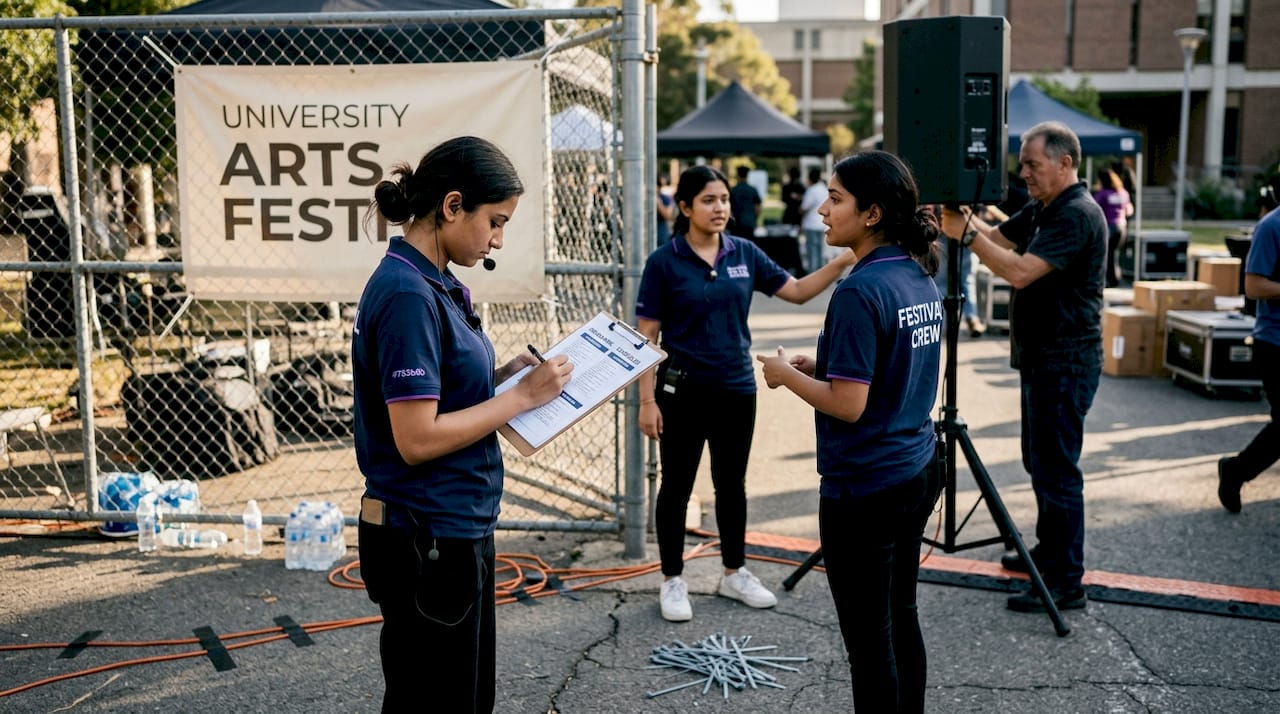
Event managers face challenges such as large crowd management, budget constraints, vendor delays, and hybrid event complexities that demand both technical skill and creative problem solving. The following table outlines common challenges and practical solutions:
| Challenge | Impact | Solution strategy |
|---|---|---|
| Large crowd management | Safety risks, logistical complexity | Implement crowd flow analysis, hire trained security, use digital ticketing |
| Budget constraints | Limited creative options, vendor quality | Prioritise high-impact elements, negotiate bulk deals, leverage technology for cost savings |
| Vendor delays and reliability | Event disruptions, client dissatisfaction | Build redundant supplier networks, include penalty clauses, maintain backup options |
| Hybrid event technology | Technical failures, engagement gaps | Invest in reliable platforms, conduct thorough tech rehearsals, hire specialist AV teams |
| Client expectation management | Scope creep, unrealistic demands | Set clear contracts, educate clients early, document all agreements |
Career growth strategies to navigate these challenges and advance in the industry include:
- Specialise after building foundational skills: once you master core competencies, focus on a niche like destination weddings, corporate conferences, or sports events to differentiate yourself
- Embrace hybrid and immersive technologies: stay current with event management trends India 2026 by learning virtual event platforms, AR/VR applications, and data analytics tools
- Network actively within industry communities: join professional associations, attend industry conferences, and cultivate relationships with vendors, venues, and fellow event professionals
- Pursue continuous learning and upskilling: the event landscape evolves rapidly, requiring ongoing education in new technologies, design trends, and audience engagement strategies
- Build a strong portfolio and personal brand: document your best work through photography, video, and case studies to showcase your creative vision and execution capabilities
Pro Tip: Focus on emotional engagement and immersive experiences rather than just visibility for client success. Events that create genuine emotional connections generate stronger word-of-mouth referrals, higher client satisfaction, and better long-term career opportunities than those that simply achieve high attendance numbers.
Balancing the high-pressure, long-hour nature of event work with creative rewards requires intentional self-care and passion for the craft. Many successful event managers report that the thrill of seeing their vision come to life, the gratitude of satisfied clients, and the variety of challenges keeps them energised despite demanding schedules. Cultivating resilience, maintaining work-life boundaries where possible, and finding joy in the creative process sustains career longevity in this intense but rewarding field.
Exploring event management specialisations allows you to align your career with your personal interests and strengths, whether that means designing luxury weddings, orchestrating large-scale corporate product launches, or managing sports tournaments and entertainment festivals.
Explore specialised event management training and certification with Team I
If you are ready to transform your creative passion into a thriving event management career, Team I offers comprehensive training programmes designed specifically for the Indian market. With over 23 years of industry experience and accreditation from EEMA and ISO, Team I provides flexible online and in-person certifications that combine theoretical knowledge with guaranteed internship placements. Their collaboration with DNA Entertainment Networks ensures you gain real-world exposure to live events, build industry connections, and develop the practical skills employers demand. Whether you are a recent graduate exploring career options or a professional seeking to specialise, Team I’s courses in corporate events, weddings, sports, and social celebrations provide tailored pathways to success. Explore detailed event management course details to find the programme that matches your goals, or discover online event management courses that fit your schedule. Learn more about the importance of internships in event careers and how Team I’s placement support can accelerate your professional journey.
Frequently asked questions
Is event management a good creative career?
Event management combines creativity and organisation, making it a fulfilling career with growing opportunities in India. The industry’s projected growth to USD 29.75 billion by 2034 creates abundant roles across corporate, social, sports, and entertainment sectors. With certifications and practical experience, it offers strong salary growth from ₹3-7 lakhs at entry level to ₹10-12 lakhs or more at mid-career stages.
What certifications should I pursue for an event management career in India?
Recommended certifications include Team I’s ECK with internship, CPEM, Events Expert Diploma, and iLEAD short courses, each offering different durations and specialisations. Look for accredited programmes with practical training, industry-recognised credentials from EEMA or ISO, and guaranteed internship placements for best career outcomes. Starting with affordable online courses allows you to test your interest before investing in comprehensive diploma programmes.
How do internships impact my event management career prospects?
Internships provide hands-on experience and networking vital for entry-level positions in the competitive Indian event industry. They expose you to real-world challenges, diverse event types, and professional workflows that theory-only education cannot replicate. Internships can increase employability by 35-40% compared to candidates without practical experience, and they help you build a portfolio of documented work that demonstrates your capabilities to potential employers.
What are the biggest challenges event managers face in India?
Managing large crowds, budget constraints, vendor delays, and hybrid event technology are major challenges requiring strategic planning and adaptability. Safety protocols for massive gatherings, negotiating with unreliable suppliers, and integrating virtual components into physical events demand both technical skill and creative problem solving. Effective planning, building redundant vendor networks, investing in reliable technology platforms, and continuous learning help overcome these hurdles and position you for long-term success in this dynamic field.