

Every challenging event in Bangalore demands more than technical know-how. Success often hinges on the ability to read emotions and respond thoughtfully within fast-paced team settings. Emotional intelligence shapes how aspiring event managers lead, collaborate, and solve problems under pressure. By mastering self-awareness, empathy, and emotional management, professionals gain a unique edge in the industry. This guide uncovers emotional intelligence skills that empower young leaders to build stronger teams and navigate complex event scenarios with confidence.
Table of Contents
- Defining Emotional Intelligence In Event Management
- Core Components Of Emotional Intelligence Skills
- Benefits For Leadership And Team Collaboration
- Cultivating Emotional Intelligence: Effective Practices
- Common Pitfalls And How To Overcome Them
Key Takeaways
| Point | Details |
|---|---|
| Importance of Emotional Intelligence | Emotional Intelligence is crucial in event management for effective teamwork and stress management. It enhances communication and collaboration among team members. |
| Core Competencies | Key competencies include self-awareness, empathy, and emotion management, which help leaders navigate high-pressure situations. |
| Continuous Development | Regular practices such as emotional journaling and structured feedback are essential for enhancing Emotional Intelligence skills. |
| Addressing Pitfalls | Recognising and overcoming common challenges, like emotional suppression, is vital for maintaining effective leadership and team dynamics. |
Defining Emotional Intelligence in Event Management
Emotional Intelligence (EI) represents a nuanced set of interpersonal capabilities that extend far beyond traditional technical skills in event management. At its core, EI involves understanding, managing, and strategically leveraging emotions to drive professional performance and team collaboration.
Research indicates that emotional intelligence is fundamentally about effectively using emotional information to influence oneself and others. For event management professionals, this translates into several critical competencies:
- Perceiving emotional signals accurately
- Understanding complex emotional dynamics
- Managing personal and team emotional states
- Adapting communication strategies based on emotional context
In high-pressure event environments, emotional intelligence becomes a critical differentiator. Event leaders with strong EI can navigate complex social interactions, manage team stress, and create positive workplace environments that enhance overall performance. The ability to read team members’ emotional states, provide empathetic support, and maintain composure during challenging situations distinguishes exceptional event managers.
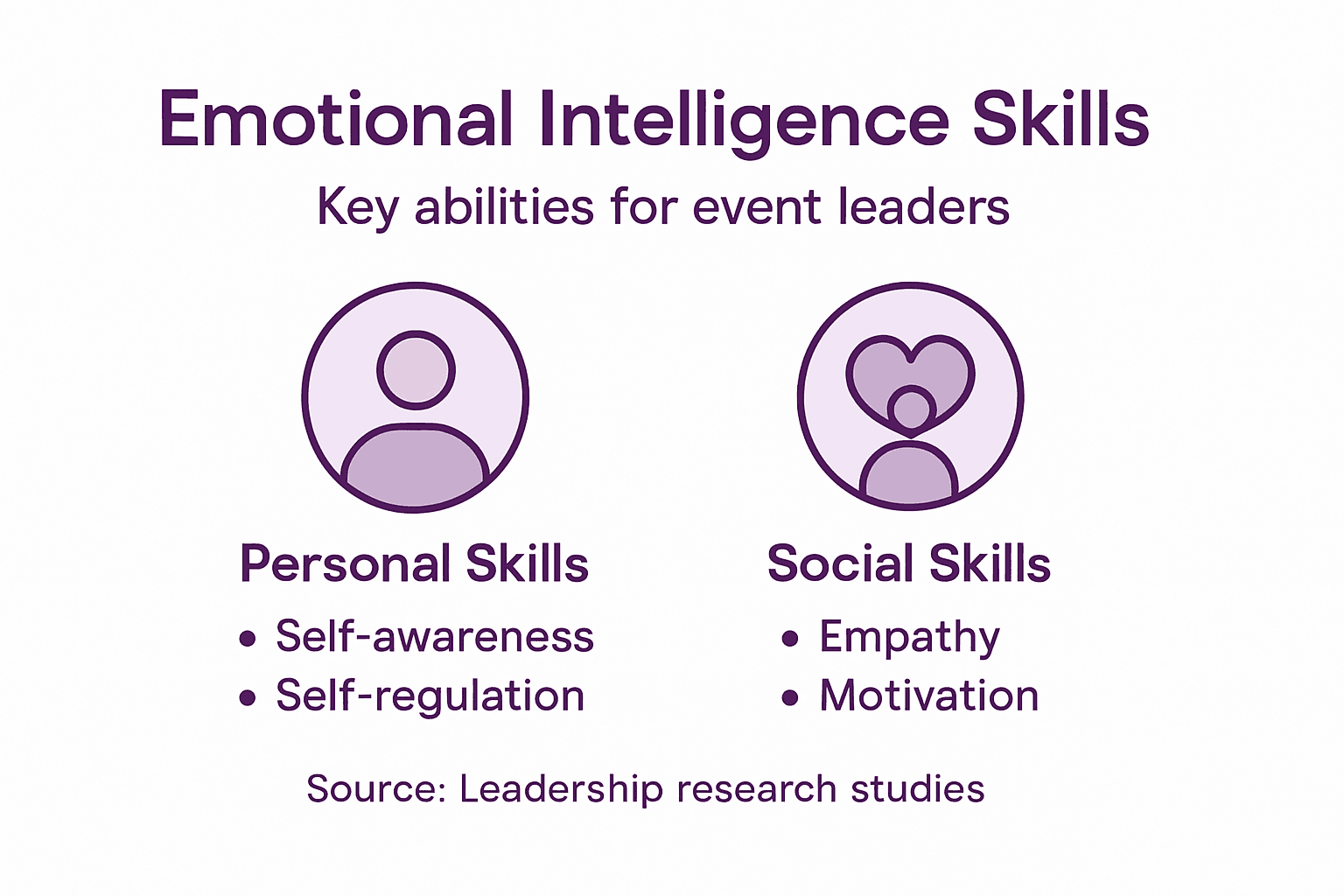
Key Components of Emotional Intelligence in Event Management:
- Self-awareness: Recognising personal emotional triggers
- Self-regulation: Managing personal emotional responses
- Empathy: Understanding team members’ emotional experiences
- Social skills: Building strong interpersonal connections
- Motivation: Maintaining positive energy during challenging projects
Event management demands continuous emotional adaptation. Interpersonal and intrapersonal skills become crucial for success, enabling professionals to create seamless experiences despite unpredictable circumstances.
Pro tip: Practice active listening and emotional self-reflection daily to gradually enhance your emotional intelligence capabilities.
Core Components of Emotional Intelligence Skills
Emotional intelligence comprises a sophisticated set of interconnected skills that enable event management professionals to navigate complex interpersonal landscapes. Four primary branches of emotional competence form the foundation of effective leadership and team management in high-stakes event environments.
These core components can be systematically broken down into essential capabilities:
- Perception of Emotions: Accurately identifying and interpreting emotional signals
- Use of Emotional Information: Leveraging emotions to facilitate thinking and decision-making
- Understanding Emotional Complexity: Comprehending the nuanced interactions between emotions
- Emotion Management: Regulating personal and team emotional responses strategically
Event leaders who develop these skills can transform potential workplace challenges into opportunities for growth and collaboration. The ability to read subtle emotional cues, respond with empathy, and maintain composure under pressure distinguishes exceptional professionals from average performers.
Practical Applications of Emotional Intelligence Components:
- Self-Awareness: Recognising personal emotional triggers and patterns
- Emotional Regulation: Controlling impulsive reactions during stressful event scenarios
- Empathetic Understanding: Connecting deeply with team members’ and clients’ emotional experiences
- Social Navigation: Building resilient and supportive professional relationships
- Motivational Alignment: Channelling emotional energy towards positive team outcomes
Emotional intelligence is not about suppressing emotions, but strategically understanding and utilising them to enhance professional performance.
Researchers have consistently demonstrated that emotional processing abilities are critical for effective leadership, particularly in dynamic industries like event management where interpersonal interactions are fundamental to success.

Pro tip: Develop a daily practice of emotional journaling to enhance your self-awareness and emotional processing skills.
Benefits for Leadership and Team Collaboration
Emotional intelligence transforms leadership dynamics by enabling event managers to create more cohesive, responsive, and high-performing teams. Leadership effectiveness significantly improves when leaders can navigate complex interpersonal landscapes with nuanced emotional understanding.
The core benefits of emotional intelligence in event management leadership include:
- Enhanced team communication
- Improved conflict resolution capabilities
- More adaptive leadership approaches
- Stronger interpersonal relationship building
- Higher team engagement and motivation
Professional event leaders who cultivate emotional intelligence can strategically balance task management with relationship building. They become adept at reading team dynamics, anticipating potential tensions, and creating environments that foster collaboration and mutual respect.
Key Leadership Transformation Areas:
- Communication Adaptability: Tailoring communication styles to individual team members
- Conflict Mediation: Resolving disagreements constructively
- Emotional Resilience: Maintaining composure during high-stress event scenarios
- Team Motivation: Inspiring performance through empathetic leadership
- Strategic Emotional Management: Channelling team emotions productively
Emotional intelligence is not a soft skill, but a critical leadership competency that directly impacts team performance and organisational success.
Balancing task and relationship management allows event leaders to create synergistic team environments where individual strengths are recognised and collective goals are prioritised.
Pro tip: Conduct weekly team emotional check-ins to develop deeper understanding and connection with your event management team.
Cultivating Emotional Intelligence: Effective Practices
Developing emotional intelligence is a deliberate and structured process that requires consistent practice and self-reflection. Specific training approaches can help event management professionals systematically enhance their emotional competencies and leadership capabilities.
Key practices for cultivating emotional intelligence include:
- Regular self-assessment and introspection
- Mindfulness and meditation techniques
- Active listening skill development
- Empathy building exercises
- Stress management strategies
- Continuous professional feedback mechanisms
Event leaders can transform their emotional intelligence through targeted development strategies. Understanding personal emotional patterns allows professionals to respond more strategically in complex interpersonal scenarios, particularly during high-pressure event management situations.
Practical Emotional Intelligence Development Techniques:
- Daily emotional journaling
- Structured feedback sessions
- Role-playing interpersonal scenarios
- Professional coaching and mentorship
- Mindfulness meditation practices
Emotional intelligence is a skill that can be learned, practiced, and continuously improved through deliberate effort and commitment.
Recognising personal emotional triggers allows event management professionals to develop more nuanced communication and leadership approaches.
Pro tip: Allocate 15 minutes daily for structured emotional reflection and self-improvement exercises.
Here’s a concise summary of emotional intelligence development strategies and their unique advantages:
| Strategy | Focus Area | Unique Business Impact |
|---|---|---|
| Daily emotional journaling | Enhances self-awareness | Reduces impulsive decisions |
| Structured feedback sessions | Highlights improvement | Builds collaborative team culture |
| Role-playing scenarios | Tests real-time responses | Prepares leaders for complex events |
| Coaching and mentorship | Personalised guidance | Accelerates professional growth |
| Mindfulness meditation | Stress management | Sustains high performance under pressure |
Common Pitfalls and How to Overcome Them
Emotional intelligence development in event management is not without its challenges. Understanding potential barriers is crucial for professionals seeking to enhance their leadership capabilities and team dynamics.
Common emotional intelligence pitfalls include:
- Emotional suppression under pressure
- Over-intellectualising emotional experiences
- Misinterpreting social and professional cues
- Inconsistent emotional self-management
- Neglecting personal emotional well-being
- Displaying inauthentic emotional responses
Event leaders often struggle with maintaining emotional balance while managing high-stress environments. The key is recognising these challenges and developing strategic approaches to mitigate their impact on professional performance and team relationships.
Strategies for Overcoming Emotional Intelligence Challenges:
- Develop consistent self-reflection practices
- Seek regular professional feedback
- Establish clear emotional boundaries
- Practice authentic emotional expression
- Invest in continuous emotional skills training
Emotional intelligence is not about perfection, but about continuous growth and self-awareness.
Navigating emotional competency challenges requires a committed, systematic approach to personal and professional development.
Pro tip: Create a monthly emotional intelligence review where you critically assess your interpersonal skills and emotional management strategies.
To help professionals recognise challenges, here’s a comparison of common emotional intelligence pitfalls and actionable solutions:
| Pitfall | How It Affects Leadership | Practical Solution |
|---|---|---|
| Emotional suppression under pressure | Limits open team communication | Practice authentic expression |
| Over-intellectualising emotions | Hampers genuine understanding | Increase empathy exercises |
| Misinterpreting social cues | Causes conflicts or mistrust | Request regular feedback |
| Inconsistent self-management | Leads to unpredictable outcomes | Develop daily reflection habits |
| Neglecting personal well-being | Decreases resilience and energy | Schedule self-care time |
Elevate Your Leadership with Emotional Intelligence Training
Emotional intelligence is a vital skill for event leaders aiming to master self-awareness, empathy and effective team communication in high-pressure environments. This article highlights the transformative power of recognising personal emotional triggers and managing team dynamics to create cohesive and motivated event teams. Overcoming challenges like emotional suppression and misinterpreting social cues can dramatically improve your leadership impact and team collaboration.
If you are serious about developing these essential capabilities, explore specialised certification programmes tailored for aspiring and practising event managers. With over 23 years of expertise, teami.org offers industry-relevant training that combines theory with hands-on projects and internships, supported by collaborations with top event networks. Take the next step towards enhancing your emotional intelligence and leadership by visiting our detailed course offerings. Do not miss the opportunity to grow your career in event management with structured learning and practical exposure. Connect with us today at teami.org and transform how you lead your teams.
Frequently Asked Questions
What is emotional intelligence in event management?
Emotional intelligence in event management refers to the ability to understand, manage, and leverage emotions to enhance professional performance and team collaboration.
How can event leaders develop their emotional intelligence?
Event leaders can develop emotional intelligence through regular self-assessment, mindfulness practices, active listening, empathy-building exercises, and seeking continuous professional feedback.
What are the key components of emotional intelligence for event managers?
The key components include self-awareness, self-regulation, empathy, social skills, and motivation, which allows event managers to effectively navigate interpersonal dynamics and lead their teams.
Why is emotional intelligence important for leadership in event management?
Emotional intelligence is crucial for leadership in event management as it enhances team communication, improves conflict resolution, builds stronger relationships, and increases overall team engagement and motivation.