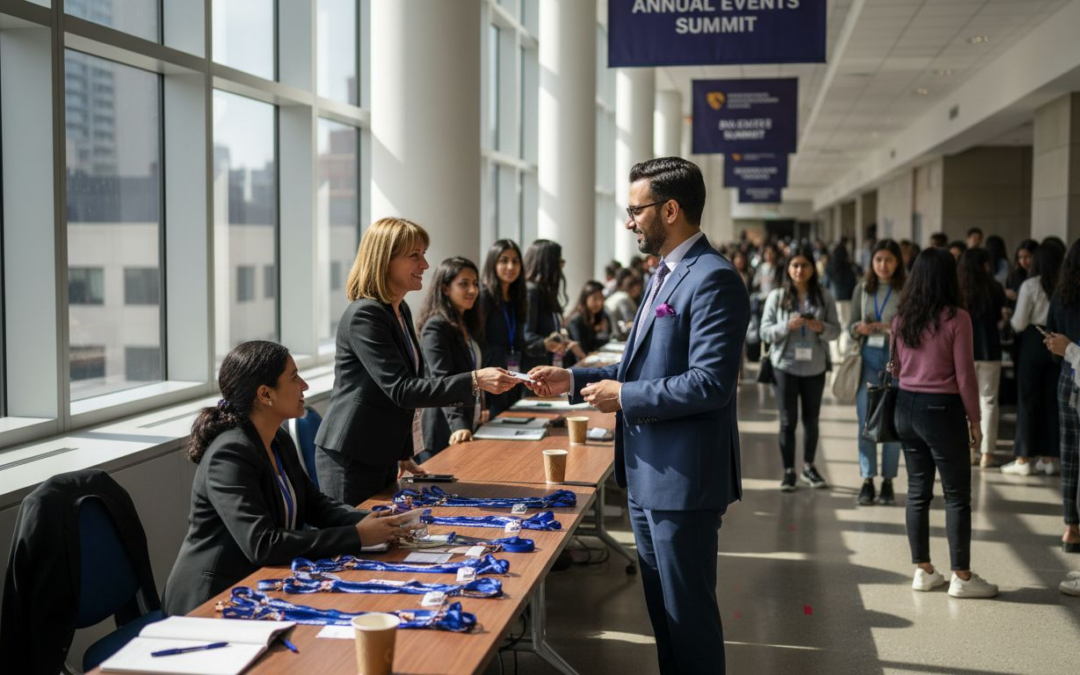
Stepping into the world of event management in Bangalore means navigating an environment where connections really matter. For aspiring professionals, mastering networking skills is more than just making casual contacts. It is the foundation for building strategic relationships that lead to real career opportunities. Discover how targeted communication, authentic interactions, and an understanding of different network types can position you ahead in both corporate and social event management.
Table of Contents
- Networking Skills Defined for Event Managers
- Types of Networks in Event Management
- Career Growth Through Effective Connections
- Building and Nurturing Professional Relationships
- Common Pitfalls and How to Avoid Them
Key Takeaways
| Point | Details |
|---|---|
| Networking is Essential | Effective networking transcends mere exchanges; it involves building and maintaining genuine professional relationships to advance career opportunities. |
| Diverse Networks Enhance Reach | Understanding the various types of networks—professional, informal, digital, and institutional—can significantly expand your professional influence and collaboration prospects. |
| Strategic Relationship Management | Successful networking requires intentional relationship-building based on authenticity, consistent communication, and providing value to others. |
| Avoid Common Mistakes | Be mindful of networking pitfalls such as being overly self-promotional and neglecting follow-up, as these can hinder your career advancement efforts. |
Networking Skills Defined for Event Managers
Networking skills represent a complex professional capability that goes far beyond simply exchanging business cards. For event managers, these skills are the fundamental infrastructure that transforms professional connections into strategic opportunities. Networking involves creating, nurturing, and leveraging interpersonal relationships to advance career objectives and organisational goals.
According to recent academic research, critical networking competencies for event managers encompass several essential dimensions:
- Effective communication strategies
- Strategic stakeholder engagement
- Project coordination capabilities
- Risk management techniques
- Time management proficiency
These skills are not merely supplementary; they are fundamental to successful event management. Professional networking requires intentional relationship-building that extends beyond superficial interactions. Event managers must develop nuanced communication approaches that allow them to connect authentically with diverse stakeholders, from vendors and sponsors to performers and venue managers.
The strategic networking process involves multiple sophisticated layers. Professional relationship development tactics include cultivating personal branding, leveraging social media platforms, and creating meaningful professional interactions that transcend transactional exchanges.
Pro tip: Develop a systematic approach to networking by setting specific relationship-building goals and tracking your professional connections systematically.
Types of Networks in Event Management
In the dynamic world of event management, networking is not a monolithic concept but a sophisticated ecosystem comprising multiple interconnected network types. Event networks represent complex collaborative platforms that facilitate strategic interactions across diverse professional landscapes.
The primary types of networks in event management include:
- Professional Networks: Formal connections within industry associations
- Informal Social Networks: Casual relationships built through shared experiences
- Digital Networking Platforms: Online communities and professional social media groups
- Institutional Networks: Connections through academic and training organisations
- Industry-Specific Networks: Targeted groups within specific event sector verticals
Each network type serves unique strategic purposes. Professional networks, for instance, provide structured opportunities for knowledge exchange, career development, and potential collaboration. Networking event formats range from casual meetups to structured conferences, each designed to achieve specific engagement objectives.
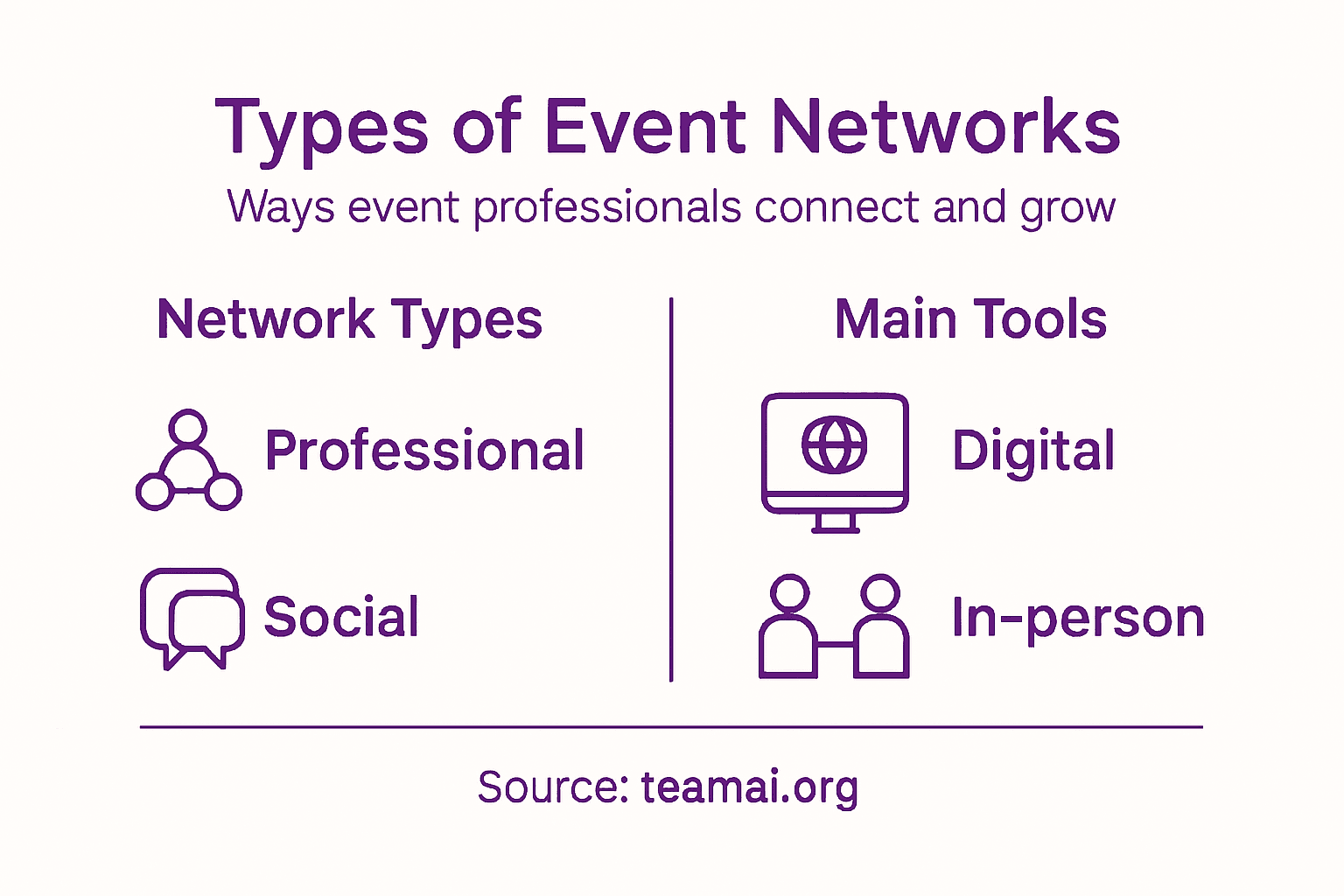
To clarify how different networks support event managers, see the table below:
| Network Type | Primary Purpose | Typical Example |
|---|---|---|
| Professional Networks | Industry connections | Event association memberships |
| Informal Social Networks | Personal rapport building | Peer meetups outside formal settings |
| Digital Networking Platforms | Expanding global reach | LinkedIn or online event groups |
| Institutional Networks | Knowledge sharing | Alumni or training organisation links |
| Industry-Specific Networks | Niche expertise exchange | Groups for wedding or sports events |
Digital platforms have revolutionised traditional networking paradigms, enabling event managers to transcend geographical limitations. These virtual networks allow professionals to connect, share insights, and build relationships across global boundaries, creating unprecedented opportunities for cross-cultural professional development.
Pro tip: Develop a diversified networking strategy that integrates both digital and in-person connections to maximise your professional reach and opportunities.
Career Growth Through Effective Connections
In the competitive landscape of event management, career growth hinges critically on the strength and quality of professional connections. Strategic networking dramatically enhances career opportunities, with research indicating that approximately 85% of professional opportunities emerge through intentional relationship building rather than traditional job application processes.
Key strategies for leveraging professional connections include:
- Cultivating genuine, mutually beneficial relationships
- Consistently engaging with industry professionals
- Attending relevant conferences and networking events
- Maintaining an active professional digital presence
- Offering value before seeking personal advantages
- Developing a diverse professional network across different sectors
Successful networking transcends mere transactional interactions. Career progression in event management demands strategic relationship development, where professionals must demonstrate consistent commitment, authentic communication, and a genuine interest in mutual professional growth.

Digital platforms have transformed networking dynamics, enabling event managers to build global connections that were previously impossible. These virtual ecosystems provide unprecedented opportunities to engage with industry leaders, learn from experienced professionals, and discover emerging career pathways across different event management specialisations.
Pro tip: Create a systematic approach to networking by scheduling regular check-ins, sharing industry insights, and maintaining meaningful professional relationships.
Building and Nurturing Professional Relationships
Building meaningful professional relationships requires deliberate strategy and consistent effort. Effective networking involves strategic relationship management that goes far beyond superficial interactions, demanding genuine engagement and mutual value creation in the event management ecosystem.
Key principles for nurturing professional connections include:
- Demonstrating authentic interest in others’ professional journeys
- Maintaining consistent communication
- Offering support without immediate expectation of return
- Sharing relevant industry insights and opportunities
- Respecting professional boundaries
- Celebrating others’ achievements
- Following through on committed actions
The digital landscape has transformed relationship-building dynamics, providing multiple platforms for sustained professional engagement. Strategic networking tips help professionals maintain connections, enabling event management professionals to create robust networks despite demanding schedules.
Successful relationship nurturing involves understanding that professional connections are living ecosystems requiring continuous attention and genuine care. Each interaction represents an opportunity to build trust, share knowledge, and create mutually beneficial professional pathways that extend beyond immediate transactional needs.
Pro tip: Create a structured system for tracking professional interactions, scheduling periodic check-ins, and maintaining meaningful connections across your network.
Common Pitfalls and How to Avoid Them
Navigating the complex landscape of professional networking requires awareness and strategic approach. Common networking mistakes can significantly undermine career opportunities, making it essential for event management professionals to understand and proactively address potential pitfalls.
Key networking mistakes to avoid include:
- Being excessively self-promotional
- Failing to prepare adequately for networking events
- Neglecting follow-up communications
- Lacking active listening skills
- Presenting an inauthentic professional persona
- Ignoring digital networking platforms
- Treating connections as transactional exchanges
- Not establishing clear networking objectives
Professional relationships are delicate ecosystems that require thoughtful navigation. Strategic networking demands intentional relationship management, focusing on authenticity, reciprocity, and genuine professional interest rather than opportunistic interactions.
Here is a quick comparison of effective relationship nurturing principles and common pitfalls:
| Approach Type | Positive Example | Negative Counterpart |
|---|---|---|
| Communication | Genuine interest expressed | Excessive self-promotion |
| Consistency | Regular engagement | Neglecting follow-up |
| Value Exchange | Sharing insights and support | Seeking benefit without reciprocity |
| Authenticity | Celebrates others’ success | Presenting inauthentic persona |
Successful event management professionals recognise that networking is a nuanced skill requiring continuous refinement. By understanding potential pitfalls, developing robust communication strategies, and maintaining a genuine approach, individuals can transform networking from a challenging task into a powerful career development tool.
Pro tip: Create a personalised networking strategy that prioritises quality interactions over quantity, focusing on meaningful professional connections.
Unlock Your Networking Potential with Expert Event Management Training
The article highlights how mastering networking skills is crucial for event managers aiming to build authentic connections and accelerate their career growth. If you find yourself struggling with creating genuine professional relationships or leveraging digital platforms for expanding your network, you are not alone. Developing strategic communication, stakeholder engagement, and relationship nurturing can feel overwhelming without the right guidance and practical experience.
At teami.org, we address these exact challenges by offering specialised certification programs designed to sharpen your event management capabilities and professional networking prowess. With over 24 years of industry expertise, our courses combine theory with hands-on projects and real event participation to build your confidence in forming meaningful connections and elevating your career. Explore our comprehensive training offerings to transform your networking approach and gain access to exclusive industry partnerships and placements.
Take the first step towards mastering networking for your event career by visiting teami.org. Seize the opportunity to learn from seasoned professionals and join a community committed to your success today.
Frequently Asked Questions
What are the essential networking skills for event managers?
Essential networking skills for event managers include effective communication strategies, strategic stakeholder engagement, project coordination, risk management, and time management proficiency.
How can networking impact career growth in event management?
Networking significantly enhances career growth by creating opportunities through professional connections, with around 85% of job opportunities emerging from intentional relationship building rather than traditional applications.
What types of networks should event managers focus on?
Event managers should focus on various networks, including professional networks, informal social networks, digital networking platforms, institutional networks, and industry-specific networks, each serving distinct strategic purposes.
What are common mistakes to avoid in professional networking?
Common networking mistakes include being excessively self-promotional, neglecting follow-up communications, failing to actively listen, treating connections as transactional exchanges, and not establishing clear networking objectives.
Recommended
- Importance of Internships – Shaping Event Careers Early – team I
- 7 Essential Tips for Networking Events for Young Professionals – team I
- How to Evaluate Event Success for Career Growth – team I
- Top Event Management Skills for Success in 2025 – team I
- Social Events | RMD Photo Booths
- Guía para inglés conversacional: domina entrevistas y reuniones – Academia Atenea
Thinking about a career in event management?
team I is Bangalore’s only EEMA-certified event management institute, running for 24 years, where students work on real live events with real budgets and real deadlines rather than classroom simulations. See the full range of event management courses in Bangalore, or go straight to the flagship Certificate Program in Event Management (CPEM).