
Securing a sponsorship deal feels daunting for many Indian event management students, yet over 60 percent of successful events in British and Indian markets rely on corporate partnerships for funding and reach. Understanding how global brands like British companies select which events to support can set you apart in a crowded field. This guide reveals actionable, step by step strategies tailored for aspiring event managers and recent graduates who want to attract sponsors while mastering their certification journey.
Table of Contents
- Step 1: Research Targeted Sponsor Prospects
- Step 2: Develop Compelling Sponsor Proposals
- Step 3: Initiate Personalised Sponsor Outreach
- Step 4: Present Tailored Sponsorship Packages
- Step 5: Confirm Sponsorship Agreements And Deliver Value
Quick Summary
| Key Point | Explanation |
|---|---|
| 1. Research Ideal Sponsors | Identify sponsors aligned with your event goals by profiling their business objectives and audience. |
| 2. Craft Persuasive Proposals | Design proposals that highlight mutual value, including measurable benefits and tailored engagement options. |
| 3. Personalise Outreach | Use tailored communication strategies to build genuine relationships with potential sponsors. |
| 4. Develop Flexible Packages | Create sponsorship packages with varied levels and clear benefits to meet diverse sponsor needs. |
| 5. Implement Effective Agreements | Establish clear contracts and maintain proactive communication to ensure mutual value and successful partnerships. |
Step 1: Research targeted sponsor prospects
Finding the right sponsors requires strategic research and a targeted approach. In this stage, you will map out potential partners who align with your event’s goals and audience, creating a powerful foundation for successful sponsorship acquisition.
Begin by developing a comprehensive profile of your ideal sponsor. This means diving deep into understanding their business objectives, target market, and previous sponsorship history. You can leverage comprehensive market research techniques as outlined in ICANN’s Event Sponsorship Management guidelines to systematically identify potential partners.
Start your research by creating a detailed spreadsheet that tracks potential sponsors. Include critical information such as company name, sector, previous sponsorship involvement, audience demographics, and potential synergies with your event. Prioritise businesses that have previously sponsored similar events in your industry or have a demonstrated interest in reaching your specific audience demographic.
Your research should extend beyond basic internet searches. Attend industry networking events, review event sponsorship case studies, analyse competitors’ sponsorship strategies, and tap into professional networks. LinkedIn can be an excellent resource for understanding company interests and connecting with decision makers.
Here is a summary of research methods to find potential sponsors:
| Research Method | Expected Outcome | Best Used For |
|---|---|---|
| Market research | Identify aligned businesses | Initial sponsor mapping |
| Networking event attendance | Build personal industry connections | Locating decision makers |
| Competitor sponsorship analysis | Uncover proven sponsor interests | Gaining industry benchmarking |
| LinkedIn investigation | Learn company focus and priorities | Tailoring sponsor approaches |
| Professional network leverage | Source warm introductions | Strengthening outreach quality |
Keen insight: Cross-reference potential sponsors’ marketing goals with your event’s unique value proposition to create more compelling sponsorship proposals.
Step 2: Develop compelling sponsor proposals
Crafting an outstanding sponsor proposal requires strategic thinking, precise communication, and a clear demonstration of mutual value. Your goal is to transform your initial research into a persuasive document that speaks directly to potential sponsors’ strategic objectives.
Begin by structuring your proposal using comprehensive writing techniques that focus on audience needs and clear objectives. Your proposal should tell a compelling story that connects your event’s unique value proposition with the sponsor’s marketing goals. Start with a strong executive summary that immediately highlights what makes your event exceptional and how sponsorship aligns with their business strategy.
Ensure your proposal includes specific, measurable benefits for the sponsor. Break down your audience demographics, projected reach, and tangible marketing opportunities. Use data visualisations, past event statistics, and precise metrics to substantiate your claims. Create custom sponsorship packages that offer flexible engagement levels tailored to different sponsor investment tiers.

Research each potential sponsor thoroughly to personalise your approach. Demonstrate that you understand their brand, recent marketing campaigns, and corporate social responsibility initiatives. Show how your event provides a strategic platform for them to achieve specific marketing or community engagement objectives.
Insider recommendation: Develop multiple proposal drafts and seek feedback from trusted industry colleagues to refine your pitch before final submission.
Step 3: Initiate personalised sponsor outreach
Initiating meaningful sponsor outreach transforms your carefully crafted proposal into a potential partnership. Your goal is to establish genuine connections that move beyond generic communication and demonstrate authentic value alignment.
Follow a structured outreach process that prioritises stakeholder engagement and personalised communication strategies when reaching out to potential sponsors. Begin by selecting the most appropriate communication channel for each prospect. Some sponsors prefer formal email introductions, while others might respond better to personalised LinkedIn messages or direct phone calls.
Prepare a communication strategy that goes beyond templated messaging. Each outreach attempt should reflect deep research into the potential sponsor’s recent achievements, corporate values, and marketing objectives. Reference specific company initiatives or recent publications to demonstrate that you understand their brand and have thoughtfully considered how your event can support their strategic goals.
Track your communication carefully and maintain a professional follow-up sequence. Send an initial introduction, wait a reasonable timeframe, and then send a gentle reminder. Be persistent without becoming intrusive. Your communication should always provide clear value and highlight the mutual benefits of potential collaboration.
Insider recommendation: Create a personalised communication tracking spreadsheet to monitor interactions, response rates, and potential next steps for each sponsor prospect.
Step 4: Present tailored sponsorship packages
Crafting and presenting sponsorship packages is an art form that requires strategic thinking and creative flexibility. Your objective is to design compelling offerings that resonate precisely with each potential sponsor’s unique marketing objectives and corporate vision.
Develop sponsorship packages using a structured approach that defines clear sponsor levels and responsibilities, ensuring each tier provides distinctive value and engagement opportunities. Create multiple package options that range from entry level to premium, allowing sponsors to select investments that best match their budget and strategic goals. Consider including flexible components such as branding opportunities, speaking slots, networking access, digital promotion, and post event reporting.
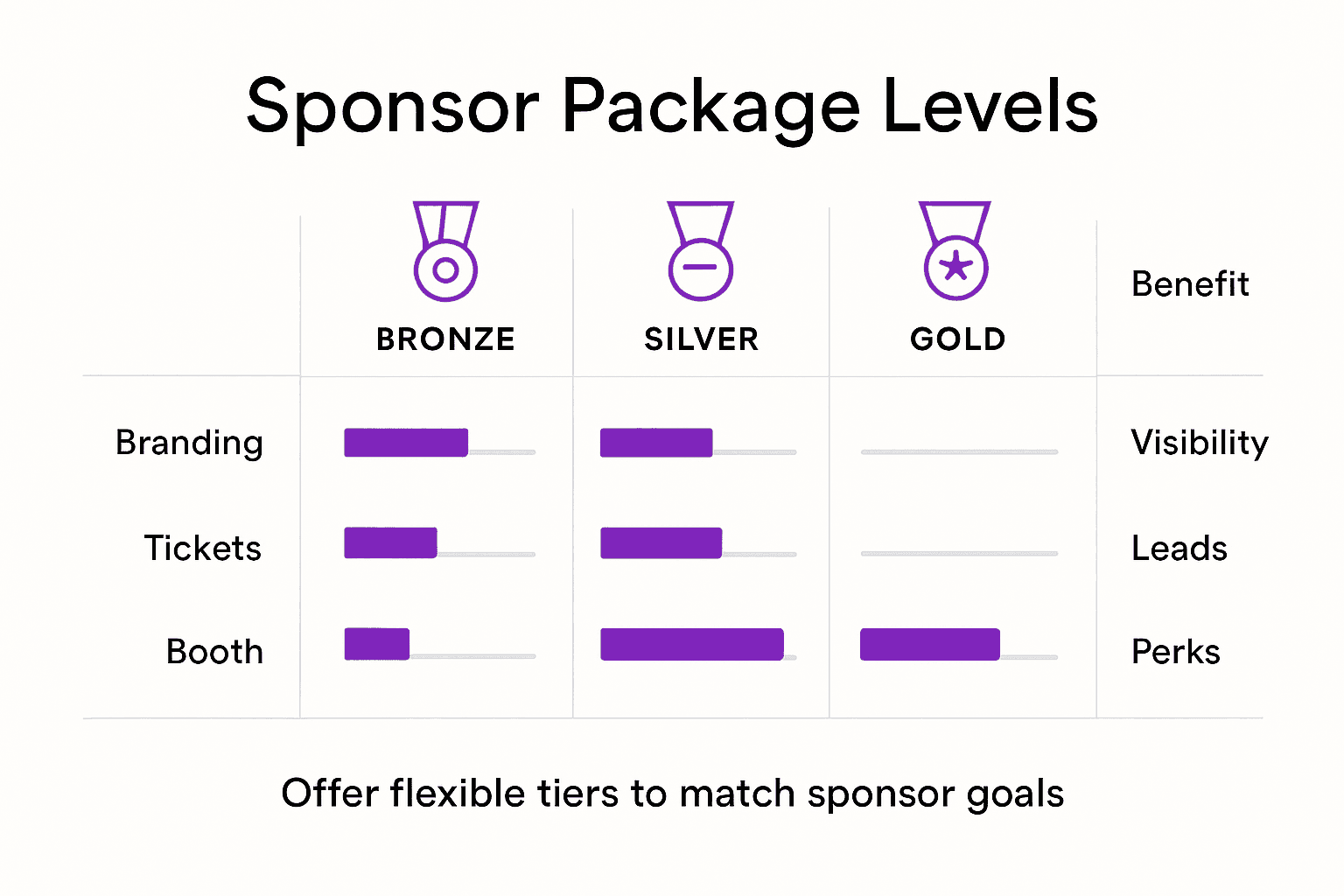
Each sponsorship package should tell a compelling story about the mutual benefits of partnership. Clearly articulate the specific advantages for the sponsor, using data visualisations and concrete metrics to demonstrate potential reach and engagement. Highlight how your event provides a unique platform for them to connect with their target audience, build brand awareness, and achieve specific marketing objectives.
Prepare professional presentation materials that are visually appealing and easy to understand. Use high quality graphics, clean design, and concise language that makes the value proposition immediately clear. Include testimonials from previous sponsors or case studies that showcase the tangible results of past event partnerships.
Below is a comparison of popular sponsorship package features and their strategic benefits:
| Package Feature | Value to Sponsors | Strategic Event Benefit |
|---|---|---|
| Branding placement | Visibility to target audience | Enhanced event prestige |
| Speaking slot | Position as industry authority | Attract high-profile participants |
| Networking access | Direct lead generation | Increased event engagement |
| Digital promotion | Extended marketing reach | Broader audience awareness |
| Post-event report | Proof of ROI and exposure | Data for future sponsorship sales |
Insider recommendation: Create modular sponsorship packages that can be easily customised during negotiations, showing flexibility and responsiveness to sponsor needs.
Step 5: Confirm sponsorship agreements and deliver value
The final stage of sponsorship acquisition involves transforming your proposals into concrete agreements that provide measurable value for both parties. Your objective is to establish a clear, professional contract that outlines expectations and sets the foundation for a successful partnership.
Develop a comprehensive sponsorship agreement that meticulously defines financial terms, deliverables, and mutual responsibilities. Ensure the document includes specific details such as sponsorship package benefits, branding opportunities, financial commitments, reporting requirements, and performance metrics. Be transparent about what each party will contribute and receive, leaving no room for ambiguity.
Prepare a robust implementation plan that demonstrates how you will deliver on every promised benefit. Create a detailed tracking system to monitor sponsor asset activation, brand visibility, and engagement metrics. Schedule regular check-ins with sponsors to provide real-time updates, share performance insights, and validate the value of their investment. Develop comprehensive post event reports that showcase quantitative and qualitative outcomes, including audience reach, brand mentions, social media engagement, and direct business opportunities generated.
Maintain proactive communication throughout the event lifecycle. Keep sponsors informed about event progress, potential challenges, and unexpected opportunities. Be responsive to their needs, demonstrate flexibility, and show genuine commitment to creating a mutually beneficial relationship that extends beyond the single event.
Insider recommendation: Document every interaction and deliverable meticulously, creating a comprehensive portfolio that can be used to secure future sponsorships and build long-term partnerships.
Elevate Your Sponsorship Skills with Expert Training
Finding and securing event sponsors involves navigating complex challenges such as identifying the right match, creating compelling proposals, and maintaining personalised communication. The detailed guide you just explored highlights critical steps including research strategies, proposal development, and package presentation. These are essential skills every aspiring event manager must master to turn partnerships into success stories.
At teami.org, we understand the pressure to deliver real sponsorship value while managing multiple event aspects. Our industry-leading courses provide hands-on exposure through live projects and internships, helping you refine sponsor outreach and negotiation skills. Benefit from 24 years of event management expertise and specialist insights on sponsorship acquisition techniques that will empower you to craft winning proposals and build lasting partnerships.
Are you ready to master the art of sponsorship and fast-track your career in event management? Explore our certification programs designed for ambitious professionals aiming to excel in sponsorship acquisition and event execution. Don’t wait to turn knowledge into opportunity. Connect now via teami.org and take the first step towards transforming your event sponsorship strategies into guaranteed success.
Frequently Asked Questions
How can I identify suitable sponsors for my event?
To identify suitable sponsors, start by creating a profile of your ideal sponsor that outlines their business objectives and target audience. Conduct thorough market research and maintain a spreadsheet tracking potential sponsors’ demographics and previous sponsorship history to refine your list.
What information should I include in my sponsorship proposal?
Your sponsorship proposal should include a compelling narrative that connects your event’s unique value with the sponsor’s marketing goals. Specify measurable benefits, audience demographics, and engagement opportunities, supporting your claims with data visualisations and past event statistics.
How should I personalise my outreach to potential sponsors?
Personalise your outreach by researching each sponsor’s recent achievements and corporate values, and reference specific initiatives in your communication. Use tailored messaging and select the appropriate communication channel, such as email or LinkedIn, to foster genuine connections with potential sponsors.
What elements should I include in sponsorship packages?
Sponsorship packages should outline distinct value propositions for various levels of sponsorship, including branding opportunities, speaking slots, and networking access. Clearly articulate benefits for the sponsor, using data to demonstrate potential reach and engagement, while keeping the presentation visually appealing.
How can I ensure effective communication with sponsors after securing their agreement?
To ensure effective communication, develop a robust implementation plan detailing how you will deliver on each promised benefit. Schedule regular check-ins to provide updates, share insights, and maintain proactive communication for a successful partnership throughout the event lifecycle.
What should be included in a post-event report for sponsors?
A post-event report should include quantitative and qualitative outcomes, such as audience reach, brand mentions, and social media engagement metrics. Present these insights alongside recommendations for future sponsorships, making them clear and actionable to showcase the value generated from their investment.
Recommended
- How to Get Clients for Events: Proven Steps for Success – team I
- How to Organise Events for Maximum Impact: Step-by-Step Guide – team I
- What Makes a Successful Event: Real Impact Revealed – team I
- How to Start Event Management Company: Complete Guide – team I
- 7 Smart Small Business Advertising Ideas for London Owners
Thinking about a career in event management?
team I is Bangalore’s only EEMA-certified event management institute, running for 24 years, where students work on real live events with real budgets and real deadlines rather than classroom simulations. See the full range of event management courses in Bangalore, or go straight to the flagship Certificate Program in Event Management (CPEM).