
Over half of British event managers now turn to influencer marketing to elevate their campaigns and connect with audiences in a crowded digital world. The rapid rise of digital personalities has transformed how events are promoted, making traditional advertising feel less impactful. By tapping into influencers’ trusted voices, organisers can create authentic buzz that drives real engagement and attendee interest. Discover how influencer marketing is changing the event management landscape and why British brands are placing their bets on this dynamic strategy.
Table of Contents
- Influencer Marketing In Event Management Defined
- Types Of Influencers And Event Campaigns
- Selecting Influencers For Event Success
- Building Effective Influencer Partnerships
- Legal, Financial, And Ethical Considerations
Key Takeaways
| Point | Details |
|---|---|
| Influencer Selection is Critical | Choose influencers whose audiences align with your event demographic for maximum engagement and relevance. |
| Strategic Collaboration Matters | Develop authentic partnerships with influencers, focusing on shared values and clear communication to enhance promotional efforts. |
| Measure and Analyse Performance | Utilise precise metrics to evaluate the effectiveness of influencer campaigns, ensuring goals are met and optimising future strategies. |
| Compliance is Essential | Adhere to legal and ethical standards in influencer marketing, including disclosure requirements and transparent contractual agreements. |
Influencer Marketing in Event Management Defined
Influencer marketing represents a strategic approach where digital personalities leverage their social media presence to promote events, brands, and experiences. This dynamic technique transforms traditional event promotion by connecting organisers directly with targeted audience segments through trusted digital voices.
According to a systematic review by the Indian Journal of Capital Markets, influencer marketing is defined as “a strategy that engages individuals with significant digital influence to share sponsored content, thereby enhancing brand visibility and consumer engagement”. In the context of event management, this translates to partnering with social media personalities who can authentically showcase event experiences and attract potential attendees.
The effectiveness of influencer marketing in events stems from its ability to create genuine, relatable narratives. Unlike traditional advertising, influencers provide personal testimonials and immersive storytelling that resonate more deeply with potential participants. They bridge the gap between event organisers and target audiences by transforming promotional messages into compelling, shareable content.
The key components of successful event influencer marketing include:
- Selecting influencers aligned with the event’s target demographic
- Developing authentic collaboration strategies
- Creating mutually beneficial partnership frameworks
- Measuring engagement and reach through precise metrics
Pro Tip: Audience Alignment Strategy: Always prioritise influencers whose follower base closely matches your event’s target audience demographics, ensuring maximum relevance and engagement potential.
Types of Influencers and Event Campaigns
Influencer marketing encompasses a diverse range of digital personalities, each offering unique engagement potential for event campaigns. Research examining influencer categories reveals a strategic classification system ranging from nano to mega influencers, distinguished primarily by their follower count and audience reach.
The influencer spectrum typically includes four primary categories:
- Nano Influencers: 1,000-10,000 followers
- Micro Influencers: 10,000-50,000 followers
- Macro Influencers: 50,000-500,000 followers
- Mega Influencers: 500,000+ followers
Each influencer category brings distinctive advantages to event marketing strategies. Nano and micro influencers often demonstrate higher engagement rates and more authentic connections with their audience, making them ideal for niche or localised event promotions. Macro and mega influencers, conversely, provide extensive reach and can generate significant brand visibility for large-scale events.
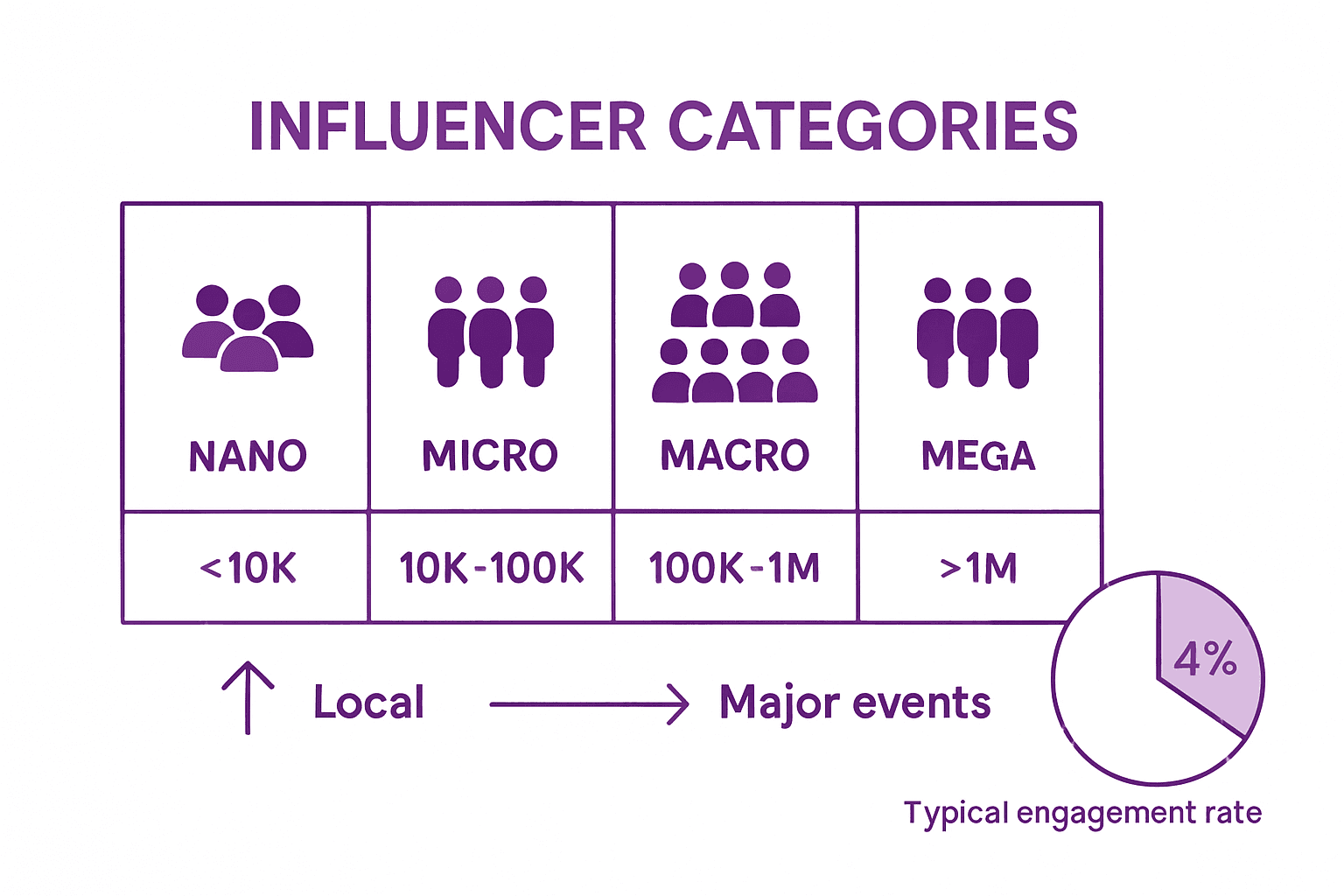
Below is a comparison of influencer types and their typical impact on event marketing outcomes:
| Influencer Category | Audience Size | Best For | Typical Engagement Rate |
|---|---|---|---|
| Nano Influencer | 1,000-10,000 | Local events, niche topics | Highest, highly personal |
| Micro Influencer | 10,000-50,000 | Special interest campaigns | High, authentic connections |
| Macro Influencer | 50,000-500,000 | Large public conferences | Moderate, substantial reach |
| Mega Influencer | 500,000+ | Major festivals, global launches | Lower, mass exposure |
Successful event campaigns leverage these influencer types strategically, matching their specific attributes with event objectives. For instance, a technology conference might collaborate with macro tech influencers, while a local music festival could benefit more from micro influencers with strong regional followings. Careful selection ensures that the influencer’s audience aligns closely with the event’s target demographic.
Pro Tip: Influencer Match Strategy: Always prioritise engagement rates and audience relevance over raw follower numbers when selecting influencers for event marketing campaigns.
Selecting Influencers for Event Success
Selecting the right influencer requires a sophisticated approach that goes beyond simple follower counts. Recent computational research reveals advanced methodologies for influencer identification that help event managers make more strategic partnership decisions.
The selection process involves comprehensive evaluation across multiple dimensions:
- Audience Alignment: Matching influencer demographics with event target market
- Content Authenticity: Assessing genuine engagement and audience interaction
- Reach and Visibility: Analysing potential event exposure
- Previous Campaign Performance: Reviewing historical marketing effectiveness
A nuanced approach to influencer selection demands detailed analysis. Computational models like InfluencerRank provide sophisticated frameworks for evaluating an influencer’s potential impact by examining their posting behaviours, social network interactions, and historical engagement metrics. This data-driven strategy moves beyond superficial metrics, enabling event managers to identify influencers who can genuinely drive audience interest and participation.

Successful influencer selection requires balancing quantitative metrics with qualitative assessment. While numerical data provides objective insights, understanding an influencer’s brand alignment, communication style, and audience trust remains crucial. Event managers must consider factors like content authenticity, audience demographics, and the influencer’s genuine interest in the event’s theme or industry.
Pro Tip: Strategic Compatibility Check: Always conduct a comprehensive background review of potential influencers, examining their past collaborations, audience sentiment, and alignment with your event’s core values and objectives.
Building Effective Influencer Partnerships
Building successful partnerships with influencers requires a strategic and nuanced approach that goes beyond transactional interactions. Research examining social media’s impact on event experiences highlights the critical importance of developing authentic, mutually beneficial relationships that align with both event objectives and influencer personal brands.
Effective influencer partnerships are built upon several foundational principles:
- Shared Value Alignment: Ensuring the influencer’s content philosophy matches event goals
- Transparent Communication: Establishing clear expectations and collaborative frameworks
- Creative Autonomy: Allowing influencers genuine creative expression
- Measurable Objectives: Defining specific, trackable partnership outcomes
The collaboration process demands a comprehensive understanding of each influencer’s unique audience and content ecosystem. Strategic research exploring brand loyalty dynamics reveals that successful partnerships emerge from deep, contextual understanding rather than superficial engagement metrics. Event managers must invest time in understanding an influencer’s communication style, audience demographics, and genuine passion for the event’s theme.
Negotiation and compensation strategies play a pivotal role in establishing robust partnerships. Beyond monetary compensation, effective collaborations incorporate comprehensive value propositions, including exclusive event access, networking opportunities, professional exposure, and potential long-term relationship development. The most successful partnerships are those that view influencers as strategic partners rather than mere promotional channels.
Pro Tip: Partnership Integrity Strategy: Develop comprehensive collaboration agreements that clearly outline mutual expectations, deliverables, compensation structures, and performance metrics, ensuring transparency and alignment from the outset.
Legal, Financial, and Ethical Considerations
Navigating the complex landscape of influencer marketing requires a comprehensive understanding of legal, financial, and ethical obligations. Emerging computational research underscores the critical importance of regulatory compliance in developing transparent and responsible marketing strategies that protect both event organisers and influencers.
Key legal and ethical considerations include:
- Disclosure Requirements: Mandatory transparency about sponsored content
- Contractual Clarity: Precise documentation of partnership terms
- Intellectual Property Rights: Clear ownership and usage agreements
- Financial Compensation Structures: Fair and documented payment mechanisms
The Federal Trade Commission’s guidelines provide critical framework for ethical influencer endorsements, emphasising the need for explicit content disclosures. Event managers must ensure influencers clearly communicate sponsored relationships, using appropriate hashtags or verbal disclaimers that indicate the commercial nature of their content. This transparency not only maintains legal compliance but also builds audience trust and credibility.
Financial negotiations require sophisticated approaches that go beyond simple monetary transactions. Successful partnerships incorporate comprehensive compensation models that might include performance-based incentives, revenue sharing mechanisms, exclusive event access, and long-term collaboration opportunities. These strategies create mutually beneficial relationships that align economic interests with ethical marketing practices.
This summary outlines essential legal and ethical aspects for event influencer collaborations:
| Aspect | Purpose | Real-World Example |
|---|---|---|
| Disclosure Clause | Ensures transparency of paid promotion | Use of #ad in social posts |
| Contractual Agreement | Details roles, rights, and obligations | Written agreement on deliverables |
| Intellectual Property | Clarifies ownership of content produced | Consent for event footage usage |
| Payment Terms | Provides fair, documented compensation | Flat fee plus ticket commission |
Pro Tip: Compliance Documentation Strategy: Develop standardised contract templates that explicitly outline disclosure requirements, content guidelines, performance metrics, and financial terms, ensuring legal protection and professional clarity for all parties involved.
Master Influencer Marketing with Expert Event Management Training
The challenge of selecting the right influencers and building authentic partnerships is central to succeeding in today’s event marketing landscape. The article highlights crucial pain points such as audience alignment, content authenticity, and legal compliance — areas where many aspiring event professionals struggle without proper guidance. To truly transform influencer strategies into memorable event experiences you need specialised skills that cover everything from strategic influencer selection to crafting ethical collaborations.
At teami.org, we provide comprehensive education designed to equip you with these exact capabilities. With over 24 years of industry experience and robust partnerships like DNA Entertainment Networks, our certification programs cover practical influencer marketing tactics alongside broader event management essentials. Gain hands-on experience through real projects, internships, and expert mentorship to confidently drive engagement and maximise event impact. Explore our specialised courses including social and corporate event management and prepare yourself for a thriving career.
Take the first step towards mastering influencer marketing strategies by visiting teami.org now. Want to turn the influencer insights from the article into real-world success Take action today and connect with us at Learn More and Enrol to begin your journey in cutting-edge event management training.
Frequently Asked Questions
What is influencer marketing in the context of event management?
Influencer marketing in event management is a strategy that involves partnering with digital personalities who utilise their social media presence to promote events, brands, and experiences, thereby enhancing visibility and engagement through authentic storytelling.
How do I select the right influencer for my event?
Selecting the right influencer involves evaluating their audience alignment, content authenticity, reach, and previous campaign performance. It’s crucial to choose influencers whose follower demographics closely match your event’s target audience.
What types of influencers are best for different events?
Nano and micro influencers are ideal for niche or localised events due to their higher engagement rates, while macro and mega influencers can generate significant visibility for large-scale events. Choosing based on the event’s objectives and audience is key.
What legal considerations should I be aware of when engaging influencers?
Legal considerations include ensuring proper disclosure of sponsored content, having clear contractual agreements outlining terms, and clarifying intellectual property rights regarding content produced for your event.
Recommended
- Essential Event Marketing Strategies for Career Success – team I
- Brand Activation Events: Driving Engagement and Loyalty – team I
- How to Get Clients for Events: Proven Steps for Success – team I
- Event Branding Essentials: Complete Guide – team I
- Influencer Marketing För B2B I Stockholm – Fungerar Det Verkligen? Så Lyckas Du! | Hive creatives
Thinking about a career in event management?
team I is Bangalore’s only EEMA-certified event management institute, running for 24 years, where students work on real live events with real budgets and real deadlines rather than classroom simulations. See the full range of event management courses in Bangalore, or go straight to the flagship Certificate Program in Event Management (CPEM).