

Most people are surprised to learn that the demand for skilled event managers in India has risen by over 50 percent in the last five years. While the glamorous side of event planning draws attention, the reality is that this career requires a unique blend of creativity, business acumen, and flawless execution. Whether you are seeking insights into how the british approach compares or want to understand the local expectations, this guide will help you grasp the essentials of the event manager’s role in India.
Table of Contents
- Defining The Event Manager Role In India
- Key Factors Influencing Salaries And Pay Scales
- Industry Sectors And Regional Salary Variations
- Essential Skills Qualifications And Certifications
- Career Progression Pathways And Growth Trends
Key Takeaways
| Point | Details |
|---|---|
| Event Manager Responsibilities | In India, event managers encompass strategic planning, logistical management, and client satisfaction, requiring a blend of creative vision and operational skills. |
| Salary Influences | Compensation varies significantly based on experience, event complexity, and geographical location, with metropolitan areas offering higher salaries. |
| Essential Skills | Strong organisational abilities, communication skills, and technical proficiency in project management are crucial for success in the event management sector. |
| Career Progression | Event management professionals can advance from entry-level roles to strategic positions by specialising in niche areas and adapting to emerging trends in the industry. |
Defining the Event Manager Role in India
In the dynamic landscape of India’s event management industry, an event manager plays a pivotal role in transforming conceptual ideas into extraordinary experiences. Their responsibilities extend far beyond simple event coordination, encompassing strategic planning, creative design, logistical management, and client satisfaction. According to employment guidelines, event managers in India are tasked with designing comprehensive event frameworks that integrate multiple complex elements.
The core responsibilities of an event manager in India typically include designing intricate event strategies, preparing targeted marketing plans, securing sponsorships, managing sophisticated logistics, and coordinating multiple vendors. These professionals must possess a unique blend of creative vision and practical operational skills. Whether organising corporate conferences, wedding celebrations, cultural festivals, or entertainment programmes, event managers must seamlessly integrate technical expertise with artistic imagination.
The role demands exceptional communication skills, meticulous attention to detail, and the ability to manage high-pressure environments. Event managers often work across diverse sectors including corporate, social, entertainment, sports, and cultural domains. Their professional toolkit includes advanced project management techniques, budgeting expertise, risk assessment capabilities, and strong interpersonal negotiation skills. Professional event managers in India are expected to understand local cultural nuances while maintaining international standards of event production and management.
Key professional capabilities required for successful event management in India include:
- Strategic planning and conceptualisation
- Budget management and financial tracking
- Vendor relationship and contract negotiation
- Technical production and staging expertise
- Client relationship management
- Crisis management and real-time problem solving
As the Indian event management industry continues to grow exponentially, professionals in this field must continually adapt, innovate, and develop their skills to meet increasingly sophisticated market demands.
Key Factors Influencing Salaries and Pay Scales
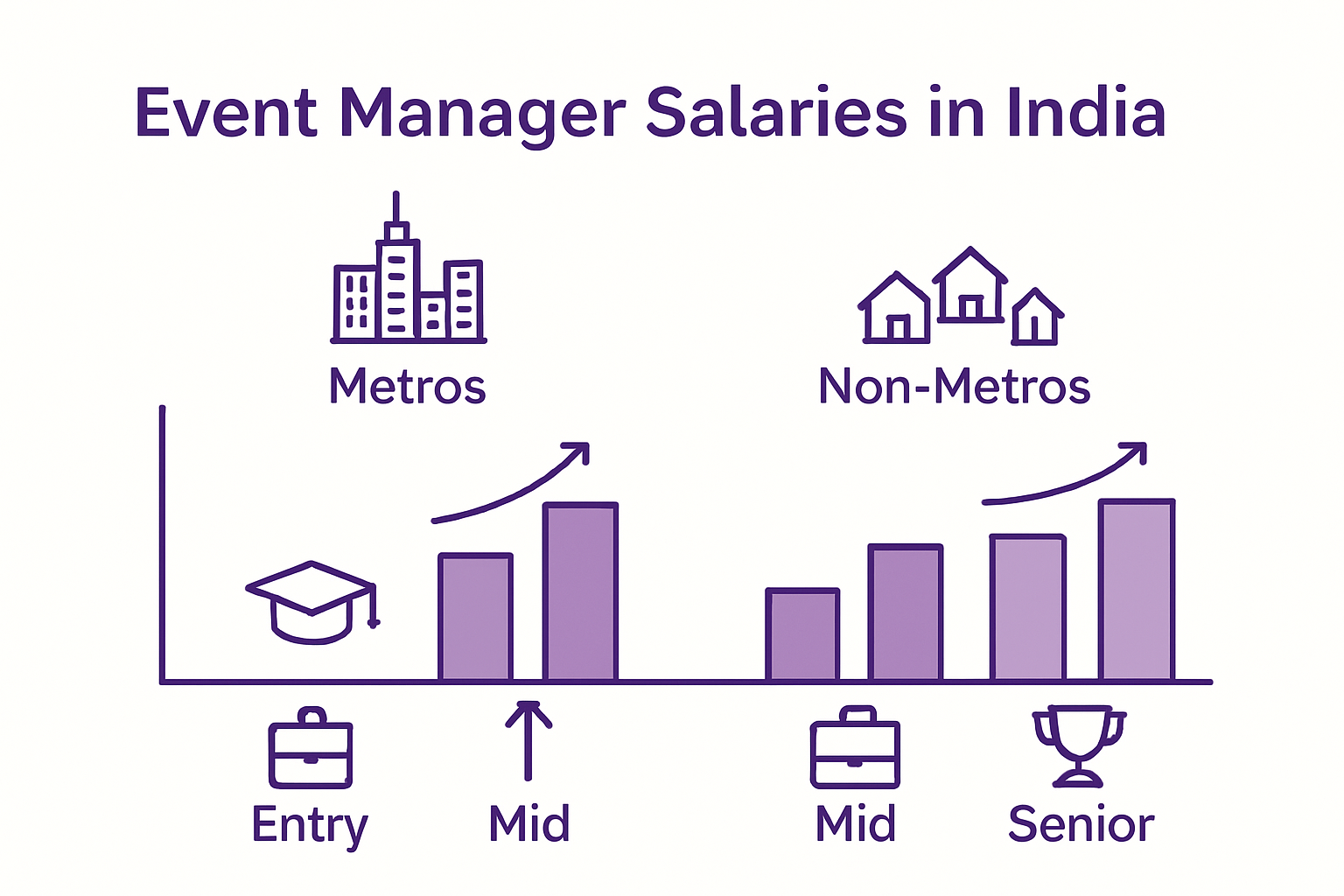
Event management salaries in India exhibit significant variation, driven by multiple complex factors that shape professional compensation. According to comprehensive career research, salary ranges are primarily structured around professional experience levels, with clear demarcations between entry-level, mid-level, and senior professionals. Typically, entry-level event managers with 0-2 years of experience can expect annual packages ranging from INR 3 to 6 lakhs, while mid-career professionals with 3-7 years of experience command salaries between INR 7 to 15 lakhs per annum.
The complexity and scale of events managed significantly impact earning potential. Corporate events, international conferences, large-scale weddings, and entertainment productions offer higher compensation compared to smaller, localised events. Specialisation becomes a critical determinant of salary, with professionals who demonstrate expertise in niche domains like technology conferences, high-end wedding planning, or corporate brand activations potentially earning substantially higher remuneration.

Professional qualifications and skill diversity play pivotal roles in determining compensation structures. Event managers with additional certifications, advanced technical skills, multilingual capabilities, and proven track records of successful large-scale event execution can negotiate more competitive salary packages. Industry insights suggest that factors such as company size, individual skill set, and specific event management expertise dramatically influence earning potential.
Key salary influencing elements include:
- Years of professional experience
- Event complexity and scale
- Industry sector specialisation
- Technical and soft skill proficiency
- Geographical location of employment
- Professional network and reputation
- Additional certifications and qualifications
Senior-level event managers with over seven years of experience can potentially earn INR 20 lakhs per annum or more, particularly when working with prestigious organisations or managing high-profile international events. The Indian event management landscape continues to evolve, offering increasingly sophisticated and financially rewarding career trajectories for skilled professionals.
Industry Sectors and Regional Salary Variations
Regional economic dynamics significantly influence event management salary structures across India, with metropolitan cities offering substantially different compensation packages compared to smaller urban centres. Metros like Mumbai, Delhi, Bengaluru, and Hyderabad demonstrate higher salary potential due to their robust corporate ecosystems, international business presence, and frequent large-scale event opportunities. These cities provide event managers with more diverse and lucrative professional prospects across multiple industry verticals.
The industry sector plays a critical role in determining salary ranges for event management professionals. Corporate events typically offer the most competitive compensation, with technology conferences, product launches, and international business summits providing premium remuneration. Entertainment sector events, including film festivals, music concerts, and cultural programmes, represent another high-potential domain. Social events such as wedding planning and community celebrations offer moderate but stable income streams for professionals with specialised skills and local market understanding.
Salary variations are not merely geographical but intricately linked to specific industry requirements and complexity levels. Industry research indicates that event managers working in technology, pharmaceutical, and financial sectors often command higher salaries compared to those in traditional event domains. The skill set required for managing sophisticated corporate events demands advanced technical knowledge, strategic planning capabilities, and exceptional communication skills, thereby justifying higher compensation packages.
Key regional and sectoral salary insights include:
- Metropolitan cities offer 30-50% higher salaries compared to tier-2 and tier-3 cities
- Corporate event management provides the highest average compensation
- Technology and pharmaceutical sectors pay premium rates for specialised event professionals
- Geographical location directly impacts earning potential
- Multinational companies typically offer more competitive salary packages
The Indian event management landscape continues to evolve, with emerging sectors like digital events, hybrid conferences, and experiential marketing creating new opportunities for professionals willing to adapt and develop specialised skill sets. Adaptability, continuous learning, and strategic networking remain crucial for maximising earning potential across different regional and industry contexts.
Essential Skills, Qualifications, and Certifications
Event management professionals require a sophisticated blend of technical expertise, interpersonal skills, and strategic thinking. Professional competencies from industry experts emphasise the critical importance of strong organisational abilities, exceptional communication skills, creative problem-solving, and the capacity to perform effectively under high-pressure environments. These foundational skills form the cornerstone of successful event management careers in India’s dynamic professional landscape.
Technical proficiencies play an equally significant role in modern event management. Professionals must demonstrate advanced capabilities in digital project management tools, budget tracking software, communication platforms, and event coordination technologies. Budget management, financial planning, vendor negotiation, and precise logistical coordination represent core technical skills that differentiate exceptional event managers. Proficiency in design software, social media marketing, digital presentation tools, and data analytics increasingly becomes crucial for professionals seeking competitive career advancement.
Recognised industry certifications can substantially enhance an event manager’s professional credibility and career prospects. Academic qualifications typically include undergraduate or postgraduate degrees in event management, hospitality management, public relations, or related disciplines. Professional certifications from reputable institutions provide additional validation of specialised skills, offering candidates a competitive edge in a rapidly evolving industry. Key certification areas include digital event management, wedding planning, corporate event coordination, international event standards, and specialised domain expertise.
Essential skills and qualifications for event management include:
- Strong communication and interpersonal abilities
- Advanced project management techniques
- Financial planning and budget management
- Digital technology proficiency
- Creative problem-solving capabilities
- Strategic planning and execution skills
- Vendor relationship management
- Cross-cultural communication expertise
Successful event managers continuously invest in professional development, staying updated with emerging industry trends, technological innovations, and evolving client expectations. The ability to adapt, learn quickly, and demonstrate versatility across different event formats remains paramount in building a sustainable and rewarding career in event management.
Career Progression Pathways and Growth Trends
Career progression in event management follows a dynamic trajectory characterised by strategic skill development and professional networking. Entry-level professionals typically commence their journey as assistant event coordinators or junior planners, gradually advancing through increasingly complex roles that demand sophisticated organisational and strategic capabilities. The initial phase involves mastering foundational skills, understanding industry dynamics, and building a robust professional portfolio that showcases diverse event management experiences.
The intermediate career stage represents a critical transformation point where event management professionals transition from operational roles to strategic positions. Specialisation becomes paramount during this phase, with professionals developing expertise in specific event domains such as corporate conferences, wedding planning, cultural festivals, or digital event management. Professionals who demonstrate exceptional communication skills, technological adaptability, and innovative problem-solving capabilities can accelerate their career progression, potentially moving into senior roles like event strategy consultants, programme directors, or independent event production entrepreneurs.
Industry growth trends suggest an increasingly sophisticated and technology-driven career landscape for event management professionals in India. The emergence of hybrid and virtual event formats, coupled with growing demand for immersive digital experiences, creates unprecedented opportunities for career expansion. Senior professionals may explore diverse career pathways including:
- Event strategy consulting
- Corporate event design and management
- Digital event production
- Training and educational roles
- Entrepreneurial event management ventures
- International event coordination
- Brand experience design
Successful career progression in event management requires continuous learning, technological proficiency, and the ability to anticipate and adapt to rapidly evolving industry trends. Professionals who invest in developing interdisciplinary skills, maintain a robust professional network, and demonstrate innovative thinking will be best positioned to capitalise on the dynamic opportunities emerging in India’s event management ecosystem.
Advance Your Career and Boost Your Event Manager Salary in India
The article highlights the growing complexity and competitive nature of the event management industry in India. Many aspiring and current event managers face challenges such as mastering strategic planning, enhancing technical skills, and gaining industry-relevant certifications to increase their earning potential. If you wish to overcome these hurdles and align yourself with current market demands like advanced project management, budgeting expertise, and specialised event domains, investing in the right education and training is crucial.
At teami.org we offer comprehensive certification programmes tailored to equip you with the exact skills needed to thrive. With 24 years of industry experience and partnership with DNA Entertainment Networks, our courses cover specialisations from social and sports events to corporate management. Experience hands-on projects, internships, and guidance designed to enhance your professional network and prepare you for higher salary brackets. Take control of your career progression today by exploring our offerings at teami.org.
Ready to transform your passion into a rewarding career with competitive salaries? Connect with us now at teami.org and start your journey toward becoming a sought-after event professional in India.
Frequently Asked Questions
What factors influence an event manager’s salary in India?
Event manager salaries in India vary significantly based on factors such as professional experience, the complexity and scale of events managed, industry sector specialisation, geographical location, and additional qualifications.
What is the average salary for entry-level event managers in India?
Entry-level event managers with 0-2 years of experience typically earn annual packages in the range of INR 3 to 6 lakhs.
How much can senior event managers earn in India?
Senior event managers with over seven years of experience can potentially earn INR 20 lakhs per annum or more, especially when working for prestigious organisations or managing high-profile international events.
What essential skills are required for a successful career in event management?
Key skills for successful event management include strong communication, project management proficiency, budget management, vendor relationship management, and creative problem-solving capabilities.
Recommended
- Why Event Management as a Career? India’s Opportunity and a Global Frontier
- How to Start Event Management Company: Complete Guide – team I
- Best Online Event Management Courses India 2025: Top Picks – team I
- What Is Event Management? Guide for Aspiring Professionals – team I
Thinking about a career in event management?
team I is Bangalore’s only EEMA-certified event management institute, running for 24 years, where students work on real live events with real budgets and real deadlines rather than classroom simulations. See the full range of event management courses in Bangalore, or go straight to the flagship Certificate Program in Event Management (CPEM).