

Every major british event faces a hidden challenge that is often underestimated: risk management. Studies show that over 60 percent of event disruptions could have been prevented with effective risk assessment and planning. From unpredictable weather to equipment security concerns, recognising and managing these risks defines the safety and success of any gathering. Understanding how to identify, evaluate, and control hazards gives organisers a crucial edge in delivering seamless and secure experiences for everyone involved.
Table of Contents
- Defining Event Risk Assessment and Its Importance
- Types of Risks in Event Management
- Step-By-Step Event Risk Assessment Process
- Legal Requirements and Industry Standards
- Roles, Responsibilities, and Common Pitfalls
Key Takeaways
| Point | Details |
|---|---|
| Importance of Event Risk Assessment | A systematic approach to identifying and managing potential hazards is essential for ensuring event safety and success. |
| Types of Risks | Event professionals must evaluate financial, operational, legal, security, environmental, and reputational risks to mitigate potential impacts. |
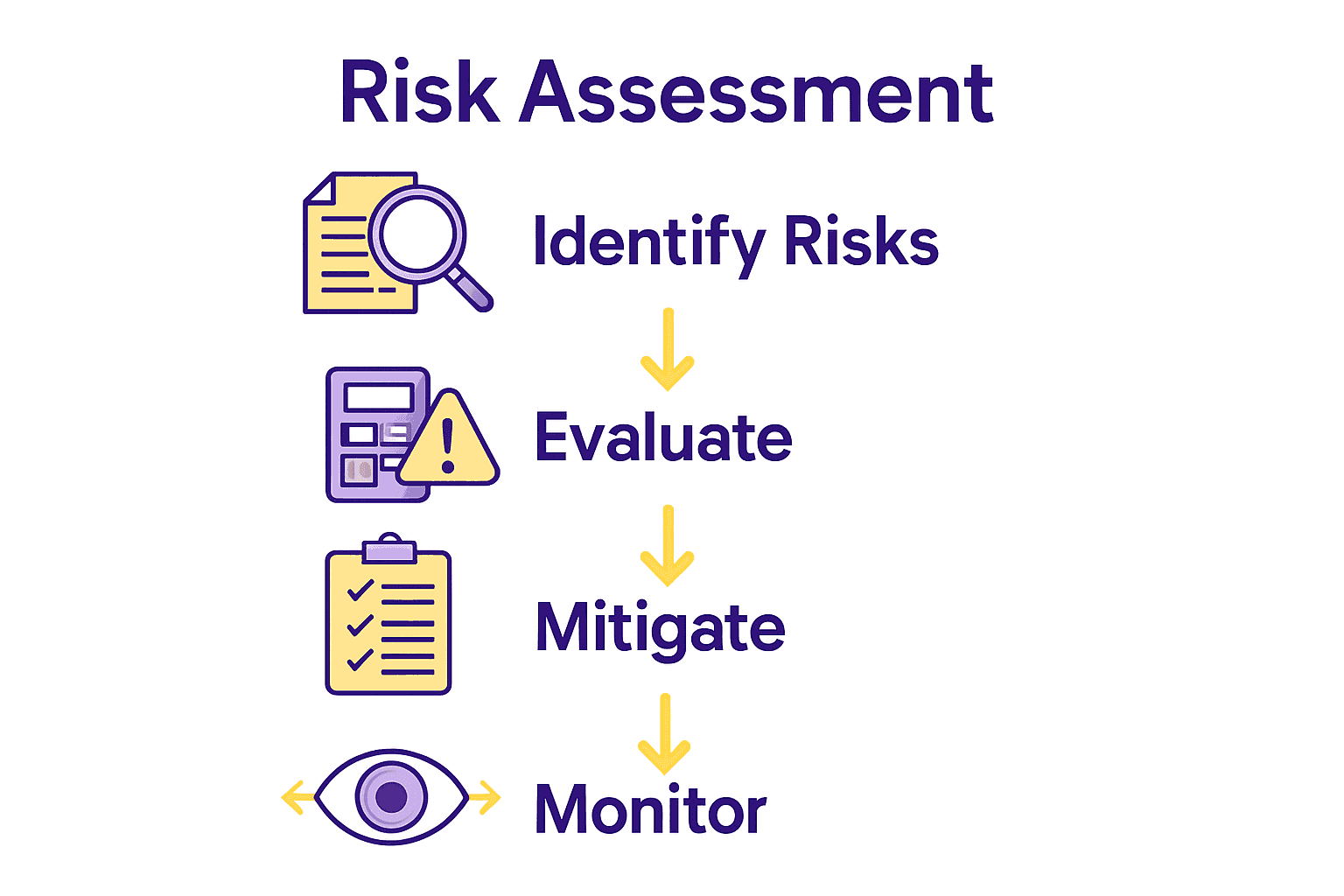
| Step-by-Step Risk Assessment Process | A structured approach, including risk identification, evaluation, mitigation strategy development, and continuous monitoring, is crucial for effective management. |
| Legal and Compliance Considerations | Adhering to industry standards and legal requirements safeguards both event organisers and participants during the planning and execution of events. |
Defining Event Risk Assessment and Its Importance
In the dynamic world of event management, risk assessment emerges as a critical process for ensuring safety, success, and operational efficiency. According to ijaar.co.in, event planning involves coordinating numerous complex elements, each potentially exposing organisers to various risks spanning financial, operational, legal, and environmental domains.
At its core, event risk assessment is a systematic approach to identifying, evaluating, and mitigating potential hazards before, during, and after an event. As defined by en.wikipedia.org, this process involves comprehensively examining potential events that might negatively impact individuals, assets, or the environment. The goal is not to eliminate risks entirely but to manage them strategically, reducing their likelihood and potential consequences.
Key components of effective event risk assessment typically include:
- Hazard identification: Recognising potential threats specific to the event
- Risk analysis: Evaluating the probability and potential impact of identified risks
- Mitigation strategies: Developing actionable plans to minimise or control potential issues
- Continuous monitoring: Implementing real-time tracking and adaptive responses
Successful risk assessment requires a proactive mindset. Event professionals must anticipate challenges, from crowd management complexities to unexpected logistical disruptions. Understanding event crowd management strategies can provide additional insights into creating comprehensive safety protocols that protect both participants and organisers.
Types of Risks in Event Management
Event management involves navigating a complex landscape of potential risks that can significantly impact an event’s success and safety. Financial risks, operational challenges, security concerns, and environmental factors represent critical areas event professionals must carefully evaluate and manage. Evm.institute highlights one particularly vulnerable aspect: equipment security, noting that valuable technical gear like audio-visual systems and lighting equipment are prime targets for potential theft.
Comprehensive risk assessment requires understanding different risk categories.
 Financial risks include budget overruns, unexpected expenses, and potential revenue losses. Operational risks encompass logistical challenges such as vendor coordination, scheduling conflicts, and technical equipment failures. Legal risks involve potential liability issues, contract disputes, and compliance requirements. Safety risks address crowd management, emergency preparedness, and potential health hazards.
Key risk categories in event management include:
- Security Risks: Potential theft, unauthorized access, crowd control issues
- Financial Risks: Budget constraints, unexpected expenses, revenue uncertainties
- Operational Risks: Technical failures, vendor coordination challenges
- Environmental Risks: Weather conditions, venue-specific hazards, natural disruptions
- Reputational Risks: Potential negative publicity, attendee dissatisfaction
For event professionals seeking to enhance their risk management skills, understanding comprehensive event logistics can provide crucial insights into anticipating and mitigating potential challenges. Successful risk management requires a proactive approach, combining strategic planning, continuous monitoring, and adaptive problem-solving techniques.
Step-By-Step Event Risk Assessment Process
Navigating the complex landscape of event risk management requires a systematic and strategic approach. According to en.wikipedia.org, risk assessment is crucial for evaluating uncertain events with potentially significant consequences. The international standard for risk management, ISO/IEC 31010, provides a comprehensive framework that event professionals can adapt to their specific context.
Risk identification represents the foundational stage of the assessment process. This involves meticulously examining all potential risks across multiple dimensions of event planning. Event managers must conduct thorough preliminary research, engage stakeholders, and leverage historical data to create a comprehensive risk inventory. This stage requires a holistic approach, considering everything from logistical challenges to potential environmental disruptions.
A structured risk assessment process typically involves these critical stages:
- Initial Risk Identification
- Comprehensive stakeholder consultation
- Review of previous event incidents
- Detailed venue and logistical analysis
- Risk Evaluation and Prioritization
- Assessing probability of occurrence
- Determining potential impact
- Ranking risks by severity
- Mitigation Strategy Development
- Creating specific action plans
- Allocating resources
- Establishing contingency mechanisms
- Continuous Monitoring and Review
- Real-time risk tracking
- Adaptive response protocols
- Post-event comprehensive analysis
For event professionals seeking to enhance their planning capabilities, the comprehensive event planning checklist can provide additional structured guidance. Successful risk management is not about eliminating all potential challenges, but developing robust, flexible strategies that enable proactive problem-solving and rapid adaptation.
Legal Requirements and Industry Standards
Industry standards form the critical backbone of professional event risk management, providing a structured framework for ensuring safety, compliance, and operational excellence. En.wikipedia.org highlights the significance of international standards like ISO/IEC 31010, which offers comprehensive risk management techniques developed by the International Organization for Standardization and the International Electrotechnical Commission.
Legal requirements in event management span multiple domains, including health and safety regulations, contractual obligations, liability protection, and environmental compliance. Event professionals must navigate a complex landscape of local, state, and potentially national regulations that govern everything from crowd management to emergency preparedness. These legal frameworks are designed to protect both event organisers and participants, establishing clear guidelines for risk mitigation and responsible event planning.
Key legal and industry standard considerations include:
- Venue Compliance: Meeting local safety and occupancy regulations
- Insurance Requirements: Comprehensive liability coverage
- Participant Safety: Implementing mandatory health and security protocols
- Contractual Obligations: Clear vendor and stakeholder agreements
- Risk Documentation: Maintaining comprehensive risk assessment records
Corporate event planning guidelines provide additional insights into navigating the intricate legal landscape of professional event management. Successful compliance requires a proactive approach, combining thorough research, continuous education, and a commitment to maintaining the highest standards of professional practice.
Roles, Responsibilities, and Common Pitfalls
Effective event risk management demands a nuanced understanding of professional roles and potential challenges. Ijaar.co.in research emphasises the critical importance of exploring risk management practices and developing robust mitigation strategies across event planning domains. The success of any event hinges on clear role definition and proactive risk anticipation.
Risk Management Team Composition typically involves multiple key stakeholders, each with distinct responsibilities. The Event Manager serves as the primary strategic coordinator, responsible for overseeing comprehensive risk assessment. Safety Coordinators focus on implementing protective protocols, while Financial Managers evaluate potential economic vulnerabilities. Legal Advisors ensure regulatory compliance and manage potential liability issues. Technical Specialists address equipment and operational risks.
Common pitfalls in event risk management include:
- Inadequate Planning: Failing to conduct comprehensive preliminary risk assessments
- Communication Breakdowns: Poor interdepartmental coordination
- Budget Underestimation: Insufficient financial contingency planning
- Compliance Oversights: Neglecting critical legal and safety regulations
- Incomplete Documentation: Weak record-keeping of risk management processes
Professionals seeking to enhance their strategic capabilities can benefit from exploring detailed event planning resources. Success in event risk management requires a holistic approach, combining technical expertise, strategic thinking, and continuous adaptive learning.
Master Event Risk Assessment with Expert Training
Managing the many risks highlighted in “The Essential Guide to Event Risk Assessment” can feel overwhelming — from identifying key hazards to developing sharp mitigation strategies. If you want to turn uncertainty into confidence you need specialised knowledge and hands-on experience to handle financial, operational, and legal risks effectively. Our courses at teami.org focus on real-world applications of risk assessment techniques taught through a blend of theory and practical projects.
Take control of your event career by learning from industry leaders partnered with DNA Entertainment Networks. Explore our comprehensive certification programs designed for aspiring event professionals eager to build expertise in safety protocols and compliance. Don’t wait to develop the skills to anticipate challenges and adapt rapidly. Start your journey today by contacting us at teami.org and transform your understanding of event risk management into a competitive career advantage.
Frequently Asked Questions
What is event risk assessment?
Event risk assessment is a systematic process used to identify, evaluate, and mitigate potential hazards that could negatively impact an event. It aims to manage risks strategically rather than eliminate them entirely, focusing on reducing their likelihood and potential consequences.
Why is risk assessment important in event management?
Risk assessment is crucial in event management because it ensures safety, operational efficiency, and the overall success of an event. By identifying potential risks, event professionals can develop effective strategies to mitigate them, protecting both participants and organisers from unforeseen challenges.
What are the key components of effective event risk assessment?
The key components include hazard identification, risk analysis, mitigation strategies, and continuous monitoring. Each component plays a vital role in systematically addressing potential risks before, during, and after the event.
What types of risks should be considered in event planning?
Event planners must consider various types of risks, including financial risks, operational challenges, security concerns, environmental factors, and reputational risks. Each category demands specific strategies to ensure comprehensive risk management.
Recommended
- Event Budget Planning Guide 2025: Steps for Success – team I
- Event Planning Checklist 2025: Step-by-Step Guide for Success – team I
- Sports Event Management: Essential Skills, Jobs, and Certifications 2025 – team I
- What Are Event Logistics? Complete Industry Guide – team I
- What Is Event Security? Complete UK Guide | Brainiac Media
- Insurance Risk Management Explained: Best Practices – Digital Insurance Platform | IBSuite Insurance Software | Modern Insurance System
Thinking about a career in event management?
team I is Bangalore’s only EEMA-certified event management institute, running for 24 years, where students work on real live events with real budgets and real deadlines rather than classroom simulations. See the full range of event management courses in Bangalore, or go straight to the flagship Certificate Program in Event Management (CPEM).