

Over 60 percent of British professionals entering event management struggle to pinpoint the real differences between event planners and coordinators. This confusion is common because both roles seem similar from the outside, yet their day-to-day work and career paths vary greatly. If you want to thrive in the vibrant British event industry, understanding these distinctions is the first step to choosing the right path and standing out in a crowded field.
Table of Contents
- Event Planner Vs Coordinator: Core Definitions
- Key Responsibilities And Scope Of Each Role
- Essential Skills And Required Qualifications
- Typical Career Paths And Industry Recognition
- Choosing Between Roles: Critical Considerations
Key Takeaways
| Point | Details |
|---|---|
| Event planners and coordinators have distinct roles | Event planners strategise and manage the overall vision, while coordinators focus on the execution and logistics during events. |
| Essential skills vary between roles | Planners require strong strategic thinking and budget management, whereas coordinators excel in operational execution and real-time problem solving. |
| Career paths offer different opportunities | Event planners may pursue freelance or corporate roles, while coordinators often progress through operational positions within the industry. |
| Choosing the right role requires self-assessment | Consider personal strengths, career goals, and preferred job responsibilities to determine alignment with either role. |
Event Planner vs Coordinator: Core Definitions
In the dynamic world of event management, the roles of event planner and event coordinator are often confused but distinctly different professional paths. According to Indeed, an event planner is responsible for creating the comprehensive strategy and vision for events, including critical tasks like vendor selection, budget management, and establishing project timelines.
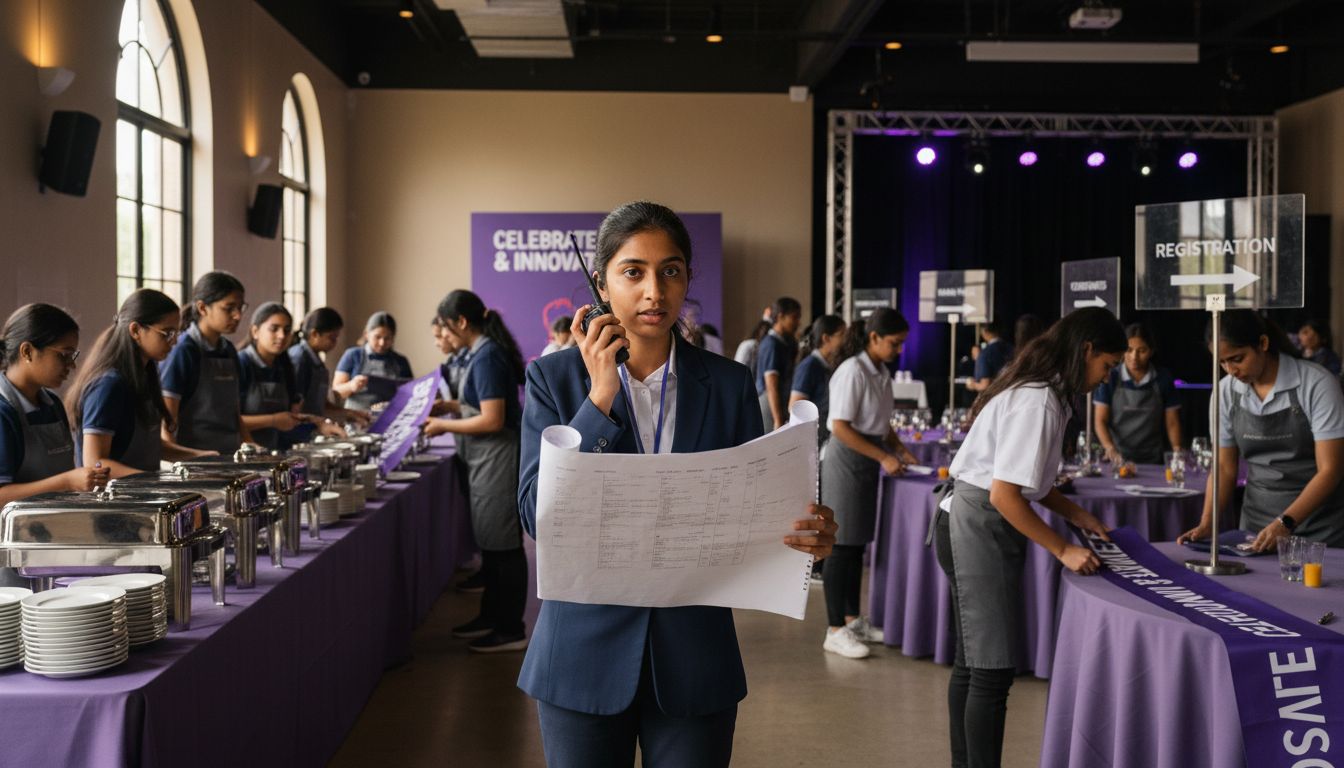
While an event planner designs the overarching event blueprint, an event coordinator focuses on tactical execution and day-of logistics. Their primary role involves managing specific operational details, ensuring vendors arrive on time, coordinating team communications, and troubleshooting challenges during the actual event. Coordinators essentially transform the planner’s strategic vision into a seamless, functioning reality.
The key differences between these roles can be summarized through their core responsibilities:
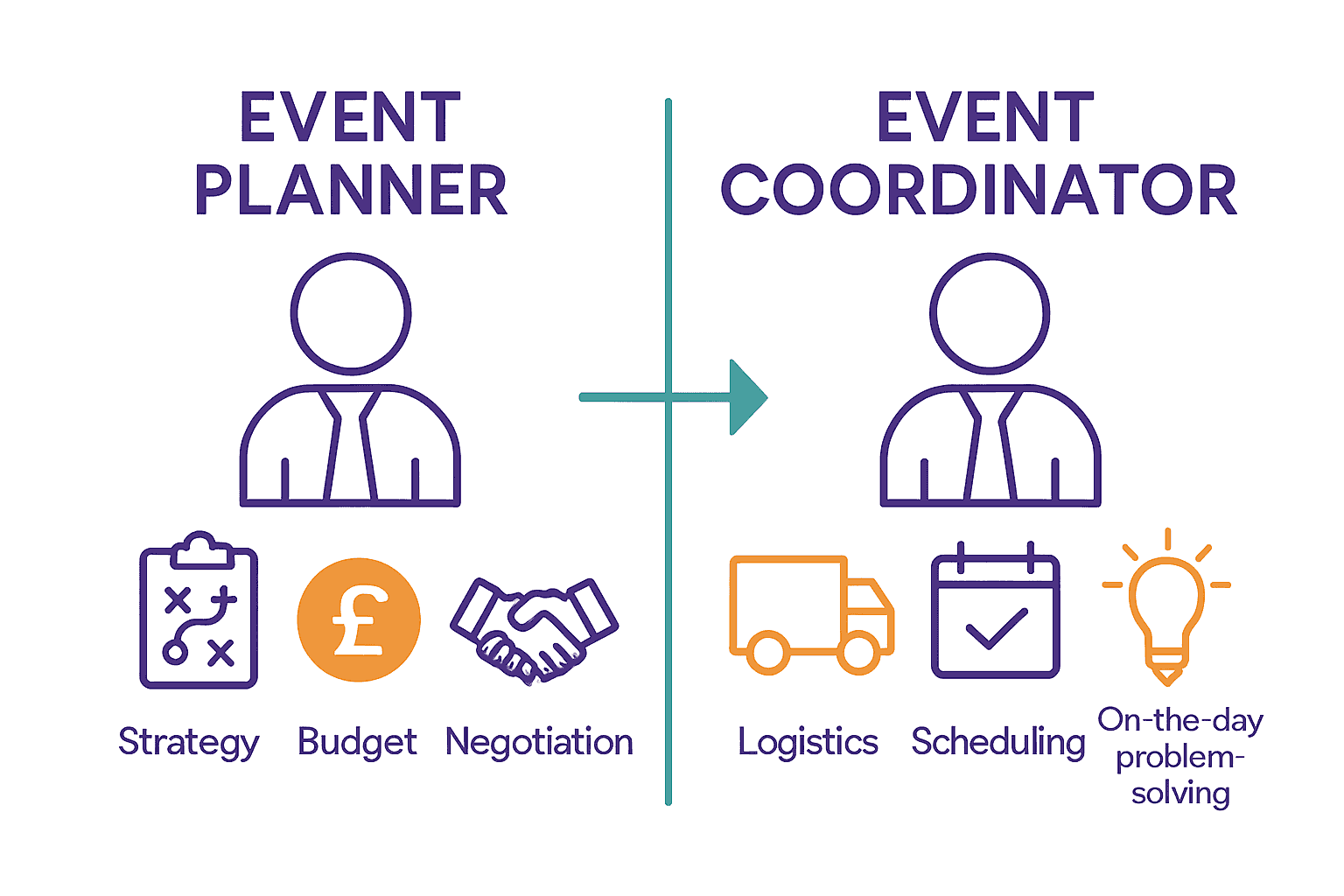
- Event Planner: Strategic design, concept development, budget creation, vendor negotiations
- Event Coordinator: Operational management, logistical coordination, real-time problem solving
For aspiring professionals looking to understand these nuanced roles in greater depth, our guide on event management for beginners provides comprehensive insights into the industry’s professional landscape. Whether you’re dreaming of designing spectacular corporate conferences or intimate wedding celebrations, understanding these distinct yet interconnected roles is your first step towards a successful event management career.
Key Responsibilities and Scope of Each Role
In the intricate landscape of event management, event planners and event coordinators have distinctive yet complementary roles that are crucial for successful event execution. Indeed highlights that event planners are primarily responsible for comprehensive client interactions, strategic planning, and overarching project management.
For event planners, the scope of work involves several critical responsibilities. These professionals engage directly with clients to comprehend their vision, develop detailed event concepts, and create comprehensive budgetary frameworks. They meticulously select and negotiate with vendors, oversee event planning staff, and design the entire event strategy from conceptualization to potential implementation.
Event coordinators, in contrast, focus on the tactical and operational dimensions of event execution. Their responsibilities are more granular and hands-on, involving:
- Client Liaison: Managing communication between planners and clients
- Vendor Management: Coordinating with venues and service providers
- Logistical Execution: Implementing specific event elements like decor, guest management, and day-of scheduling
- Real-time Problem Solving: Addressing unexpected challenges during events
Professionals seeking deeper insights into these nuanced roles can explore our guide on event management for beginners, which provides comprehensive context about the evolving landscape of event management careers. Understanding the intricate balance between planning and coordination is fundamental for anyone aspiring to excel in this dynamic professional domain.
Essential Skills and Required Qualifications
Successful event professionals must develop a robust skill set that transcends traditional job descriptions. Indeed emphasizes that both event planners and coordinators require exceptional communication skills, customer service abilities, and meticulous attention to detail to thrive in this competitive industry.
For event planners, educational qualifications often include a bachelor’s degree in hospitality management, business administration, or event management. Beyond academic credentials, advanced skills like strategic thinking, financial planning, and creative problem-solving become crucial. Planners typically need comprehensive knowledge of budgeting techniques, vendor negotiation strategies, and the ability to translate client visions into executable event designs.
Event coordinators require a complementary yet distinct skill set, which includes:
- Operational Expertise: Proficiency in logistics and real-time management
- Technical Skills: Familiarity with event management software and digital planning tools
- Interpersonal Abilities: Strong communication and conflict resolution skills
- Local Network Understanding: Deep knowledge of local venues, vendors, and service providers
Aspiring professionals can gain valuable insights and preparation through our event management for beginners guide, which provides comprehensive strategies for developing these essential professional competencies. Ultimately, success in event planning and coordination demands a blend of technical knowledge, creative thinking, and exceptional interpersonal skills.
Typical Career Paths and Industry Recognition
The event management profession offers diverse and dynamic career trajectories for ambitious professionals, with event planners and event coordinators experiencing multiple advancement opportunities across corporate, social, and specialized event sectors. Young professionals typically begin their careers in entry-level roles, gradually building expertise and expanding their professional networks.
For event coordinators, the initial career path often involves supporting senior planners, managing specific event segments, and developing operational skills. Progression might include roles like junior coordinator, senior coordinator, and eventually event management positions. Specialization becomes crucial, with opportunities emerging in corporate events, wedding planning, conference management, and niche sectors like technology or entertainment events.
Event planners tend to have more strategic career progression, which can include:
- Freelance Professional: Independent event planning consultant
- Corporate Event Specialist: Managing events for large organizations
- Entrepreneurial Path: Establishing personal event planning businesses
- Sector Specialization: Focusing on wedding, corporate, or social event domains
Professionals looking to understand the nuanced career landscape can explore our event management for beginners guide, which provides comprehensive insights into industry opportunities and professional development strategies. Success in this field requires continuous learning, networking, and adapting to evolving industry trends and client expectations.
Choosing Between Roles: Critical Considerations
Event planning and event coordination represent distinct professional pathways that require careful introspection and strategic career planning. Indeed highlights that the primary differentiator between these roles lies in the scope of work and level of responsibility, with planners typically handling entire event frameworks while coordinators focus on specific operational aspects.
When contemplating which role aligns best with your professional aspirations, several critical factors demand consideration. Prospective professionals should evaluate their personal strengths, preferred working style, and long-term career objectives. Event planners require robust strategic thinking, creative vision, and comprehensive project management skills. In contrast, event coordinators thrive on detailed execution, real-time problem solving, and operational precision.
Key decision-making factors include:
- Personal Skill Set: Matching individual strengths with role requirements
- Career Trajectory: Understanding potential advancement opportunities
- Financial Considerations: Recognizing potential earnings and compensation differences
- Professional Temperament: Assessing preference for strategic versus tactical work
Aspiring event management professionals can gain deeper insights by exploring our event management for beginners guide, which provides comprehensive guidance on navigating these nuanced career choices. The most successful professionals remain adaptable, continuously developing skills that transcend traditional role boundaries.
Unlock Your Event Management Career with Expert Training
Understanding the roles of an event planner and an event coordinator is only the first step in forging a successful career in event management. This article highlights the critical challenge many aspiring professionals face: bridging the gap between knowing the differences and confidently stepping into these dynamic roles. The complex mix of strategic vision, operational precision, and real-time problem solving can feel overwhelming without proper guidance and hands-on experience.
At teami.org, we turn these challenges into opportunities. With 24 years of industry expertise and recognised accreditations, we offer specialised certification courses that cover every aspect mentioned in the article—from strategic event planning to detailed coordination. Our unique blend of online and hybrid learning, combined with internships and live event participation, equips you with the skills to transform your passion into a rewarding profession. Ready to move beyond theory and gain practical exposure? Explore our comprehensive event management for beginners guide and start your journey with confidence.
Take control of your future today. Discover how our tailored courses and industry connections can empower your event career by visiting teami.org. Connect with us now and step into the world of event management equipped to succeed.
Frequently Asked Questions
What is the main difference between an event planner and an event coordinator?
The primary difference lies in the scope of work: event planners focus on the strategic design and overall vision of an event, while event coordinators manage the operational tasks and logistics during the event execution.
What skills are essential for event planners?
Event planners require strong strategic thinking, financial planning abilities, vendor negotiation skills, and creative problem-solving capabilities, along with excellent communication and customer service skills.
What responsibilities do event coordinators handle on the day of the event?
Event coordinators manage real-time logistical execution, including vendor coordination, guest management, schedule adherence, and troubleshooting any issues that arise during the event.
How can someone decide which role is right for them in event management?
Prospective professionals should evaluate their personal strengths and preferences, as those who enjoy strategic and creative work may lean towards event planning, while those who thrive on detailed logistical execution may prefer coordination.
Recommended
- Key Event Coordinator Responsibilities Explained Clearly – team I
- What is Event Planning? A Guide for Future Professionals 2025 – team I
- 7 Event Management Career Options for Aspiring Professionals – team I
- 7 Jobs After Event Management to Boost Your Career – team I
- Role of Event Manager: Complete Guide for Businesses – Uproduction
- The Essential Guide to Concierge Services in Corporate Events | Trinity Concierge
Thinking about a career in event management?
team I is Bangalore’s only EEMA-certified event management institute, running for 24 years, where students work on real live events with real budgets and real deadlines rather than classroom simulations. See the full range of event management courses in Bangalore, or go straight to the flagship Certificate Program in Event Management (CPEM).