
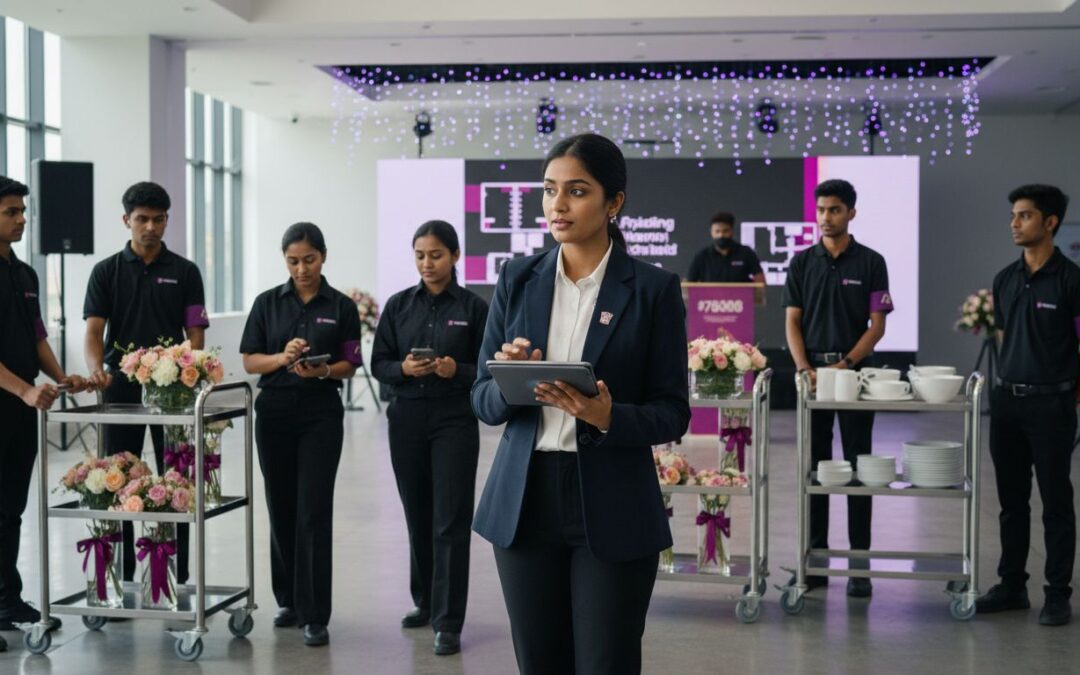
Over 90 percent of successful events credit their impact to meticulous planning and seamless execution. In the fast-paced world of event management, every detail can make or break a guest’s experience. Understanding what an event planner actually does helps reveal the blend of creativity, organization, and skill behind every memorable occasion. Discover what sets these experts apart and why their role is vital whether planning corporate conferences, weddings, or milestone celebrations.
Table of Contents
- Defining The Role Of An Event Planner
- Types Of Event Planning Specializations
- Daily Duties And Core Responsibilities
- Essential Skills And Qualifications Needed
- Common Challenges And How To Overcome Them
- Career Growth, Trends, And Opportunities
Key Takeaways
| Point | Details |
|---|---|
| Role and Skills | Event planners are creative storytellers who require a blend of strategic and operational skills, including budget management, negotiation, and emotional intelligence. |
| Specializations | Event planning encompasses various specializations, such as corporate, wedding, and cultural events, each requiring unique expertise and skills. |
| Daily Responsibilities | Event planners handle tasks throughout the event lifecycle, from initial planning and vendor management to on-site coordination and post-event evaluations. |
| Challenges and Solutions | Common challenges in event planning include budget constraints and last-minute changes; effective problem-solving involves preparation and maintaining flexible communication. |
Defining the Role of an Event Planner
An event planner is a dynamic professional who transforms abstract concepts into memorable experiences. According to California State University San Bernardino, event planners coordinate various events by overseeing comprehensive planning and logistics, including critical elements like theme development, program design, venue selection, décor coordination, vendor management, and precise budget control.
The scope of an event planner’s responsibilities extends far beyond simple logistics. These professionals are essentially storytellers who craft immersive experiences through meticulous planning and creative vision. Whether organizing corporate conferences, wedding celebrations, cultural festivals, or academic symposiums, event planners must possess a unique blend of creative imagination and strategic operational skills.
Key responsibilities of an event planner typically include:
- Conceptualizing event themes and objectives
- Negotiating contracts with venues and vendors
- Managing comprehensive event budgets
- Developing detailed event timelines
- Coordinating technical and logistical requirements
- Ensuring seamless guest experiences
- Handling unexpected challenges with professionalism
As UC Berkeley iSchool highlights, event planners manage events across diverse scales – from intimate gatherings to large-scale productions – requiring exceptional organizational skills, creativity, and the ability to anticipate and resolve complex operational challenges.
Professional event planners must also stay current with emerging trends in technology, design, and experiential marketing. This means continuously updating skills in areas like digital event platforms, sustainable event practices, and innovative engagement strategies. The role demands not just technical competence, but also emotional intelligence, adaptability, and a genuine passion for creating extraordinary moments that leave lasting impressions.
Types of Event Planning Specializations
Event planning is a dynamic profession with multiple specialization areas that cater to diverse industry needs. Wikipedia highlights that professional conference organisers represent one critical specialization, focusing on managing congresses, conferences, seminars, and providing comprehensive services including program development and complex logistical coordination.
The primary event planning specializations include:
- Corporate Events: Conferences, product launches, team building, annual meetings
- Wedding Planning: Designing and executing wedding celebrations across various cultural traditions
- Social Events: Milestone celebrations, birthday parties, anniversaries, fundraisers
- Cultural Events: Festivals, cultural exhibitions, community gatherings
- Sports Events: Tournament management, athlete ceremonies, sports marketing events
- Academic Events: Symposiums, graduation ceremonies, educational conferences
- Entertainment Events: Music festivals, award ceremonies, live performances
As noted by Bologna Business School, event planners fundamentally focus on the creative and strategic aspects before the event, meticulously designing themes, atmospheres, and layouts to precisely reflect client requirements and vision.
Each specialization demands unique skills and expertise. Corporate event planners must understand business communication and professional networking dynamics, while wedding planners require exceptional design sensibilities and emotional intelligence. Sports event specialists need deep understanding of athletic event logistics, and cultural event coordinators must navigate complex social and cultural sensitivities. Successful event planners often develop deep expertise in one or two specializations while maintaining broad knowledge across different event types.

Daily Duties and Core Responsibilities
Event planning is a complex profession that demands exceptional organizational skills and meticulous attention to detail. According to University of New Mexico Job Descriptions, event planners actively participate in critical processes like goal setting, program evaluation, serving as primary liaison points, contract negotiation, and comprehensive logistics coordination.
Pre-Event Planning Responsibilities typically include:
- Conducting initial client consultations
- Developing comprehensive event proposals
- Establishing clear event objectives
- Creating detailed project timelines
- Researching and selecting appropriate venues
- Developing precise budgetary frameworks
Event Execution Responsibilities encompass:
- Managing vendor relationships
- Coordinating technical and logistical requirements
- Supervising event setup and breakdown
- Ensuring seamless event flow
- Handling real-time problem resolution
- Managing guest experience and expectations
As Adzuna highlights, event planners are responsible for conceptualizing events from inception to completion. This involves a comprehensive approach that includes venue selection, contract negotiations, budget management, logistical coordination, challenge troubleshooting, event execution, and post-event success evaluation.
Post-event responsibilities are equally crucial. Successful event planners conduct thorough debriefings, compile detailed reports, gather client and attendee feedback, and analyze event performance metrics. These final steps are essential for continuous improvement and building a reputation for delivering exceptional experiences.
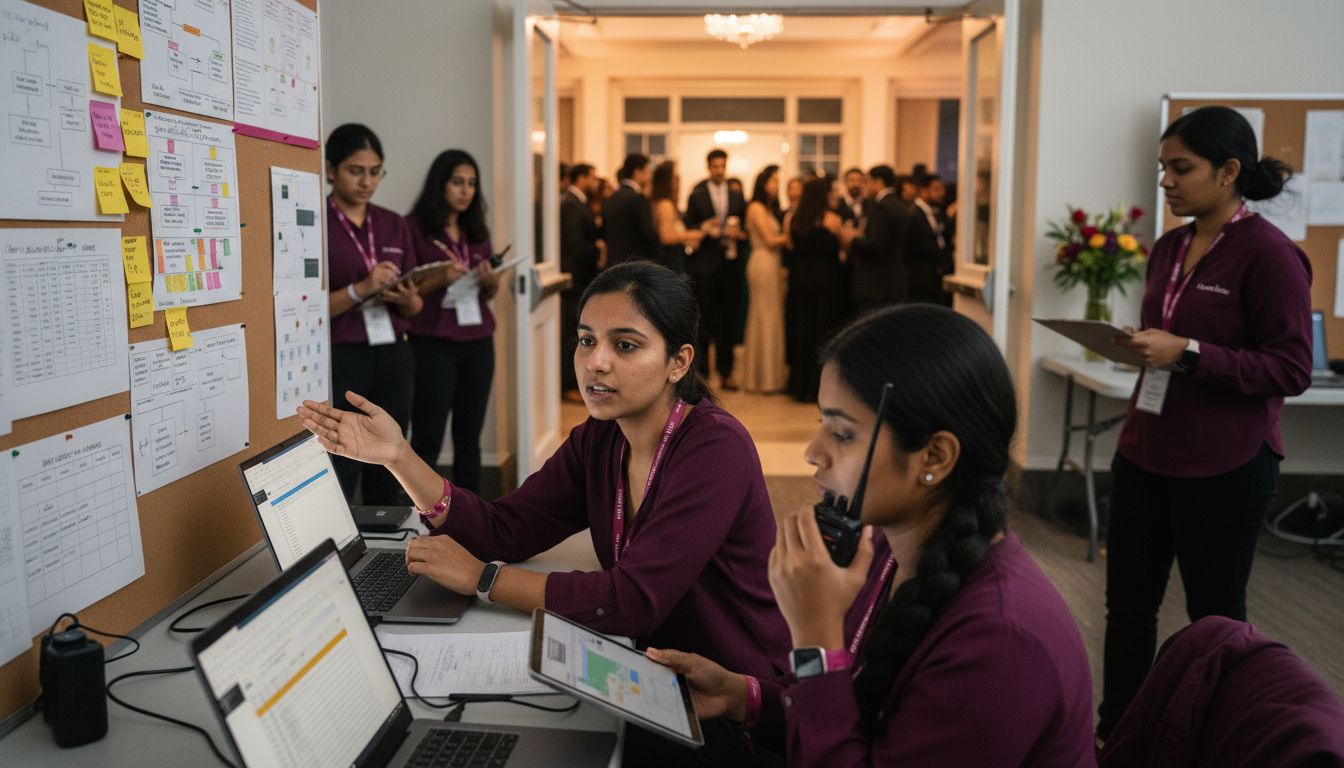 The role demands not just technical skills, but also emotional intelligence, adaptability, and the ability to remain calm under pressure.
Essential Skills and Qualifications Needed
Becoming a successful event planner requires a unique combination of technical expertise and interpersonal skills. California State University San Bernardino highlights the critical skills essential for event planning professionals, emphasizing creativity, exceptional problem-solving abilities, high-level organizational skills, capacity to manage pressure under tight deadlines, and strong interpersonal communication.
Core Soft Skills include:
- Exceptional communication
- Emotional intelligence
- Adaptability and flexibility
- Stress management
- Active listening
- Conflict resolution
- Creativity and innovation
Technical Skills and Competencies:
- Budget management
- Digital event planning software
- Contract negotiation
- Project management
- Data analysis
- Marketing fundamentals
- Basic graphic design
Professional qualifications can significantly enhance career prospects. Wikipedia notes the Certified Meeting Professional (CMP) credential, established by the Events Industry Council, as a recognized certification demonstrating professional expertise through a rigorous eligibility and examination process.
Successful event planners continuously invest in their professional development. This means staying updated with industry trends, attending workshops, networking with professionals, and potentially pursuing specialized certifications. While formal education in event management, hospitality, or marketing provides a strong foundation, practical experience, a robust portfolio, and demonstrable skills often matter more in this dynamic and creative profession.
Common Challenges and How to Overcome Them
Event planning is a profession fraught with unexpected complexities and rapid-fire challenges that test even the most experienced professionals. Adzuna emphasizes that event planners consistently face unforeseen obstacles and last-minute changes, requiring exceptional troubleshooting skills and rapid implementation of effective solutions.
Primary Challenges Event Planners Encounter:
- Budget constraints and financial limitations
- Vendor coordination and communication breakdowns
- Unexpected technical failures
- Last-minute guest or client requests
- Weather-related disruptions
- Logistical coordination complexities
- Conflicting stakeholder expectations
Strategic Problem-Solving Approaches:
- Develop comprehensive contingency plans
- Maintain flexible communication channels
- Create buffer time in event schedules
- Cultivate strong vendor relationships
- Invest in technology and backup systems
- Practice scenario-based planning
- Maintain calm and professional demeanor
According to EdMates, successful event management hinges on meticulous logistics coordination, ensuring rigorous compliance with legal and operational requirements, and maintaining transparent financial records. This approach transforms potential challenges into opportunities for demonstrating professional expertise.
Ultimately, overcoming challenges requires a combination of proactive planning, emotional intelligence, and adaptive thinking. Seasoned event planners view unexpected situations not as obstacles, but as chances to showcase their problem-solving capabilities. The most successful professionals cultivate a mindset of resilience, viewing each challenge as an opportunity to deliver exceptional value and create memorable experiences despite unexpected complications.
Career Growth, Trends, and Opportunities
Event management is a dynamic profession with expanding horizons and diverse career pathways. Wikipedia highlights that meeting and convention planners have significant opportunities across multiple sectors, including corporations, associations, and government organizations, supervising strategic and operational event activities.
Emerging Career Pathways:
- Corporate Event Strategist
- Digital Event Experience Designer
- Sustainable Events Consultant
- Virtual and Hybrid Event Specialist
- Event Technology Integration Manager
- Cultural Experience Curator
- Wedding and Social Event Entrepreneur
Industry Growth Indicators:
- Increasing demand for experiential marketing
- Rising complexity of hybrid event formats
- Growing emphasis on technological integration
- Expansion of virtual event platforms
- Increased focus on sustainability and ethical event practices
- Personalisation of event experiences
- Global market expansion
The International Centre for the Study of Planned Events emphasizes ongoing research to advance industry sustainability and government policy, indicating the profession’s increasing strategic importance.
Successful event management professionals must remain adaptable, continuously upskill, and embrace technological innovations. The future belongs to those who can seamlessly blend creative storytelling, technological prowess, and strategic thinking. By developing a multidisciplinary skill set and staying attuned to emerging trends, event planners can transform challenges into extraordinary opportunities for professional growth and innovation.
Elevate Your Event Planning Career with Expert Training
The “Life of an Event Planner: Complete Expert Guide” reveals how vital creative vision, strategic planning, and emotional intelligence are for success in this fast-paced profession. If you find yourself challenged by managing complex logistics or adapting to sudden changes, you are not alone. Many aspiring event planners struggle with acquiring both the technical skills like budget management and the softer skills such as communication and stress handling. These are exactly the skills that can be sharpened through specialised, practical training.
At teami.org, we understand the demands of the event industry having partnered with DNA Entertainment Networks for over two decades. Our comprehensive courses provide hands-on projects, internships, and real event participation to build your confidence and expertise in areas like corporate, social, sports, and wedding event planning. Ready to transform challenges into opportunities and craft memorable experiences for your clients Choose to invest in your future today with our industry-recognised certifications and personalised guidance. Contact us now on WhatsApp to discover how you can start your journey towards becoming a standout event planner.
Frequently Asked Questions
What are the primary responsibilities of an event planner?
Event planners are responsible for conceptualizing and coordinating events, which includes managing budgets, negotiating contracts, handling logistics, and ensuring a seamless guest experience.
What types of events do professional event planners typically manage?
Event planners specialize in various types of events, including corporate events, weddings, social gatherings, cultural festivals, sports events, academic conferences, and entertainment events.
What essential skills are required to become a successful event planner?
Successful event planners need strong communication skills, creativity, problem-solving abilities, excellent organizational skills, proficiency in budget management, and knowledge of digital event planning tools.
How do event planners handle unexpected challenges during an event?
Event planners prepare for unexpected challenges by developing contingency plans, cultivating strong vendor relationships, maintaining clear communication, and practicing problem-solving to adapt quickly to changing circumstances.
Recommended
- 7 Jobs After Event Management to Boost Your Career – team I
- What is Event Planning? A Guide for Future Professionals 2025 – team I
- 7 Event Management Career Options for Aspiring Professionals – team I
- Wedding Event Management: Guide for Career Success in 2025 – team I
- How to Design Event Signage for Maximum Impact –
- 7 Essential Outdoor Display Best Practices for Events – LIVE DISPLAYS