
A wedding planner is a dedicated professional who organises, schedules, and manages every task involved in creating a successful wedding event. In India, where a single wedding can span three to five days, involve hundreds of guests, and require coordination across dozens of vendors, this role is not a luxury. It is the difference between a celebration that runs like clockwork and one that unravels at the mandap. A skilled planner handles the full scope of wedding event management, from the first budget conversation to the final farewell.
What does a wedding planner actually manage?
A typical wedding involves 300–400 distinct tasks spread across an 18-month timeline. That number surprises most couples. It means your planner is not just picking flowers. They are managing contracts, chasing confirmations, building master schedules, and solving problems before you ever know they existed.
The planning timeline follows a clear structure. Venues book out 12–18 months in advance, and key vendors like photographers and caterers need to be secured 9–12 months before the date. In cities like Mumbai and Delhi, where premium venues fill up fast, missing these windows means settling for second choices.

| Planning phase | Timeline before wedding | Key tasks |
|---|---|---|
| Foundation | 18–12 months | Budget, guest list, venue booking |
| Vendor selection | 12–9 months | Photographer, caterer, decor, entertainment |
| Detailing | 9–4 months | Invitations, outfits, travel, accommodation |
| Finalisation | 4–8 weeks | Confirmations, payments, master timeline |
| Execution | Final week | Rehearsals, vendor briefings, day-of logistics |
Pro Tip: Build your wedding planning checklist in phases, not as one overwhelming document. Tackle the 18-month tasks first, then revisit monthly. A phased approach prevents paralysis and keeps momentum going.
Wedding planner vs venue manager vs coordinator: what is the difference?
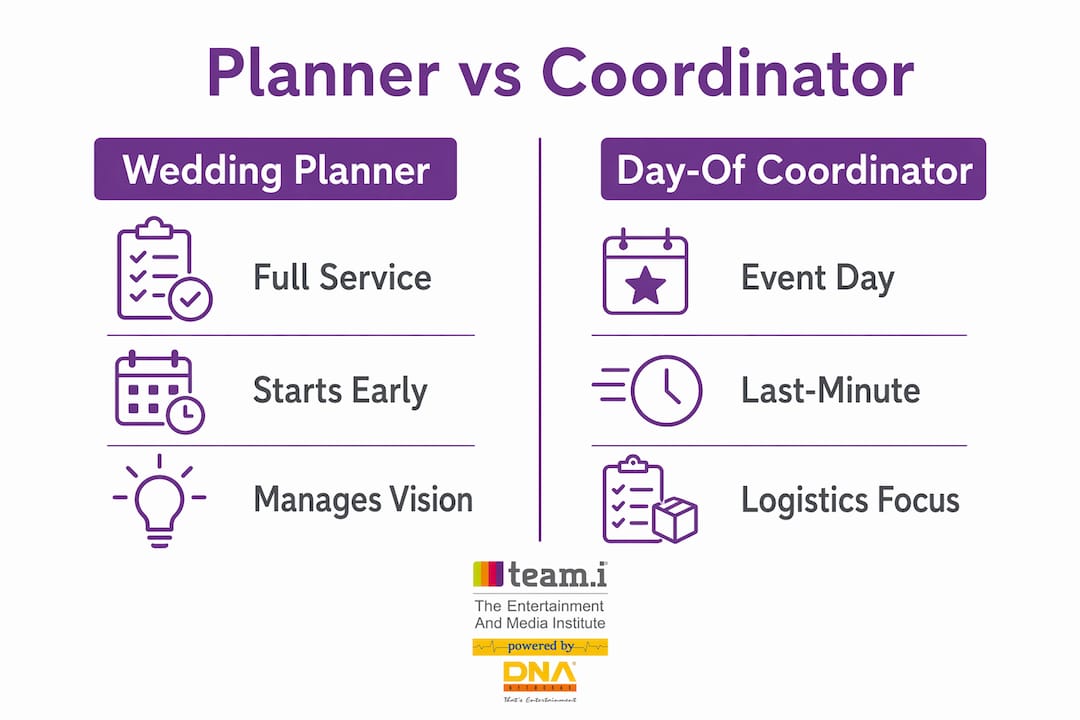
These three roles confuse almost every couple, and the confusion costs money. A wedding planner manages your vision, your budget, and your entire vendor ecosystem from day one. A venue event manager handles venue-specific logistics such as access, facilities, and in-house staff. These roles complement each other. They do not replace each other.
A day-of coordinator is a third, distinct role. This professional steps in 8–10 weeks before the wedding to take over communications and build the master timeline. Many couples assume the venue manager fills this role. They do not. The venue manager’s loyalty is to the venue, not to your guest experience.
| Role | When they start | Primary focus |
|---|---|---|
| Wedding planner | 12–18 months out | Your vision, budget, all vendors |
| Venue event manager | Venue booking confirmed | Venue logistics, facilities, in-house staff |
| Day-of coordinator | 8–10 weeks out | Timeline, communications, execution |
For a large Indian wedding in Hyderabad or Bangalore, you often need all three. For a smaller celebration, a full-service planner can absorb the coordinator role. Understanding the difference between planner and coordinator before you hire saves you from paying for overlapping services.
Pro Tip: Ask every venue directly: “Does your event manager attend the full wedding day, or only during setup?” The answer tells you exactly how much external coordination support you need.
How to choose a wedding planner for an Indian wedding
Choosing the right planner starts with one question: do they know your city? A planner with strong vendor relationships in Bangalore will negotiate better rates and get priority bookings that an outsider cannot. Local knowledge is not a bonus. It is a core competency.
The three main wedding coordinating services are full-service planning, partial planning, and day-of coordination. Full-service planners manage everything from concept to close. Partial planners step in at a defined stage. Day-of coordinators handle execution only. Your budget and how much time you have to self-manage determines which model fits.
When you interview prospective planners, ask these questions directly:
- How many Indian weddings have you managed in this city in the past two years?
- Can you share a sample master timeline from a previous event?
- What is your vendor markup policy? Do you earn commission from vendors?
- What happens if a key vendor cancels 48 hours before the wedding?
- How do you handle multi-day events with overlapping ceremonies?
Read every contract before signing. Watch for vague language around “additional costs” and “out-of-scope services.” A good planner will define scope clearly and in writing. If they resist putting details in the contract, that is your answer.
Pro Tip: Request a reference from a couple whose wedding had a major last-minute problem. How a planner handles a crisis tells you far more than a smooth success story.
Does hiring a wedding planner actually save you money?
The short answer is yes, and the savings are often larger than the planner’s fee. Specialist planner services prevent costly booking errors and bring contract scrutiny that most couples simply do not have the experience to apply. A planner who catches a problematic cancellation clause once has already paid for themselves.
Planners negotiate vendor contracts at volume. A planner who books 20 weddings a year with a particular catering company in Chennai or Pune gets rates and terms that a one-time client never will. That buying power flows directly to your budget.
The financial benefits go beyond direct savings:
- Avoided double bookings. A planner tracks every vendor confirmation, preventing the expensive scramble of replacing a no-show supplier.
- Budget reallocation. Planners identify where you are overspending early, before deposits are locked in.
- Vendor accountability. Written briefs and signed contracts mean vendors deliver what was agreed, or face documented consequences.
- Time value. The hours you would spend chasing quotes, reading contracts, and managing logistics have real cost. Planners absorb that labour.
Partial planning services suit couples who want professional oversight without full-service fees. You handle the early decisions, and the planner takes over vendor management and execution. This model works well for affordable wedding planning without sacrificing professional coordination on the day.
How to manage your wedding planning checklist and stay on track
A master checklist with 300-plus tasks sounds daunting. Break it into four timeline phases and it becomes manageable. The foundation phase covers budget and venue. The vendor phase covers every supplier booking. The detailing phase covers invitations, outfits, and travel. The execution phase covers the final week.
Use a shared digital tool to track tasks, assign owners, and set deadlines. A simple spreadsheet works. What matters is that both partners and the planner access the same document in real time. Miscommunication between partners and planners is the most common cause of last-minute chaos at Indian weddings.
Common pitfalls to avoid:
- Missing the 12-month venue booking window and losing your preferred location.
- Assuming the caterer handles all food permits and licences without checking.
- Skipping a written brief for the photographer, then disputing the final album.
- Forgetting to confirm entertainment logistics, including live music integration and sound requirements, until the week before.
- Not building a contingency budget of at least 10–15% for unexpected costs.
Wedding planning is structured project management, not a series of aesthetic decisions. The couples who treat it that way, with timelines, owners, and written confirmations, consistently have smoother events.
What 24 years of event management teaches you about weddings
Wedding planning is a logistical project first. The flowers and the colour palette matter, but they are the last 10% of the job. The first 90% is vendor alignment, contract management, timeline building, and contingency planning. Couples who focus only on the aesthetic layer are the ones who call their planner in a panic at 11 PM the night before.
Indian weddings carry a particular weight. They are not just celebrations. They are multi-day productions involving families, rituals, vendors, and guests who all have strong opinions. A planner acts as an emotional buffer as much as a logistics manager. When the florist delivers the wrong shade of marigold at 6 AM, you do not want to be the one making that call. Your planner does.
The couples I have seen get the most out of their planners are the ones who start early, communicate clearly, and trust the process. Hiring a planner at the six-month mark and expecting them to fix decisions already made is like calling a doctor after the surgery. The value is in the prevention, not the rescue.
— Teami
Teami’s event management training for aspiring wedding planners
Wedding planning is one of the most demanding and rewarding specialisations in the events industry. If you are a couple who has been through this process and found yourself fascinated by the logistics, or if you are someone who wants to build a career managing weddings professionally, structured training makes all the difference. Teami brings 24 years of industry experience to its event management courses, with hands-on training across wedding, corporate, and large-scale events. The curriculum covers vendor negotiation, master timeline creation, budget management, and real event execution. Explore Teami’s online event management programme to see how professional certification can open doors in India’s growing events industry.
FAQ
What does a wedding planner do on the actual wedding day?
A wedding planner manages vendor arrivals, oversees the master timeline, resolves last-minute issues, and coordinates all moving parts so the couple can be present without managing logistics.
How early should you hire a wedding planner in India?
Hire a full-service planner 12–18 months before your wedding date. This secures the best venues and vendors before booking windows close.
What is the difference between a wedding planner and a day-of coordinator?
A wedding planner manages the entire planning process from start to finish. A day-of coordinator steps in 8–10 weeks before the wedding to manage execution only.
Do destination weddings require a specialist planner?
Yes. Destination weddings require planners with knowledge of local laws and logistics, including sound ordinances, permits, and regional vendor networks that a general planner may not have.
Can a wedding planner help reduce costs?
A planner with strong vendor relationships negotiates better rates and prevents expensive booking errors. Partial planning services offer professional oversight at a lower fee than full-service packages.