

TL;DR:
- India’s virtual events market is projected to reach USD 31.41 billion by 2033, offering significant career opportunities.
- Success in virtual event management requires strong communication, tech adaptability, and rigorous planning skills.
- Mastering key platforms like Zoom, Hopin, and Cvent, along with engagement strategies, is essential for career growth.
India’s virtual events market sat at USD 6.70 billion in 2024 and is racing towards USD 31.41 billion by 2033. That is not a niche trend. That is a career opportunity screaming for trained professionals. If you are an aspiring event manager or a recent graduate trying to make your mark, understanding virtual event management is no longer optional — it is the baseline. This article breaks down the skills, tools, and strategies you need to manage virtual events confidently, build a portfolio that actually impresses employers, and position yourself at the front of a field that is expanding faster than most people realise.
Table of Contents
- Understanding virtual event management in India
- Essential tools and platforms for successful virtual events
- Designing engaging virtual events: Best practices
- Measuring success and building your event management career
- What most beginners miss about virtual event careers
- Launch your virtual event management career with practical courses
- Frequently asked questions
Key Takeaways
| Point | Details |
|---|---|
| Booming virtual events market | India’s virtual events sector is expanding rapidly and offers strong job opportunities. |
| Master key platforms | Familiarity with tools like Zoom, Hopin, and Cvent is essential for entry-level success. |
| Focus on engagement | Interactive strategies and clear KPIs help ensure high attendance and participant satisfaction. |
| Track your impact | Using analytics and certification boosts credibility and career growth in event management. |
| Versatile skillset matters | Hybrid event management skills make you more employable and adaptable in the Indian market. |
Understanding virtual event management in India
Virtual event management is the art and science of planning, coordinating, and delivering events that happen entirely online. Think of it as running a live show where your stage is a screen, your audience is scattered across cities, and your backstage crew is on chat. It is not simply a scaled-down version of in-person events. It is a completely different discipline, demanding its own set of skills and instincts.
In India, the shift has been dramatic. From corporate town halls and product launches in Mumbai to pan-India job fairs and massive online music shows, the variety of virtual events is extraordinary. The Indian event industry has been transformed by digitalisation, and virtual formats now sit at the heart of corporate communication, education, and entertainment alike.
The India events market analysis shows a sector undergoing rapid reinvention. With a projected 18.70% CAGR through to 2033, the demand for skilled virtual event professionals will only accelerate. That means entry-level jobs, internships, and freelance opportunities are opening up right now for those who are ready.
The most common virtual event types in the Indian market include:
- Webinars and online conferences for corporate training and industry summits
- Virtual job fairs and campus recruitment drives for HR teams and universities
- Online music shows and entertainment streams for large youth audiences
- Hybrid product launches combining in-person and digital audiences
- E-learning events for edtech platforms and professional development bodies
For entry-level roles, three skills consistently separate candidates who get hired from those who do not:
“The event professionals who thrive in virtual formats are those who combine strong communication, genuine tech-adaptability, and rigorous planning discipline. Technical skills open the door; everything else determines how far you go.”
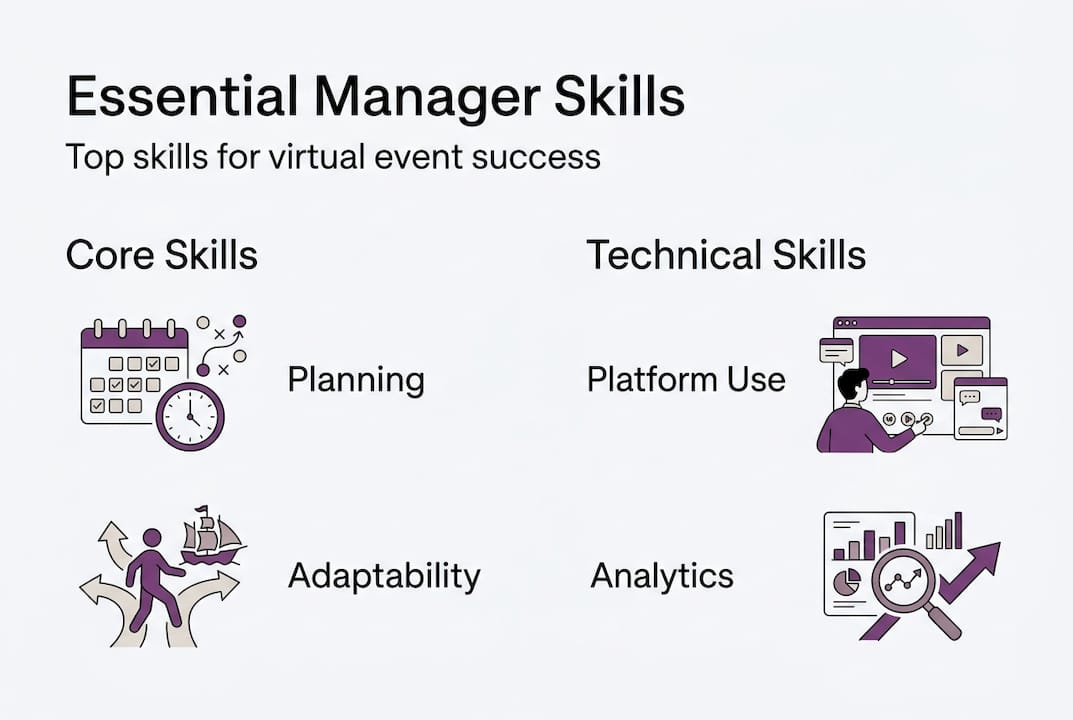
Communication means writing crisp run-of-show documents, briefing speakers, and managing real-time issues calmly. Tech-adaptability means learning new platforms quickly without panicking when something glitches live. Planning means building detailed timelines, contingency plans, and post-event reports that demonstrate your value clearly.
Essential tools and platforms for successful virtual events
You would not walk into a kitchen without knowing how to use the equipment. Virtual events are no different. The platforms you choose shape everything — attendee experience, production quality, and your ability to manage multiple moving parts simultaneously.
The leading key players in India’s virtual events space are Cvent, Zoom, and Hopin. Each serves a different purpose, and knowing which tool fits which situation is genuinely a superpower early in your career.
| Platform | Best for | Cost | Beginner-friendly? |
|---|---|---|---|
| Zoom | Webinars, team meetings, small conferences | Free tier available; paid from ~₹1,300/month | Very high |
| Hopin | Large-scale virtual expos, networking events | Paid plans; free tier limited | Moderate |
| Cvent | Corporate conferences, registration management | Enterprise pricing | Moderate to advanced |
For most beginners, Zoom is where you start. It is widely used across Indian corporates and educational institutions, and its interface is forgiving enough to learn fast. Hopin is worth exploring for events with networking breakout rooms and exhibitor booths. Cvent is the heavyweight for managed registrations and data analytics, so learning even the basics here signals seriousness to employers.
Beyond the big three, a solid virtual event management guide will show you how tools like StreamYard for live production and Slido for audience polling complement your primary platform.
- Always run a tech rehearsal at least 48 hours before any event
- Use multi-language support settings where your audience speaks different regional languages
- Test your internet backup before every single live session — no exceptions
Pro Tip: Study the hybrid event best practices for managing both online and in-person audiences simultaneously — this is increasingly the skill set employers are hunting for in 2026.
Choosing the right platform comes down to two questions: What is the size of your audience? And what outcome do you need them to walk away with? Answer those, and your platform choice becomes obvious.
Designing engaging virtual events: Best practices
Here is the brutal truth about virtual events: audiences have zero patience for boring. They will close the tab, mute the speaker, or scroll Instagram before your second slide is done. Engagement is not a nice-to-have. It is the entire job.
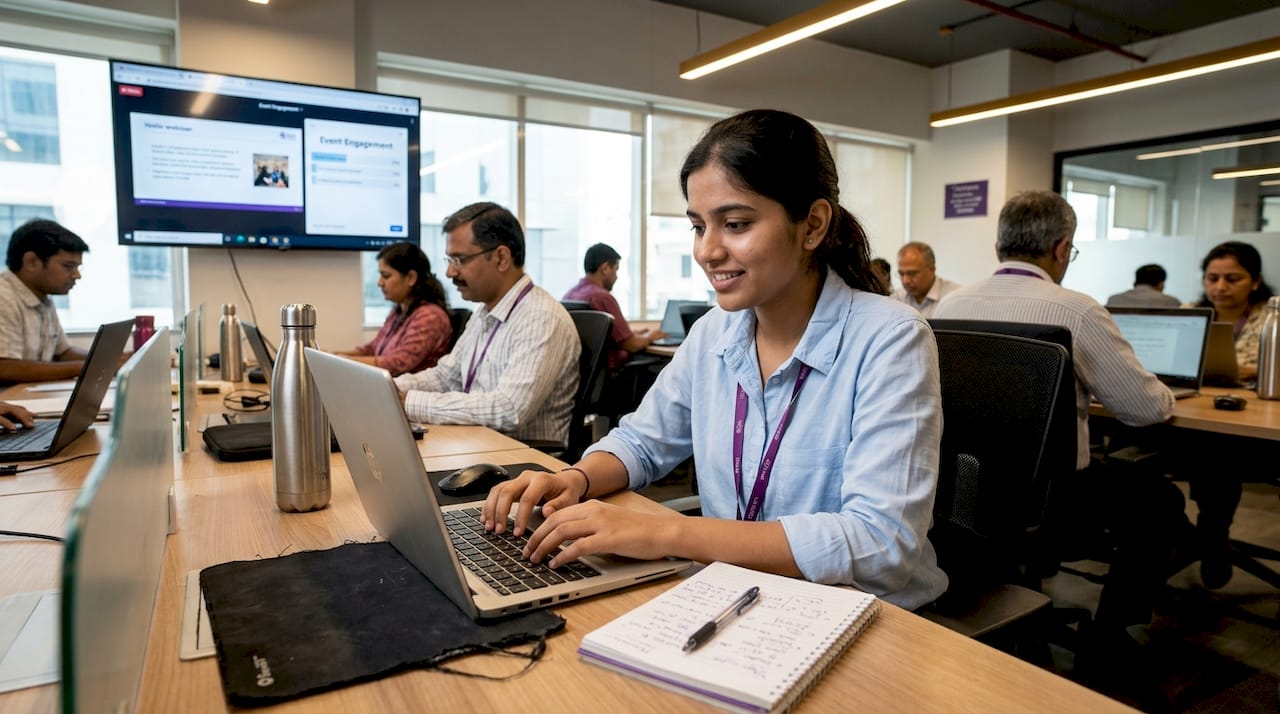
Global benchmarks make this clear. Engagement has risen 172% since the shift to virtual formats, and 76% of attendees actively participate in polls and chats when those tools are used well. More strikingly, 81% of event organisers report higher ROI from virtual formats compared to traditional ones.
These are not abstract numbers. They are your blueprint.
| Engagement strategy | Impact |
|---|---|
| Live polls during sessions | Up to 60% increase in active participation |
| Dedicated Q&A segments | Reduces drop-off by keeping audiences involved |
| Chat moderation and responses | Creates community feeling, extends session time |
| Clear KPIs shared upfront | Boosts speaker performance and attendee focus |
Here is a numbered framework for planning a genuinely engaging virtual event:
- Define your outcome first. What should attendees know, feel, or do after attending?
- Design your agenda around energy, not time slots. Alternate between presentations, discussions, and polls.
- Brief every speaker on virtual delivery. Most speakers trained for in-person events need specific coaching for screen presence.
- Build in interaction every 10 to 12 minutes. Polls, chat prompts, or live Q&A — keep fingers busy.
- Assign a dedicated tech host. Do not let your main host manage both content and troubleshooting simultaneously.
- Measure everything. Collect attendance data, poll responses, session drop-off points, and post-event surveys.
Pro Tip: Set your KPIs before the event runs, not after. When you visit measuring event ROI resources before your planning phase, you design sessions specifically to generate measurable outcomes — and that impresses clients and employers alike.
With effective event design, you are already ahead of most beginners. Now let us look at how to measure success and demonstrate your value as a virtual event professional.
Measuring success and building your event management career
You ran a great event. Now what? If you cannot prove it was great with data, it might as well not have happened. Measurement is where good event managers separate themselves from great ones.
The most important KPIs for virtual events include:
- Attendance rate: Did registrants actually show up? Anything above 40% is a solid start.
- Engagement rate: How many attendees interacted through polls, chats, or Q&A?
- Session completion rate: How many people watched until the end?
- Net Promoter Score (NPS): Would attendees recommend the event?
- Lead generation numbers: For corporate events, how many qualified leads did the event produce?
Analytics tools built into platforms like Zoom and Hopin provide most of this data automatically. The skill is knowing which numbers to pull, how to present them, and what recommendations to make for next time.
Building a career in virtual event management is about layering skills intentionally. Sessions can boost attendance by 30% when structured correctly — and showing that you understand this in an interview sets you apart instantly.
Here is what a job-ready virtual event professional should be actively doing:
- Earning a recognised certification in event management or digital events
- Building a portfolio of at least two or three executed projects (even volunteer or college events count)
- Developing hybrid skills through resources like this complete virtual event guide
- Attending industry meetups and online networking communities for event professionals
- Exploring the full range of event management career options to identify your specialisation
“In a rapidly expanding Indian market, professionals who combine virtual expertise with strong analytics skills and a genuine certification will consistently outpace those who rely on experience alone. Measure. Document. Improve. Repeat.”
Networking is underrated in this industry. The event world in India operates heavily on relationships and referrals. Meet people. Follow up. Show up consistently, even when you are still learning.
What most beginners miss about virtual event careers
Here is something we see over and over again: beginners spend six months learning every feature of Zoom and Hopin, then stall completely when they face their first difficult client or a session that falls flat despite perfect tech. Why? Because they treated virtual event management as a technology problem when it is actually a people problem.
Platforms change. What does not change is your ability to stay calm when a keynote speaker drops off mid-sentence, to read an audience’s energy through a screen, and to communicate clearly under pressure. These are the skills that event management best practices consistently point to as the real differentiators in a long career.
Hybrid events will define the next decade of the Indian events industry. If you only learn virtual formats, you are leaving half the market behind. If you only know in-person production, you are already behind. The professionals who master both will be genuinely irreplaceable. Start building both skill sets now, not later.
And finally, do not underestimate mentorship. Find someone who has managed large-scale events and ask sharp questions. Certifications open doors; mentors tell you what happens after you walk through them.
Launch your virtual event management career with practical courses
If this article has fired you up, that energy deserves a direction. team I brings 24 years of industry experience and real event exposure to every programme it offers. Whether you are starting from scratch or looking to sharpen specific skills, our event management course gives you the structured, practical foundation the industry actually demands. Explore our online event management courses designed for aspiring professionals who need flexibility without compromising depth. And if hands-on experience is what you are after, our event work experience programme puts you inside real events, not just classrooms. Your career in virtual event management starts with one deliberate step forward.
Frequently asked questions
What are the basic skills required for virtual event management?
You need communication, technical proficiency, adaptability, and planning skills to manage virtual events successfully. Aspiring managers who also focus on hybrid skills and measurable KPIs will gain a decisive career edge in India’s growing market.
Which platforms are most popular for virtual events in India?
Zoom, Cvent, and Hopin are the leading platforms currently used for virtual events across corporate, educational, and entertainment sectors in India.
How can I maximise engagement during virtual events?
Use interactive tools like polls, chats, and Q&A sessions throughout your event, and set clear KPIs before the event begins. Global benchmarks show that 76% of attendees participate actively when these tools are used well.
Is a certification necessary to succeed in virtual event management?
Certification is increasingly valued by employers and can significantly boost your career prospects in India’s fast-growing event industry. Hybrid skills and certification together create the strongest foundation for long-term career success.
Recommended
- Virtual Event Management: Complete Professional Guide – team I
- Top Event Management Skills for Success in 2025 – team I
- 10 Essential Skills To Learn In Our Event Management Online Course – team I
- Event Management Best Practices for Career Success – team I
- Essential Business Management Skills for Career Success