

Stress levels in event management have reached record highs, with nearly forty percent of young professionals reporting difficulty staying focused during demanding workdays. In energetic cities like Bangalore, managing large gatherings often rivals British standards for precision and urgency. Mindfulness offers a proven way to reduce stress and improve mental clarity, helping professionals transform chaotic schedules into opportunities for success. Discover strategies that make it possible to build resilience and thrive in high-pressure environments.
Table of Contents
- Defining Mindfulness For Busy Professionals
- Popular Mindfulness Techniques And Approaches
- Benefits Of Mindfulness In Event Management
- Integrating Mindfulness Into Daily Routines
- Risks, Misconceptions, And Practical Limitations
Key Takeaways
| Point | Details |
|---|---|
| Mindfulness as a Strategy | Mindfulness helps busy professionals maintain mental clarity and emotional resilience in high-pressure environments, enabling more effective decision-making. |
| Practical Techniques | Integrating short mindfulness practices, such as breathing exercises and mindful pauses, enhances focus and reduces stress during hectic schedules. |
| Benefits to Performance | Regular mindfulness practice can lead to significant improvements in emotional regulation, cognitive flexibility, and interpersonal communication among event managers. |
| Realistic Expectations | Professionals should adopt brief, strategic mindfulness interventions rather than seeking lengthy sessions or perfection, to effectively manage stress and build resilience. |
Defining mindfulness for busy professionals
For event management professionals navigating high-pressure environments in Bangalore, mindfulness represents more than a trendy wellness concept. It is a strategic approach to maintaining mental clarity and emotional resilience. Present-centered awareness allows professionals to stay grounded amidst the chaotic dynamics of event planning and coordination.
At its core, mindfulness involves cultivating an intentional, non-judgmental awareness of one’s immediate experience. This means observing thoughts, emotions, and bodily sensations without getting entangled in reactive patterns. For busy professionals, this practice creates mental space between stimulus and response, enabling more purposeful decision-making during stressful event management scenarios.
The practical application of mindfulness in professional settings involves several key techniques:
- Conscious breathing during high-stress moments
- Brief meditation sessions between event preparations
- Systematic body scan techniques to release accumulated tension
- Developing emotional regulation skills
Professional mindfulness is not about eliminating stress entirely but developing the psychological flexibility to navigate challenges with greater ease and effectiveness. By training attention and cultivating present-moment awareness, event management professionals can transform potential overwhelm into strategic composure.
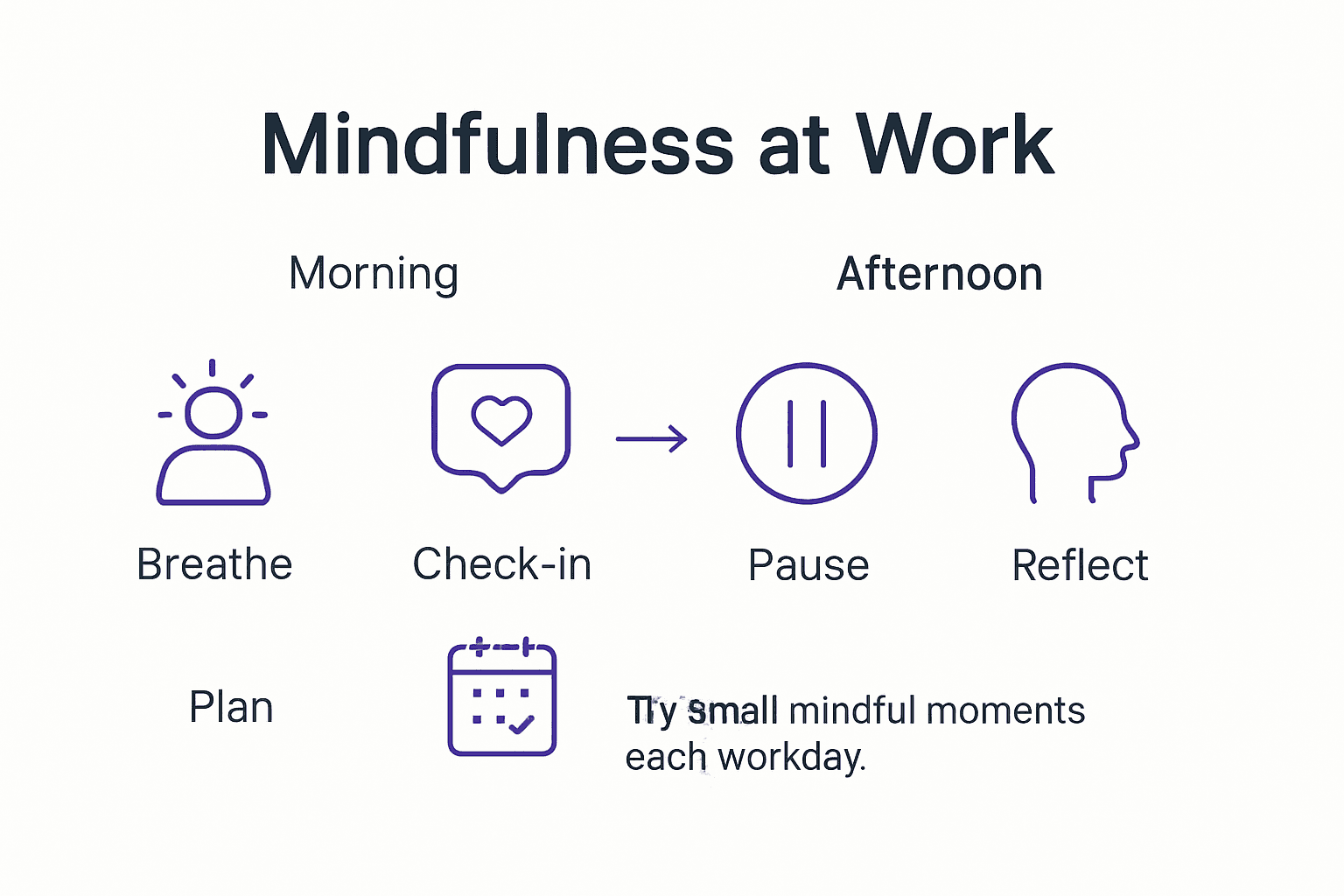
Pro tip: Practice a 3-minute mindful breathing exercise every morning to set a centred tone for your professional day.
Popular mindfulness techniques and approaches
Event management professionals in Bangalore require practical, time-efficient mindfulness techniques that integrate seamlessly into their demanding work environments. Mindfulness practices tailored for busy professionals offer strategic approaches to managing stress and enhancing mental clarity without disrupting workflow.
Several key mindfulness techniques have proven particularly effective for professionals seeking quick yet impactful stress management strategies:
- Breathing Exercises: Short, focused breathing techniques that can be performed at a workstation or between event planning sessions
- Body Scan Meditation: A rapid technique for releasing physical tension and resetting mental focus
- Mindful Walking: Brief movement practice that combines physical activity with present-moment awareness
- Focused Attention Practice: Short mental exercises designed to strengthen concentration and emotional regulation
These approaches are not about achieving perfect meditation, but creating micro-moments of awareness that help professionals navigate high-pressure situations with greater emotional intelligence. By integrating these techniques, event management professionals can develop resilience, improve decision-making skills, and maintain composure during complex event coordination challenges.
Techniques like 4-7-8 breathing (inhaling for 4 seconds, holding for 7, exhaling for 8) or two-minute mindful observation can provide immediate stress relief and mental recalibration. The goal is consistency rather than perfection, allowing professionals to build mental fitness gradually and sustainably.
Pro tip: Select one mindfulness technique and commit to practicing it daily for 14 consecutive days to establish a sustainable habit.
Benefits of mindfulness in event management
Event management professionals face unique challenges that demand exceptional mental resilience and adaptability. Research demonstrates significant positive impacts on job performance and health outcomes for professionals who integrate mindfulness practices into their daily workflows. These benefits extend far beyond simple stress reduction, offering comprehensive improvements in professional effectiveness.
The primary benefits of mindfulness in event management can be categorised into several critical domains:
- Emotional Regulation: Enhanced ability to manage high-pressure situations without experiencing overwhelming stress
- Cognitive Flexibility: Improved decision-making capabilities during complex event coordination
- Attention Management: Greater capacity to remain focused amid multiple simultaneous tasks
- Interpersonal Communication: More empathetic and responsive interactions with clients, vendors, and team members
Mindfulness transforms how event management professionals approach challenges. By cultivating present-moment awareness, practitioners develop a remarkable capacity to navigate unpredictable scenarios with composure. This mental training enables faster problem-solving, reduces reactive decision-making, and promotes a strategic approach to potential disruptions.
Professionals who consistently practice mindfulness report substantial improvements in their overall work performance. These improvements manifest through reduced burnout, increased creativity, and a more balanced approach to managing intricate event logistics. Supporting systematic work-life balance strategies can further amplify these mindfulness benefits, creating a holistic approach to professional development.
Pro tip: Incorporate a 5-minute mindfulness check-in during your daily event planning routine to systematically reset and refocus your professional approach.
Integrating mindfulness into daily routines
Event management professionals require pragmatic strategies for embedding mindfulness into their fast-paced work environments. Practical strategies can help incorporate mindfulness seamlessly without disrupting busy schedules, transforming momentary awareness into sustainable professional practice.
Successful mindfulness integration involves strategic approaches tailored to the unique demands of event management:
- Morning Preparation: Dedicating 5-10 minutes to breathing exercises before starting work
- Transition Moments: Using brief mindful pauses between event planning tasks
- Communication Intervals: Practicing focused listening during client and vendor interactions
- Sensory Anchoring: Utilising brief moments of sensory awareness during high-stress situations
Building a sustainable mindfulness practice requires a progressive, step-by-step approach that accommodates the dynamic nature of event management. Professionals can start by embedding mindfulness into everyday activities like walking between meeting venues, eating lunch mindfully, or taking conscious breaths during logistical preparations.
The key is developing micro-practices that fit naturally into existing workflows. Event managers can transform routine activities into mindfulness opportunities by maintaining present-moment awareness, observing thoughts without judgment, and creating small pockets of intentional attention throughout their workday.
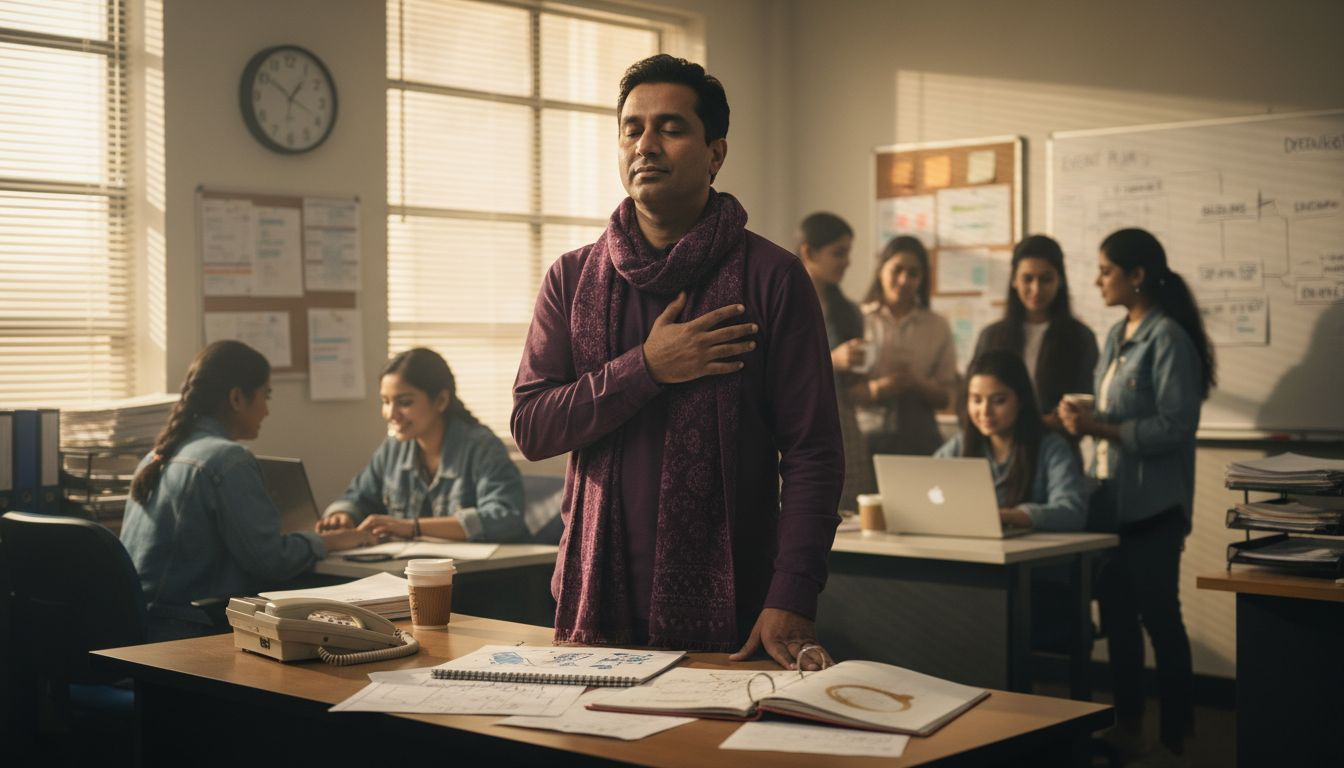
Here’s a comparison of mindfulness integration strategies and their typical professional outcomes:
| Integration Strategy | Typical Implementation Time | Likely Impact on Performance | Sustainability in Busy Schedules |
|---|---|---|---|
| Morning breathing exercises | 5-10 minutes pre-work | Improved clarity, reduced anxiety | Highly sustainable |
| Mindful pauses between tasks | 60 seconds per transition | Enhanced focus, fewer mistakes | Easily maintained |
| Focused listening in meetings | During communication | Stronger relationships, better negotiation | Moderately sustainable |
| Sensory anchoring in stress | During high-pressure events | Quicker emotional relief, lowered tension | Sustainable with practice |
Pro tip: Select three daily activities where you can incorporate 60-second mindfulness breaks, such as before answering emails, during transportation, or while reviewing event schedules.
Risks, misconceptions, and practical limitations
Event management professionals often encounter significant barriers when attempting to integrate mindfulness practices into their high-pressure environments. Common misconceptions about mindfulness can prevent practitioners from developing effective strategies, creating unrealistic expectations about what mindfulness truly entails.
Key misconceptions and practical limitations include:
- Time Myth: Believing mindfulness requires extensive, uninterrupted meditation sessions
- Perfection Fallacy: Expecting immediate, dramatic mental transformations
- Complexity Assumption: Thinking mindfulness is an overly complicated or mystical practice
- Professional Skepticism: Viewing mindfulness as incompatible with high-performance professional environments
The primary risks associated with mindfulness practice emerge from misunderstanding its fundamental nature. Many professionals mistakenly assume that mindfulness demands radical lifestyle changes or significant time investments. In reality, effective mindfulness for event management professionals involves brief, strategic interventions that can be seamlessly integrated into existing workflows.
Professionals must recognise that mindfulness is not about achieving a permanent state of zen, but developing mental resilience and adaptive awareness. The practice is fundamentally about creating small, intentional moments of presence that help manage stress and enhance cognitive flexibility. Unrealistic expectations can lead to frustration and eventual abandonment of potentially beneficial practices.
Reviewing common misconceptions and practical realities can help set realistic expectations for event managers:
| Misconception | Reality | Impact if Uncorrected |
|---|---|---|
| Requires lengthy sessions | Brief interventions are highly effective | Discouragement, poor engagement |
| Must achieve perfection | Consistency is more valuable | Frustration, abandonment |
| Too complex to master | Simple strategies offer real benefits | Missed stress-management opportunities |
| Unfit for professionals | Suits demanding work environments | Ignored mental resilience growth |
Pro tip: Start with 60-second mindfulness interventions and approach the practice with curiosity rather than rigid expectations.
Strengthen Your Event Management Career with Mindfulness and Expert Training
Managing stress and maintaining focus are crucial challenges for event professionals committed to excellence. This article highlights how mindfulness techniques such as conscious breathing and present-centred awareness can transform overwhelming pressure into clear, composed decision-making. If you are seeking to develop these mental skills while gaining industry-relevant experience, team.i.org offers specialised certification courses designed for busy professionals like you.
Our programmes combine practical exposure through internships and real event participation with expert guidance on managing event logistics and emotional resilience. Developing mindfulness alongside professional competencies will help you excel in the demanding event sector without sacrificing your well-being. Take the next step towards mastering both your craft and your mental clarity by exploring our comprehensive course offerings today. Visit team.i.org now to begin your journey towards a balanced and successful event management career.
Frequently Asked Questions
What is mindfulness and how can it benefit professionals?
Mindfulness is the practice of maintaining a non-judgmental awareness of the present moment. For professionals, it helps in reducing stress, enhancing focus, and improving emotional regulation, leading to better decision-making and interpersonal communication.
How can I integrate mindfulness into my busy work schedule?
You can integrate mindfulness into your daily routine by practising brief exercises such as morning breathing exercises, mindful pauses between tasks, or focused listening during meetings. Even small, intentional moments of awareness can significantly impact your stress levels and focus.
What are some effective mindfulness techniques for busy professionals?
Effective mindfulness techniques for busy professionals include breathing exercises, body scan meditation, mindful walking, and focused attention practices. These can be easily incorporated into your workday without requiring extensive time commitments.
How long should I practice mindfulness to see its benefits?
It’s recommended to start with brief daily mindfulness practices of around 3 to 10 minutes. Consistency over time is key to noticing improvements in stress management and focus; for instance, aim for daily practices for at least 14 consecutive days.