

Career-minded students in Bangalore often discover that mastering technical event planning is only part of the journey. In a field as people-focused as event management, soft skills like communication, adaptability, and emotional intelligence can determine who rises to the top. These essential abilities enable professionals to work seamlessly with diverse teams, respond to client needs, and thrive in fast-changing environments. Understanding the real value of soft skills helps you stand out in Bangalore’s competitive event industry.
Table of Contents
- Defining Soft Skills In Professional Settings
- Essential Types Of Soft Skills For Careers
- Role Of Soft Skills In Event Management
- Developing And Enhancing Workplace Soft Skills
- Common Pitfalls Of Lacking Soft Skills
Key Takeaways
| Point | Details |
|---|---|
| Importance of Soft Skills | Soft skills are essential for professional success, significantly enhancing workplace interaction and collaboration. |
| Development Strategies | Continuous learning and deliberate practice are key to developing effective interpersonal capabilities. |
| Impact on Career Progression | Mastering soft skills can lead to better promotion opportunities and a stronger professional network. |
| Consequences of Deficiencies | Lack of soft skills can result in communication issues and hinder career advancement, affecting both individuals and organisations. |
Defining Soft Skills in Professional Settings
In today’s rapidly evolving professional landscape, soft skills have emerged as critical determinants of workplace success. These interpersonal capabilities go far beyond traditional technical expertise, representing the nuanced human abilities that distinguish exceptional professionals. Interpersonal abilities essential for sustainable development encompass a complex array of personal characteristics that enable effective interaction and performance.
Soft skills fundamentally represent a constellation of personal attributes that facilitate professional effectiveness:
- Communication capabilities
- Emotional intelligence
- Problem-solving approaches
- Adaptability and resilience
- Collaborative teamwork skills
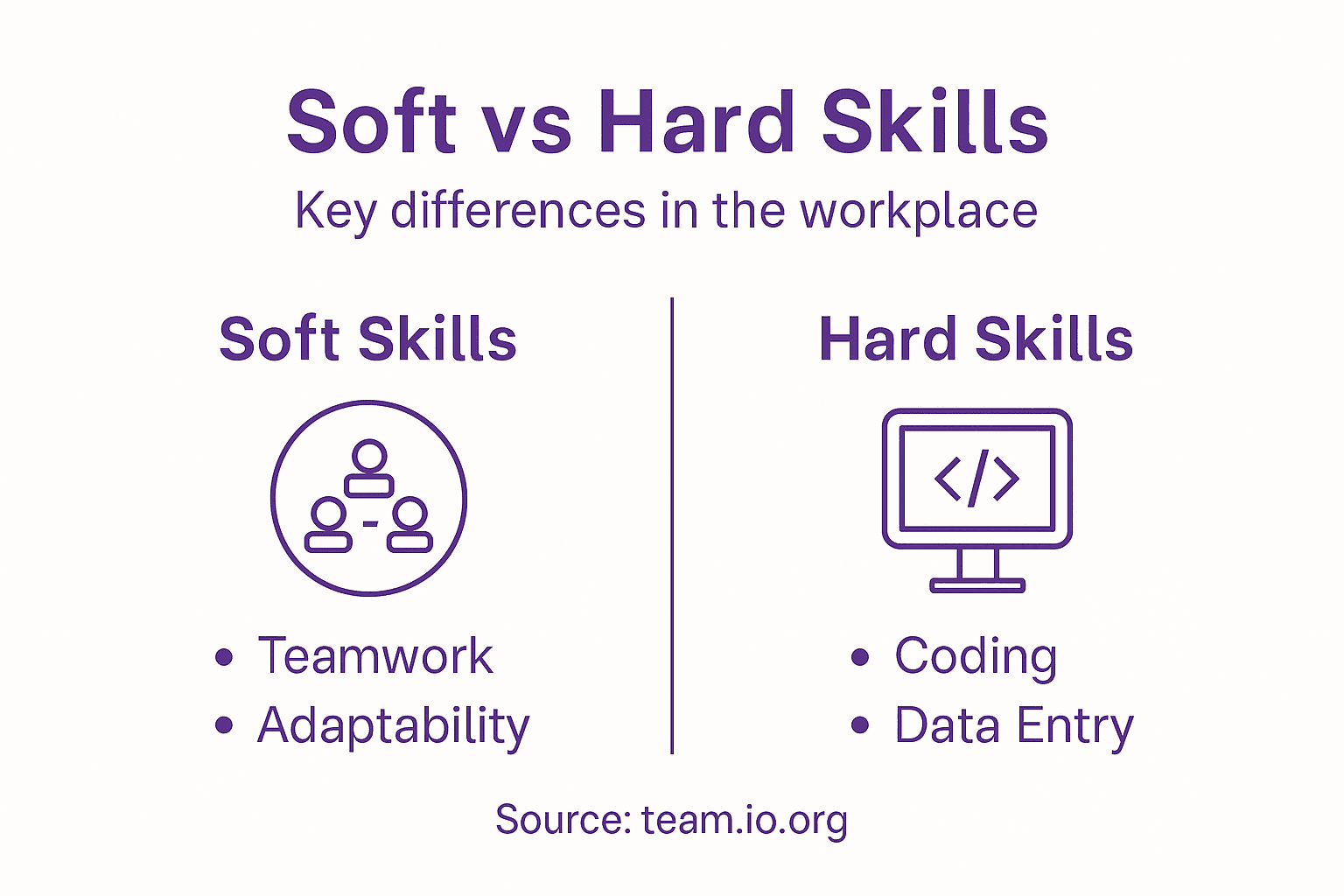
Unlike hard skills which are easily quantifiable and specific to particular roles, soft skills transcend professional boundaries. Essential personal characteristics for global employability increasingly determine an individual’s capacity to navigate multicultural, digitally transformed workplaces.
The distinction between soft and hard skills is crucial for professional development. Here is a comparative overview:
| Aspect | Soft Skills | Hard Skills |
|---|---|---|
| Definition | Interpersonal attributes | Role-specific technical abilities |
| Measurement | Difficult to quantify | Easily measured and tested |
| Transferability | Applicable across industries | Usually job or industry-specific |
| Impact on Success | Enhances teamwork, adaptability | Fundamental for task execution |
| Development Method | Practice, feedback, reflection | Formal education, technical training |
The contemporary professional environment demands a holistic skill set where technical knowledge intersects with sophisticated interpersonal capabilities. Employers now recognise that technical proficiency alone cannot guarantee success; the ability to communicate effectively, demonstrate empathy, and adapt quickly has become paramount. Soft skills represent the invisible infrastructure that enables technical skills to be deployed successfully in complex, collaborative environments.

Pro tip: Invest time in systematically developing your soft skills through deliberate practice, reflective learning, and seeking constructive feedback from mentors and colleagues.
Essential Types of Soft Skills for Careers
Career success increasingly depends on mastering a diverse range of soft skills that extend beyond traditional technical competencies. Foundational skills crucial for career progression represent a sophisticated toolkit enabling professionals to navigate complex workplace environments effectively.
Key categories of essential soft skills include:
- Emotional Intelligence
- Self-awareness
- Empathy
- Relationship management
- Communication Skills
- Active listening
- Verbal articulation
- Non-verbal communication
- Adaptability
- Flexibility
- Learning agility
- Change management
- Problem-solving
- Critical thinking
- Creative solution development
- Strategic decision-making
- Leadership Capabilities
- Team collaboration
- Conflict resolution
- Motivational skills
Critical workforce skills for global competitiveness demonstrate that soft skills are not supplementary but fundamental to professional success. These capabilities enable individuals to respond dynamically to evolving workplace challenges, bridging technical knowledge with sophisticated interpersonal competencies.
Modern organisations seek professionals who can seamlessly integrate technical expertise with advanced interpersonal abilities. Soft skills allow individuals to communicate effectively, collaborate across diverse teams, and demonstrate resilience in complex professional scenarios. They represent the invisible infrastructure that transforms technical knowledge into tangible workplace value.
Pro tip: Continuously assess and develop your soft skills through structured feedback, reflective practice, and targeted personal development workshops.
Role of Soft Skills in Event Management
Event management represents a dynamic profession where soft skills are not just complementary but absolutely essential for success. Authentic assessment methods for event management skills demonstrate that interpersonal capabilities are critical for navigating the complex landscape of professional event planning and execution.
Key soft skills fundamental to event management include:
- Communication Skills
- Client relationship management
- Clear verbal and written instructions
- Stakeholder engagement techniques
- Problem-solving Abilities
- Quick decision-making under pressure
- Creative solution development
- Risk management strategies
- Emotional Intelligence
- Reading audience and client dynamics
- Managing team stress levels
- Conflict resolution
- Adaptability
- Handling unexpected event challenges
- Flexibility in planning
- Rapid response to changing scenarios
Soft skills development in event management curricula underscores the industry’s growing recognition that technical knowledge alone is insufficient. Event professionals must seamlessly blend technical expertise with sophisticated interpersonal capabilities to create memorable experiences.
Successful event managers are distinguished by their ability to anticipate challenges, communicate effectively across diverse teams, and maintain composure in high-pressure environments. Soft skills enable professionals to transform logistical complexities into smooth, engaging experiences that exceed client expectations and create lasting impressions.
Pro tip: Practice active listening and emotional awareness during client consultations to develop more nuanced communication skills essential for event management success.
Developing and Enhancing Workplace Soft Skills
In today’s rapidly transforming professional landscape, developing soft skills has become a strategic imperative for career advancement and organisational success. Rising importance of interpersonal competencies demonstrates how technological innovations and globalisation are fundamentally reshaping workplace dynamics and skill requirements.
Strategies for enhancing soft skills include:
- Self-Assessment
- Identify personal skill gaps
- Seek honest feedback
- Monitor professional interactions
- Continuous Learning
- Attend workshops
- Engage in online courses
- Practice active listening
- Professional Networking
- Join industry groups
- Participate in collaborative projects
- Observe successful professionals
- Experiential Learning
- Take on challenging assignments
- Volunteer for cross-functional teams
- Embrace diverse work environments
Soft skills integration for workforce competence highlights the critical need for targeted development strategies that go beyond traditional training models. Modern professionals must proactively cultivate interpersonal capabilities through deliberate practice and reflection.
Successful soft skills development requires a multifaceted approach combining self-directed learning, organisational support, and continuous personal growth. Professionals who invest in enhancing communication, emotional intelligence, and adaptability will position themselves as invaluable assets in an increasingly complex and dynamic workplace ecosystem.
Below is a summary of practical strategies and associated benefits for developing workplace soft skills:
| Strategy | Example Activity | Benefit to Professional Growth |
|---|---|---|
| Self-Assessment | Skill gap analysis with mentor input | Identifies areas for focused learning |
| Continuous Learning | Taking virtual communication courses | Keeps skills current and relevant |
| Professional Networking | Attending industry associations | Expands support and learning network |
| Experiential Learning | Leading a cross-team project | Builds confidence and adaptability |
Pro tip: Create a personal development journal to track your soft skills progress, documenting specific interactions, challenges overcome, and lessons learned.
Common Pitfalls of Lacking Soft Skills
Professional success hinges not just on technical expertise, but on the nuanced interpersonal capabilities that define workplace effectiveness. Risks associated with soft skills deficiencies reveal profound consequences for individual career trajectories and organisational performance.
Key pitfalls of inadequate soft skills include:
- Communication Breakdowns
- Misunderstandings with colleagues
- Ineffective client interactions
- Poor team collaboration
- Career Limitation
- Reduced promotion opportunities
- Lower salary potential
- Limited professional network
- Performance Challenges
- Difficulty handling complex scenarios
- Weak problem-solving approaches
- Inability to manage workplace dynamics
- Emotional Intelligence Gaps
- Struggling with conflict resolution
- Limited empathy and relationship building
- Reduced team morale
Employability challenges for graduates demonstrate that technical knowledge alone cannot compensate for significant soft skills deficiencies. Employers increasingly prioritise candidates who can navigate complex interpersonal landscapes, communicate effectively, and demonstrate adaptability.
The consequences of soft skills limitations extend beyond individual performance, potentially creating systemic challenges within organisational structures. Professionals lacking these critical capabilities may find themselves increasingly marginalised in a workplace that demands sophisticated interpersonal competence and dynamic collaborative skills.
Pro tip: Regularly seek constructive feedback from mentors and colleagues to identify and address specific soft skills development areas.
Elevate Your Career with Essential Soft Skills Training
The article highlights the undeniable impact of soft skills such as communication, emotional intelligence, and adaptability on workplace success. Many professionals struggle with developing these interpersonal capabilities that go beyond technical knowledge yet are crucial for thriving in dynamic environments like event management. Whether you aim to enhance your problem-solving abilities or boost your leadership skills, mastering these soft skills is vital for standing out in today’s competitive job market.
At team.i.org, we understand that technical expertise alone is not enough. With over 23 years of industry experience and a commitment to bridging the skill gap, our comprehensive certification programmes are designed to integrate hands-on training with intensive soft skills development. From social and corporate events to sports and wedding management, our courses focus on practical exposure and personalised mentorship. Ready to transform your potential into tangible success? Explore our offerings and take the first step towards career advancement by contacting us today at team.i.org. Unlock your future with skills that truly make a difference.
Frequently Asked Questions
What are soft skills and why are they important in the workplace?
Soft skills refer to interpersonal abilities such as communication, emotional intelligence, and adaptability. They are crucial for workplace success because they facilitate effective collaboration, enhance problem-solving, and improve overall performance in diverse work environments.
How do soft skills differ from hard skills?
Soft skills are interpersonal attributes that are difficult to quantify and apply across various industries, while hard skills are specific technical abilities that can be easily measured and are usually job-specific. Both are essential, but soft skills significantly enhance teamwork and adaptability.
What are some examples of essential soft skills for career advancement?
Key soft skills include emotional intelligence, communication skills, adaptability, problem-solving abilities, and leadership capabilities. Mastering these skills can improve professional relationships and open up more career opportunities.
How can I effectively develop my soft skills?
To develop soft skills, engage in self-assessment, seek continuous learning opportunities (such as workshops or online courses), network with professionals in your field, and gain experiential learning through challenging assignments and diverse work environments.
Recommended
- Effective Communication at Work – Elevating Team Performance – team I
- Top Event Management Skills for Success in 2025 – team I
- Future Workplace Skills: What Event Managers Need Now – team I
- Importance of Networking Skills for Event Careers – team I
- Key Leadership Skills: Complete Guide for Coaches – Hoop Mentality